Konjac Benefits: From Glucomannan to Low Calories

Table of Contents
When planning a weight management diet, do you often hesitate before meals wondering 'Can I eat this?' As a practitioner, I frequently recommend konjac, but many patients ask about its components and weight loss mechanisms. Let me explain these aspects step by step.
Why Konjac Feels Light
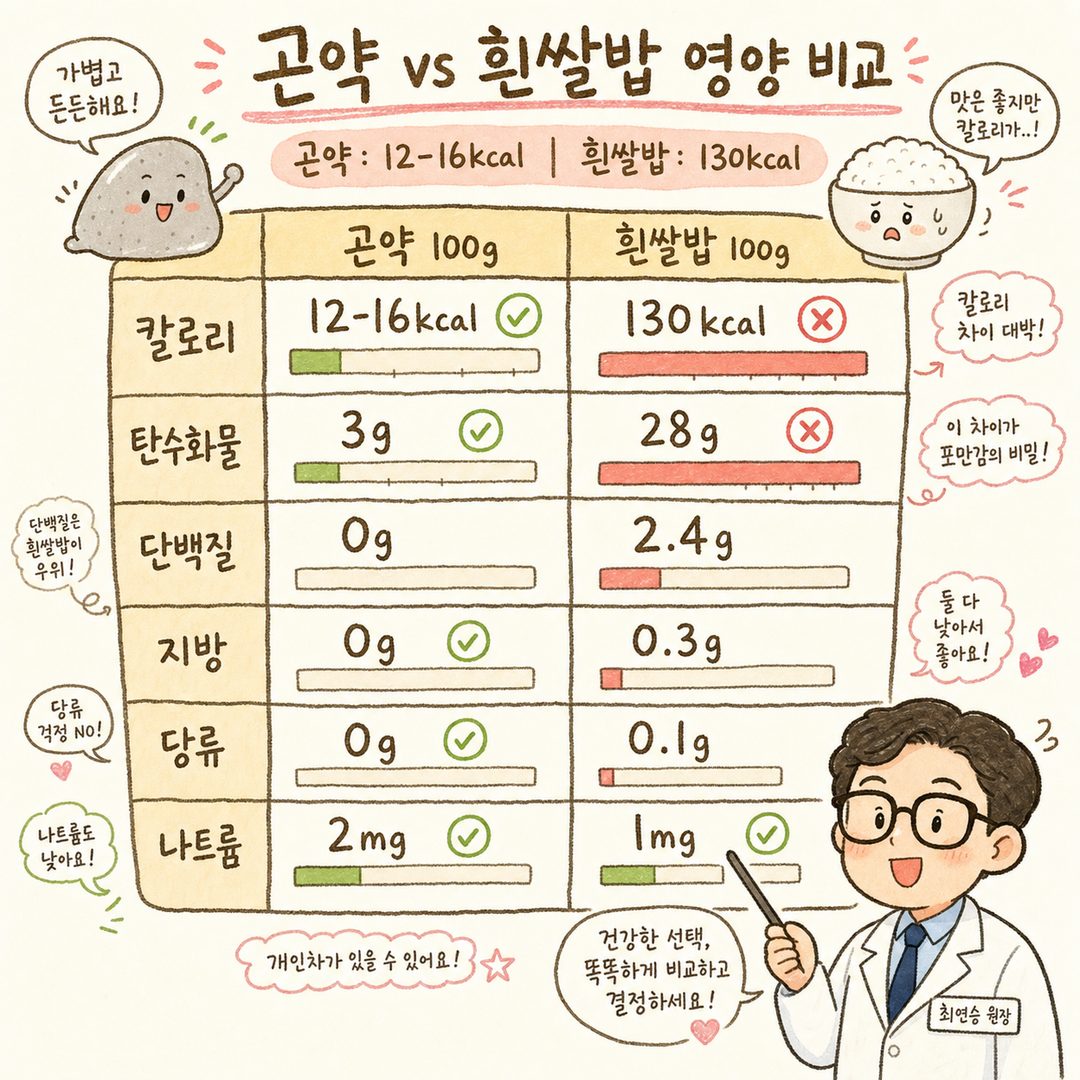
Konjac comes from the corm of the konjac plant. Despite its name suggesting a rice cake, it's primarily composed of water and dietary fiber. According to research, konjac is 93-97% water, with konjac jelly containing only 12-16kcal per 100g - significantly lower than the same weight of white rice.
Examining the nutritional profile makes its lightness more apparent. Per 80g serving, konjac contains 1.47g carbohydrates, 0.06g protein, 0g fat, 1.28g sugar, and 0mg sodium. Frankly, it's nutritionally sparse. It's better viewed as a "supporting actor that reduces overall food intake" rather than a "nutrient-rich food."
How Glucomannan Works in the Body
Glucomannan is konjac's key component. This soluble and insoluble fiber expands significantly when mixed with water. It slowly expands in the stomach, prolonging satiety and reducing intense hunger pangs.
It also functions in the intestines. Studies show glucomannan delays sugar and fat absorption by extending gastric emptying time. This slower absorption helps moderate postprandial blood sugar spikes. Research also indicates potential cholesterol-lowering effects. Konjac can be particularly beneficial for those struggling with blood sugar fluctuations or constipation.
Konjac Rice Cakes vs. Regular Rice Cakes
Konjac rice cakes are popular among those who can't give up rice cakes. They're made by replacing part of the rice flour with konjac powder or paste. Patent literature shows formulations using 3-50% konjac powder with rice flour or 10-50% konjac paste with rice flour.
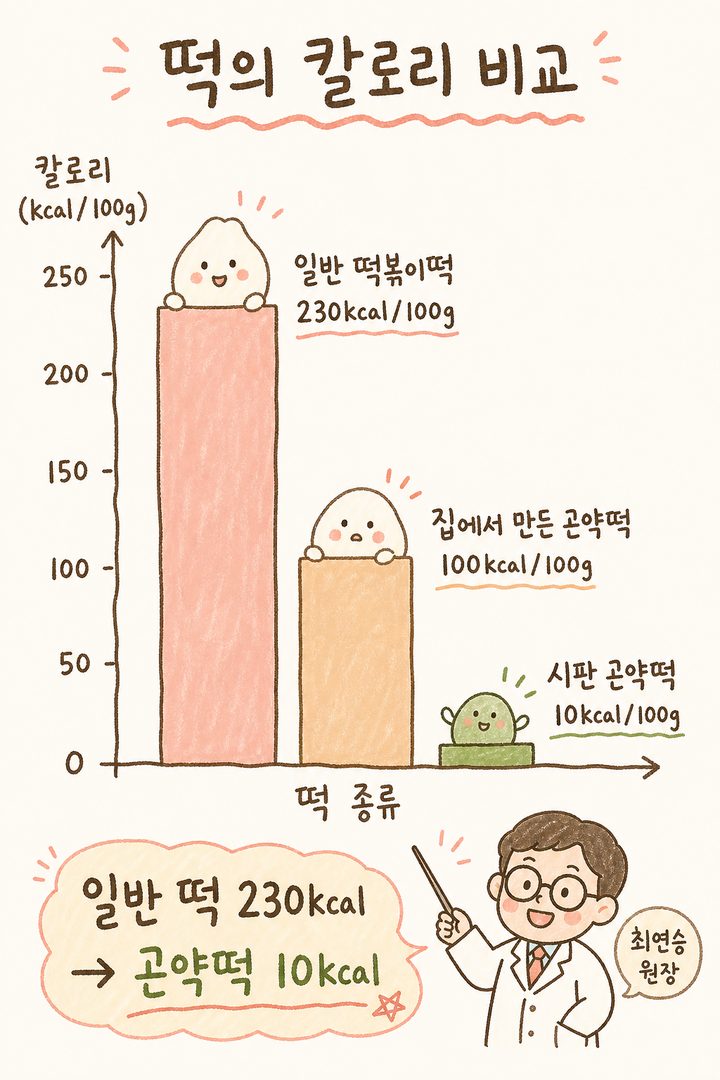
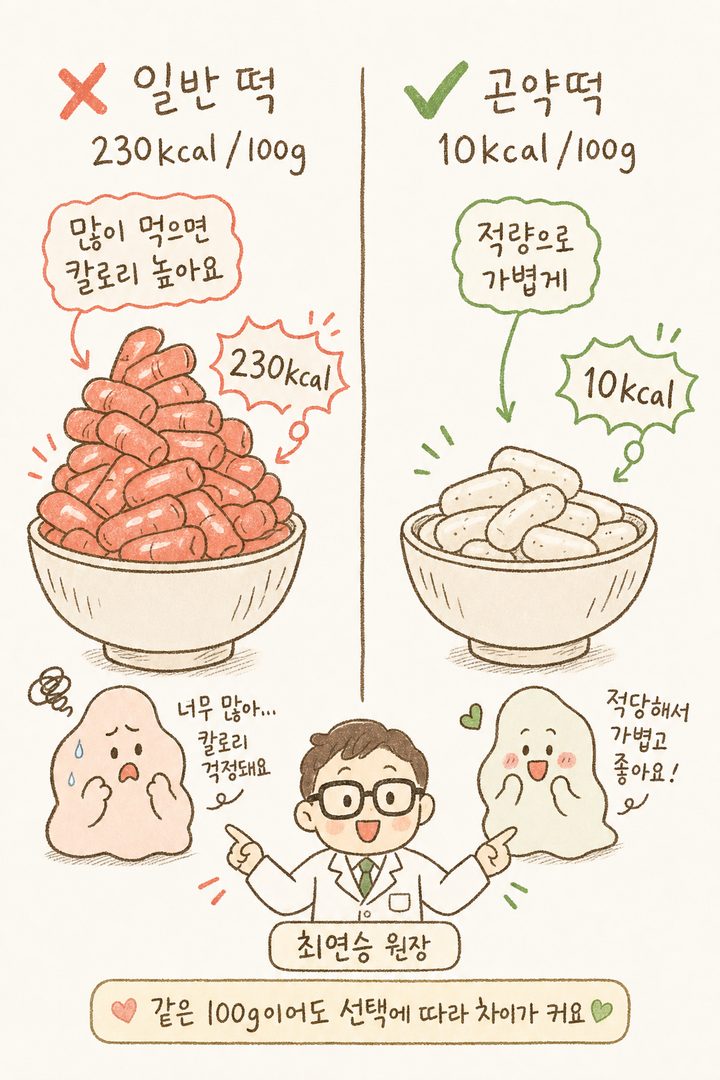
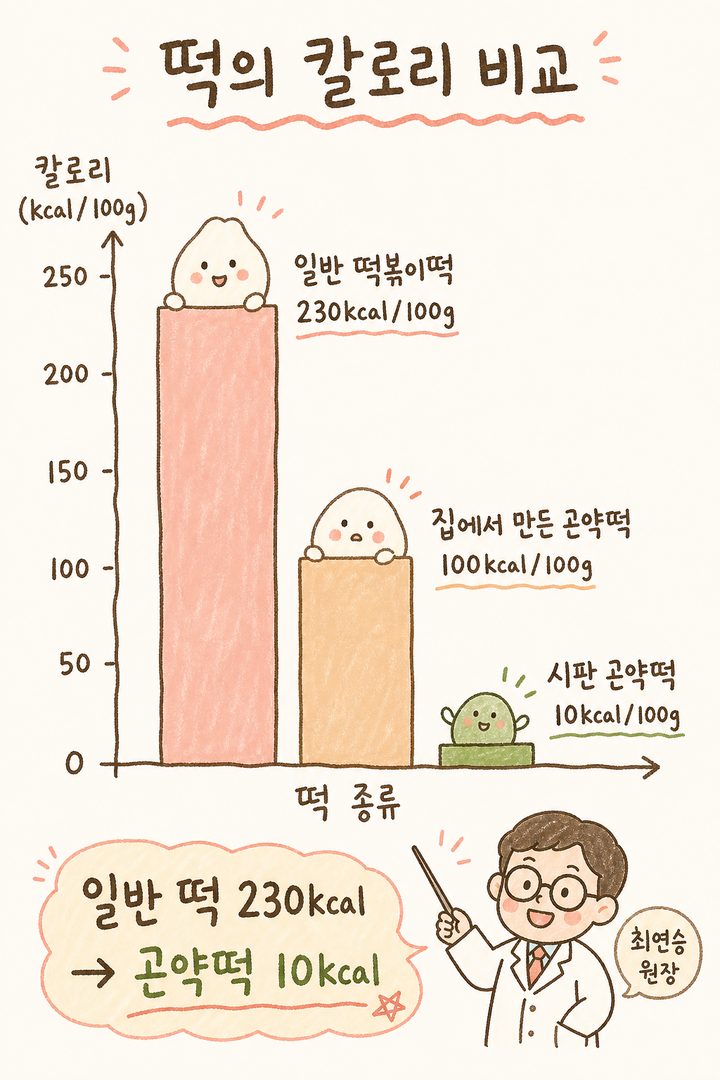
The calorie difference is substantial. Commercial konjac rice cakes contain 10kcal per 100g (about 18kcal per 180g package), while regular tteokbokki rice cakes contain 230kcal per 100g - a 95% reduction. Homemade versions with rice and konjac powder contain about 100kcal per 100g, half that of regular rice cakes.
Konjac from a Korean Medicine Perspective
Patients who struggle with weight loss often share a common trait: "I don't feel satisfied even after eating." In Korean medicine, we frequently see patients with weak digestive function (spleen-stomach deficiency) prone to dampness accumulation. For them, reducing refined carbohydrates like white rice, noodles, and rice cakes is crucial. Konjac, being mostly fiber and water, helps reduce refined carb intake while maintaining meal volume.
However, I don't recommend meals consisting solely of konjac. Its low nutritional density can lead to protein, vitamin, and mineral deficiencies. From a Korean medicine perspective, simply reducing food volume can weaken vital energy (qi). A balanced diet with protein and vegetables is much safer.

Smart Ways to Use Konjac
If you want to incorporate konjac into your diet, remember these tips:
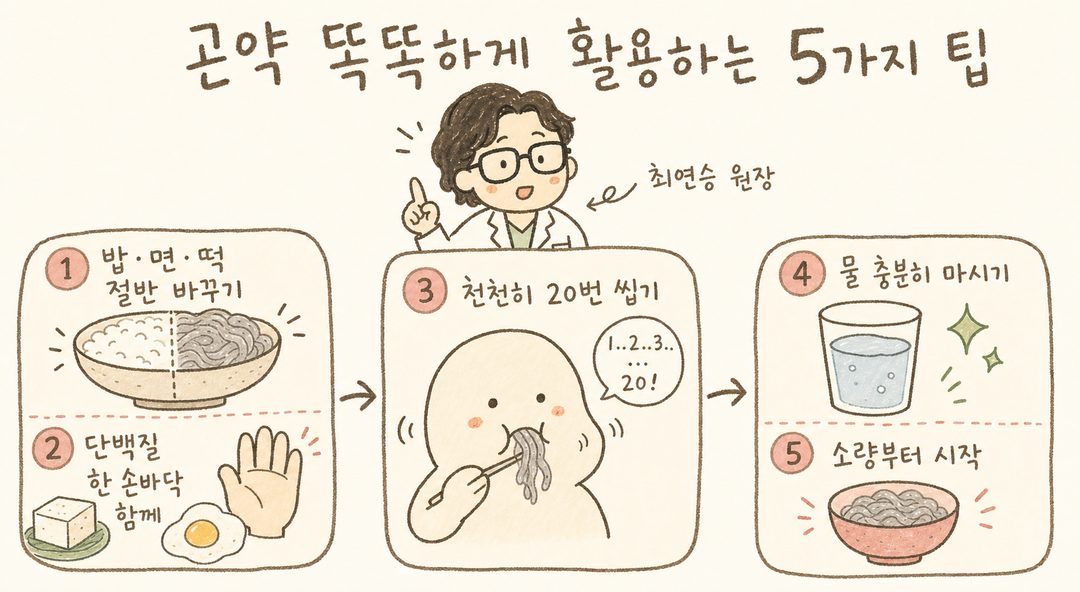
Instead of completely eliminating rice, noodles, or rice cakes, replace half with konjac jelly, noodles, or rice cakes. This maintains familiar textures while reducing calories.
Always include one palm-sized portion of protein (chicken breast, tofu, eggs) with each meal to compensate for konjac's low nutritional density.
Chew slowly. Glucomannan needs time to expand in the stomach. Chewing each bite about 20 times increases satisfaction with the same portion.
Drink plenty of water with konjac. Insufficient water can cause bloating.
Don't overconsume. Those with sensitive digestion may experience gas or bloating. Start with one meal portion.
In my practice, I often say, "Konjac isn't the main character but a reliable supporting actor in weight management." Small dietary changes can make noticeable differences over weeks or months. If you're hitting plateaus with konjac and fiber alone, consider our Baekrok Gambi-jung prescription with constitutional assessment. Finding the right approach for your constitution is the fastest long-term solution, better than extreme dieting.