
Diet Sweet Potatoes: Steaming, Fiber, and Satiety

Table of Contents
You might have bought a whole box of sweet potatoes for your diet, only to be confused about how to eat them to actually lose weight. In my clinic, I often hear the question, "Why am I not losing weight even though I'm eating sweet potatoes?" To be honest, sweet potatoes aren't a magic weight-loss food. The results vary significantly depending on how you cook them and how much you consume.
Is it True That Sweet Potatoes Are Good for Weight Management?
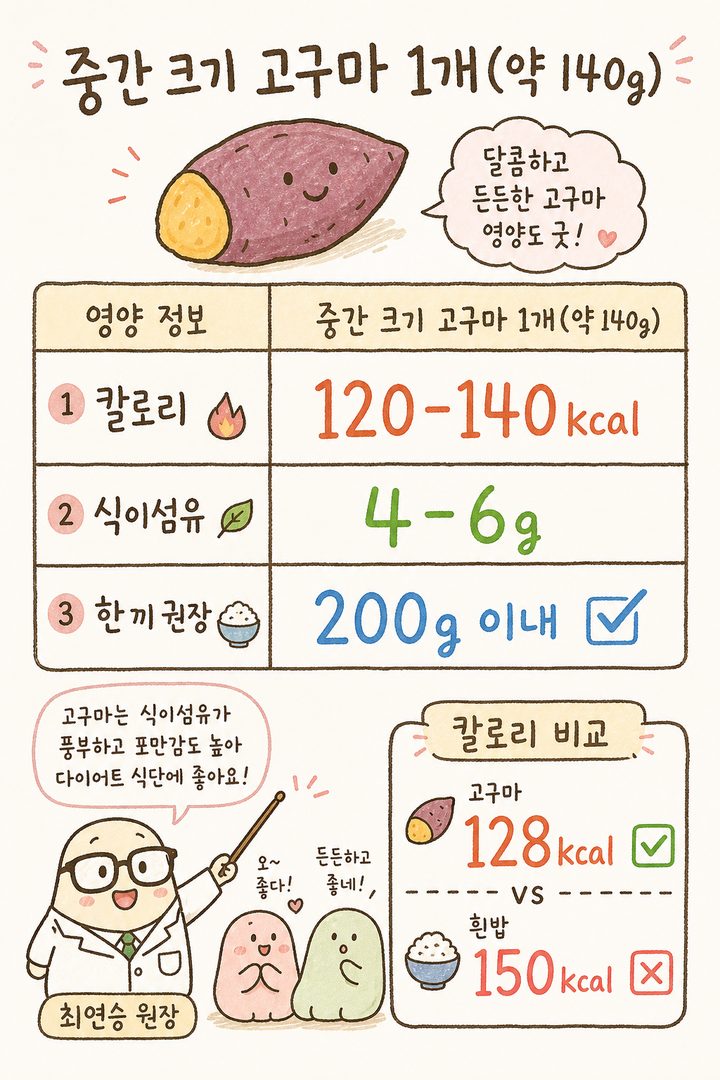
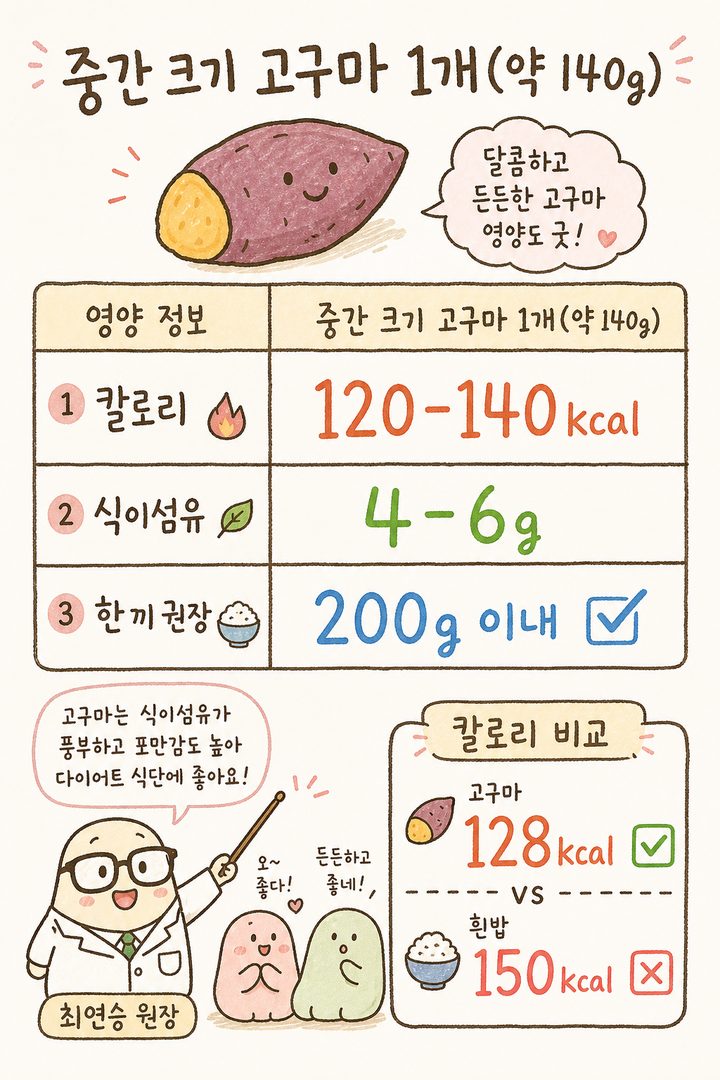
Let's start with the calories. Sweet potatoes contain 128 kcal per 100g. Compared to white rice (approx. 150 kcal per 100g), they are slightly lower, but they are far from being an "ultra-low-calorie food." The reason they are a staple in weight management diets is due to three factors: satiety, dietary fiber, and blood sugar control.
In particular, sweet potatoes are rich in soluble fiber, which keeps you full for longer. The jalapin component, often mentioned in media, aids bowel movements and helps prevent constipation, a common side effect of dieting. Therefore, sweet potatoes are not a food that causes weight loss simply because they are low in calories; rather, they are a carbohydrate control strategy where you replace rice with an appropriate portion. Knowing this difference before you start significantly impacts your results.
Cooking Methods Determine Your Weight Management Results
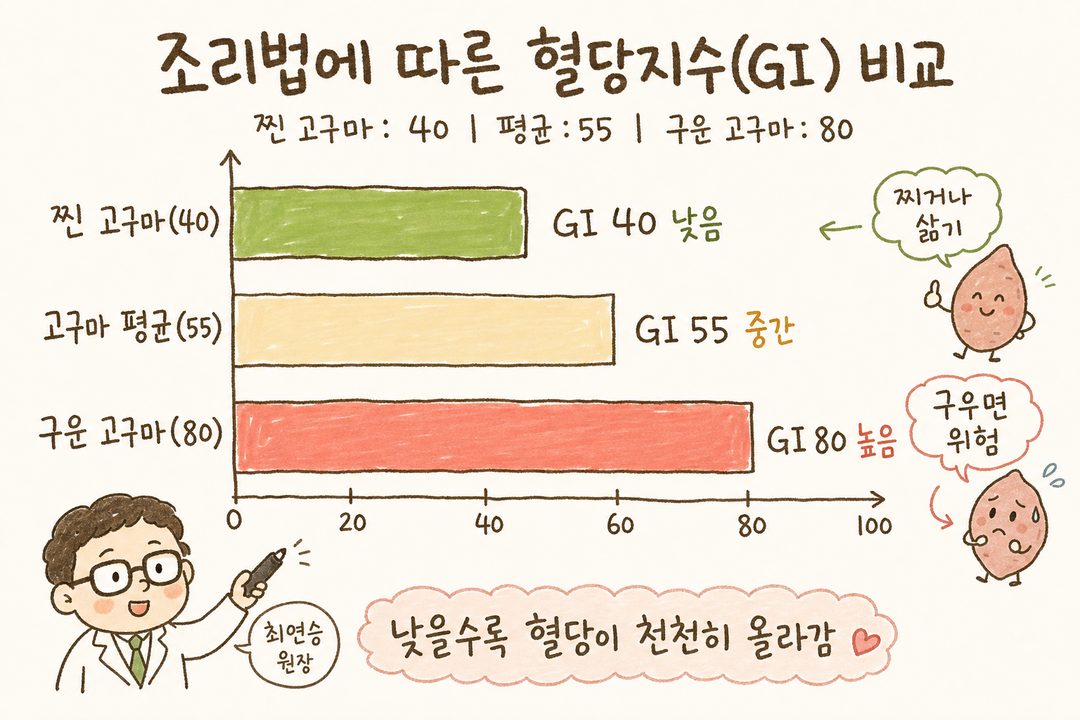
This is the real key. Even with the same sweet potato, the glycemic index (GI) changes completely depending on how you cook it.
Steamed Sweet Potato: GI approx. 40 — Blood sugar rises slowly.
Average Sweet Potato: GI approx. 55 — Lower than potatoes.
Roasted Sweet Potato: GI rises up to 80 — Difficult to consider this a diet food.
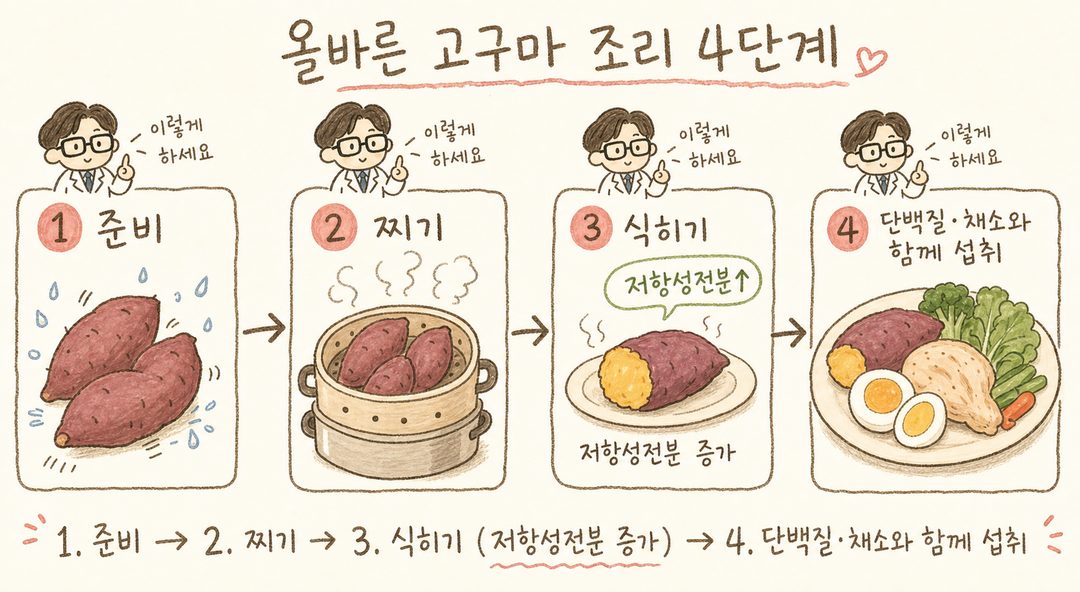
There is a reason why roasted sweet potatoes are so sweet. When the sugar content increases through roasting, blood sugar spikes just as quickly. Conversely, steaming or boiling preserves resistant starch, leading to a gradual rise in blood sugar and longer-lasting satiety. One more tip: if you cool them down after steaming, the resistant starch content increases further. Packing them cold in a lunch box is actually more advantageous for your diet.
Portion size is also crucial. Data shows that one medium sweet potato (approx. 140g) contains 4–6g of fiber and 120–140 kcal. Aiming for one medium-sized potato per meal, or between 140–200g (keeping it under 200–210 kcal), is ideal. If you eat two or three roasted sweet potatoes in one sitting, your total carbohydrate intake for that day will easily exceed a bowl of rice.
Sweet Potatoes from a Baekrokdam Korean Medicine Perspective: Body Constitution
In Korean medicine, we don't just look at calorie charts when evaluating sweet potatoes. Everyone has a different digestive capacity and constitution. If you naturally have a "cold" stomach, suffer from frequent gas, or experience prolonged bloating after meals, even one steamed sweet potato can feel burdensome. I often see patients in my clinic who force themselves to eat sweet potatoes daily because "they're good for dieting," only to find their abdominal bloating or constipation worsening.
On the other hand, steamed sweet potatoes are a great fit for those who suffer from frequent constipation and slow bowel movements, as jalapin aids intestinal motility. This is why I advise patients to observe how their body reacts to the food for about a week, rather than just following the advice that "sweet potatoes are good." Simply noting changes in post-meal bloating, gas, and bowel movements will help you identify the right portion and frequency for your body.
Additionally, many people surprisingly eat sweet potatoes alone. This causes blood sugar to fluctuate, leading to hunger again two or three hours later and eventually resulting in snacking. From a Korean medicine perspective, this is a pattern that occurs when the Spleen and Stomach (Bibi) functions cannot sufficiently transport and transform (Unwha) the food. Pairing them with protein and vegetables stabilizes this flow significantly.
Practical Sweet Potato Recipes You Can Start Today
Instead of complex recipes, here are a few combinations I actually recommend to patients in my clinic.
Basic Principle: Minimize oil and sugar; steam or boil rather than roast. It is even better to cool them after steaming.
Portion: Within 1 medium-sized potato per meal (approx. 200g).
Protein Pairing: Be sure to include either 2 eggs, chicken breast, or tofu.
Vegetable Pairing: Add volume with shredded cabbage, carrots, or a handful of salad.
Sweet Potato Toast (Bread Substitute): Mash 1 steamed sweet potato (150–200g), mix with 2 eggs, pan-fry, and top with 30–50g of natural cheese. This makes a full meal without flour.
If you want to cook them quickly in the microwave, check the doneness in 1-minute intervals. Cooking them for a long time at once often dries out the outside while leaving the inside undercooked. Another tip is to start with a slightly smaller portion for the first three days. Some people experience gas when their dietary fiber intake increases suddenly.
Finally, I want to emphasize one thing: sweet potatoes are just a tool. There is no magic that makes 36% of your body weight disappear just by changing one item in your diet. Real change begins when you consider your activity level, sleep, stress, and natural constitution together.
If your progress is slow despite dietary changes, or if you are curious about a weight management direction tailored to your constitution, consider a consultation for Baekrok Gambi-jung at Baekrokdam Clinic. We can help design a plan that fits your constitution and lifestyle, even down to a single meal of sweet potatoes. We will help you find a sustainable path rather than an unreasonable diet.