Diet and Wine: Calories, Frequency, and Types

Table of Contents
"Is one glass of wine okay tonight?" It's a common thought a few days into a diet. Many people ask whether that single glass is truly harmless or if it will undermine days of hard work.

Why a Glass of Wine is More Challenging Than You Think
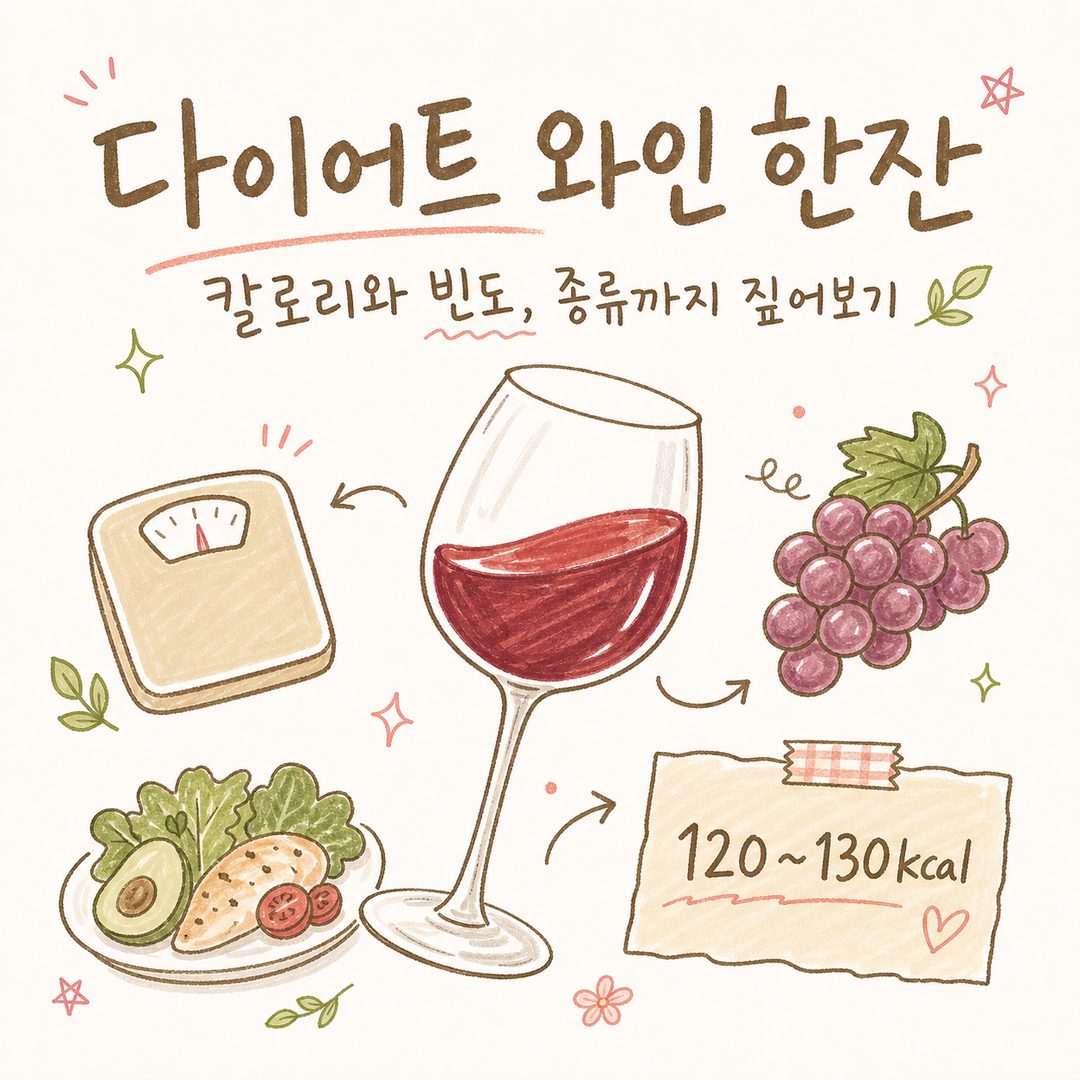
Let’s look at the numbers first. A standard glass of wine (approx. 150mL) generally contains 120–130 kcal. Some data suggests a range of 105–120 kcal per glass. While you might think of it as "just a light drink," it actually provides nearly the same calories as half a bowl of rice.
The problem isn't just the calories. Since wine is alcohol, excessive consumption is reported to increase appetite and decrease fat breakdown. While one glass can be a light pleasure, increasing it to two or three glasses can derail your choice of snacks that night and your meal plan the next morning. The real trap isn't that wine is an enemy of your diet, but rather that it is difficult to stick to just 'one glass.'
Calories Vary by Type
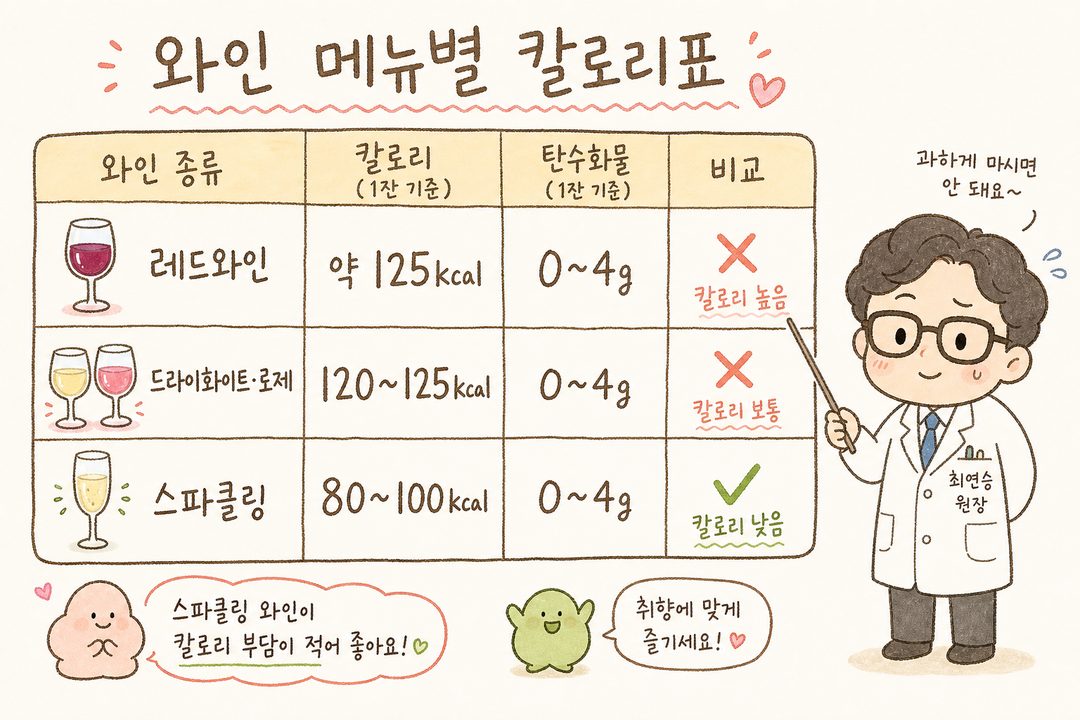
Even for the same wine, the "weight" of a glass changes depending on the variety. Here is a summary:
Red Wine: 85–90 kcal per 100mL, approx. 125 kcal per 150mL glass.
Dry White/Rosé: 120–125 kcal per glass.
Sparkling Wine: Relatively light at 80–100 kcal per glass.
Other sources list 5 oz (approx. 148mL) of red wine at 105 kcal, or 82 kcal per 100mL.
Carbohydrates (sugars) are generally low, at about 0–4g per glass. However, sweet dessert wines or varieties with high sugar content can exceed this range. When choosing a glass, it is safer to go with dry varieties. Some data also suggests that wines with lower alcohol content are more advantageous for weight management.
One Glass vs. Two: A Weekly Perspective
I often tell patients in the clinic: "One glass is fine, but if that becomes one glass every day, the story changes."
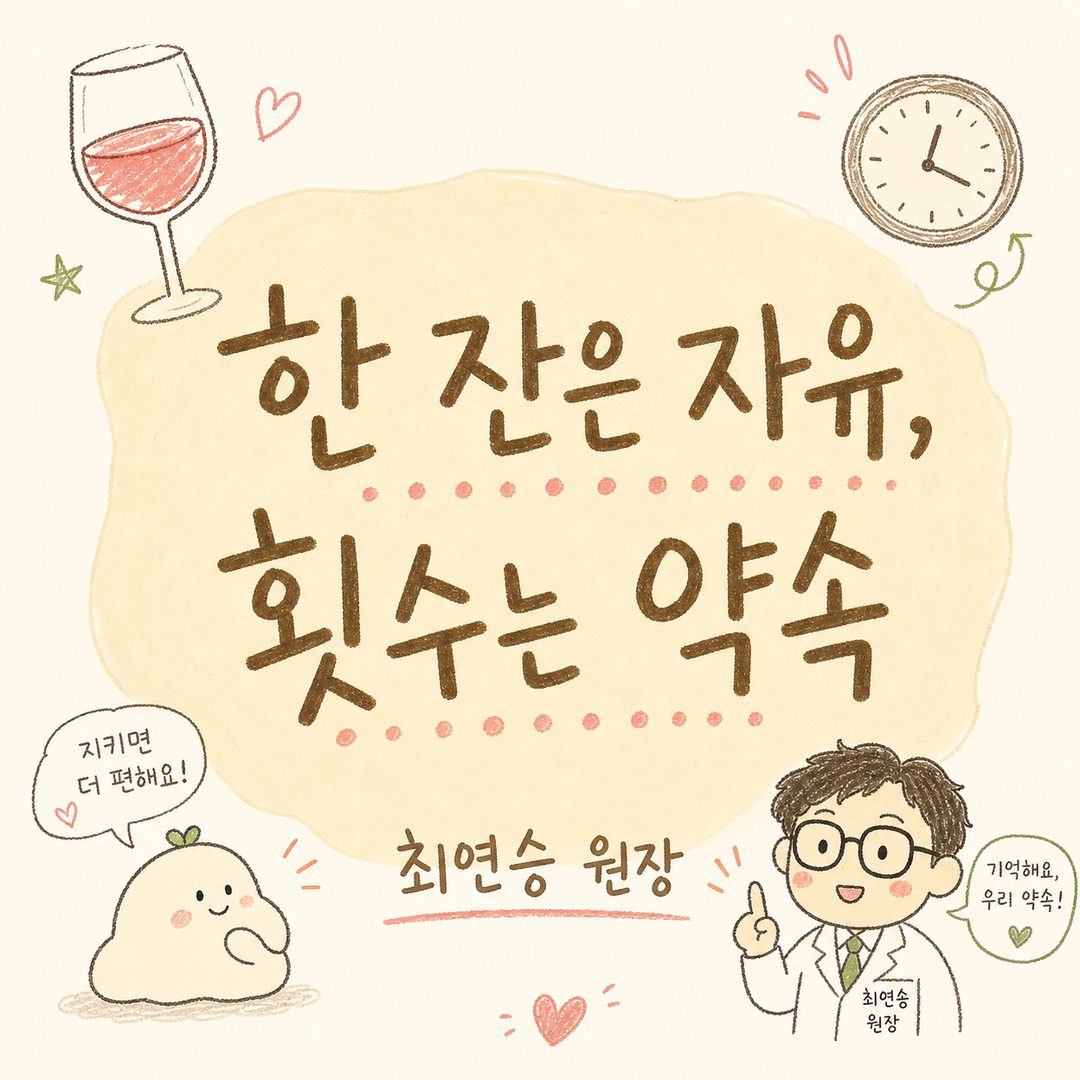
Regarding recommended limits, many sources suggest one glass per day for women and two glasses or fewer for men. Experts also advise reducing frequency to less than 2–3 times per week. For a practical strategy, one glass (approx. 120–150mL) per session, twice a week or less, is a reasonable limit.
Once you cross this line, more people experience their weight plateauing or slightly increasing. Even drinking just twice a week comes as a package deal with high-calorie snacks, next-day edema, and decreased exercise performance. It helps to think: "The glass is a choice, but the frequency is a promise."

Wine and Body Constitution at Baekrokdam Clinic
In Korean medicine, alcohol is not viewed simply as a mass of calories. Alcohol has the property of "Damp-Heat" (濕熱); frequent consumption creates an environment where waste products and edema (swelling) easily accumulate in the body. For those who experience frequent swelling in the face or legs, have a weak stomach, or are light sleepers, even one glass of wine can make the body feel heavy the next day.
I do not tell my patients to quit wine unconditionally. However, I do emphasize that the same glass of wine acts differently depending on your constitution. For those with cold hands and feet or slow digestion, a cup of warm tea is more suitable than wine. For those whose heat rises easily, late-night wine often disrupts sleep and triggers the next day's appetite. One glass at a social gathering is fine. However, I do not recommend letting it become a nightly "ritual."
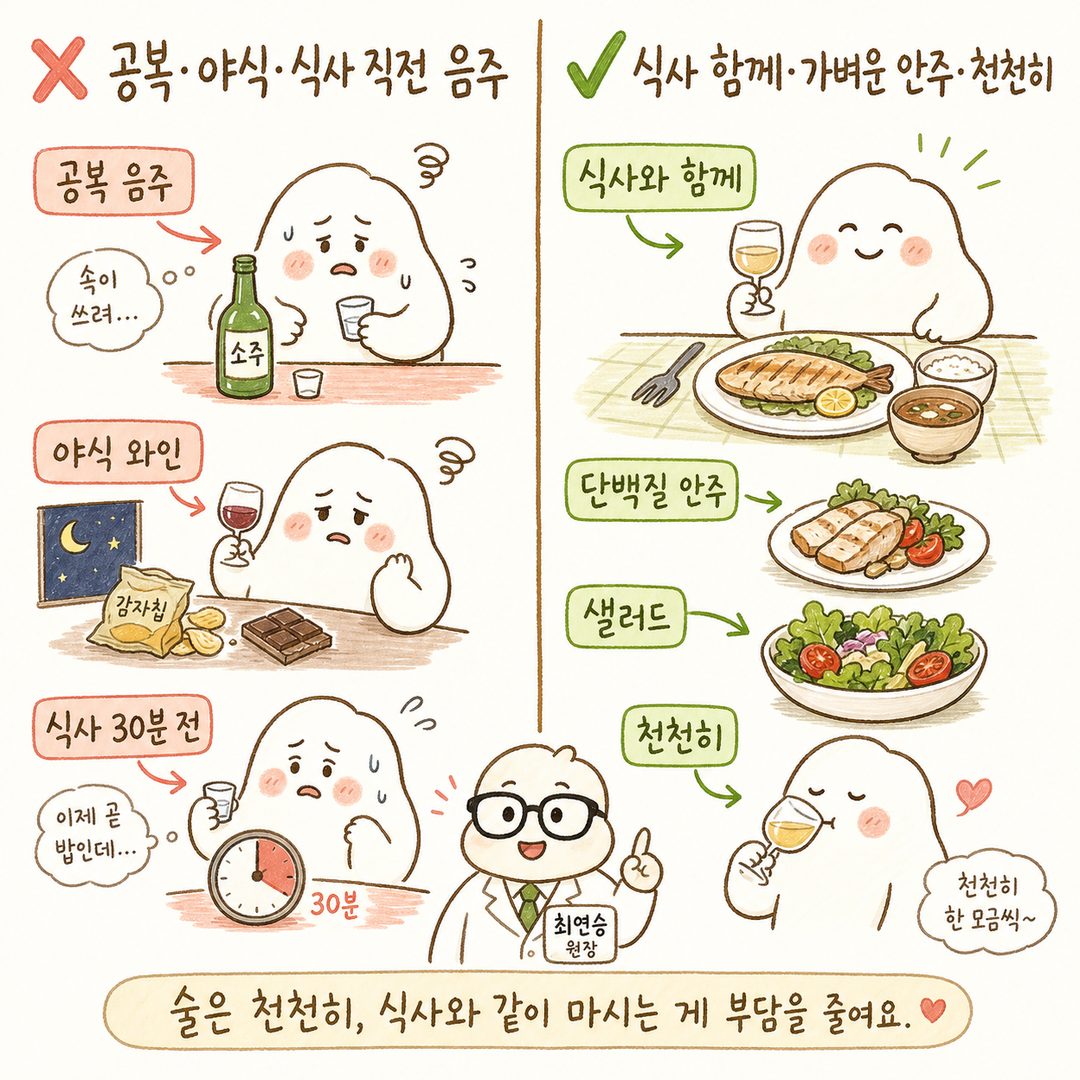
Common Misconceptions: Empty Stomach, Late-night, and Pre-meal Drinking
There are several misunderstood habits regarding wine and weight management.
Drinking on an empty stomach: Drinking without food speeds up alcohol absorption and significantly stimulates appetite. It is better to drink slowly with a meal to reduce the burden on the body.
With late-night snacks: The combination of late-night wine and snacks is the fastest way to increase total calorie intake.
Drinking 30 minutes before a meal: Alcohol stimulates the appetite, causing you to eat more during the actual meal.
Sweet snacks: Choose salads, grilled dishes, or protein-based snacks over cheesecake or chocolate.
Avoiding these four habits alone can significantly reduce the impact a single glass has on your body.
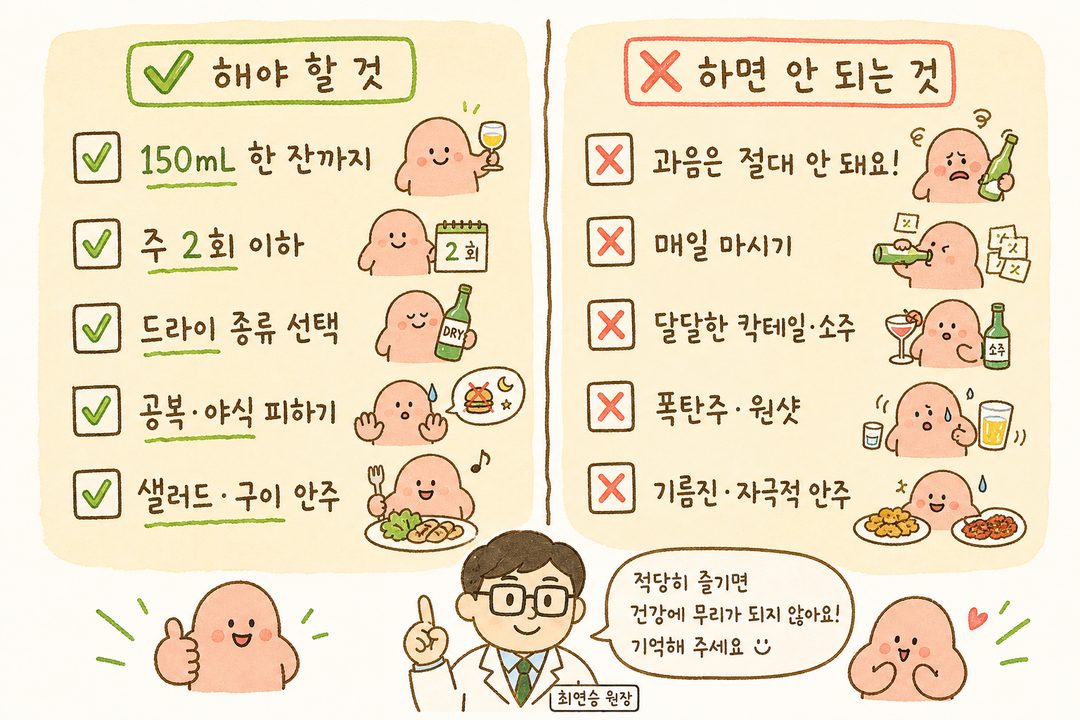
Action Points You Can Apply Today
You can forget the complex rules. Just remember these five points:
Limit yourself to one 150mL glass at a time; do not refill.
Commit to a frequency of twice a week or less.
Choose dry varieties (Sparkling, Dry White, Dry Red).
Avoid drinking on an empty stomach, late at night, or 30 minutes before a meal.
Keep snacks light, focusing on salads, grilled dishes, and protein.
By following these steps, you can enjoy wine without disrupting your weight loss progress. In a diet, creating a sustainable boundary is much more important than quitting perfectly.
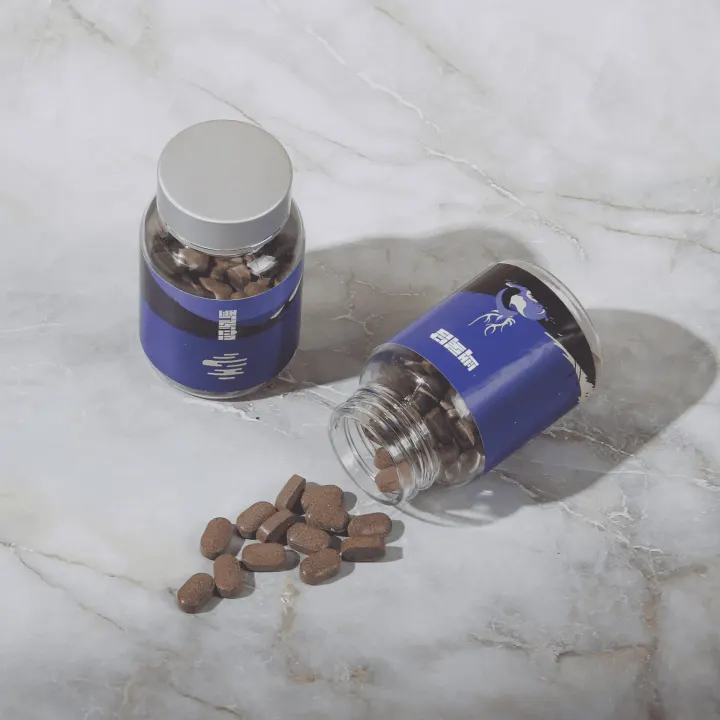
If one glass repeatedly turns into two, leading to next-day edema and appetite spikes, it is not just a calorie issue. It is time to examine your constitution and lifestyle rhythm. At Baekrokdam Clinic, we provide a Korean medicine diet program that uses Baekrok Gambi-jung in a tablet form 錠 to help manage appetite, edema, and waste products based on your constitution. If you want to keep the pleasure of a glass while reducing the burden on your body, please come in for a consultation.