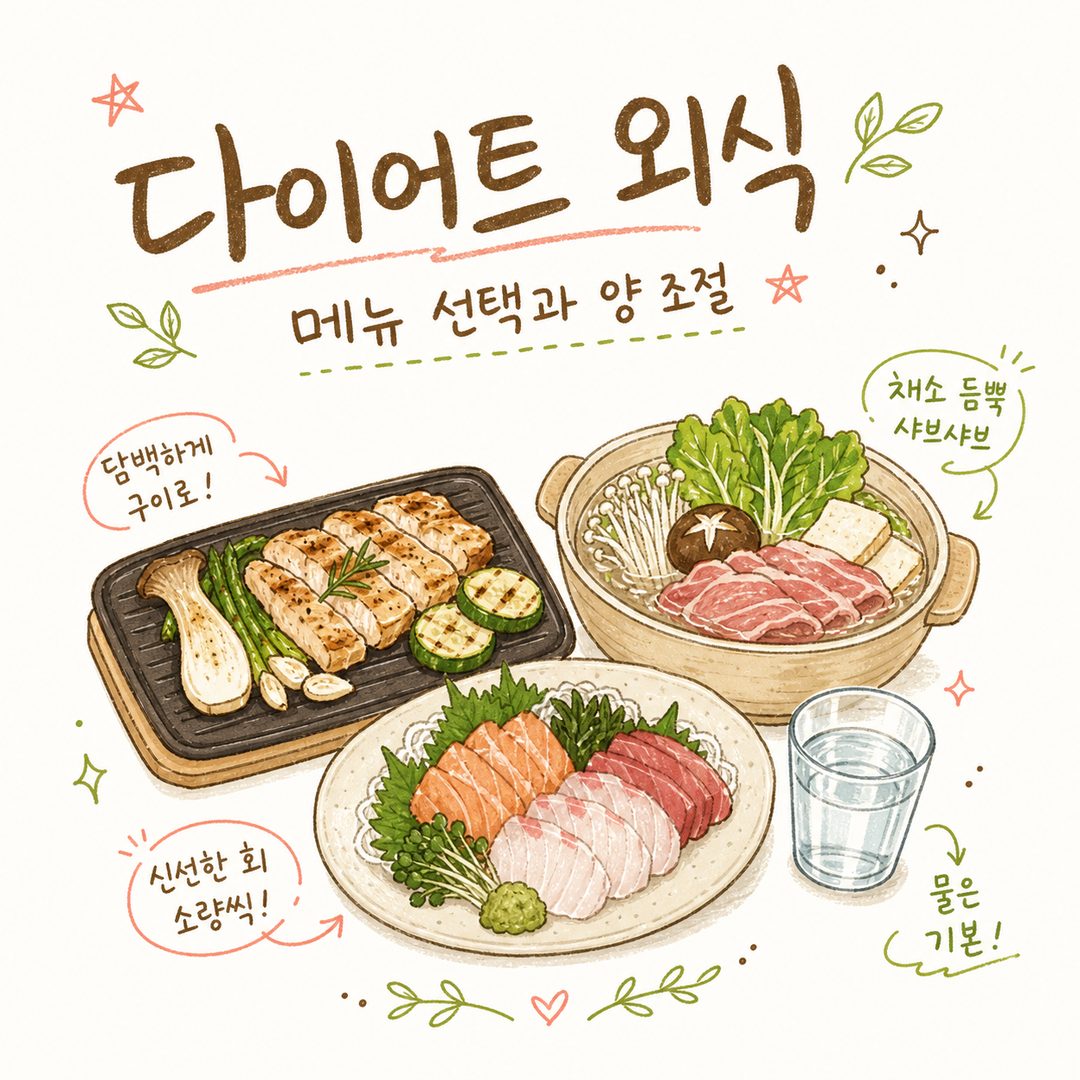
Diet Dining Out Guide: Menu Choices & Portion Control

Table of Contents
- Check the Cooking Method First: Grilled, Steamed, or Blanched Instead of Fried
- Make Lean Protein the Center of Your Meal
- Vegetables First, Half Portion of Rice or Noodles
- Sauces and Drinks: Reducing Sweetness Makes a Difference
- Transform Your Meal: Before and After
- 3 Recommended Combinations You Can Use Right Away
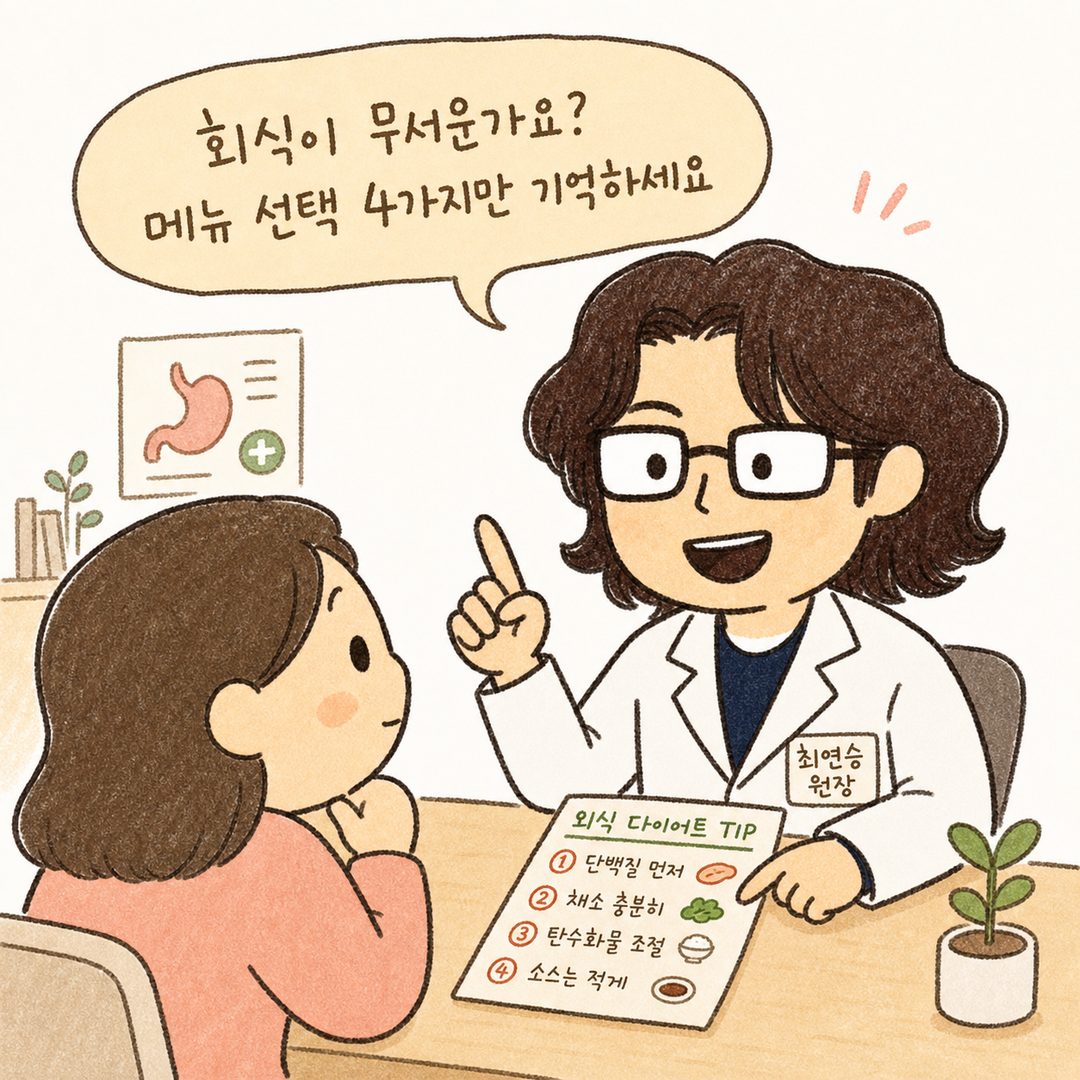
Unexpected business dinners during dieting can be overwhelming. In our clinic, we often hear patients say, 'Doctor, I think I ruined everything with yesterday's meal out.' The issue isn't dining out itself. The real challenges are menu selection and portion control - just these two things. If you know how to manage these variables from the moment you enter the restaurant, you can finish your meal cleanly within 400-700 calories. Today, I'll share four key variables to help you stay on track while dining out, along with practical menu combinations you can use right away.
Check the Cooking Method First: Grilled, Steamed, or Blanched Instead of Fried
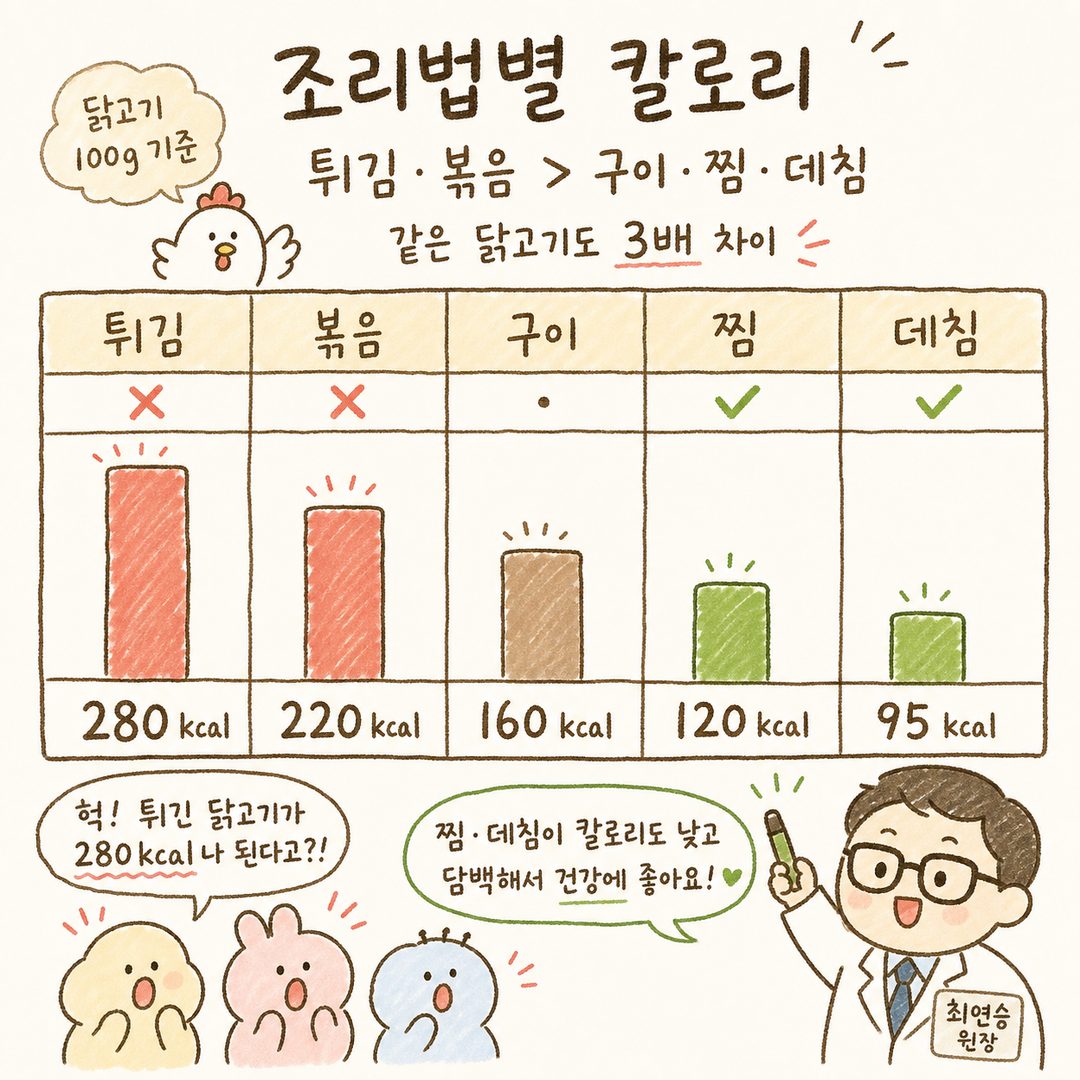
When choosing a menu item, the first thing to consider is the cooking method. Even with the same chicken, fried chicken and grilled chicken have completely different calorie impacts. A weight management guide recommends choosing grilled, steamed, or blanched dishes over fried or stir-fried options - this simple rule makes a big difference. There's a reason shabu-shabu is often recommended for diet dining - the cooking method involves blanching vegetables and lean meat in boiling broth without added oil. Bossam (boiled pork belly) and suyuk (boiled pork slices) are similar - boiled meat has fewer calories than fried options, and eating it with fresh vegetable wraps adds satiety.
I often tell my patients: 'When you open the menu, look for the words "grilled, steamed, boiled, or blanched" first.' Even within the same restaurant, choosing dishes with these words automatically simplifies your decision. Sashimi, rice bowls with raw fish, and grilled fish are also good choices. Seafood provides about 20g of protein per 100g, allowing you to get protein while minimizing fat intake.
Make Lean Protein the Center of Your Meal
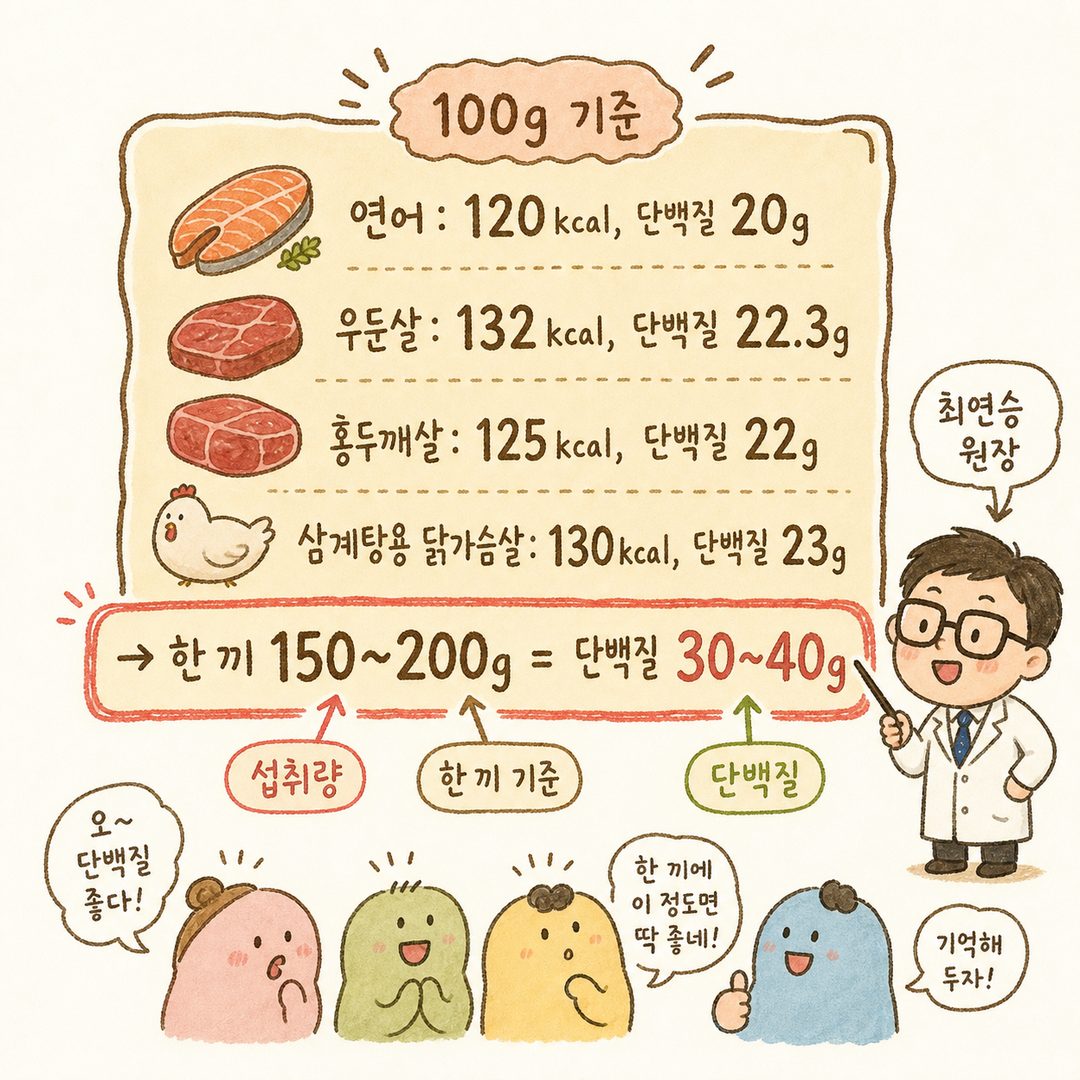
After cooking method, consider the main ingredient. When managing weight, centering your meal around protein is the safest approach. Let's look at the numbers: Salmon contains 120kcal per 100g with 0g carbohydrates and 20g protein. Beef eye round has 132kcal and 22.3g protein per 100g, while pork sirloin has 128kcal and 22.88g protein. These are all in a similar range. Having about 100g of lean meat per meal provides approximately 20g of protein, promoting satiety and preventing muscle loss.
Cut selection also matters. When having bossam or suyuk, choose leaner cuts like front leg or tenderloin over fatty parts. Samgyetang (ginseng chicken soup), seolleongtang (ox bone soup), or bone soup are also good options. Focus on the solid ingredients like chicken, boiled pork, or Korean radish greens rather than the broth for a more balanced protein meal. Choosing dishes where the protein is clearly visible, such as sashimi, steak, or grilled chicken, makes meal planning much simpler.
Vegetables First, Half Portion of Rice or Noodles
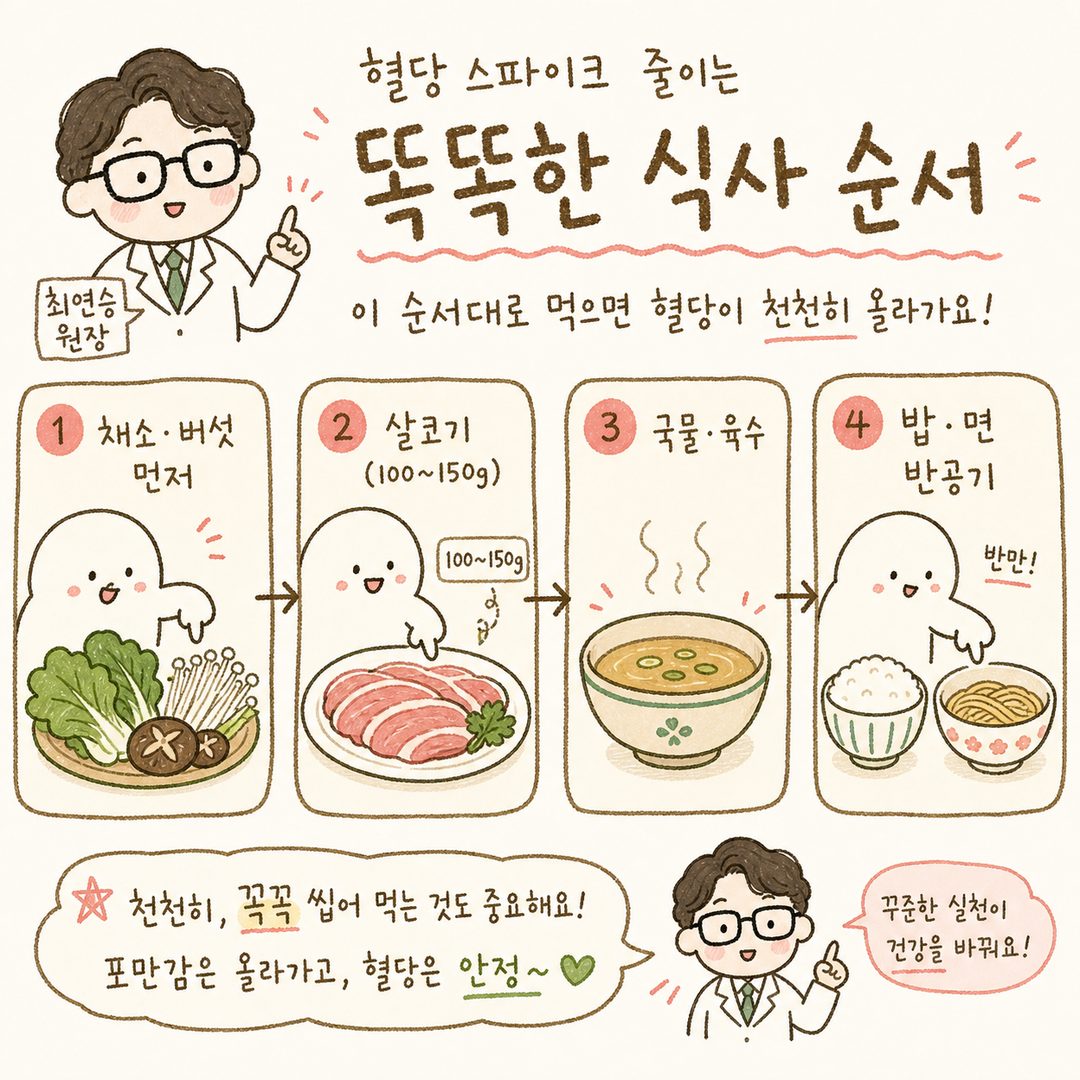
The third variable is side ingredients, particularly the ratio of vegetables to carbohydrates. Even at the same bossam restaurant, your results will vary depending on how you eat. Fill up on lettuce and perilla leaf wraps, and significantly reduce or share carbohydrate sides like cold buckwheat noodles or rice balls. At shabu-shabu, load up on vegetables and mushrooms, and try to skip the noodles, porridge, rice cakes, or dumplings that often come at the end.
Having an eating order helps too. For shabu-shabu, start with vegetables, then meat, and finish with just a small amount of noodles or porridge. When choosing bibimbap or rice wraps at Korean restaurants, the advantage is getting various vegetables at once. Rather than completely avoiding carbohydrates, approach it with the principle of half portions of rice and noodles. With samgyetang, having just half a bowl of rice (about 150kcal) keeps the entire meal around 500-600 calories. For rice bowls with raw fish, reduce the rice to half and increase the proportion of fish and vegetables.
Sauces and Drinks: Reducing Sweetness Makes a Difference
The final variable, often overlooked, is sauces and drinks. No matter how well you choose your meal, high-calorie sauces can undermine your efforts. For shabu-shabu, choose lighter sauce combinations like soy sauce with wasabi instead of sweet options like sesame or sweet chili sauce, and use minimal amounts. With bossam, use shrimp sauce or soy sauce instead of ssamjang (spicy soybean paste) to reduce sodium and sugar intake. For rice bowls with raw fish, use less than half the usual amount of chojang (sweet and sour sauce).
For drinks, stick to water, green tea, or Americano without added sugar. We often hear in the clinic how one casual drink order can significantly increase meal calories. If dessert is served, share it or skip it altogether. For different cuisines, decide on one or two sauces in advance: shrimp sauce/soy sauce for Korean, soy sauce/wasabi for Japanese, olive oil/pepper for Western - this prevents indecision when ordering.
Transform Your Meal: Before and After
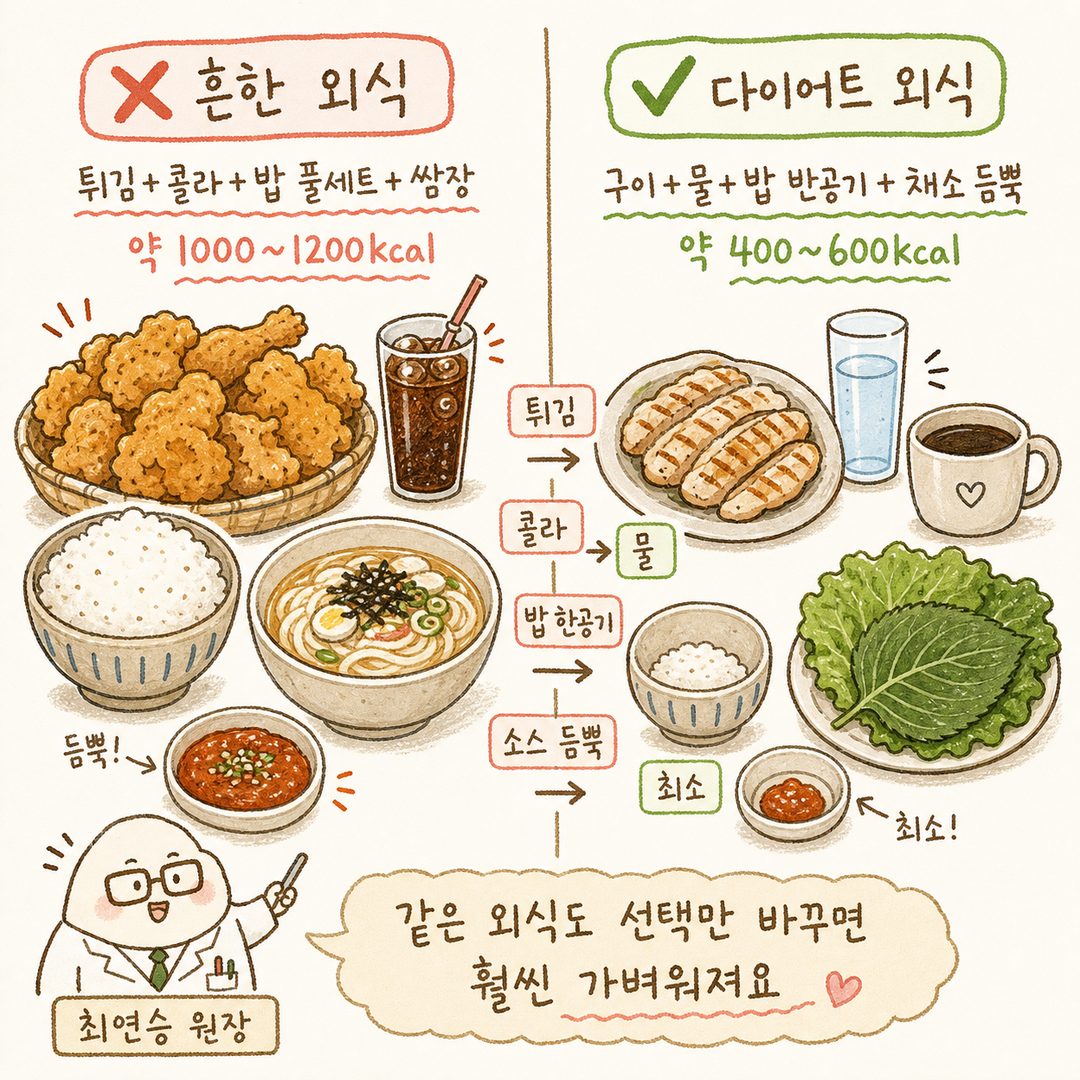
The same restaurant, same menu, but completely different meals depending on the details:
❌ Common Dining Pattern - Fried chicken with cola, finishing a full bowl of rice, bossam with generous ssamjang and a full bowl of cold buckwheat noodles, shabu-shabu ending with noodles and porridge - full course
✅ Diet Dining Pattern - Grilled chicken with sugar-free drinks, half portion of rice, bossam with lettuce/perilla leaf wraps and shrimp sauce/soy sauce, shabu-shabu focusing on vegetables and lean meat while skipping noodles/porridge
Let me recap the key points: Choose grilled/steamed/blanched cooking methods, about 100g of lean protein, plenty of vegetables, half portions of carbohydrates, and minimal sweet sauces. Following these four principles will keep your meal around 400-700 calories, helping you maintain your diet even during business dinners.

3 Recommended Combinations You Can Use Right Away
Here are three frequently recommended combinations you can order immediately at restaurants:
Shabu-shabu Combination - Plenty of vegetables/mushrooms, about 150g lean meat, skip noodles/porridge/rice cakes/dumplings, small amount of soy sauce + wasabi sauce. Finishes around 400-500 calories per meal.
Bossam/Suyuk Combination - Lean cuts like front leg/tenderloin with plenty of lettuce/perilla leaf wraps, shrimp sauce/soy sauce instead of ssamjang, share cold buckwheat noodles or rice balls with others, half portion of rice or less.
Salmon Sashimi/Rice Bowl Combination - 100g salmon (120kcal, 20g protein) with plenty of vegetables. For rice bowls, reduce rice to half portion and use less than half the usual amount of chojang. This low-carb, high-protein combination significantly reduces meal burden.
All three combinations can be applied immediately at restaurants you frequently visit. They reduce decision-making time in front of the menu, which itself greatly helps with diet maintenance.
Dining out isn't something to avoid - it's an occasion that can be incorporated into your daily life once you know how to manage the variables. However, even with perfect meal planning, some people struggle with appetite control or fall into patterns of late-night eating or binge eating due to their constitution. In such cases, Korean medicine approaches that simultaneously address appetite and metabolism can help. Baekrokdam's Baekrok Gambi-jung is a Korean herbal medicine for weight management prescribed according to individual constitution, helping to manage both appetite and metabolism steadily even with frequent dining out. If you feel your diet consistently fails during meals out, I recommend considering a constitutional consultation.