Postpartum Weight Management: 3-6 Month Golden Time

Table of Contents
That feeling of helplessness when standing in front of the mirror for the first time after giving birth is a story I hear often in the clinic. Your baby is lovely, but your body feels unfamiliar, and while you're desperate to return to your old self, many don't know where to begin.
Why Postpartum Weight Management Feels More Difficult
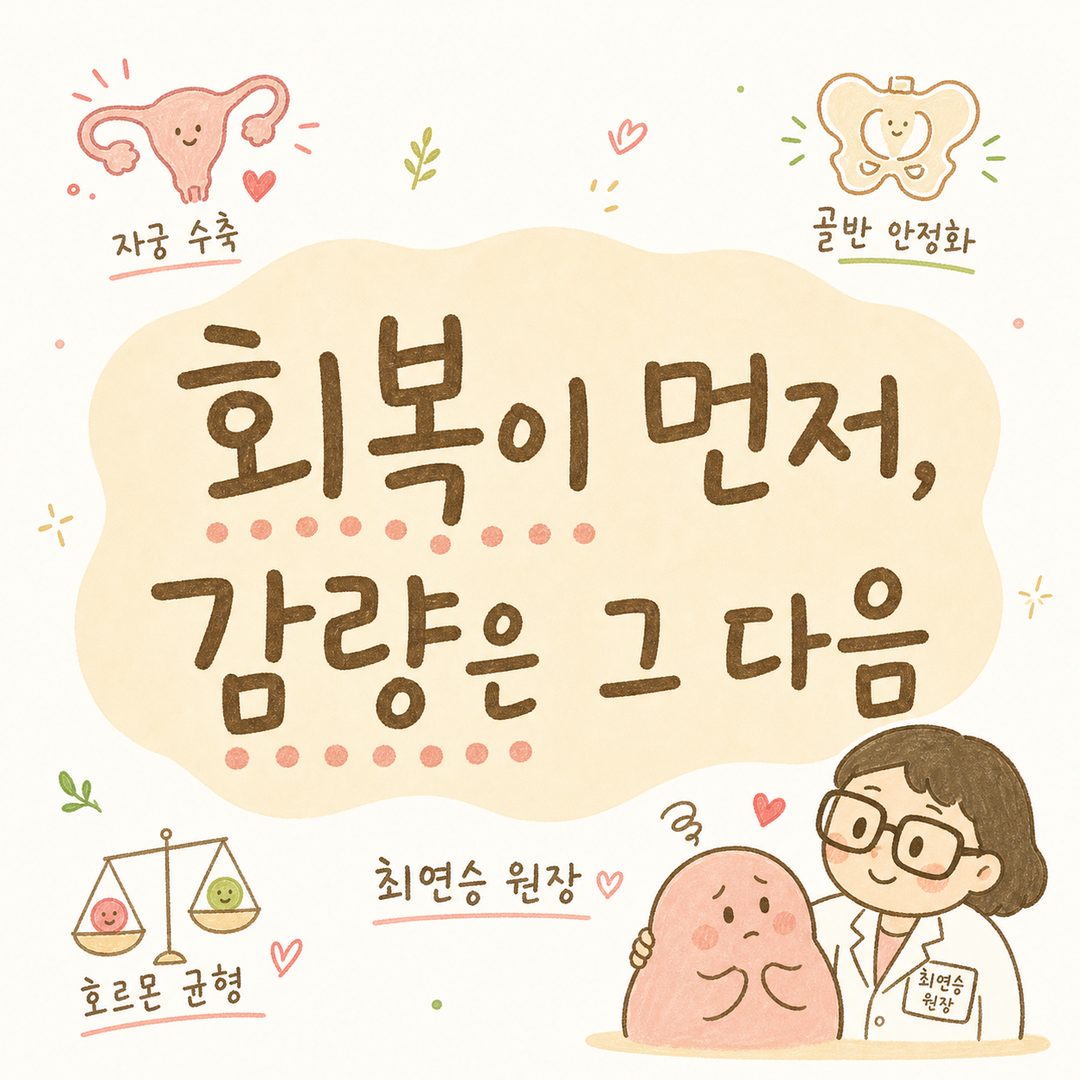
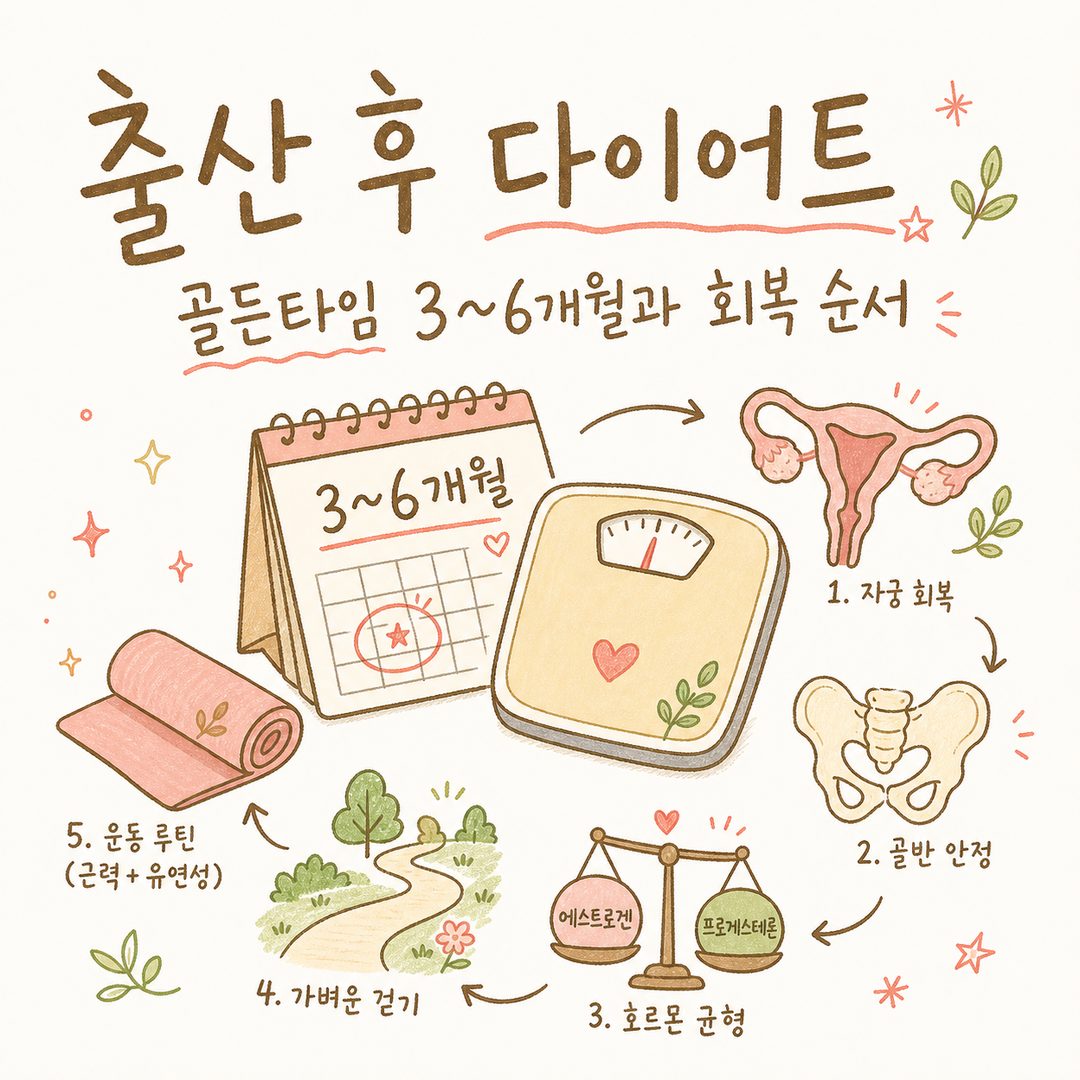
Pregnancy and childbirth are not just about gaining weight. The uterus expands and then contracts, and while the pelvis and muscles recover, hormones and basal metabolism fluctuate significantly. Immediately after birth, your body is a stage for recovery, not a stage for weight management.
According to data from the Ministry of Health and Welfare's 'i-Sarang' portal, a natural weight loss of 5–6 kg occurs between birth and the first 3 weeks due to uterine contractions, diuresis, and sweating. This is the period when the weight of the baby, placenta, and amniotic fluid is removed, and body fluids are regulated. During this time, the numbers on the scale drop without much effort. The real frustration begins after this. The moment natural weight loss stops, you start wondering, "Why am I staying the same?"
Pushing yourself too hard at this stage will only delay recovery. If you strictly restrict your diet or engage in intense exercise before uterine contractions are complete, it can lead to complications such as bleeding, dizziness, and a decrease in breast milk supply.
How Your Body Changes Over Time
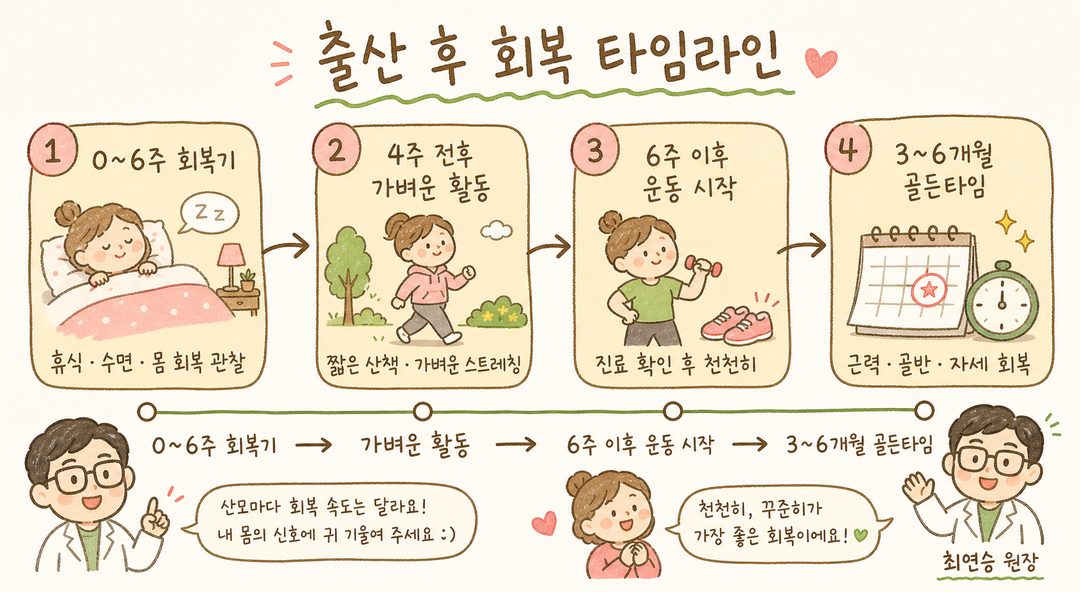
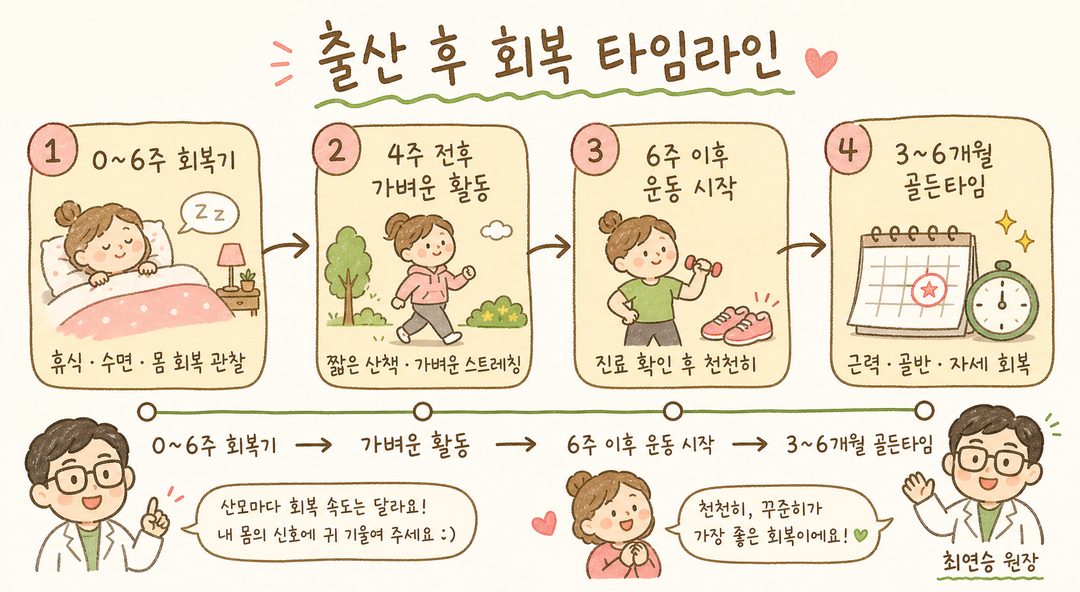
Synthesizing various OB-GYN and Korean medicine data, the timeline for recovery is quite clear:
0–6 Weeks Postpartum (Puerperium): Uterine contraction and pelvic recovery are the priorities. Light walking and pelvic floor (Kegel) exercises are recommended. Strenuous weight management is prohibited.
Around 4 Weeks Postpartum: Depending on the recovery status, some may be able to perform 20–30 minutes of light walking, stretching, or yoga. You must stop immediately if you experience pain or bleeding.
After 6 Weeks Postpartum: After an OB-GYN check-up, you can consider adding light aerobic and light resistance exercises. It is generally advised that light activity is possible after 6 weeks for natural births and 8 weeks for C-sections.
3–6 Months Postpartum (Golden Time): This is the period when body fat is most easily lost due to changes in hormones and metabolism. It is a window where the same amount of effort yields significantly better results.
Ministry of Health and Welfare data also recommends gradually returning to pre-pregnancy weight over a period of 6 months. Letting go of the pressure to finish the process in a month or two will make you feel much lighter mentally.
When to Consider Diet Pills or Herbal Medicine
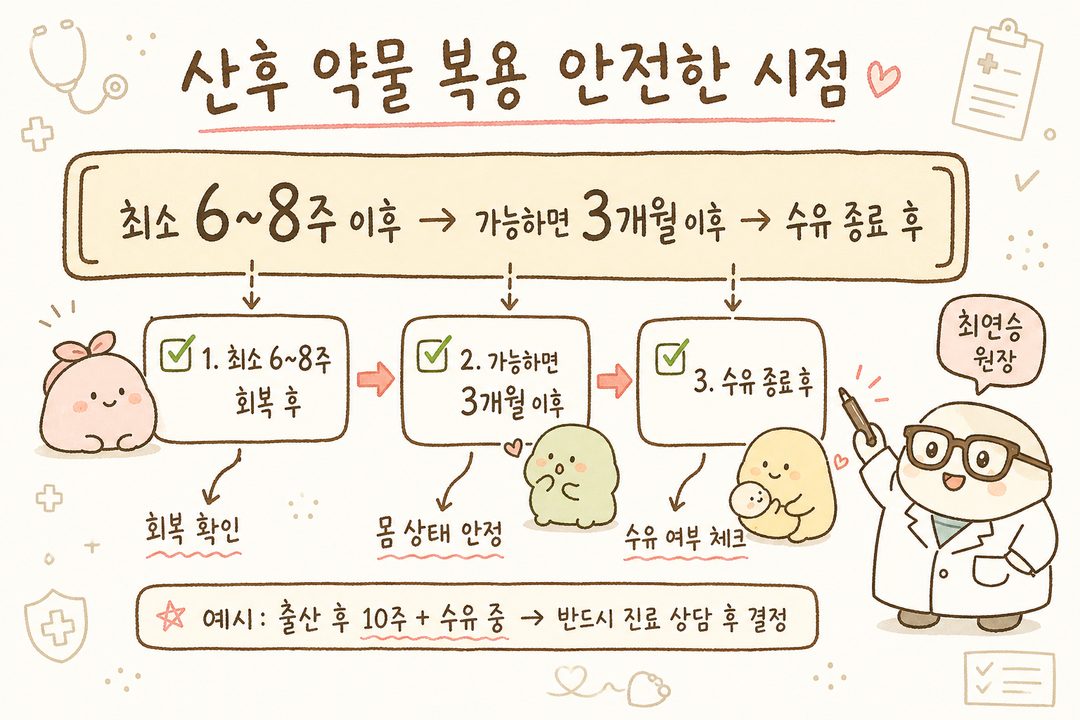
This is the most frequent question I receive in the clinic. Most resources suggest that the minimum recovery period before considering diet pills is 6 to 8 weeks postpartum, with actual intake recommended after 3 to 4 months or after breastfeeding has ended. Since this varies based on the mother's recovery, whether they had a C-section, and their breastfeeding status, a consultation with your primary doctor is essential.
In terms of data, some sources suggest that medication can be considered under professional prescription starting 2 months postpartum, while others suggest 3 to 6 months as a safer starting point. A realistic standard is: at least 6–8 weeks of recovery, preferably after 3 months, and after ending breastfeeding if you are nursing. If you are breastfeeding, you must be even more cautious as medicinal ingredients can affect the baby.
Postpartum Care at Baekrokdam Clinic
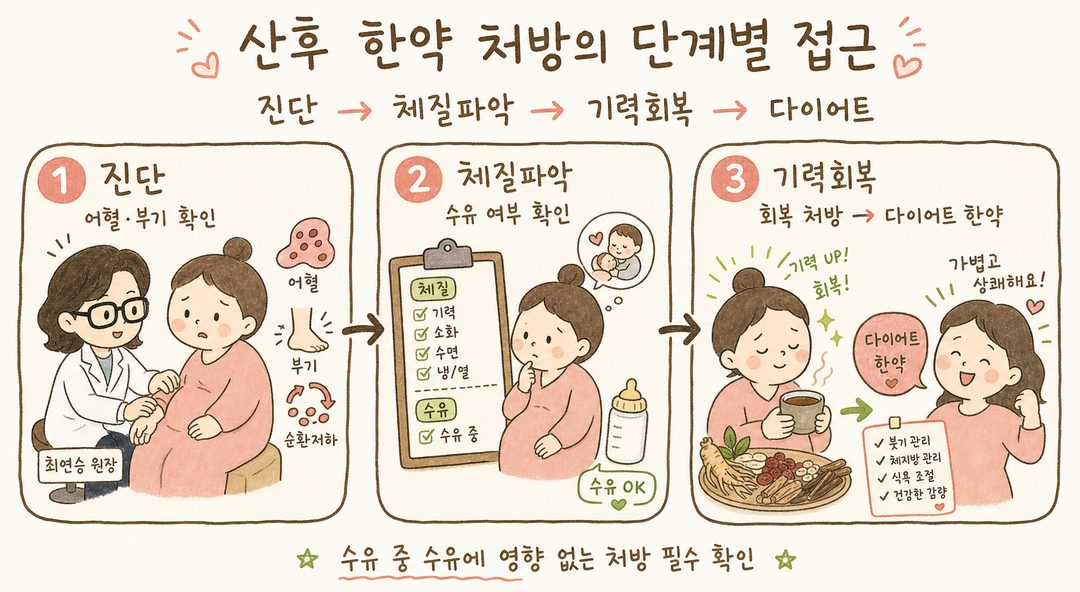
When I recommend postpartum herbal medicine, I first examine whether the patient is in the "recovery phase" or the "management phase." Even for the same postpartum period, the delivery method, breastfeeding status, original constitution, and recovery speed all differ. Some need to focus on clearing edema and blood stasis (Eohyeol) first, while others need restorative tonics to replenish their energy. Diet herbal medicine follows after that.
I provide detailed explanations to breastfeeding mothers regarding whether the prescription is safe for nursing and which specific herbs are included. Postpartum obesity is often not just a matter of calories but is intertwined with Korean medicine patterns such as blood stasis, Qi deficiency, and phlegm-dampness. Therefore, a constitution-based approach determines the results. I have seen too many patients in the clinic who tried to lose weight too quickly, only to suffer from decreased milk supply or severe dizziness. That is why I always say, "Recovery first, weight loss second."
Things You Can Start Doing Today
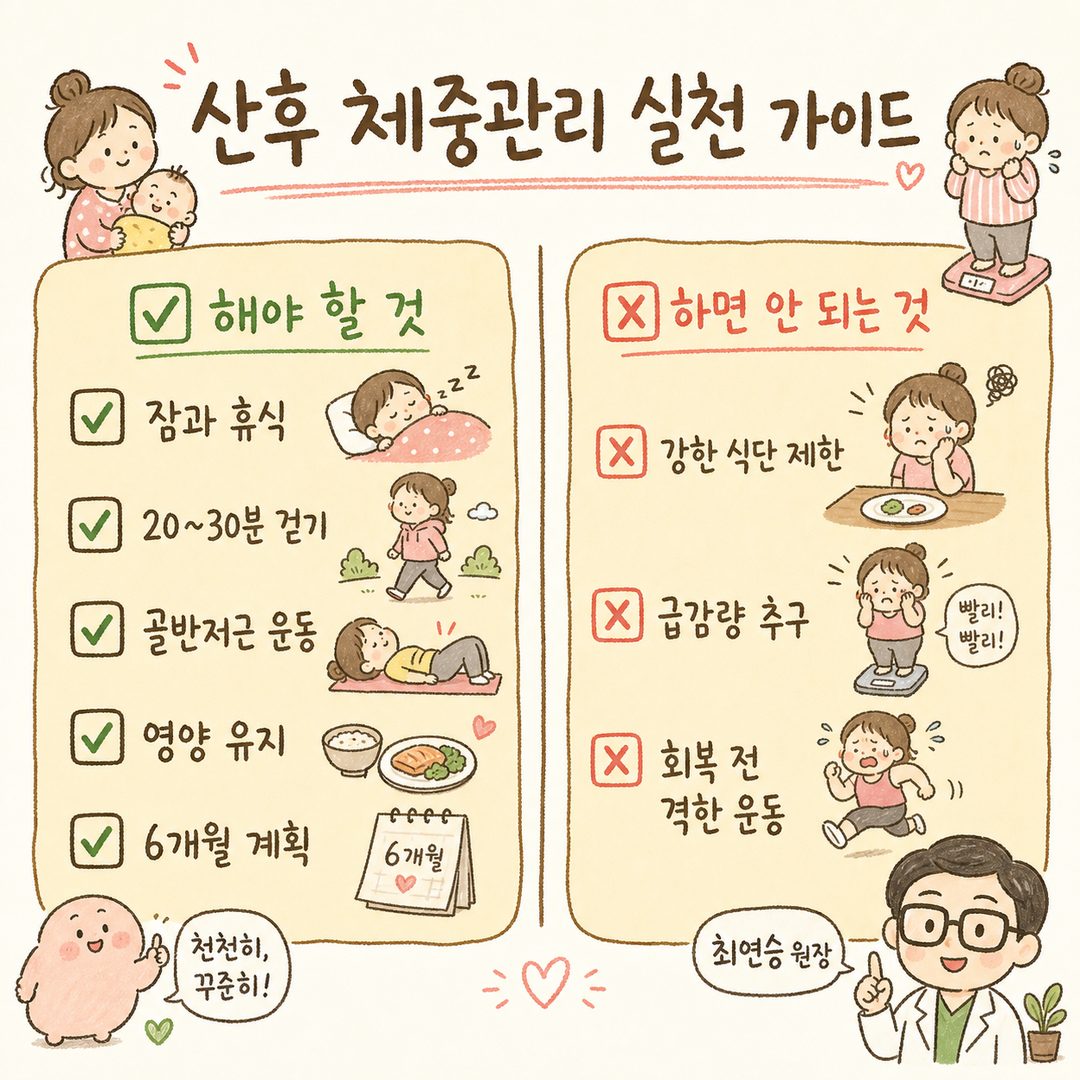
It doesn't have to be grand. Postpartum weight management starts with dietary adjustments, light walking, and—if you are nursing—maintaining breastfeeding, rather than medication.
View sleep and rest as part of your weight management. Lack of sleep disrupts appetite hormones.
Start with 20–30 minutes of light walking daily. It's good to include pelvic floor exercises.
Avoid extreme food restriction. If you are breastfeeding, nutritional deficiencies directly affect the baby.
Avoid rapid weight loss in a short period. Aim to return to your weight slowly over 6 months.
Utilize the 3–6 month golden time to begin more focused diet and exercise adjustments.
Instead of obsessing over the numbers, ask yourself, "Am I less swollen and less tired than last week?" That is the true sign of recovery.
Childbirth is not a single event but a long journey that lasts nearly a year. Pushing too early delays recovery, and waiting too long means missing the golden time. At Baekrokdam, we first assess the mother's recovery stage and constitution, and provide customized prescriptions that even consider breastfeeding status. Don't struggle alone; come and see where your body currently stands in its journey.