Chicken Breast Nurungji Samgyetang: Calories & Portions

Table of Contents
I often meet patients in the clinic who crave a warm bowl of soup while on a diet/weight management program. You want to eat Samgyetang but also want to lose weight, leaving you feeling conflicted.
Why Regular Samgyetang Isn't Ideal for Dieting
You’ve likely experienced feeling unusually bloated or seeing the scale tick up the day after eating a bowl of Samgyetang. Boiling a whole chicken releases fat from between the skin and bones into the broth. With the addition of glutinous rice, the carbohydrate ratio naturally increases.
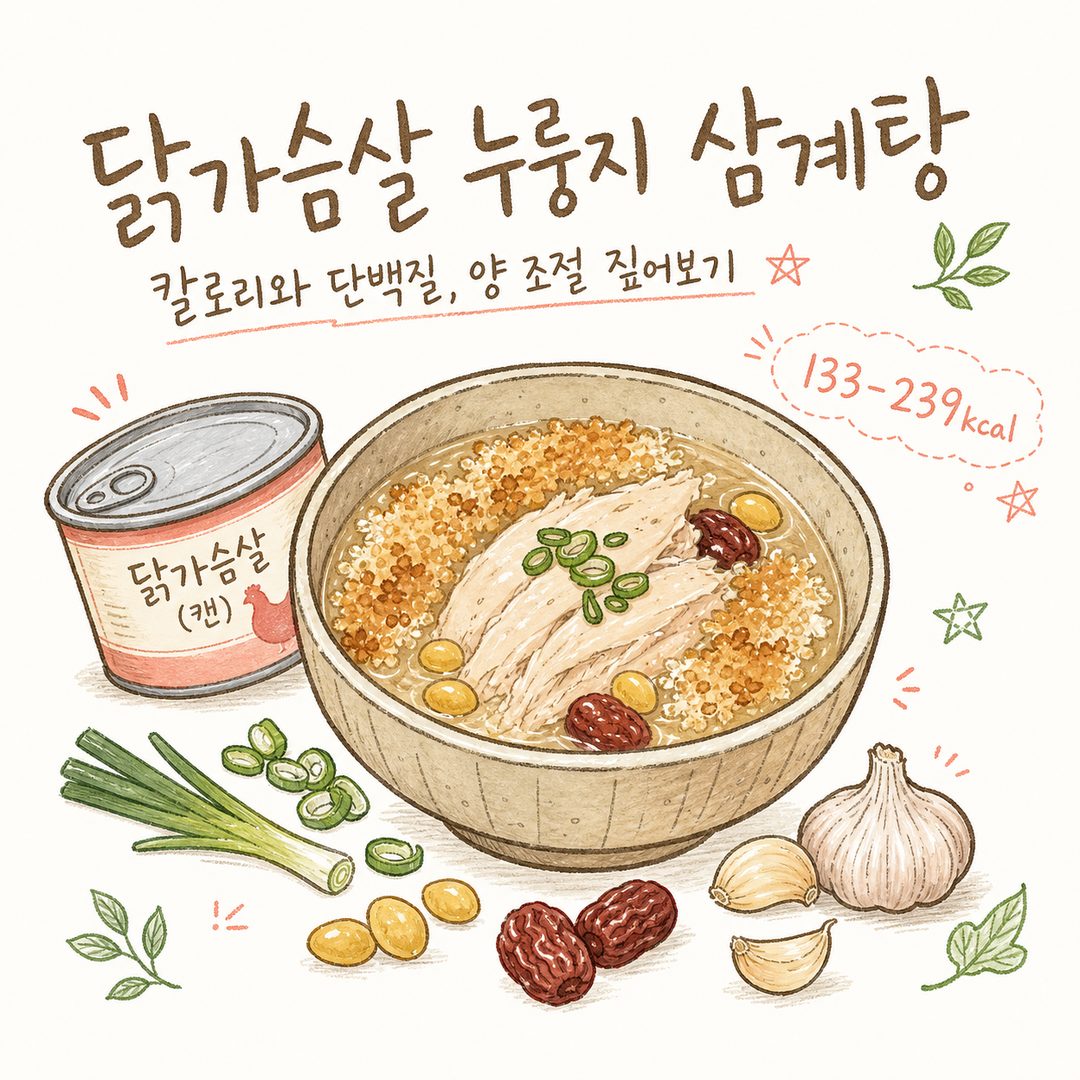
Switching to chicken breast changes the story. The Nurungji Samgyetang recipe introduced by Kuki News uses canned chicken breast and rice boiled together like a scorched rice porridge instead of a whole chicken. This restorative meal reduces fat and calories compared to regular Samgyetang while maintaining the savory flavor and satiety of Nurungji.
According to the Korea Dietetic Association, 100g of raw chicken breast is approximately 109kcal, and calories don't increase significantly when cooked without oil. This means simply using chicken breast instead of a whole roasted chicken significantly reduces the burden.
Nurungji Samgyetang by the Numbers
Understanding the numbers makes portion control much easier. Here is data compiled from nutritional information platforms.
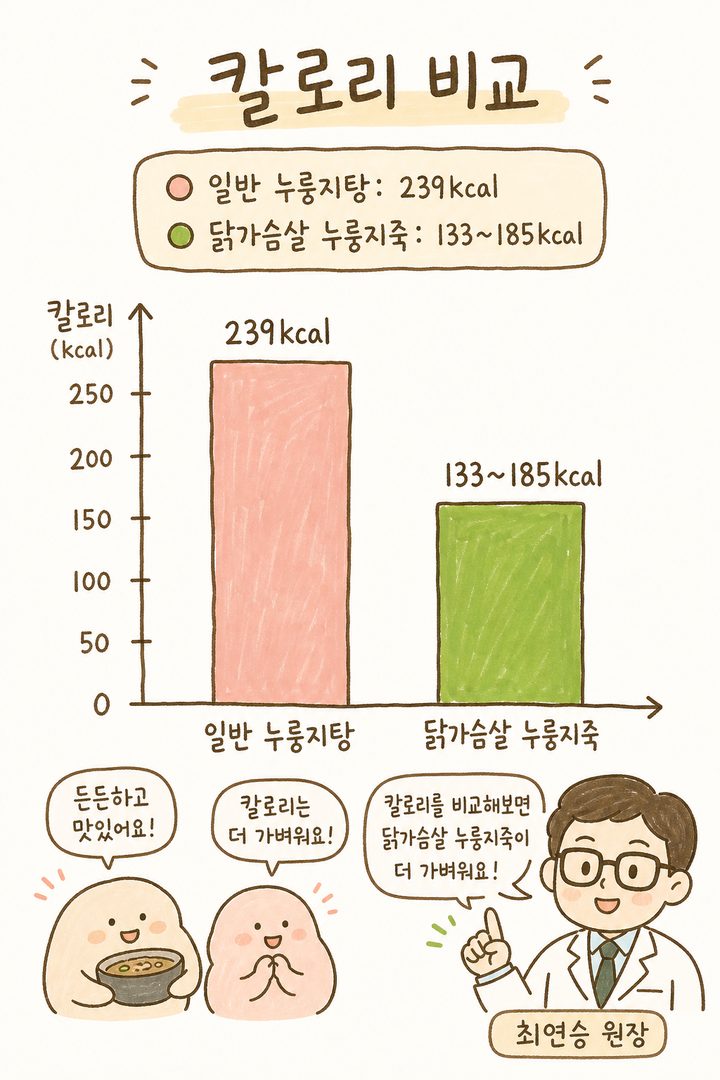
A standard serving of Nurungjitang is about 239kcal.
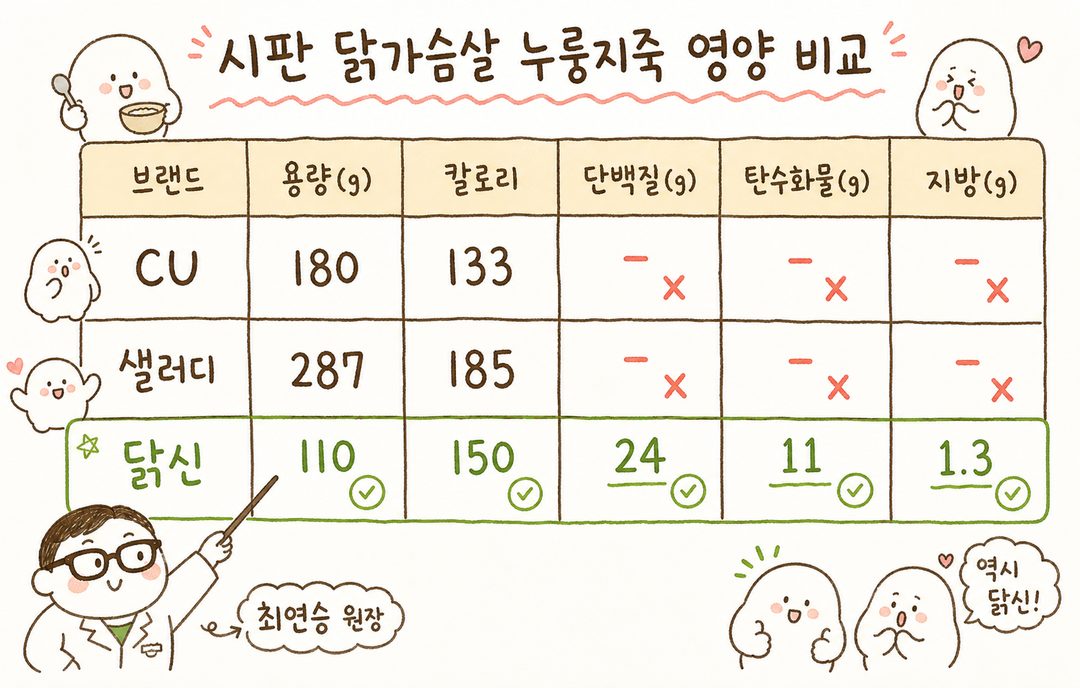
Commercial chicken breast Nurungji porridge products range from 133 to 185kcal.
For example, CU's Chicken Breast Nurungji Porridge (180g) is 133kcal, while Salady's Double Chicken Breast Nurungji Porridge 287g is 185kcal.
Daksin's Chicken Breast Brown Rice Nurungji 110g is labeled as 150kcal with 24g of protein, 11g of carbohydrates, and 1.3g of fat.
The key point to watch is the carbohydrate ratio and sodium rather than just calories. Nutritional sites note that regular Nurungjitang has a high carb ratio, which can quickly raise post-meal blood sugar, and consuming mostly broth leads to high sodium intake. Finishing a whole bowl of broth can easily account for a significant portion of the daily recommended sodium. It's better to gradually reduce the habit of drinking salty broth.
4-Serving Basic Recipe and Portion Sense
Here is the 4-serving recipe introduced by Kuki News.
2 cans of pure chicken breast (approx. 200–240g × 2)
3 bowls of rice (approx. 600g, white rice basis)
12 ginkgo nuts, 8 jujubes (dates), 8 cloves of garlic, 1 green onion
6 cups of water (approx. 1.2L)
The cooking process is simple. After washing the garlic, green onion, jujubes, and ginkgo, place them in a pot with the rice, water, chicken breast, and the liquid from the can. Once it starts boiling, reduce to low heat, cover, and cook thoroughly. When the rice grains soften, simmer for another 10 minutes on low heat to allow the scorched rice (nurungji) to form at the bottom before serving.
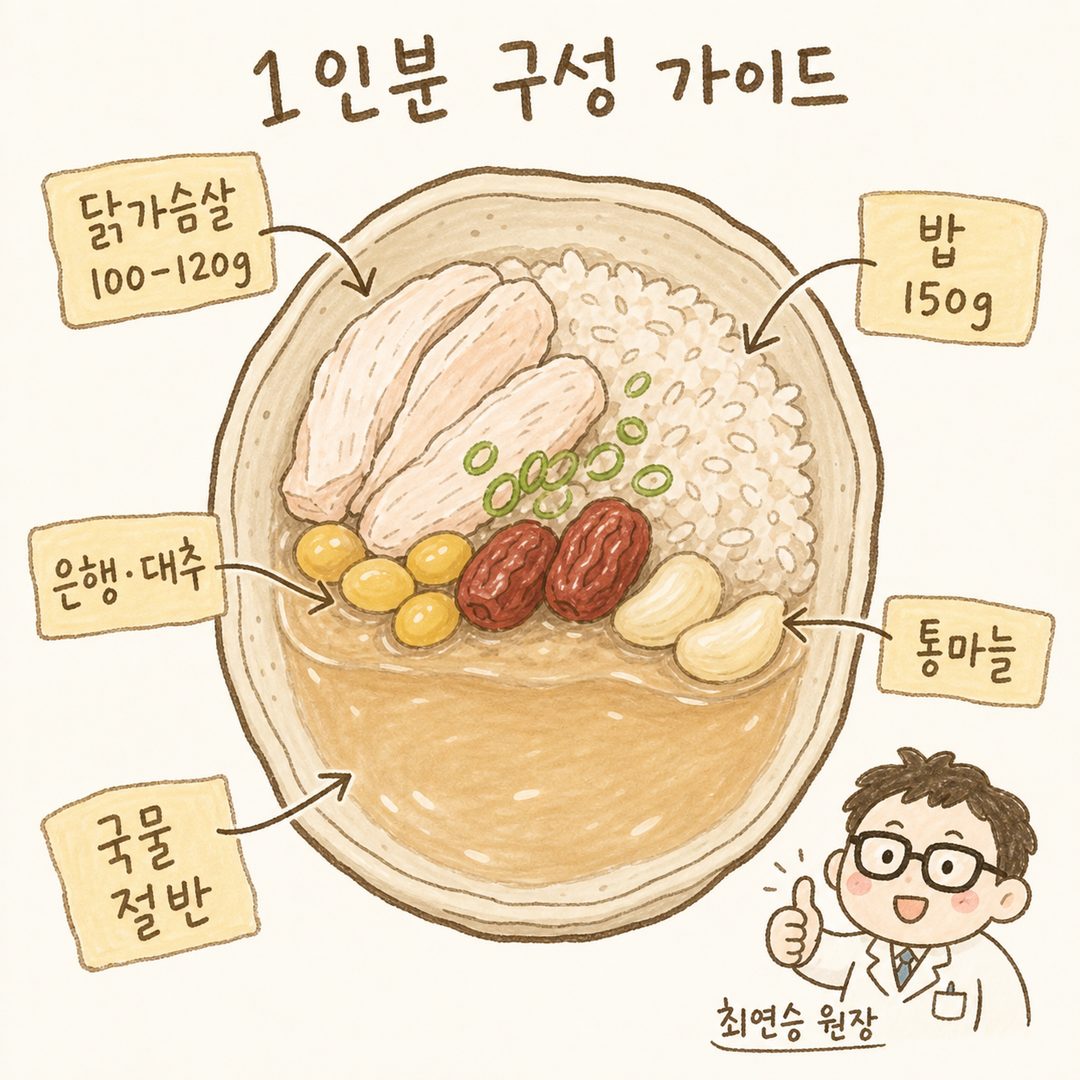
Dividing this amount into four portions provides about 100–120g of chicken breast and 150g of rice per serving. If you are on a diet/weight management program, I recommend dividing it into 5 or 6 portions and filling the remaining hunger with blanched vegetables or kimchi.

Perspective from Baekrokdam Clinic
In Korean medicine, the combination of chicken breast and nurungji is viewed not just as a calorie count, but as a food structure that is easy for the Spleen and Stomach (脾胃) to accept. Chicken has a warm nature, making it less taxing for those with weak digestive energy or those who suffer from cold hands and feet and fatigue. Nurungji is also considered an ingredient that calms the Spleen and Stomach. This is why it is less burdensome even for those with sensitive stomachs who start meals with porridge or thin gruel.
However, there is one thing I must point out. Even with the same menu, reactions vary by constitution. For those with a Damp-Phlegm (濕痰) constitution who tend to swell and feel heavy, consuming a lot of broth often leads to facial swelling the next day. Conversely, for those who are thin and have weak vitality, a warm bowl of Nurungji Samgyetang can help stimulate the appetite. The key is who eats what in what state.
In the clinic, I usually recommend refining how you eat each meal rather than setting a goal to "lose more than 1kg per week." Having faced similar struggles myself, I really want to emphasize this point.
Practical Tips You Can Implement Now
I will share practical tips commonly provided by nutritional information sites in a clinical tone.
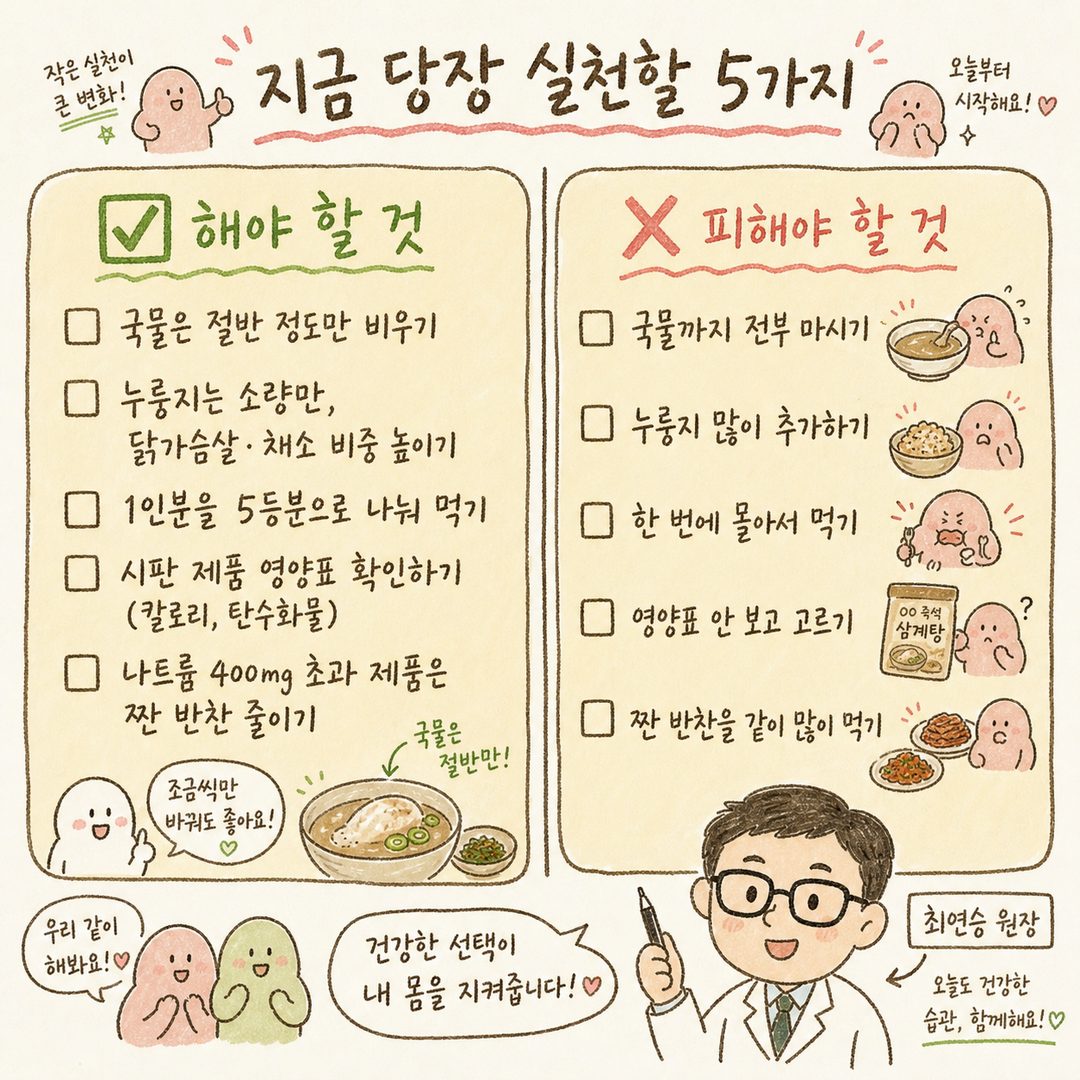
Drink only about half of the broth. Simply changing the habit of finishing salty broth significantly lightens the sodium burden.
Use only a small amount of nurungji and increase the ratio of chicken breast and vegetables. This is the balance point to enhance the protein effect while lowering the carbohydrate burden.
Divide one serving into 5 portions instead of 4 to avoid eating too much at once.
Check the nutrition label when choosing commercial products. Some products are 133kcal for a 180g bag, while others are 185kcal for a 287g bag. Even in the same category, volume and calories vary significantly.
If a product exceeds 400mg of sodium, balance it by reducing the amount of side dishes like kimchi or pickled vegetables.
Following these five tips will help you avoid the common trap of mindlessly eating "because it's chicken breast" and failing to lose weight.
Conclusion
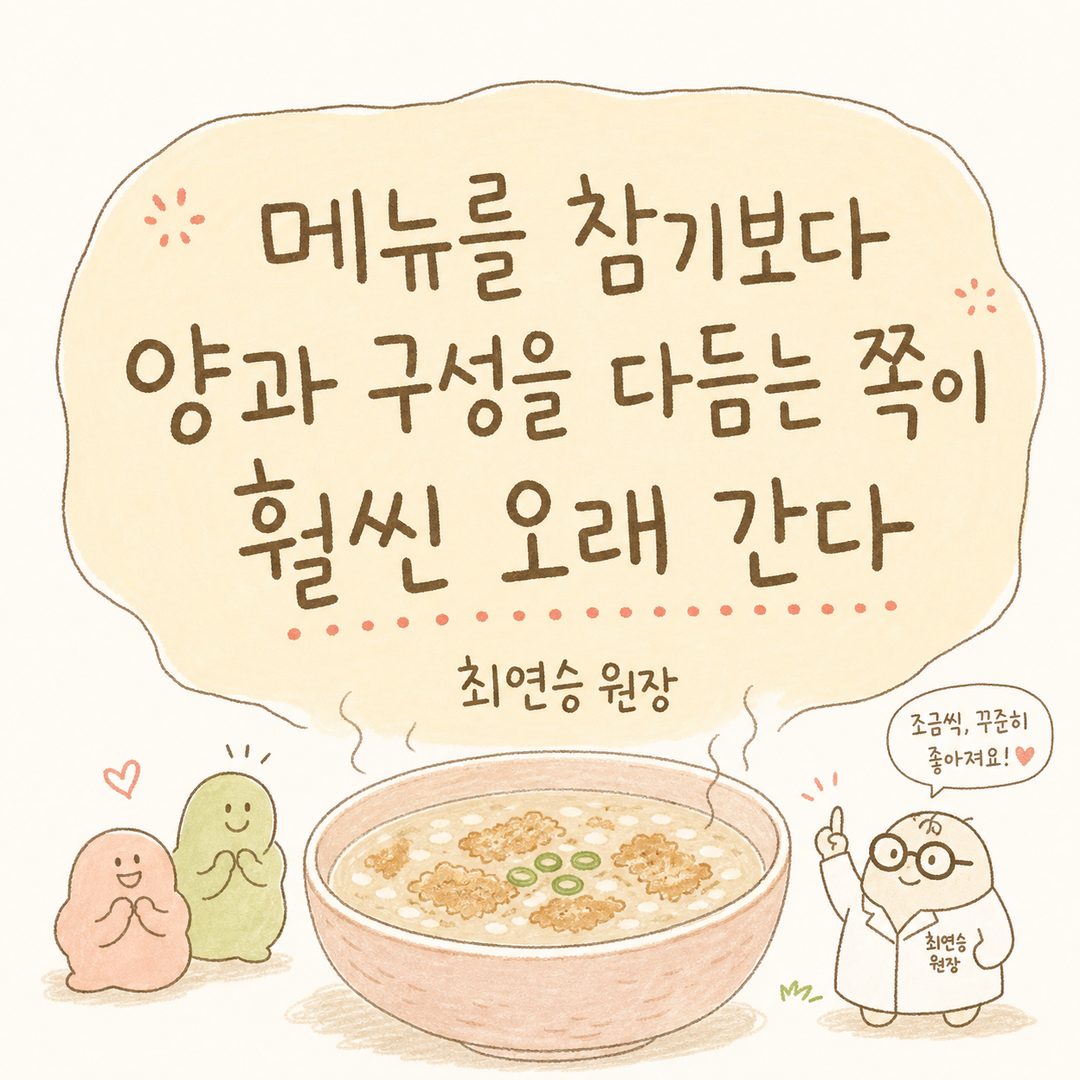
In seasons when you crave a warm bowl of Nurungji Samgyetang, refining the portion and composition is much more sustainable than resisting the menu entirely. By balancing the ratio of chicken breast, nurungji, and vegetables, health restoration and diet/weight management can meet in a single bowl. If your weight doesn't budge despite dietary changes, or if you feel unusually swollen and heavy after eating certain meals, I recommend getting a constitutional diagnosis. At Baekrokdam Clinic, we examine eating habits and constitution alongside Baekrok Gambi-jung, so feel free to start with a consultation about refining your daily meals.