Chicken Breast Cream Soup: Protein, Veggies & Calories

Table of Contents
In the consultation room, many people confess that planning a diet/weight management menu feels overwhelming. Everyone knows chicken breast is beneficial, but eating it boiled every day becomes so dry and tough that most people give up after a few days. I often share these same concerns with my patients. Today, I’ll share a gentler way to enjoy chicken breast—a cream soup recipe—along with insights from a Korean medicine perspective.
Why Eating Chicken Breast Daily is Challenging
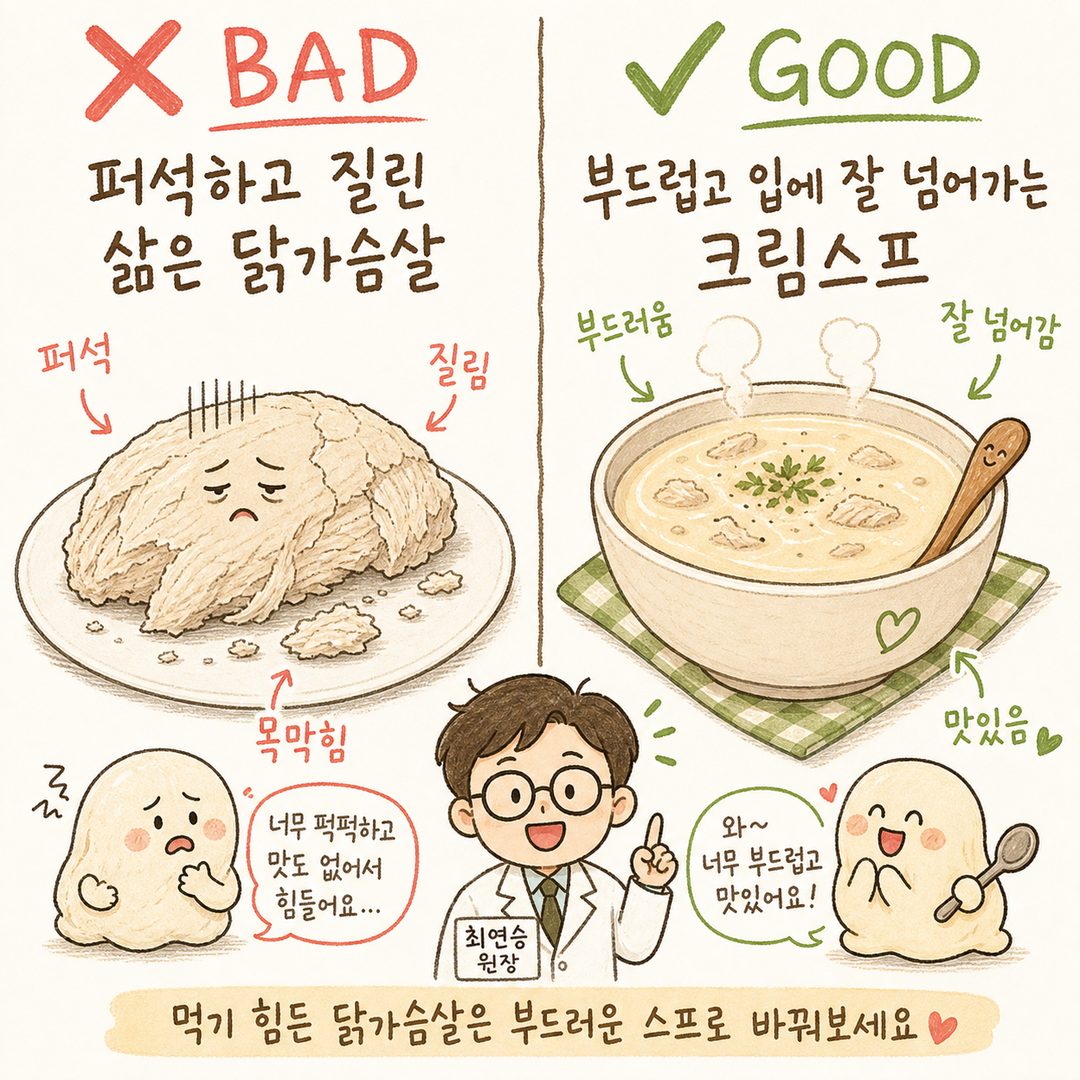
Chicken breast is frequently emphasized in diet/weight management plans because it is low in fat and high in protein density. The problem is that because it lacks fat, prolonged heating causes moisture to escape, making the texture tough. Some recipe guides suggest not boiling chicken breast for too long or adding it back at the very end to cook briefly. Even with the same ingredients, a change in cooking method completely transforms the sensory experience.
Cream soup is a cooking method that gently coats the fibers of the chicken breast with milk and a small amount of fat. It is an excellent way to compensate for the shortcomings of chicken breast. In the clinic, I often advise those who complain that "boiled chicken breast is impossible to swallow" to try changing the form to a cream soup.
Basic Ingredients and Portions (Serves 2)
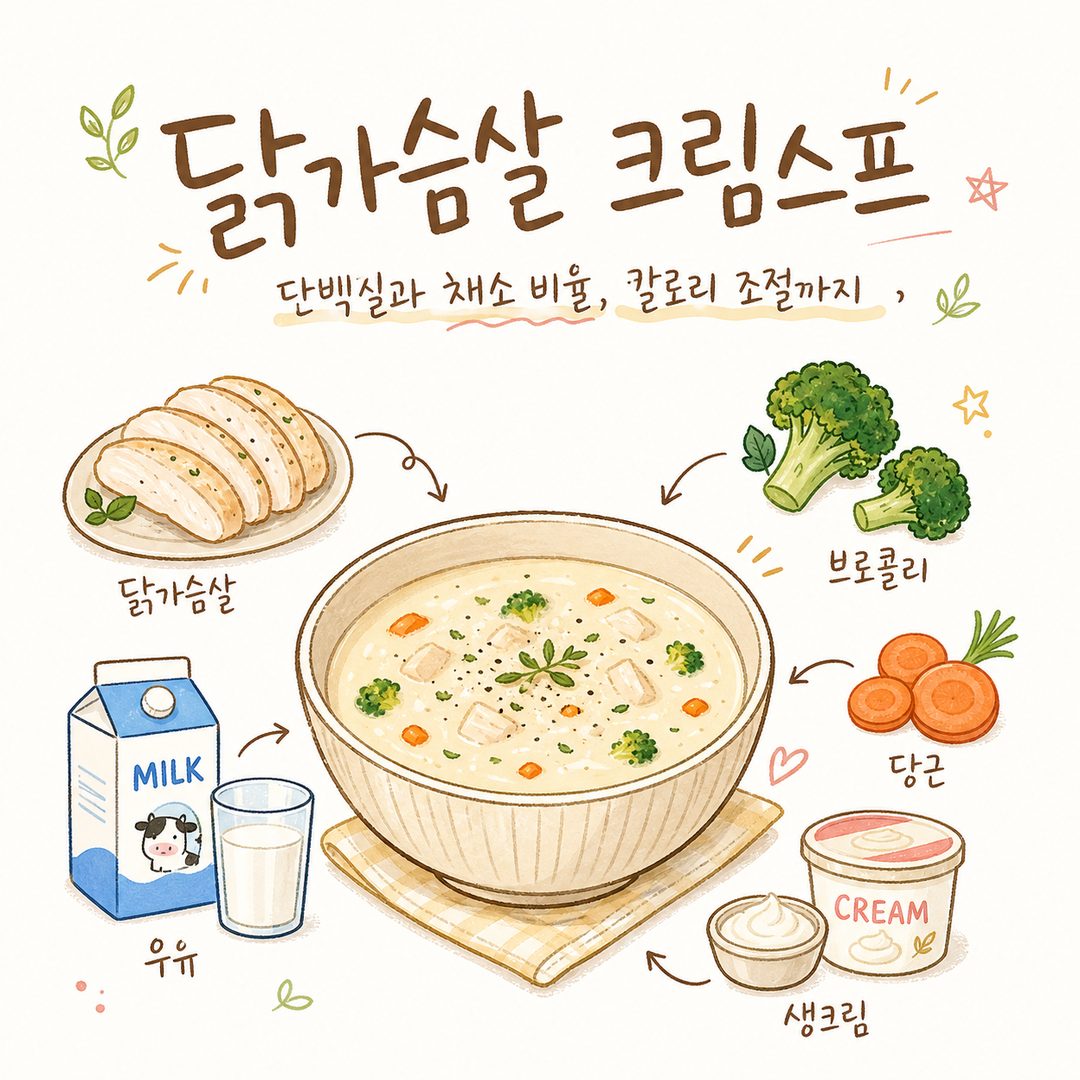
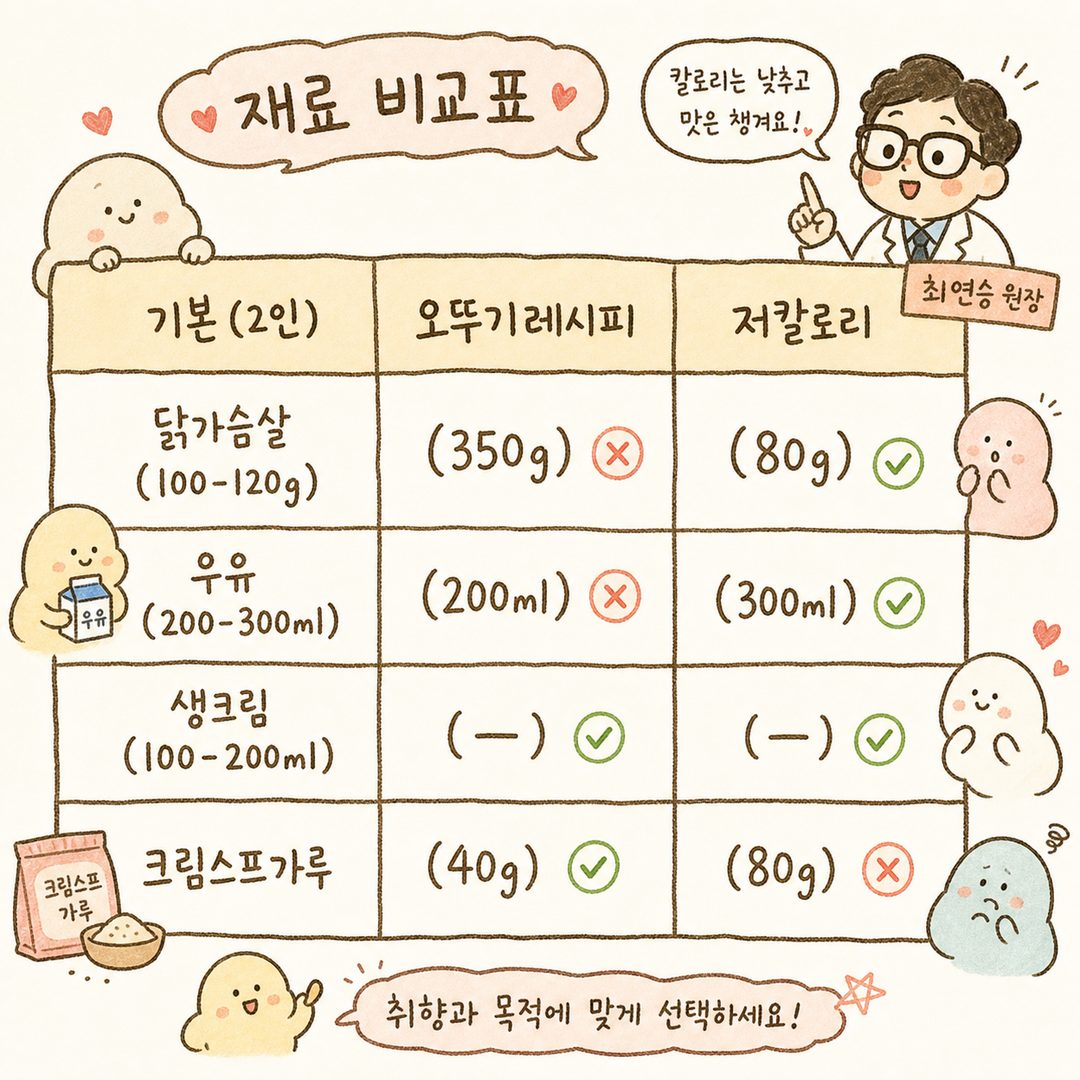
Here is a simple summary of the portions commonly found in various recipes. For chicken breast, one palm-sized piece (approx. 100–120g) is the standard. For accompanying vegetables, 1/2 an onion (approx. 100g), 80g of carrots, 80g of blanched broccoli, and 70g of bell peppers are appropriate.
For the cream base, a common ratio is 200–300ml of milk combined with 100–200ml of heavy cream. If you don't have heavy cream, you can increase the proportion of milk. Use 300–400ml of water or chicken stock to adjust the consistency. To thicken it easily, you can use 2 tablespoons of flour (approx. 20g) or 80g of commercial cream soup powder. 1–2 tablespoons of olive oil or butter is sufficient.
Some methods use 350g of chicken with 40g of cream soup powder, 200ml of milk, and 200ml of water. You can also add a layer of flavor with 1 tablespoon of whole wheat flour and a slice of mozzarella cheese.
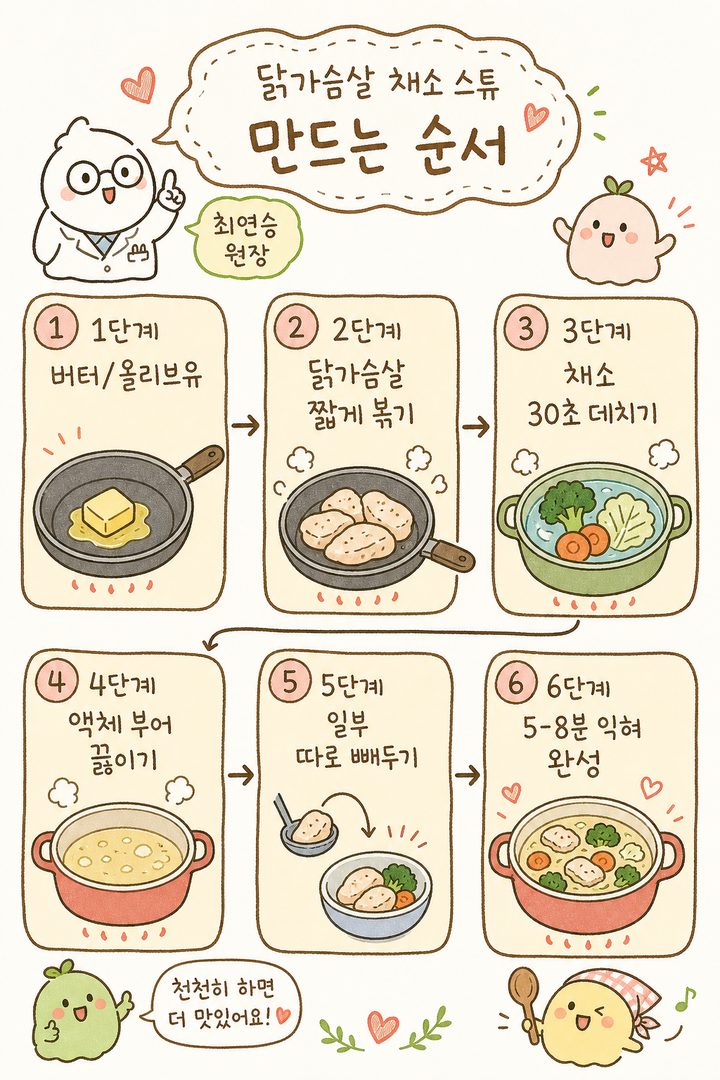
Cooking Steps to Reduce Dryness
Melt 1–2 tablespoons of butter or olive oil in a deep pot. Lightly season bite-sized cubes of chicken breast with salt and pepper, then sauté them briefly over medium heat just until the outside turns white. For the broccoli, blanch it in boiling salted water for about 30 seconds beforehand to preserve its color and texture.
Sauté the vegetables together, then pour in the milk, heavy cream, and water (or chicken stock) and bring to a boil. Instead of boiling the chicken breast for a long time from the start, set some aside and add it back during the final stage, simmering it for only 5–8 minutes to keep the texture much softer.
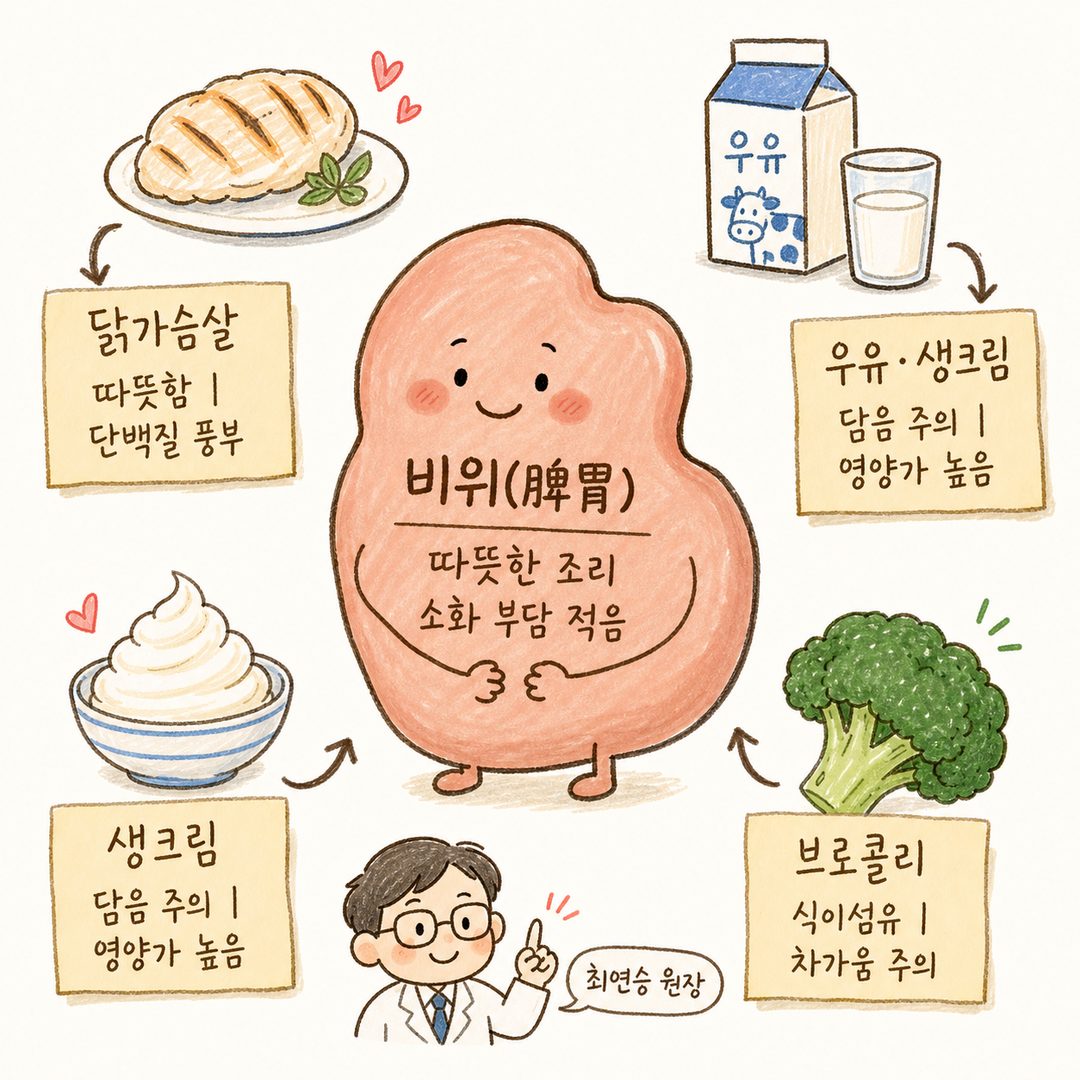
Cream Soup from the Perspective of Baekrokdam
In Korean medicine, we believe that the same food is perceived differently depending on an individual's constitution and digestive power. For those with a weak Spleen and Stomach (脾胃), even high-protein foods can cause prolonged bloating if they are cold or greasy. In the consultation room, I often ask "in what form was it cooked?" rather than just the amount of protein.
Since cream soup is served warm, it places relatively less burden on the Spleen and Stomach. However, milk and heavy cream are considered to have properties that easily create Damyum (痰飮, phlegm-fluid). Therefore, it is important to maintain balance so that cream-based dishes are not repeated too frequently in your overall diet. Enjoying cream soup as a variation about once a week can reduce the fatigue of a chicken breast diet/weight management plan without significantly increasing the burden of Damyum.
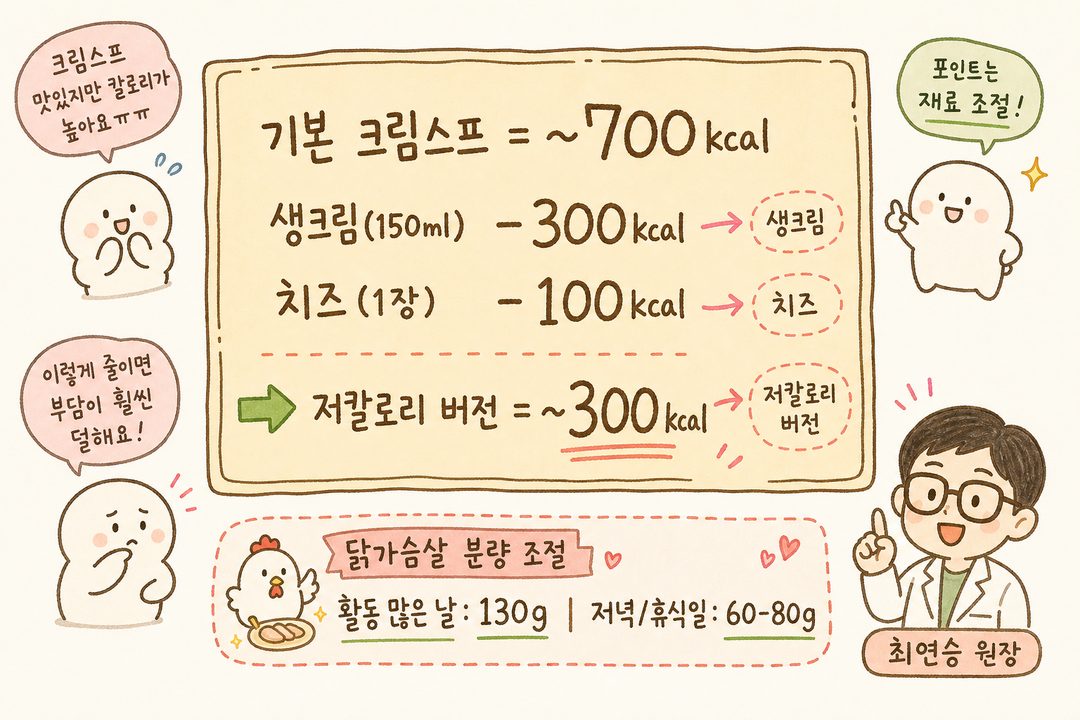
Tips for Controlling Calories and Thickness
The calories in a bowl of cream soup vary significantly depending on the amount of heavy cream and cheese used. Applied menus like chicken breast cream risotto, which use a lot of cheese and cream, can reach nearly 700 kcal per meal. If you are currently on a diet/weight management program, it is less burdensome to omit the heavy cream and increase the milk ratio, or use only a small amount of flour (2 tbsp, approx. 20g) to set the thickness.
When adding cheese, limit it to about one slice, and keep the Parmesan topping within 1 tablespoon to enhance flavor without inflating the calories. Aim for 60–130g of chicken breast per meal; adjust toward 130g on highly active days and keep it lighter at 60–80g for dinner.
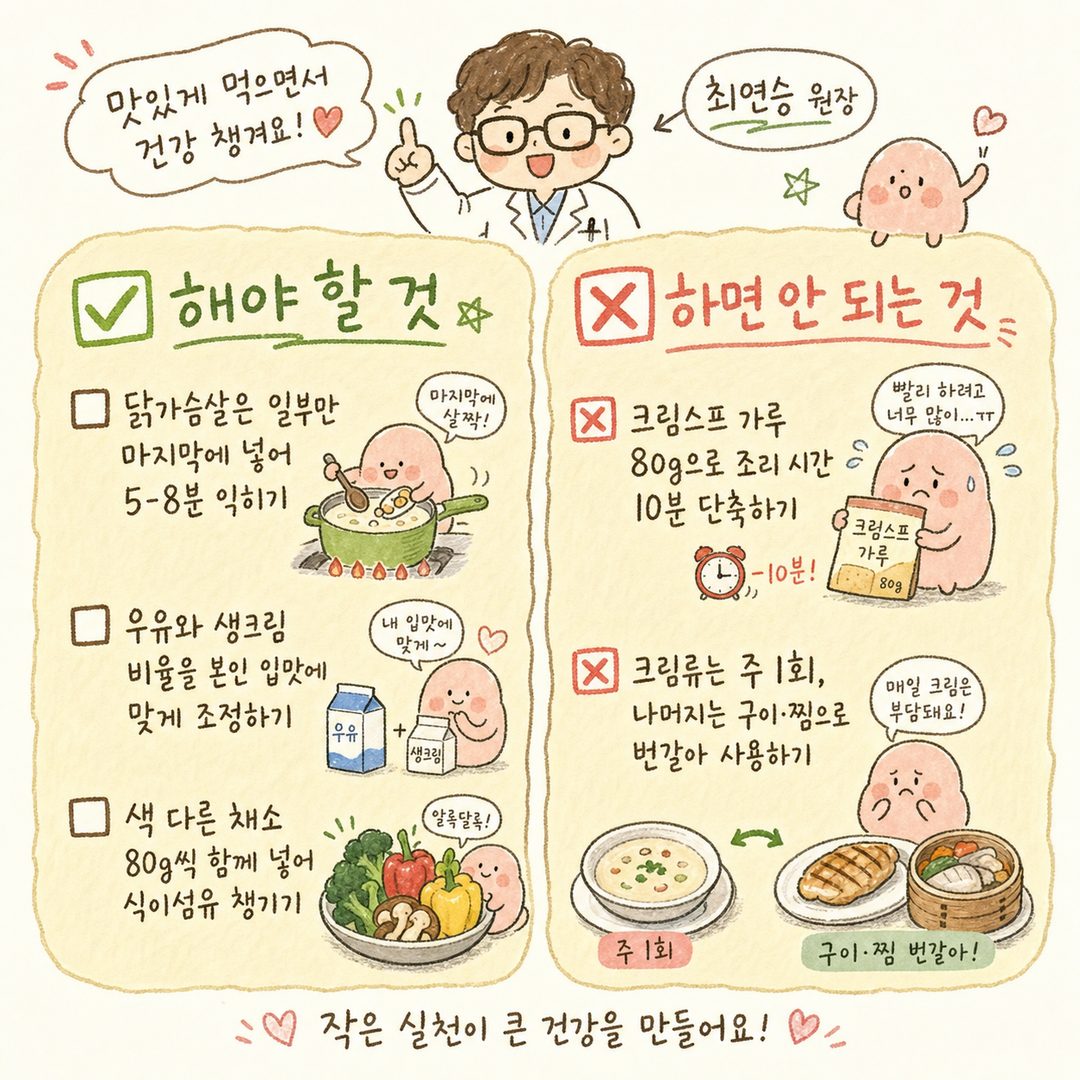
Practical Points to Apply Right Now
Do not boil all the chicken breast at once; add some at the end and cook for only 5–8 minutes.
Adjust the ratio of 200–300ml milk + 100–200ml heavy cream to your taste. If calories are a concern, increase the milk proportion.
Include about 80g of colorful vegetables like broccoli, carrots, and onions to ensure adequate dietary fiber.
Using 80g of cream soup powder can reduce weekday dinner prep time to under 10 minutes.
Limit cream-based dishes to about once a week, alternating with lighter cooking methods like grilling or steaming for other meals.
For those whose chicken breast diet/weight management plans frequently fail, incorporating a menu with a different texture—like cream soup—once a week can be more helpful than repeating the same recipe every day. However, some constitutions may find cream-based foods burdensome. If you would like to check the protein intake pattern and cooking frequency that suits your specific constitution, we can review diet guides and Korean medicine diet programs together during a Baekrok Gambi-jung consultation.