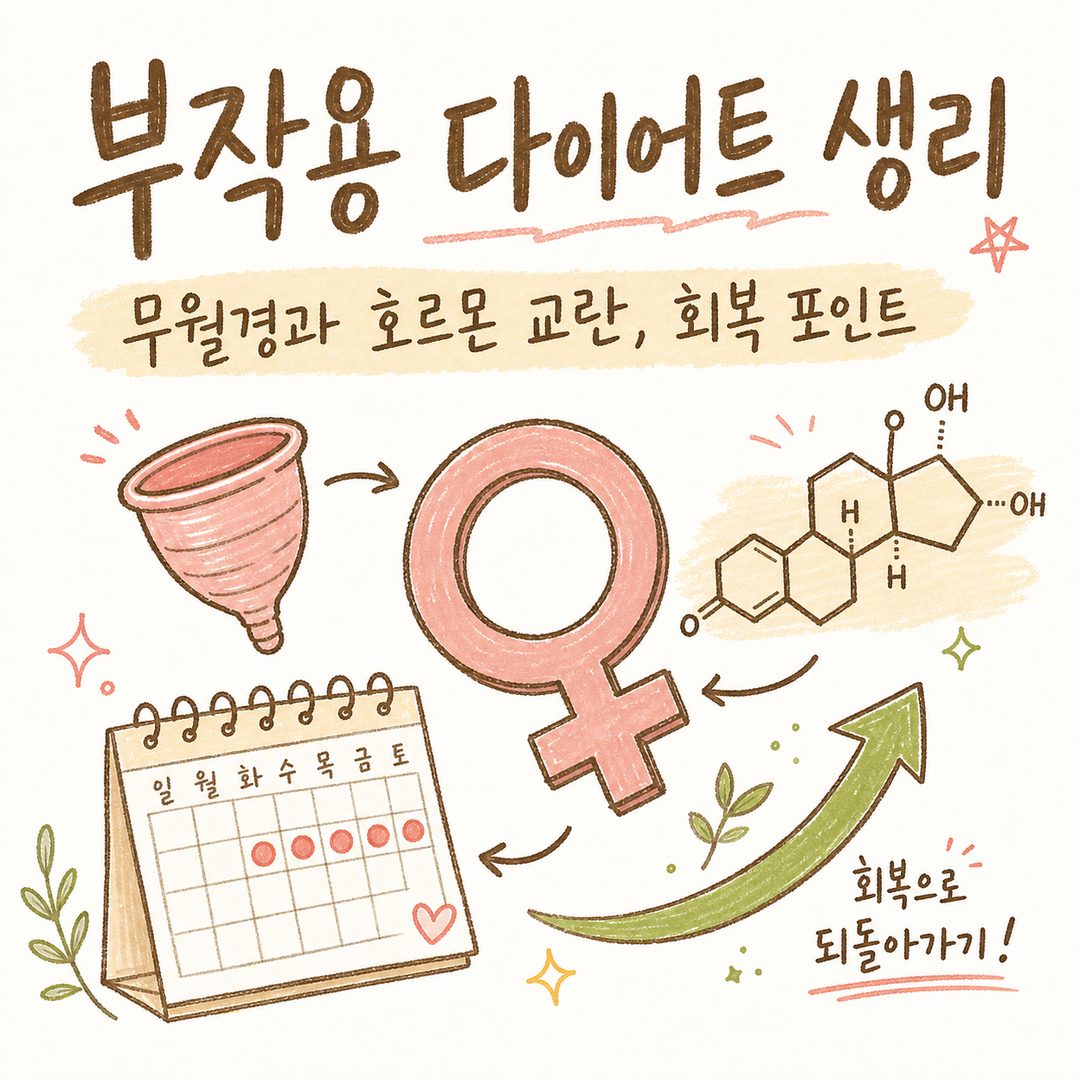
Diet & Menstruation: Amenorrhea and Hormonal Recovery

Table of Contents
Have you ever experienced irregular periods or a significant decrease in flow after starting a diet? While the numbers on the scale may be going down, you might feel uneasy as if your body is flashing a warning signal.
Why Dieting Affects Your Period
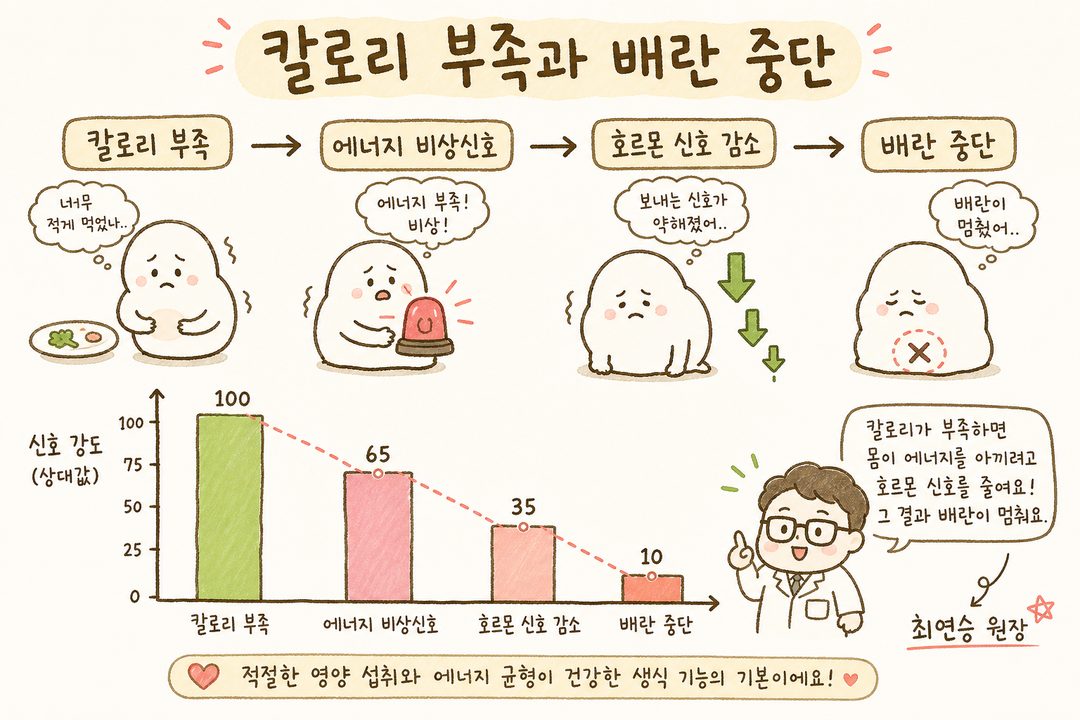
Rapid weight loss is a major side effect that causes menstrual irregularity and amenorrhea. When body fat drops suddenly, the hypothalamus perceives this as an energy deficiency emergency. It then reduces hormonal signals to the ovaries, effectively stopping ovulation. Consequently, it is common for periods to stop or for the cycle to become significantly longer.
When this is combined with fad diets or starvation, the body also lacks iron, B vitamins, and essential fatty acids. Since the "building blocks" for hormones are insufficient, it becomes difficult to maintain the uterine lining, leading to decreased flow, delays, or skipped periods. In the clinic, the patterns of patients who say, "My period stopped after I lost weight," are almost identical. In many cases, they didn't just reduce their meals; they practically stopped eating altogether.
Risks by the Numbers — How Much is Too Much?
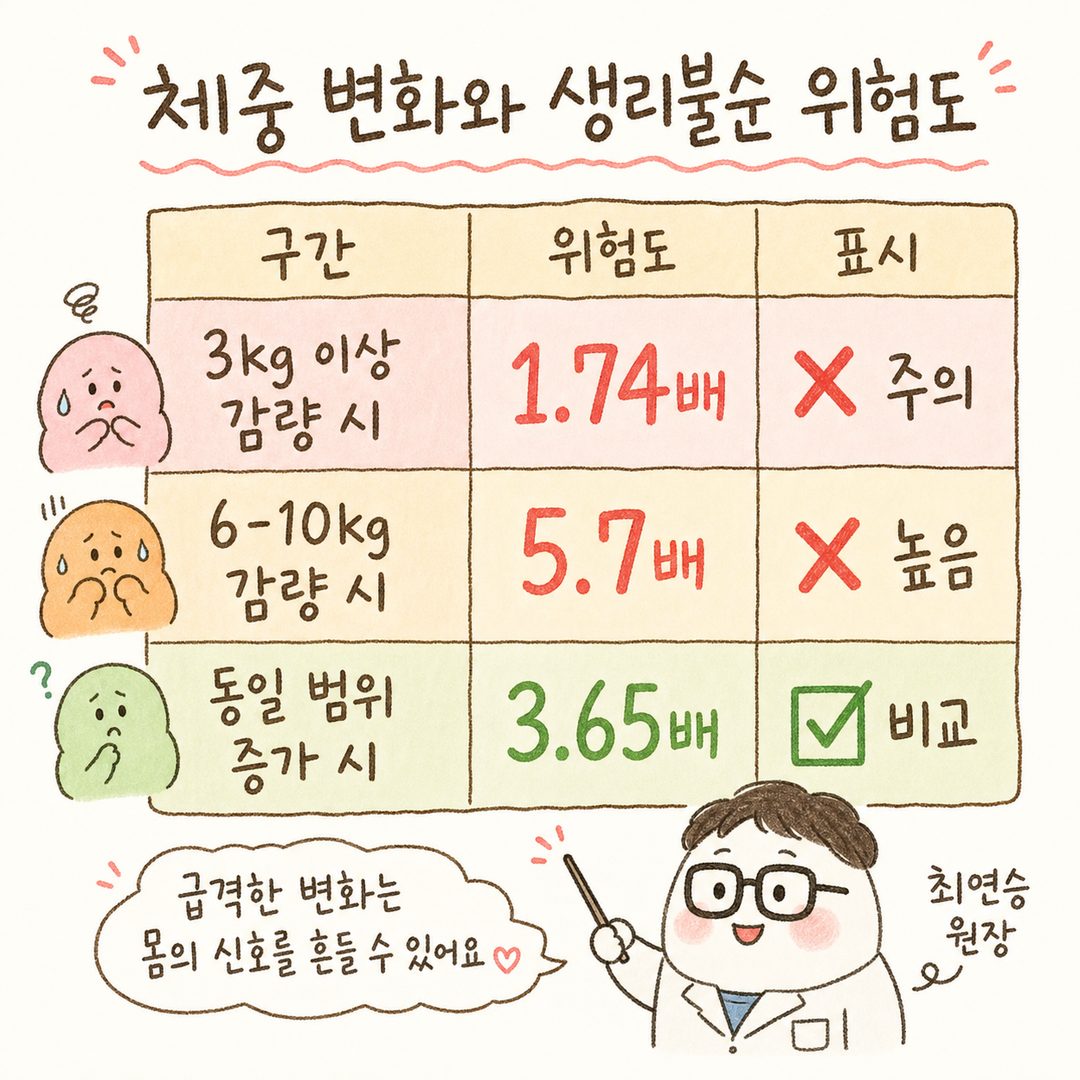
Research data on this is quite clear. For women with obesity, a weight change of over 3kg within a year increases the risk of irregular periods by 1.74x for weight loss and 1.45x for weight gain. The risk jumps sharply as the magnitude of change increases. For a 6–10kg loss, the risk surges to 5.7x, and for a gain in the same range, it rises to 3.65x.
Speed is also crucial. Gynecologists recommend losing within 5% of your body weight per month, which for someone weighing 60kg, means not exceeding 3kg in a month. In my clinic, I suggest a standard of "1kg per month, or 3kg per quarter (3 months)." While it may feel slow, a pace that does not disrupt your menstrual cycle is ultimately the fastest way to reach your goal.
Why Diet Pills Can Be More Dangerous
Many people rely on medication rather than food control, but the side effect data is significant. In a domestic survey, 73% of diet pill users reported experiencing side effects. These included dry mouth (72.0%), palpitations (68.8%), insomnia (66.7%), depressive feelings (25.4%), personality changes (23.8%), and anxiety (22.8%). A figure of 1.6% for suicidal ideation was also reported.
Seoul National University Hospital also lists dry mouth, insomnia, dizziness, palpitations, anxiety, and nervousness as representative side effects of narcotic appetite suppressants. These are accompanied by cardiovascular risks such as high blood pressure, pulmonary arterial hypertension, and tachycardia. For someone whose cycle is already unstable, adding medication causes the hormonal axis to falter twice as hard. They must be used cautiously, for short periods, and only under a doctor's prescription.

Real Cases from the Clinic
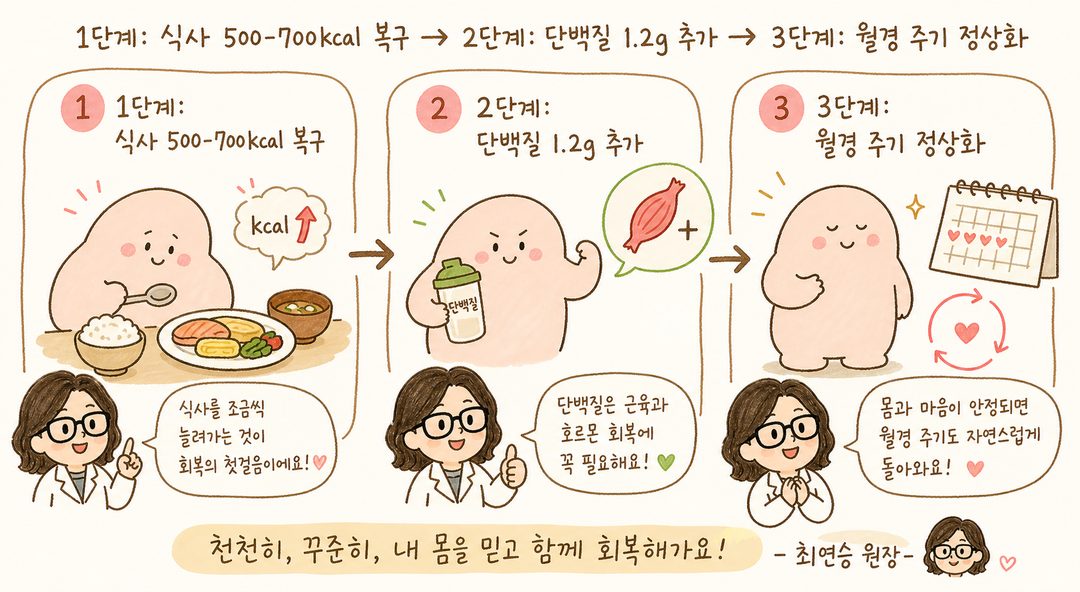
I remember a patient in her 30s who came to me after losing 6kg rapidly. Her period had been absent for two months, and she was experiencing dizziness, constipation, and insomnia all at once. Upon reviewing her food log, her daily intake was around 700kcal with almost no protein. For such patients, I never advise further weight loss. First, we restore the basal metabolism by increasing intake by about 500–700kcal and adjusting protein to 1.0–1.2g per kg of body weight.
Recovery speed varies by individual. In some cases, the cycle returns within 4 weeks, while for others, it may take more than 3 months. If the cycle becomes shorter than 21 days or amenorrhea persists for more than two months, I recommend co-treatment with a gynecologist. This is not a situation that should be managed by Korean medicine alone.
The Korean Medicine Perspective
In Korean medicine, menstrual changes are interpreted as a deficiency of Qi and Blood (氣血), Liver Qi Stagnation (肝鬱), and Spleen-Stomach Weakness (脾胃虛弱). If the Spleen and Stomach are damaged by fasting or extreme dieting, the body's ability to extract Qi and Blood from food weakens, and the Chong and Ren meridians (衝任脈), which are linked to hormones, do not receive nourishment. This is why flow decreases or cycles lengthen.
At Baekrokdam Clinic, we monitor three key signals alongside weight loss: digestion, sleep, and the menstrual cycle. Depending on the individual's constitution, we add prescriptions that tonify the Spleen and Stomach and soothe Liver Qi to ensure the weight loss approach is not too aggressive. The core strategy is not to lose weight as fast as possible, but to lose it while maintaining a normal menstrual cycle.


What You Can Do Right Now
Keep your monthly weight loss within 5% of your current weight, ideally aiming for 0.5–1kg per week.
Do not drop your daily intake too low. Diets under 700kcal are the fastest way to disrupt your hormones.
Consume about 1.2g of protein per kg of body weight. Including one serving of chicken breast, eggs, tofu, or fish in every meal is sufficient.
Consciously add foods rich in iron and B vitamins (spinach, beef, whole grains) to your diet.
Record your menstrual cycle on a calendar. If it becomes shorter than 21 days or stops for more than two months, you must get a medical checkup.
Use appetite suppressants and diet pills only for short periods and under a doctor's prescription. Avoid purchasing them on your own.
Menstruation is the most honest signal your body sends. The speed at which that signal stays healthy is far more important than the speed of the numbers dropping on the scale. If you are currently dieting and your period is delayed or the flow has noticeably decreased, do not just endure it alone. At Baekrokdam Clinic, we examine your constitution and menstrual health together, finding a path to manage weight without strain by tonifying the Spleen and Stomach with Baekrok Gambi-jung. Let's talk comfortably in the clinic.