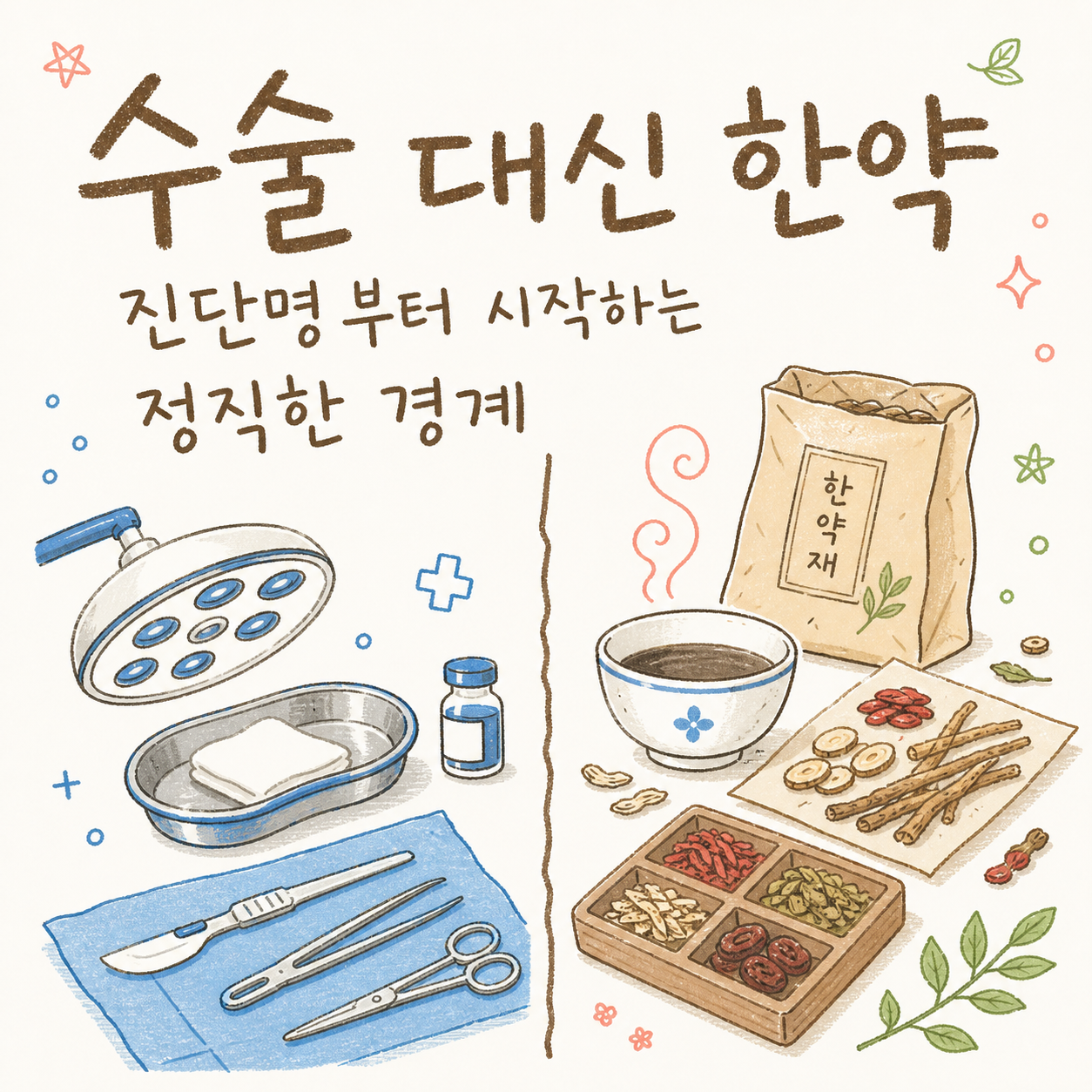
Herbal Medicine vs. Surgery: A Korean Medicine Perspective

Table of Contents
There's one question I hear most frequently in my practice: "Doctor, can we try herbal medicine instead of surgery?" I completely understand this sentiment—no one wants to go under the knife. But when I try to answer, I always pause at the same point. There are conditions that respond well to herbal medicine, and others that simply don't. Today, let's explore that boundary together.
What Exactly Does "Herbal Medicine Instead of Surgery" Mean?
In simple terms, herbal medicine instead of surgery refers to attempting herbal treatment when surgical intervention has been recommended. This doesn't apply to all conditions. While non-surgical approaches including herbal medicine may be considered for conditions amenable to conservative treatment, they cannot replace clear surgical indications. To put it simply: "While it may help alleviate some symptoms, it cannot universally replace surgery itself" is the most honest definition.

How Did This Expression Become Commonplace?
Several factors contributed to this phrase becoming widespread in Korean society. In Korean medicine practice, herbal medicine has long been used for post-surgical recovery, swelling, pain, and blood stasis and edema reduction. While it doesn't replace the surgeon's knife, herbal medicine has played a role in preparing and recovering the body around surgery. The phrase "herbal treatment instead of surgery" gained traction through medical advertisements and patient testimonials, especially for common conditions like herniated discs. However, it's important to note that most of these claims focus on inflammation and pain relief and absorption promotion as supplementary goals.
Key Checklist: Herbal Medicine or Surgery?
In my practice, I always review these key points with patients. Think of it as a self-assessment:
Does the diagnosis meet surgical indications? — For tumors, organ perforation, uncontrolled bleeding, or progressive paralysis, relying solely on herbal medicine is challenging.
Is it within the scope of conservative treatment? — Conditions like herniated discs, chronic pain, or post-surgical recovery support may benefit from gradual improvement.
What medications are you currently taking? — Special attention is needed for anticoagulants, antiplatelet drugs, diabetes medications, and immunosuppressants when combined with herbal medicine.
Have you checked liver function and bleeding risk? — Especially important around surgical periods.
Is there a risk of disease progression during delay? — Some conditions improve with time, while others worsen.
Only after addressing these five points can we begin discussing herbal medicine.
Addressing Common Misconceptions
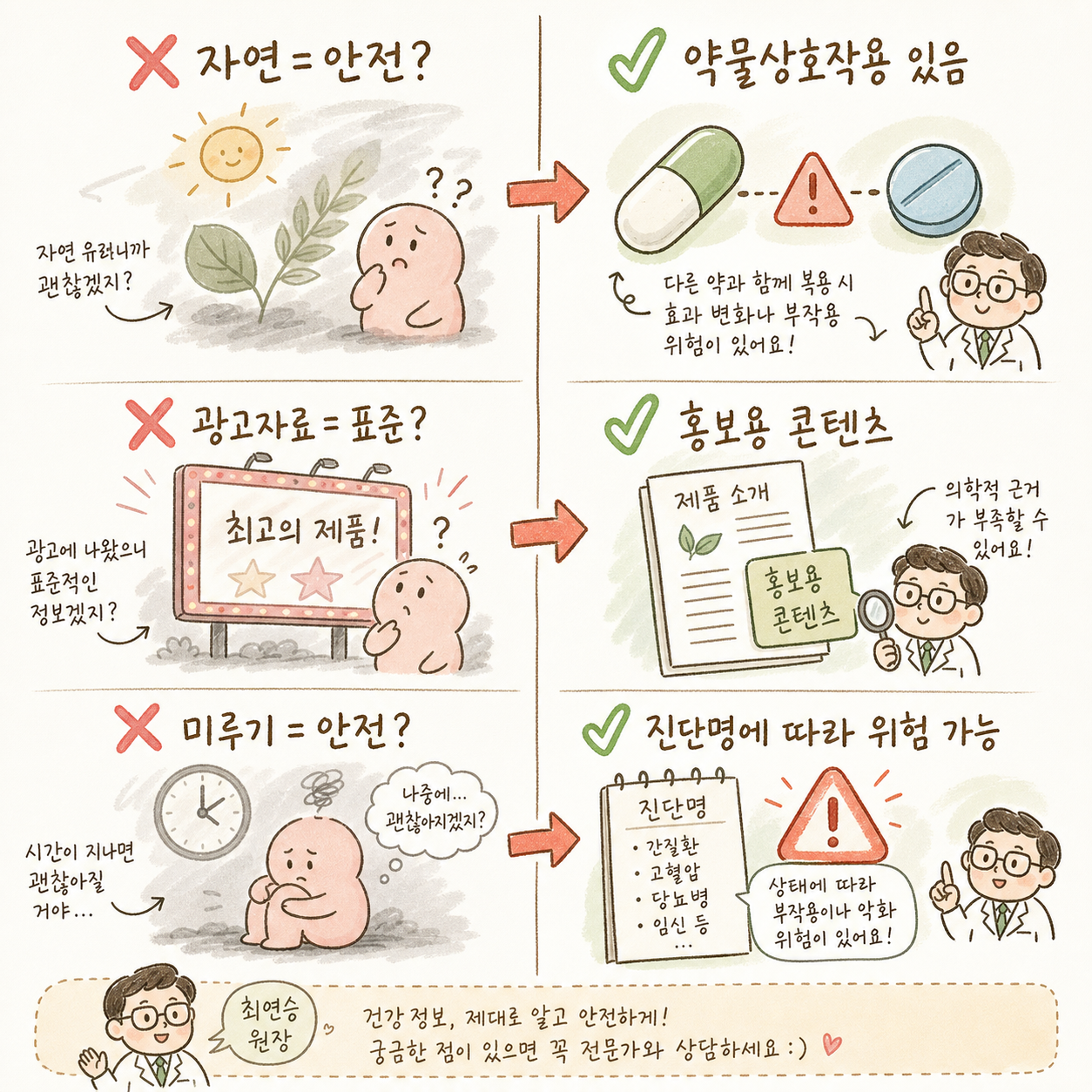
The most frequent misconception is that "herbal medicine is natural, therefore always safer than surgery." Natural origin and safety are separate matters. Herbal medicine can cause drug interactions and burden liver function. The second misconception is that "if it says 'herbal medicine instead of surgery' in Korean medicine materials, it's a verified standard treatment." Many such materials are promotional content and cannot be considered evidence-based alternatives to surgery. The third is the decision to "delay surgery and try herbal medicine first"—depending on the diagnosis and severity, this delay could reduce recovery potential. The diagnosis is always the starting point.
From a Weight Management Perspective
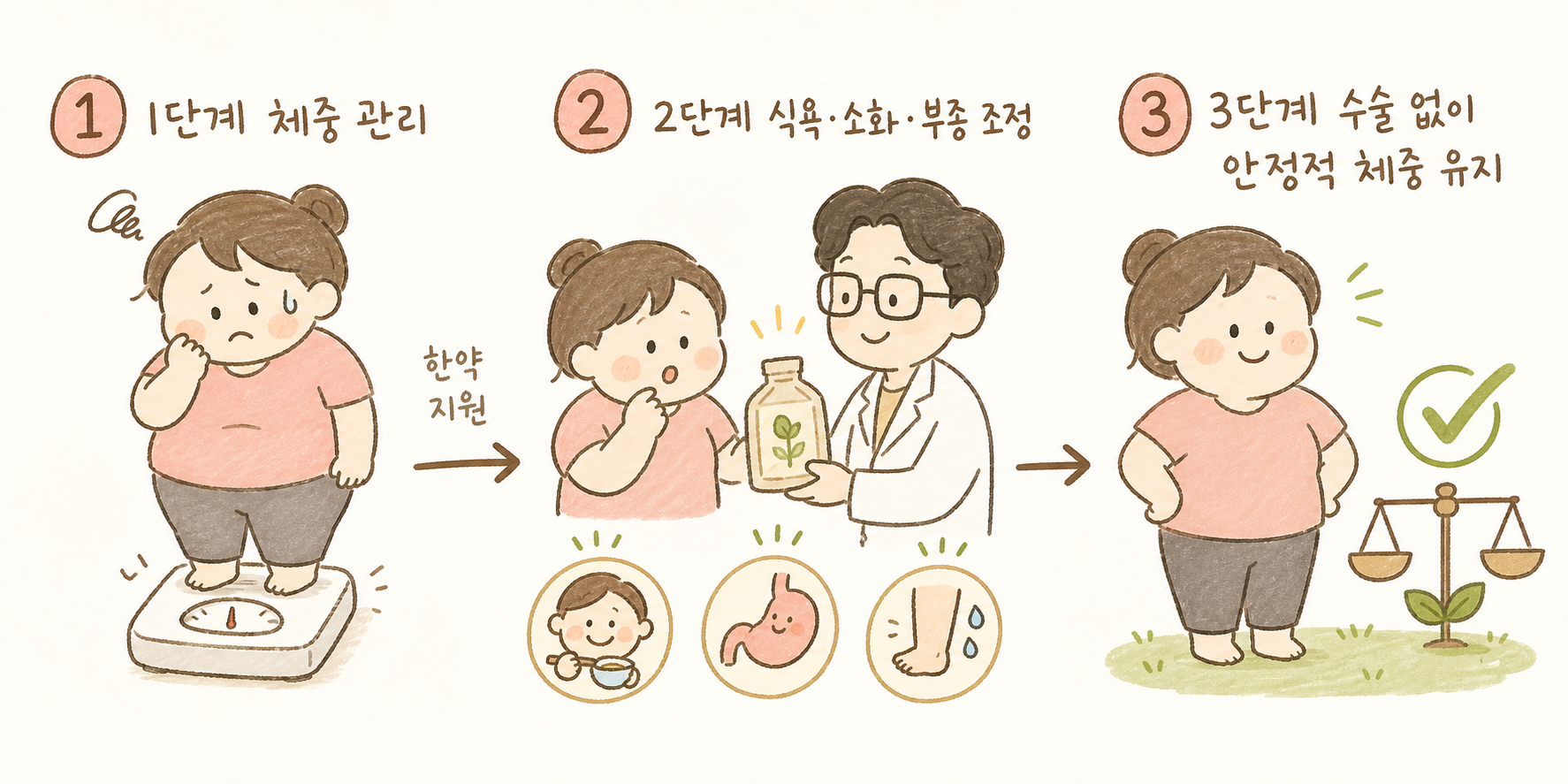
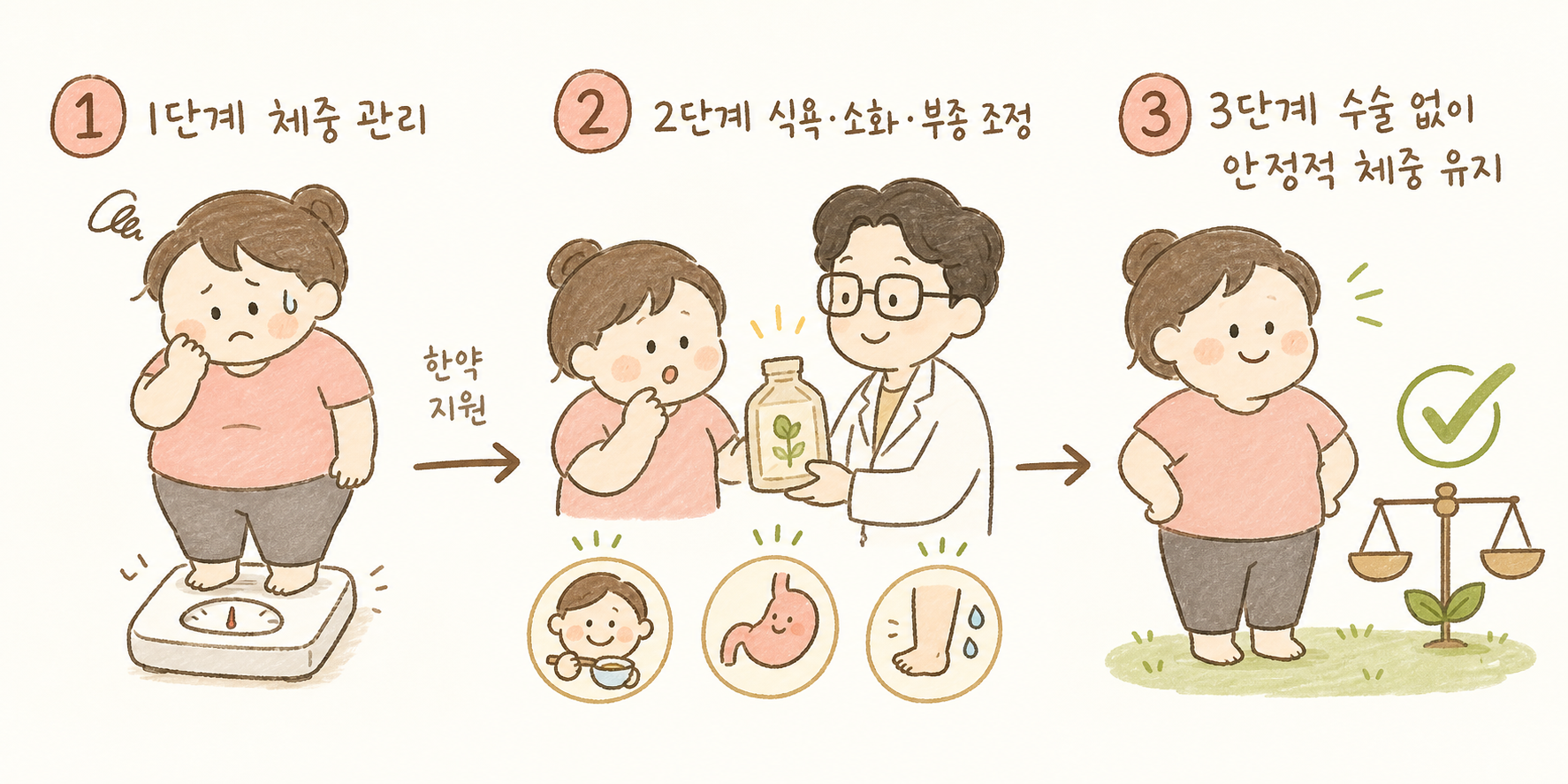
I often receive similar questions in weight management consultations, such as "Can we try herbal medicine instead of gastric bypass surgery?" The principle remains the same. For patients with clear surgical indications due to severe obesity, herbal medicine cannot replace surgery. However, for those within the range where conservative weight management is possible, herbal medicine can help regulate appetite, digestion, swelling, and metabolic rhythm. We apply the same principles of resolving blood stasis and edema from other treatments to weight management. Therefore, I explain Korean herbal diet pills not as "replacements for surgery" but as "supports to maintain a weight range that doesn't require surgery." This approach helps maintain realistic expectations and allows me to provide honest assistance.
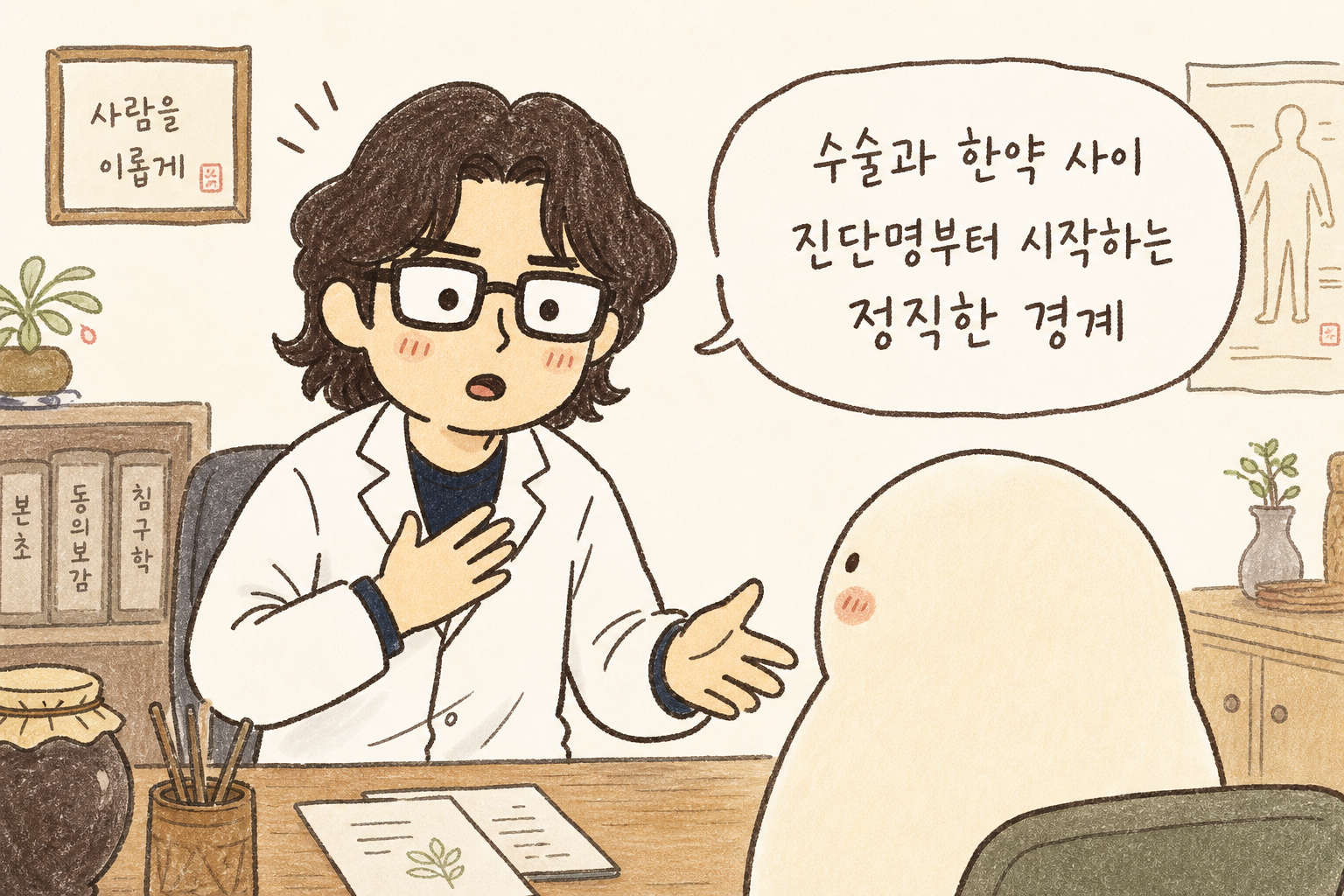
Essential Pre-Treatment Considerations
If you're considering herbal medicine as an alternative to surgery, there are crucial factors to check beforehand. Bleeding risk, drug interactions, and liver function are non-negotiable items. If you're taking anticoagulants, antiplatelet drugs, diabetes medications, or immunosuppressants, consult your healthcare provider before starting herbal treatment. For conditions like tumors, emergency bleeding, or severe nerve damage, herbal medicine can only play a supportive role. Both patients and practitioners need this honest starting point. When recommending herbal medicine, I first look at the diagnosis, then current medications. Without clarity on these two points, both effects and side effects become unclear.
Let me conclude with one line: "Herbal medicine instead of surgery" is not a magic phrase. It only has meaning within the coordinates of diagnosis and severity. While herbal medicine works well in areas suitable for conservative treatment, it cannot replace the scalpel where surgery is truly needed. Only by defining this boundary together can herbal prescriptions be safe and honest. At Baekrokdam Korean Medicine Clinic, we developed Baekrok Gambi-jung with the same principle—an herbal formula designed not for those facing major surgical decisions, but for those working to regulate appetite and metabolic rhythm within a manageable weight range. If you're somewhere between considering herbal medicine and surgery, let's start by examining your diagnosis together.