Dining Out Diet: Why Eating Order Matters Most

Table of Contents
- Dining Out Diet Strategy: Why 'Order' Matters More Than Menu Choice?
- A Guide to Staying Firm in Front of the Menu
- How to Overcome a 'Plateau' in Your Dining Out Diet Strategy?
- Key Points for Dining Out Strategies Involving Alcohol
- Spleen Deficiency (Biheo) and Dining Out Diet Strategies
- Frequently Asked Questions
Whether it's a gathering with friends or a company dinner, looking at a menu can often feel like a source of stress when you're on a diet. I remember back when I was strictly managing my weight; during a string of wedding invitation dinners, I would break into a cold sweat in front of the menu, calculating calories and failing to focus on the conversation. However, after meeting countless patients in my clinic, I’ve realized that long-term success is determined not by cutting out dining out entirely, but by how you apply a practical dining out diet strategy.
Simply resolving to "eat less" isn't enough. If you understand our body's digestive mechanisms and blood sugar flow, you can enjoy social meals without breaking your weight loss momentum.
Dining Out Diet Strategy: Why 'Order' Matters More Than Menu Choice?
Many people focus solely on the calories of the menu items. However, what proves more powerful in practice is the "eating order." This is because even if you eat the same amount, the speed at which blood sugar spikes and the amount of insulin secreted change completely depending on which nutrient enters the stomach first.
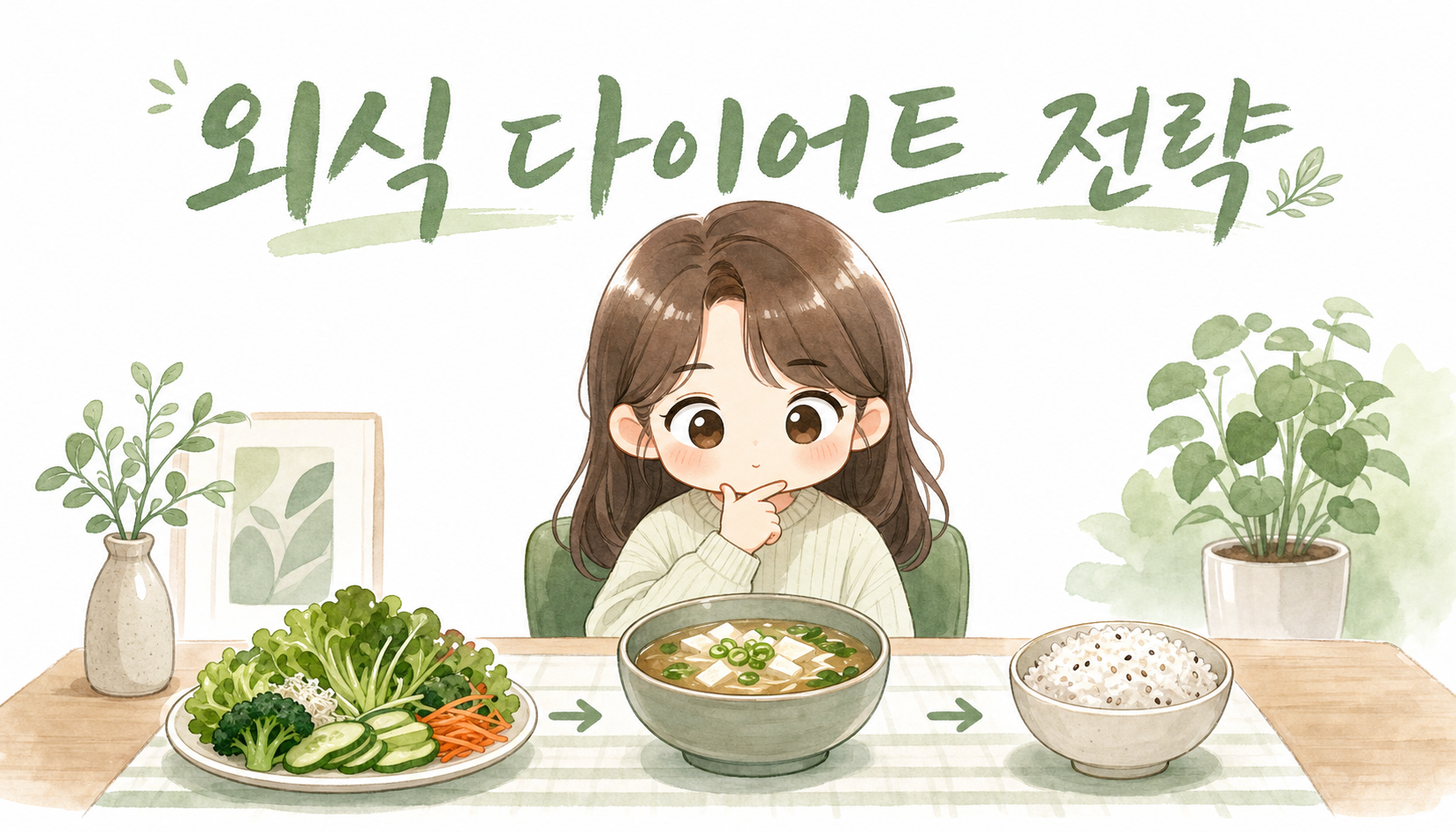
I always tell my patients to remember the sequence: 'Fiber → Protein → Carbohydrates.' Eating vegetables first acts like casting a net in your stomach. it slows down the absorption of fats and carbohydrates that follow. From the perspective of Traditional Korean Medicine (TKM), this is a fundamental way to prevent the accumulation of Phlegm-fluid (痰飮)—metabolic waste products within the body.
When carbohydrates rush in suddenly, it overloads the functions of the Spleen and Stomach (脾胃). Nutrients that aren't fully digested turn into Phlegm-fluid, creating an environment where it's easy to gain weight. Therefore, starting with a sufficient amount of salad or vegetable side dishes (namul) is the most basic step in a dining out diet strategy.
A Guide to Staying Firm in Front of the Menu
If you think, "I must only eat salad," when choosing a menu, you'll likely burn out quickly. In social life, you often don't have the power to choose the menu. In these cases, you need the wisdom to examine the cooking methods of each dish.
Korean Food: This is the most recommended category. However, when eating Bibimbap, reduce the amount of red pepper paste (gochujang), and for stews, focus on the solid ingredients. The sodium dissolved in the broth causes bloating and hinders circulation.
Japanese Food: Sashimi is a great choice, but be careful with sushi rice as it is seasoned with sugar and vinegar, which can spike blood sugar faster than expected. It's wise to eat only half the rice portion.
Western Food: Steak or grilled fish are excellent protein sources. The key is resisting the temptation of side fries or pre-meal bread. Asking for dressing or sauce on the side to dip your food in can help reduce sugar intake.
Chinese Food / Malatang: Many dishes are fried or stir-fried in oil, so caution is needed. For Malatang, a realistic strategy is to never drink the broth and instead eat only the green vegetables and tofu.
The "cooking method" is more important than the type of food. Choosing grilled over fried, and boiled or steamed over grilled, can significantly reduce unnecessary fat intake.
How to Overcome a 'Plateau' in Your Dining Out Diet Strategy?
Are there times when the scale won't budge despite following your dining out strategy? Many people feel like giving up, thinking, "Maybe this isn't working for me." However, a plateau is a natural process where the body adjusts to a new weight.
In TKM, this is sometimes viewed as Liver Qi Stagnation (肝鬱)—a state where energy is stagnant due to stress. The stress of not losing weight itself blocks the circulation of Qi and Blood, lowering metabolism. In such times, rather than reducing food intake further, it's necessary to improve sleep quality and circulate energy through light walks.
Also, if you dine out frequently, check if you are unknowingly consuming excessive liquid fructose or sugar hidden in seasonings. That one glass of ade or extra dressing you thought was "okay" could be prolonging your plateau. You need to give your body time to adjust to its new set point.
Key Points for Dining Out Strategies Involving Alcohol
The biggest hurdle for office workers is, of course, drinking sessions. Alcohol is not only high in calories but also temporarily halts the body's fat-burning process. This is because the liver prioritizes detoxifying alcohol, pushing fat metabolism to the background.
The way to survive a drinking session is surprisingly simple. Set a rule to drink two glasses of water for every glass of alcohol. Water dilutes the alcohol concentration and provides a sense of fullness, preventing you from overreaching for appetizers. For snacks, choose high-protein, low-fat options like steamed eggs, tofu (from tofu kimchi), or grilled fish.
The day after drinking, Blood Stasis (瘀血) and toxins are likely to accumulate. It is essential to discharge waste products through sufficient hydration and a light lower-body bath (half-bath). You can overcome the biggest hurdle just by breaking the habit of seeking high-calorie "hangover meals" the next day.
Spleen Deficiency (Biheo) and Dining Out Diet Strategies
Some people bloat and gain weight easily even after a small meal out. In TKM, these individuals are likely suffering from Spleen Deficiency (脾虛), a state where the energy of the digestive organs is weakened. When digestive power drops, the body fails to convert nutrients into energy and instead tries to store them as waste.
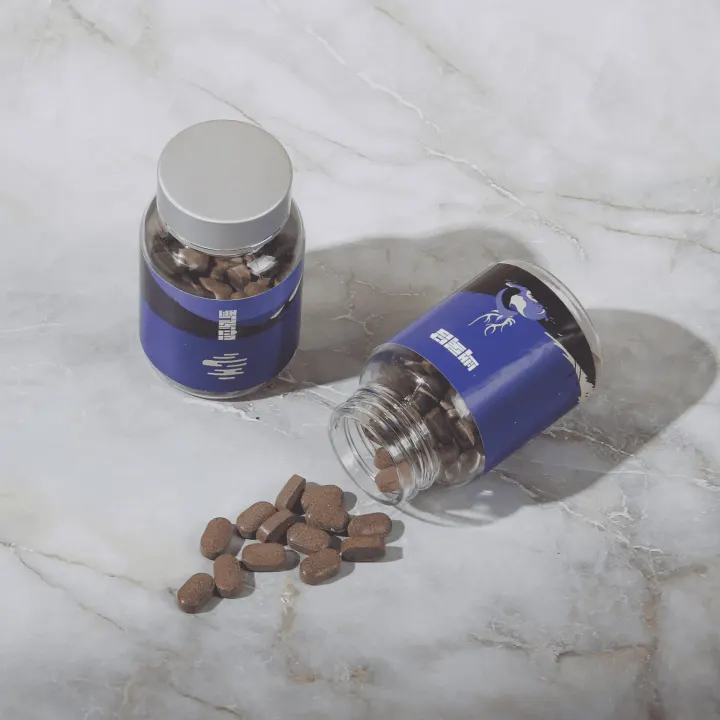
In these cases, unconditional fasting can be poisonous. A process that aids the Qi of the Spleen and Stomach while facilitating waste discharge must be combined. We utilize prescriptions like Baekrok Gambi-jeong, which modernizes the principles of Bangpungtongseong-san (防風通聖散), to help the metabolic flow of such patients.
When it's difficult to overcome the temptation of dining out and metabolic decline through willpower alone, it's wise to seek auxiliary help to assist the body's circulation. By clearing out internal waste and boosting metabolism, the results of your dining out diet strategy will manifest much faster.
Frequently Asked Questions
Q. Can I drink as much Zero Coke as I want when dining out?
Zero-calorie drinks are a better choice than regular sugary sodas. However, some suggest that artificial sweeteners can maintain a craving for sweetness and affect the gut microbiome, so we recommend prioritizing water and enjoying them only occasionally.
Q. If I accidentally overate, should I fast the next day?
Fasting completely the day after overeating can actually trigger binge eating at the next meal. Instead, skip breakfast or eat lightly with vegetables, and increase your activity level by about 1.5 times to burn off 'glycogen' before it is stored as fat.
Q. I'm on a diet, but the company dinner menu is Samgyeopsal (Pork Belly). What should I do?
Samgyeopsal is a great protein source but high in fat. In this case, try eating 3–4 pieces of wrap vegetables like lettuce or perilla leaves before the meat. Then, apply a 'Low-Carb, High-Fat' style strategy by boldly skipping carbohydrates like rice or cold noodles (naengmyeon) to help defend your weight.
Dining out is one of the joyful parts of life. Rather than cutting it off entirely, I hope you master dining out diet strategies to wisely manage your body's reactions. If self-control is too difficult and your body feels heavy, it's always a good idea to check your metabolic state with a professional.