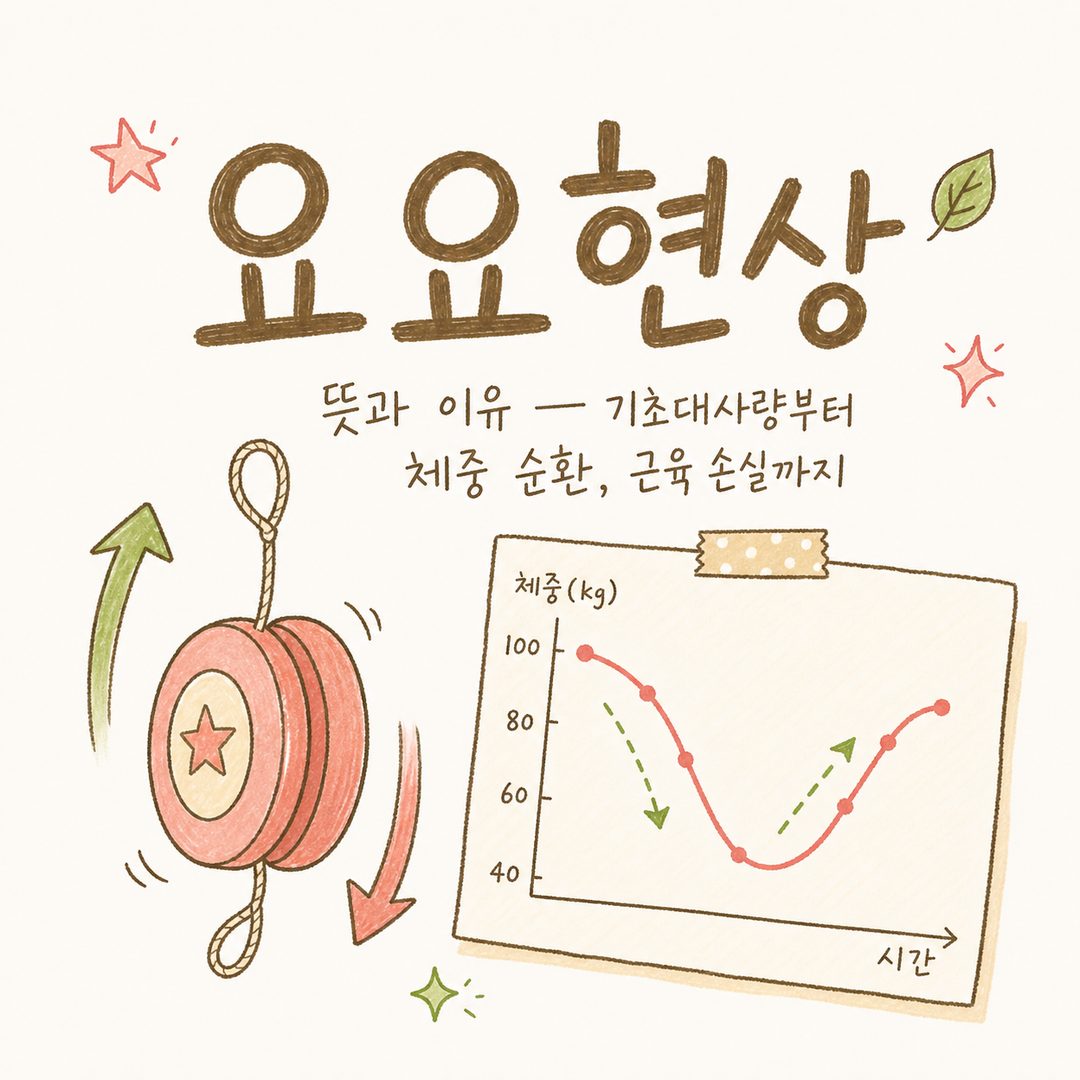
Yo-Yo Effect: Causes & Prevention

Table of Contents
In the clinic, I often hear: 'Doctor, I lost 10kg, but it all came back in two months - I even gained an extra kilo.' It's frustrating. I understand this struggle personally. Today, let's unravel the mystery of the yo-yo effect together.
Understanding the Yo-Yo Effect: A Medical Definition
The yo-yo effect refers to the phenomenon where weight lost through dieting is regained within a short period, often exceeding the original weight. Think of that moment when you look in the mirror and realize you look exactly as you did before starting your weight management journey.

Typically, regaining the lost weight or more within 1-2 months after weight loss is considered the yo-yo effect. In academic terms, it's also called yo-yo dieting or weight cycling. These all refer to the same phenomenon - the weight going up and down like a yo-yo toy.
Origin of the Term - Why 'Yo-Yo'?
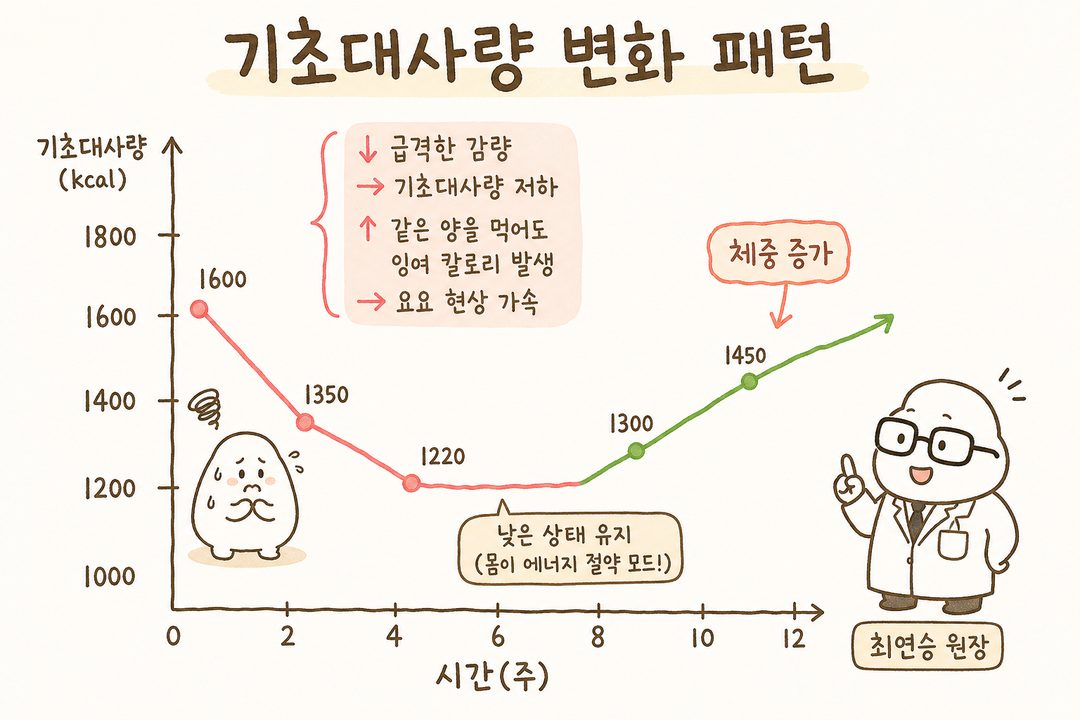
The name itself is intuitive. Think of a yo-yo on a string - it goes down and comes back up, then down again. Your weight graph follows the same pattern. After initial weight loss comes a brief period of stability, followed by a steep increase.
The problem is, this phenomenon isn't simply due to lack of willpower. According to the National Health Insurance Service, rapid weight loss lowers your basal metabolic rate. Even if you eat the same amount as before, you'll have excess energy that gets stored as fat, leading to weight regain. This happens because your body establishes a new equilibrium point, and when you return to old eating habits without accounting for this change, the excess energy accumulates as fat.
Key Risk Factors for Yo-Yo Effect: A Checklist
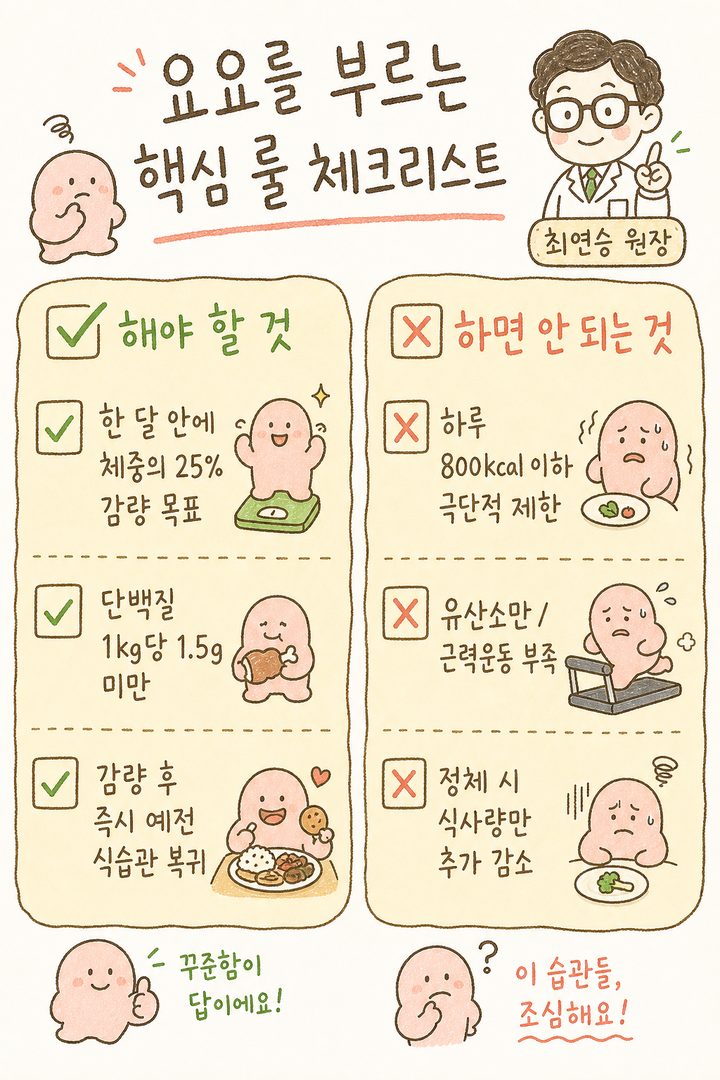
Here are the items I review with my patients. Count how many apply to you:
Setting unrealistic goals like losing 25% of body weight in a month
Severely restricting calories to under 800kcal per day
Consuming less than 1.5g of protein per kg of body weight, essentially starving yourself
Doing only cardio with little to no strength training
Returning to previous eating habits immediately after reaching weight loss goals
Responding to weight plateaus by further reducing food intake
If any of these apply, maintaining weight loss will be challenging. Particularly when muscle mass has decreased and you return to previous eating habits, your body will have excess energy even with the same food intake. This surplus gradually accumulates as fat - that's the essence of the yo-yo effect.
Common Misconceptions About the Yo-Yo Effect
There are several misconceptions worth addressing:
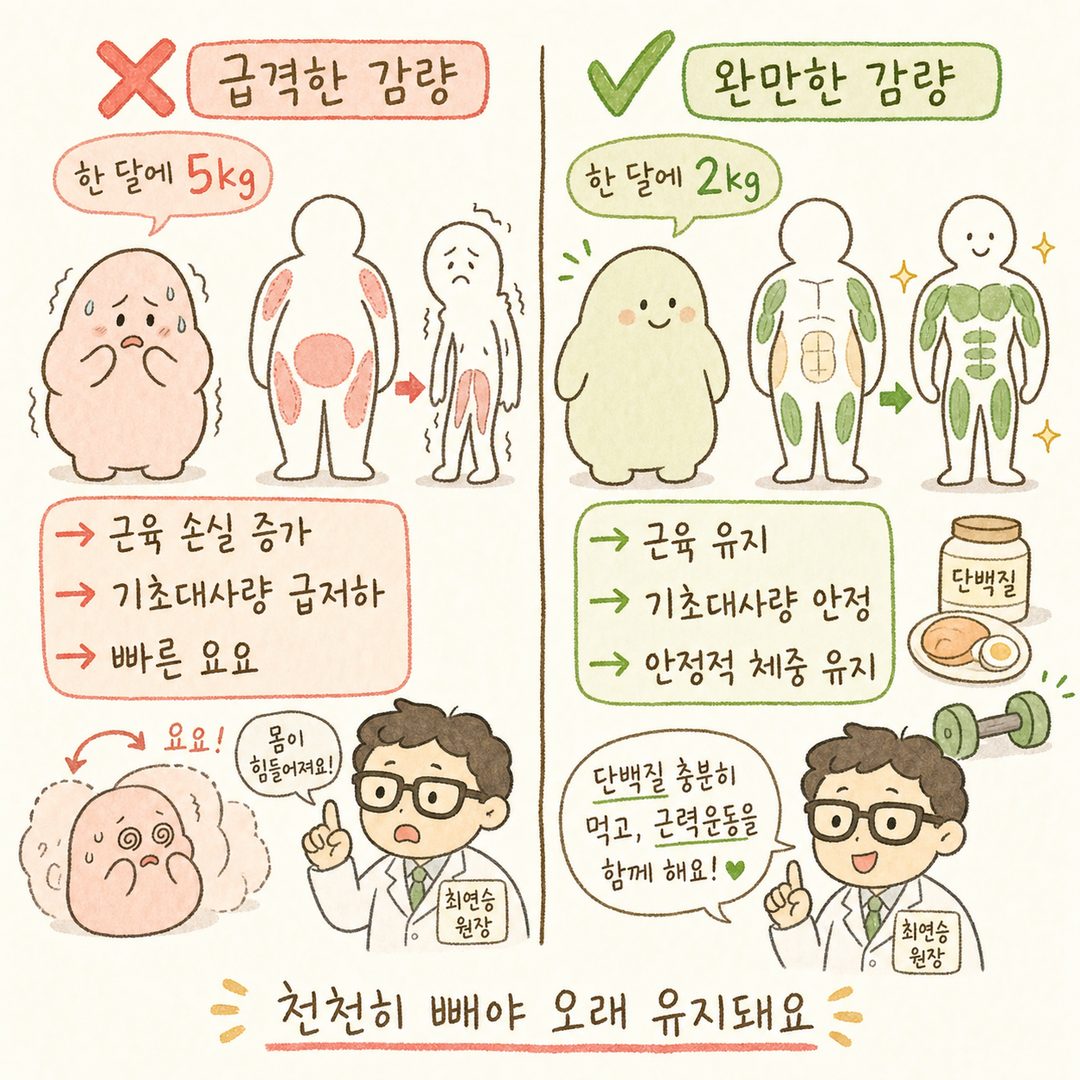
"The yo-yo effect is due to weak willpower." No. Rapid weight loss causes both fat and muscle loss, which lowers your basal metabolic rate. This is a physiological change, not a matter of willpower.
"Once you experience the yo-yo effect, you can never diet successfully again." Not true. Having experienced the yo-yo effect means you've learned your body's response pattern. You just need to avoid the same pitfalls next time.
"The more you starve, the faster you lose weight, so it's good, right?" While you might see quick initial results, you're losing muscle along with fat, and your metabolism slows down. This actually makes the yo-yo effect come back faster and stronger.
"The yo-yo effect just means regaining lost weight." The key point is that it's not just about returning to your original weight - many people gain more weight than they initially lost, often exceeding their pre-diet weight by the original loss amount within 1-2 months.


From a Weight Management Perspective - Does Prevention Really Work?
This is what patients are most curious about. Is it really possible to prevent the yo-yo effect? Is it effective?
To be honest, there's no magic solution that prevents the yo-yo effect 100%. However, you can significantly reduce its severity and speed. There are two key aspects to focus on:
First, pace control. This is why I recommend gradual weight loss of 1-3kg per month. Losing weight too quickly leads to muscle loss and decreased metabolism. A slower pace gives your body time to adapt to its new equilibrium.
Second, protein intake and muscle maintenance. Even during weight management, maintaining 1.0-1.5g of protein per kg of body weight and incorporating strength training helps preserve muscle mass. This means less decrease in basal metabolic rate, resulting in smaller calorie surpluses during maintenance.
Remember, reaching your target weight doesn't mean your weight management journey is over. The 1-2 months after weight loss are the golden period for yo-yo effect. Instead of immediately increasing intake by 500-800kcal, gradually transition to a maintenance diet. It typically takes about a month for your body to adjust to its new weight.
The yo-yo effect isn't so much a sign of failed weight management as it is a warning from your body that you're moving too fast. The term might sound light, but its implications are serious. Respect your body's natural pace and plan for a maintenance period as long as your weight loss period. If managing diet, exercise, and lifestyle changes alone feels overwhelming, consider Baekrokdam's Baekrok Gambi-jung program for personalized pace control and maintenance support. Let's discuss this in more detail during your consultation.