Yo-Yo Dieting: Metabolism, Maintenance, and Habits

Table of Contents
- Why the Body Changes When the Yo-Yo Effect Repeats
- Correlation Between Korean Herbal Diet Pills and the Yo-Yo Effect
- Psychological Stress and the Cycle of Weight Cycling
- Homeostasis: The Original Weight the Body Remembers
- What Is the Standard for Success Without Yo-Yoing?
- Points to Prevent Yo-Yoing Starting Today
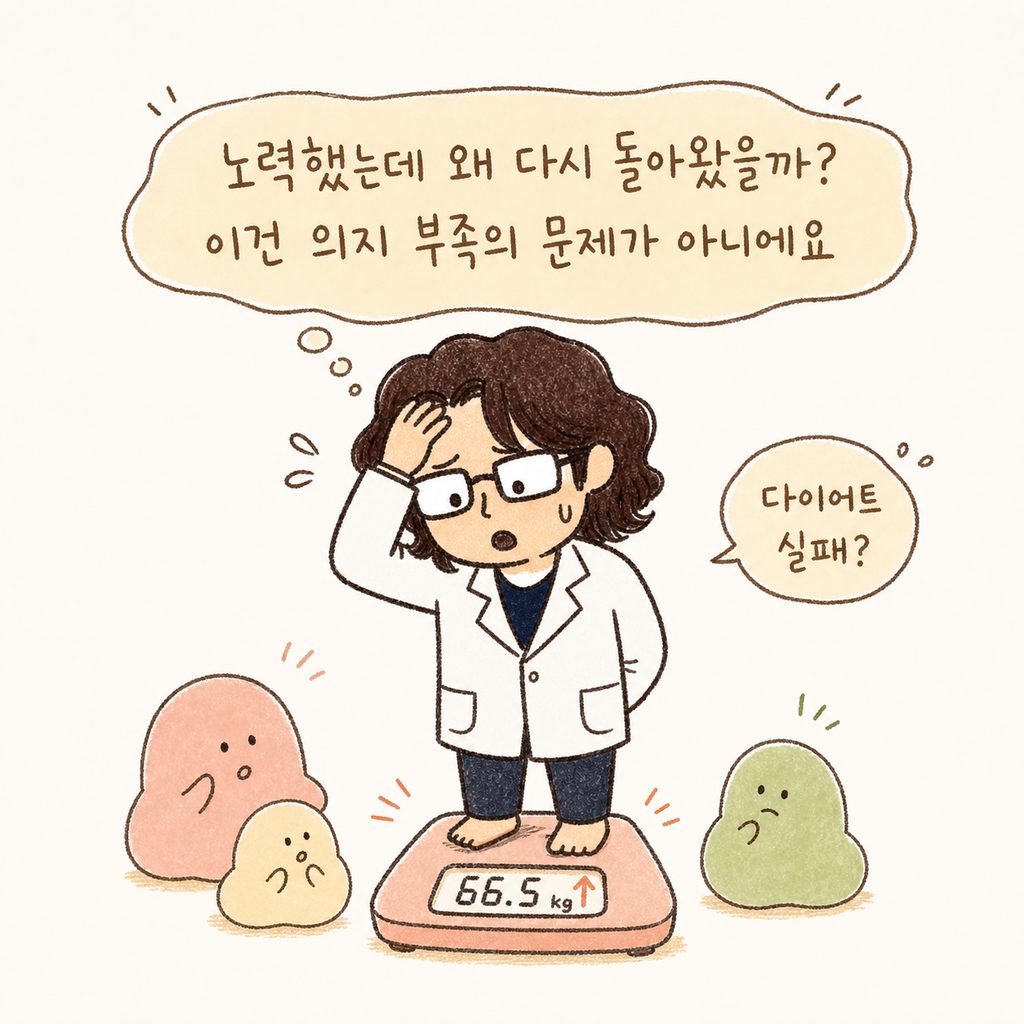
It's disheartening to see the scale return to its original number after working so hard to lose weight. In the clinic, I often meet patients who blame themselves, asking, "Is it because I have no willpower?" However, this isn't about a lack of willpower; it's a matter of survival instincts hardwired into our bodies.
Why the Body Changes When the Yo-Yo Effect Repeats
After repeating weight management several times, you might feel like you gain weight more easily than before. This isn't an illusion. As you experience the yo-yo effect repeatedly, your body truly transforms into a weight-gain-prone constitution.
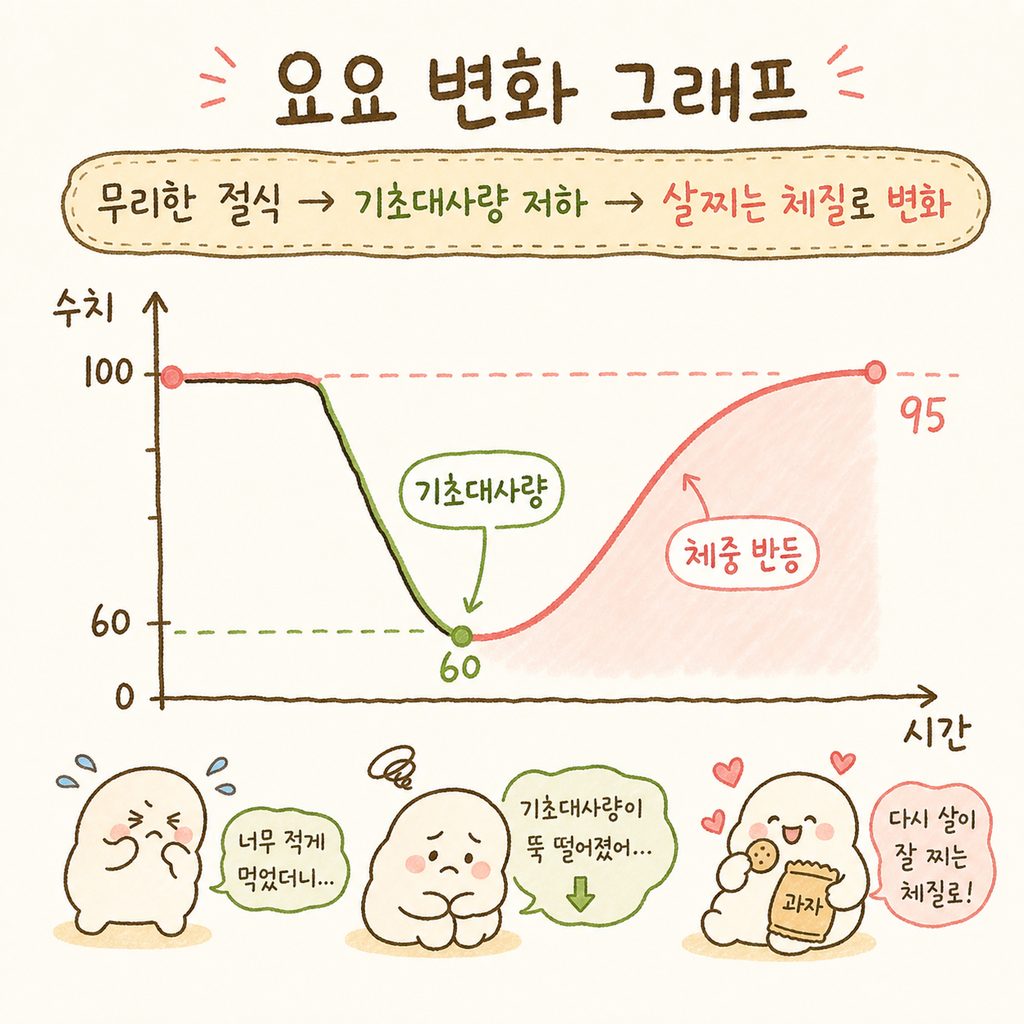
The primary culprit is a decrease in basal metabolism. If you recklessly starve yourself or extremely restrict calories to lose weight in a short period, your body perceives this as a state of famine. Consequently, muscle mass is lost, and your basal metabolism—the energy your body burns even at rest—drops significantly. Even if you eat the same amount as before, the energy your body cannot use is stored entirely as fat.
Hormonal changes cannot be ignored either. Repeated yo-yoing leads to insulin resistance and leptin resistance. Insulin regulates blood sugar, and leptin signals satiety; when these signals become dull, fat accumulates more easily, and you find yourself reaching for food even when full.
Correlation Between Korean Herbal Diet Pills and the Yo-Yo Effect
In the clinic, many patients ask, "Did I get a yo-yo effect because I stopped taking the Korean herbal diet pills?" However, stopping the herbal medicine itself is not the direct cause of the yo-yo effect.
Korean herbal diet pills or herbal medicines help make weight loss easier by suppressing appetite and increasing satiety while you take them. However, if your lifestyle patterns, such as eating habits and activity levels, remain the same while taking the medicine, your weight is likely to rise again the moment you stop the medicine and return to your original lifestyle.
Korean herbal diet pills alone cannot prevent the yo-yo effect entirely. You must use the period of receiving help from herbal medicine to internalize habits that manage eating habits, activity levels, sleep, and stress to truly make that lost weight your own.
Psychological Stress and the Cycle of Weight Cycling
The state of repeatedly losing and gaining weight is technically referred to as weight cycling. Recent research shows that psychological factors are heavily involved in this process.
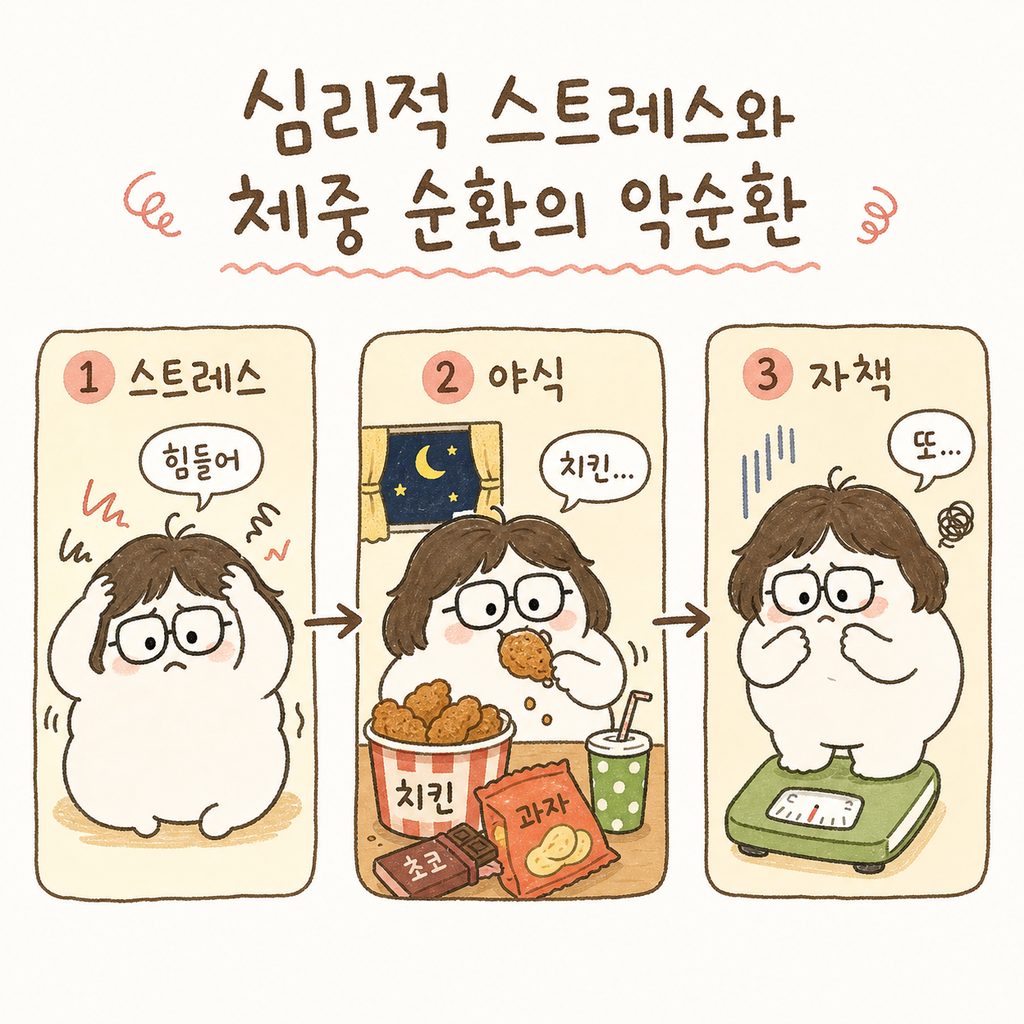
One study identifies perceived stress and self-efficacy as decisive factors in weight cycling. When stress is high and self-efficacy—the belief that "I can lose weight again"—is low, it is easy to fall into binge eating or late-night snacking. This, in turn, creates a vicious cycle of weight gain and self-reproach.
When sleep deprivation is combined with stress, the body becomes even more unstable. Since it is easy for the habit of filling emotional hunger with food to take root, finding psychological stability is a core component of weight management.
Homeostasis: The Original Weight the Body Remembers
Our bodies have a mechanism called homeostasis that tries to maintain a constant weight. It is essentially a form of "weight memory." When weight drops suddenly, the body views this as a crisis and moves to return to its original weight.
![Comparison table of two weight loss strategies. [Rapid weight loss: Body perceives a crisis, very high risk of yo-yo effect] vs [Slow weight loss: Body adapts, high possibility of maintenance].](/api/files/assets/2026-07/0336584c.jpg?sig=382310b54230a78603c0b32289cc3a68843ab1da0c04bd8f435d93e9d3bd1238)
Particularly if obesity has persisted for a long time, epigenetic changes occur in fat cells. Animal studies have shown that after undergoing these changes, weight returns much faster when returning to a high-fat, high-calorie diet.
The body remembers the previous high weight and has a strong force to return there. Therefore, rather than pushing yourself hastily, you need a strategy to lose weight slowly and steadily enough that the body does not notice.
What Is the Standard for Success Without Yo-Yoing?
So, to what extent must weight be maintained to say there is no yo-yo effect? Generally, if weight returns to the original level or higher within 1–2 months after losing weight through diet and exercise, it is considered a yo-yo effect.
Academically, success is evaluated as "maintenance without yo-yoing" only when weight fluctuations do not exceed 20% for about 6 months to a year after weight loss.
Lowering the numbers is not the end; how you secure this maintenance period is the true battlefield of weight management. It is important to let go of impatience and have a mindset that looks at least 6 months ahead.
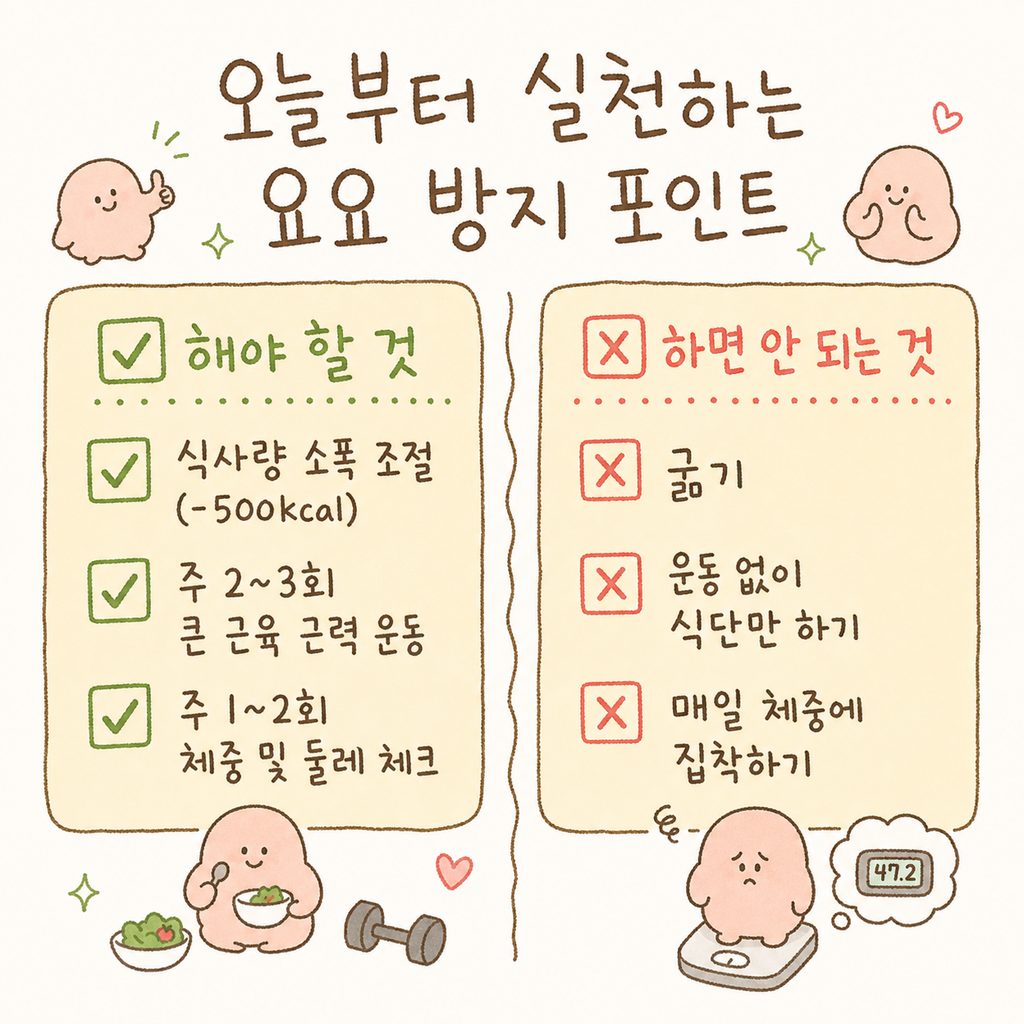
Points to Prevent Yo-Yoing Starting Today
I will highlight healthy maintenance methods you can practice right now. Start with small habits you can maintain for a long time rather than grand plans.

First, try reducing your food intake slightly. It is safe to subtract about 500 kcal from the calories required to maintain your current weight. Extreme starvation actually lowers your metabolism and invites the yo-yo effect.
Second, incorporate strength training. It is good to move focusing on large muscles—specifically the legs, glutes, back, and chest—2–3 times a week. Protecting or building muscle increases your metabolism and effectively prevents the yo-yo effect.
Third, do not obsess too much over weighing yourself. Rather than crying or laughing over the numbers every day, it is much better for your mind to check your weight and waist circumference 1–2 times a week under the same conditions to observe the overall trend.
If you have struggled several times for over 6 months but experience repeated severe yo-yoing or symptoms like binge eating and vomiting, I strongly recommend consulting a professional to check for an eating disorder.
Your body and mind must be very exhausted from the repeated cycle of weight fluctuations. Seeing many patients in the clinic, my heart often goes out to those who suffer not because of weak willpower, but because of the body's systems.
If an approach tailored to your constitution and meticulous management go hand in hand, you can sufficiently break free from this cycle. With the Baekrok Gambi-jung program, you can expect better results by restoring collapsed metabolism. Please try the tips I shared today one by one, and feel free to tell me what changes occurred during your next visit.