Home InBody Accuracy: Body Fat Errors and 4-Pole Limits

Table of Contents
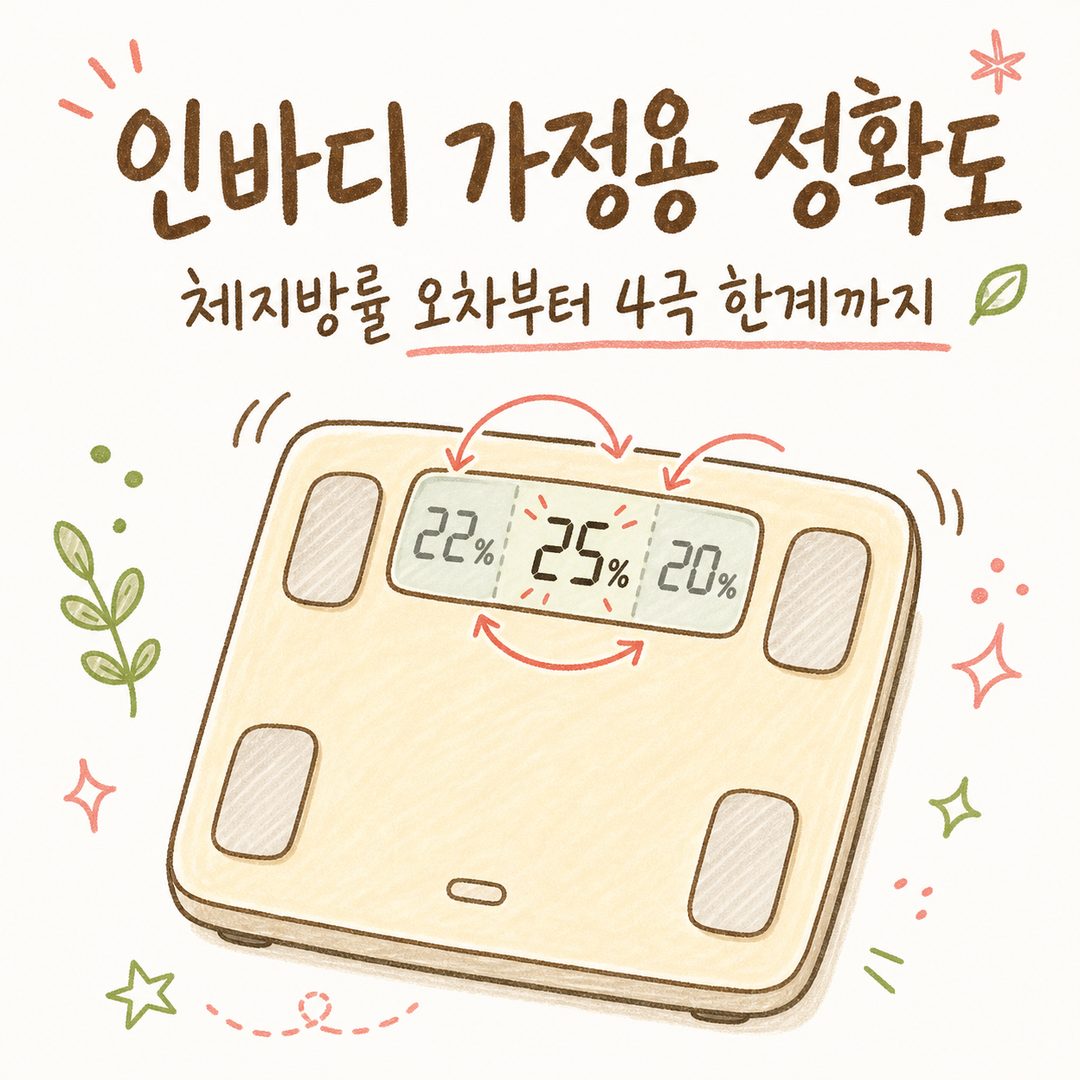
It's a question I often hear in the clinic: "Doctor, can I trust the numbers on my home InBody scale?" It's dizzying when your body fat percentage is 22% yesterday, 25% today, and back down to 20% the next day. I've had the same concerns. Today, I'll explain how much you can trust the accuracy of home InBody scales and how to interpret those numbers.
Why Are Home InBody Numbers So Inconsistent?
The biggest difference between home InBody scales and professional InBody devices found in gyms or clinics lies in the number of frequencies and the electrode structure. According to InBody’s specifications, home models typically use 2–3 frequencies, while professional models use 3–6 frequencies. A higher number of frequencies allows for a more detailed analysis of body water status. Data shows that depending on hydration levels, body fat percentage errors can range from an average of 1% to a maximum of 3%.
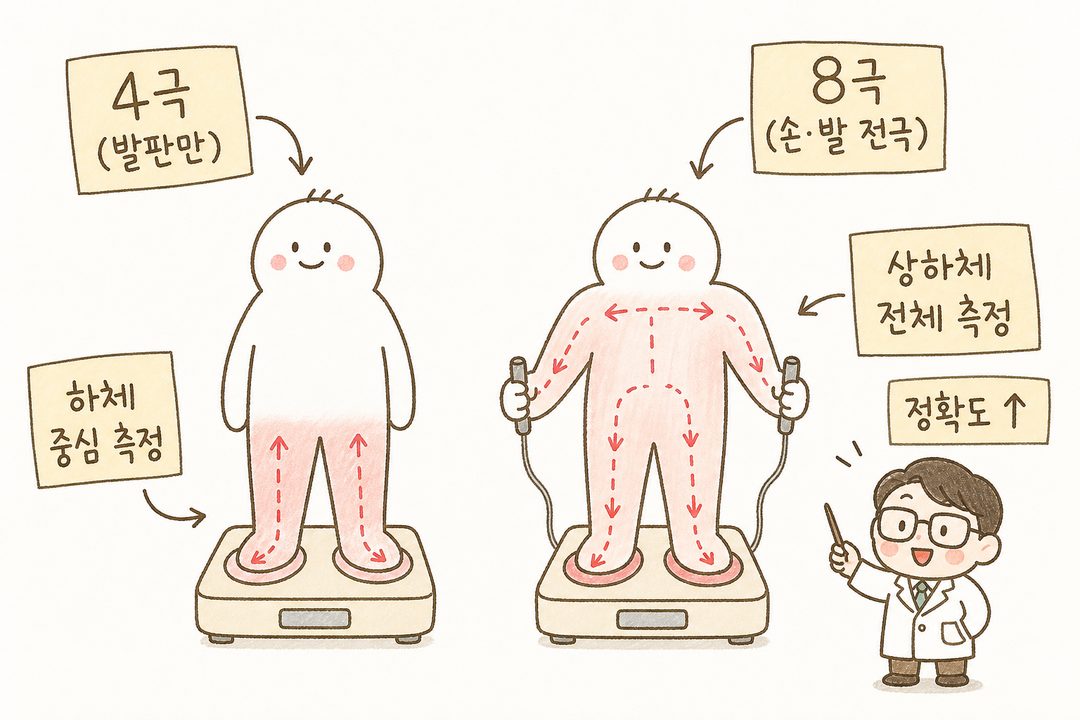
The number of electrodes is also decisive. Among home models, 4-pole scales (feet only) have current flowing primarily through the lower body, which reduces the accuracy of upper body and arm analysis. Conversely, models equipped with 8-pole technology (hand and foot electrodes), such as the InBody Dial, measure the upper and lower body separately, leading to a significant difference in accuracy even among home devices. Inconsistent numbers aren't just the machine's fault; they are the result of your body's daily water levels and your measurement posture.
What Do Actual Test Results Show?
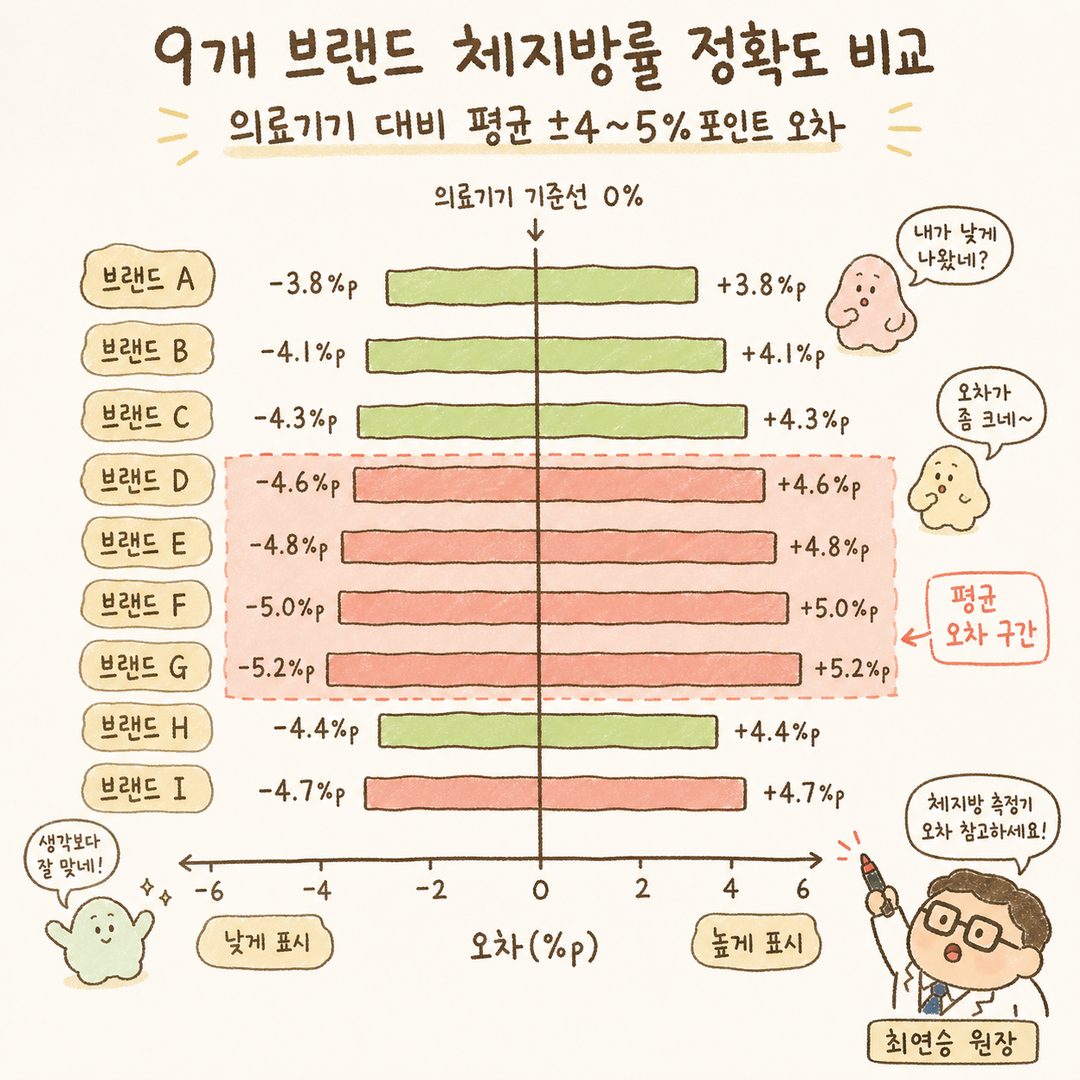
The story becomes clearer when looking at the results of a study by the Korea Consumer Agency (KCA) on 9 smart scale brands. While some products met the standards for weight accuracy, all 9 products showed an average difference of 4–5 percentage points in body fat percentage compared to medical-grade devices. The KCA concluded that "accuracy is at a moderate level, and it is recommended to use them for reference only."
To put this into everyday numbers: if a person's actual body fat percentage is 20%, a home scale might show anywhere between 15% and 25%. Even if the numbers fluctuate by 3–4 percentage points between yesterday and today, it doesn't necessarily mean your body has changed that much. Therefore, the KCA and experts recommend getting precision tests (medical institutions, professional InBody, DEXA, etc.) when an accurate measurement is needed and focusing on the trend of change rather than absolute values at home.

How Does Baekrokdam Clinic View These Numbers?
In the consultation room, I don't view the home InBody numbers brought in by patients as the "final answer." In Korean medicine, even with the same weight, a body with high edema, a body with muscle loss, or a body with stagnant phlegm-dampness (Dameum) are viewed as entirely different conditions. Home devices operate on BIA (Bioelectrical Impedance Analysis) principles and are highly sensitive to water distribution. Variables such as salty food the night before, menstrual cycles, lack of sleep, or alcohol consumption can cause body fat percentage numbers to swing.
That’s why I tell my patients to look at the trend over 2–4 weeks rather than a single data point. We treat the body fat and muscle mass shown by the scale as indicators of daily condition. In the clinic, we use pulse diagnosis, abdominal palpation, eating habits, sleep, and the state of edema and digestion to determine the right direction for your constitution. From the perspective of Korean medicine, a home InBody scale is less of a diagnostic tool and more like a diary recording your body's trends.
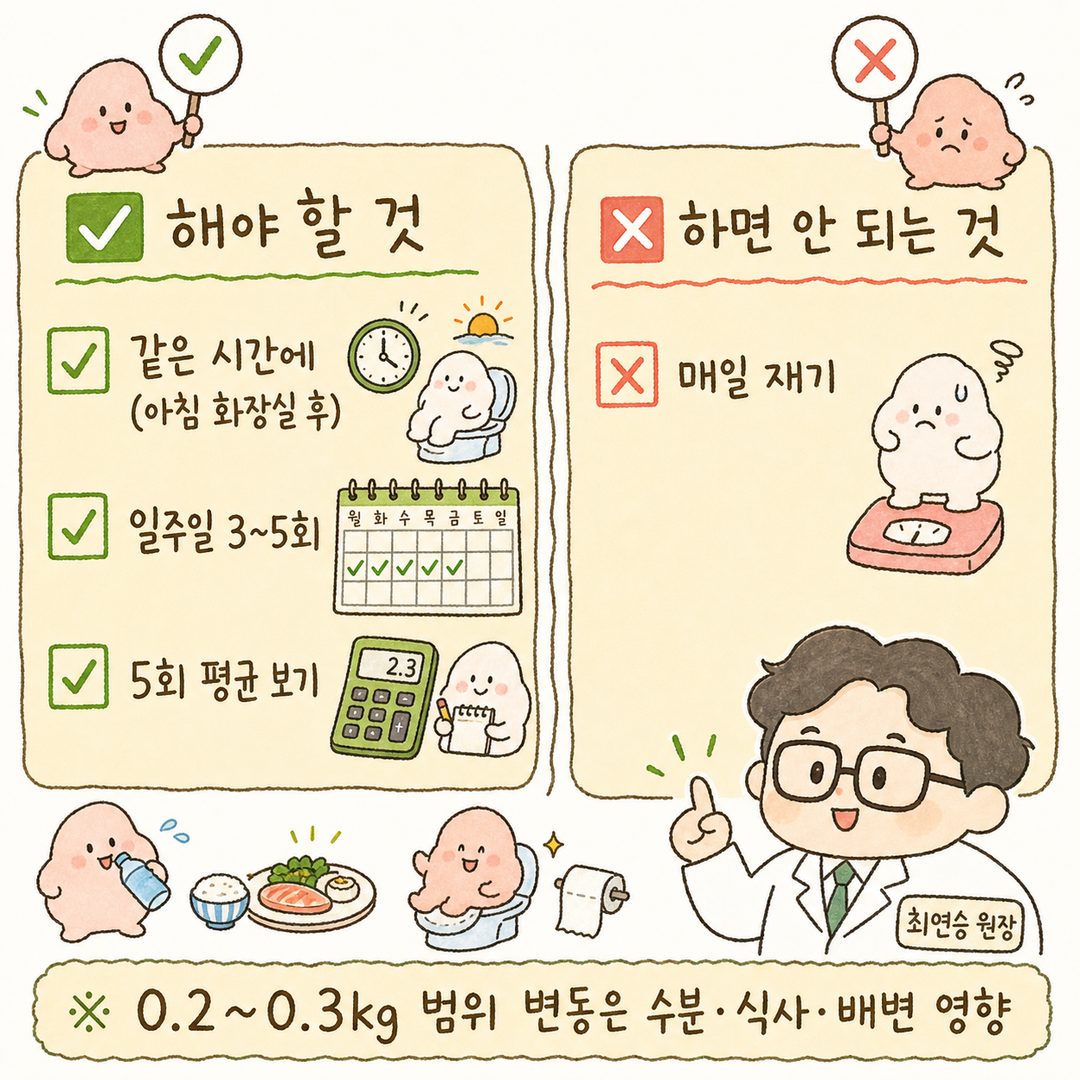
Measurement Routines You Can Change Right Now
The way to use a home InBody scale more effectively is surprisingly simple. By reducing variables in the measurement environment, you can ensure the trend line shown by the machine reflects your actual changes.
Measure at the same time. Immediately after waking up and using the bathroom, before eating, is the most stable time.
Keep your clothing consistent. Thick clothes or the presence of socks can fluctuate the numbers by 0.1 kg.
Instead of daily, measuring 3–5 times a week is appropriate. Daily checks can lead to unnecessary stress over minor fluctuations.
Look at the trend using a 5-measurement average instead of a single number. That line is much more honest than a single day's variation.
Fluctuations of 0.2–0.3 kg are largely influenced by water, food, and bowel movements. Just observe within that range.
Even if the body fat percentage suddenly jumps by 3–4 points, judge based on whether the trend line has shifted over several days.
When accurate body composition is needed (start, mid-point, or end of a diet/weight management program), calibrate your progress with a professional InBody device at a medical institution.
When approached this way, the 4–5 percentage point error of home InBody scales isn't a major weakness. Even if absolute values fluctuate, a trend line created by repeated measurements under the same conditions reflects your body quite honestly.
Please don't be too swayed by home InBody numbers. Numbers are just reference lines; the real changes in your body are more clearly revealed through your physical condition, how your clothes fit, the feeling of edema, and your daily meals and sleep. If the trend line is blurring and you're experiencing issues with edema, appetite, or digestion, it's time for a check-up based on your constitution. At Baekrokdam Clinic, we examine your constitution, lifestyle, and body composition trends alongside Baekrok Gambi-jung, so feel free to visit us with your home InBody records.