InBody Impedance Analysis: BIA Principles & Results

Table of Contents
Many patients visiting our clinic for weight management ask about the 'impedance' numbers on their InBody results. Today, I'll explain how InBody's impedance analysis works and what these numbers reveal about your body composition.
Why Impedance is Central to InBody Analysis
Let's start with the terminology. InBody is actually a brand name for body composition analyzers made by the Korean company InBody Co., Ltd., but it's now commonly used as a generic term for body composition testing.
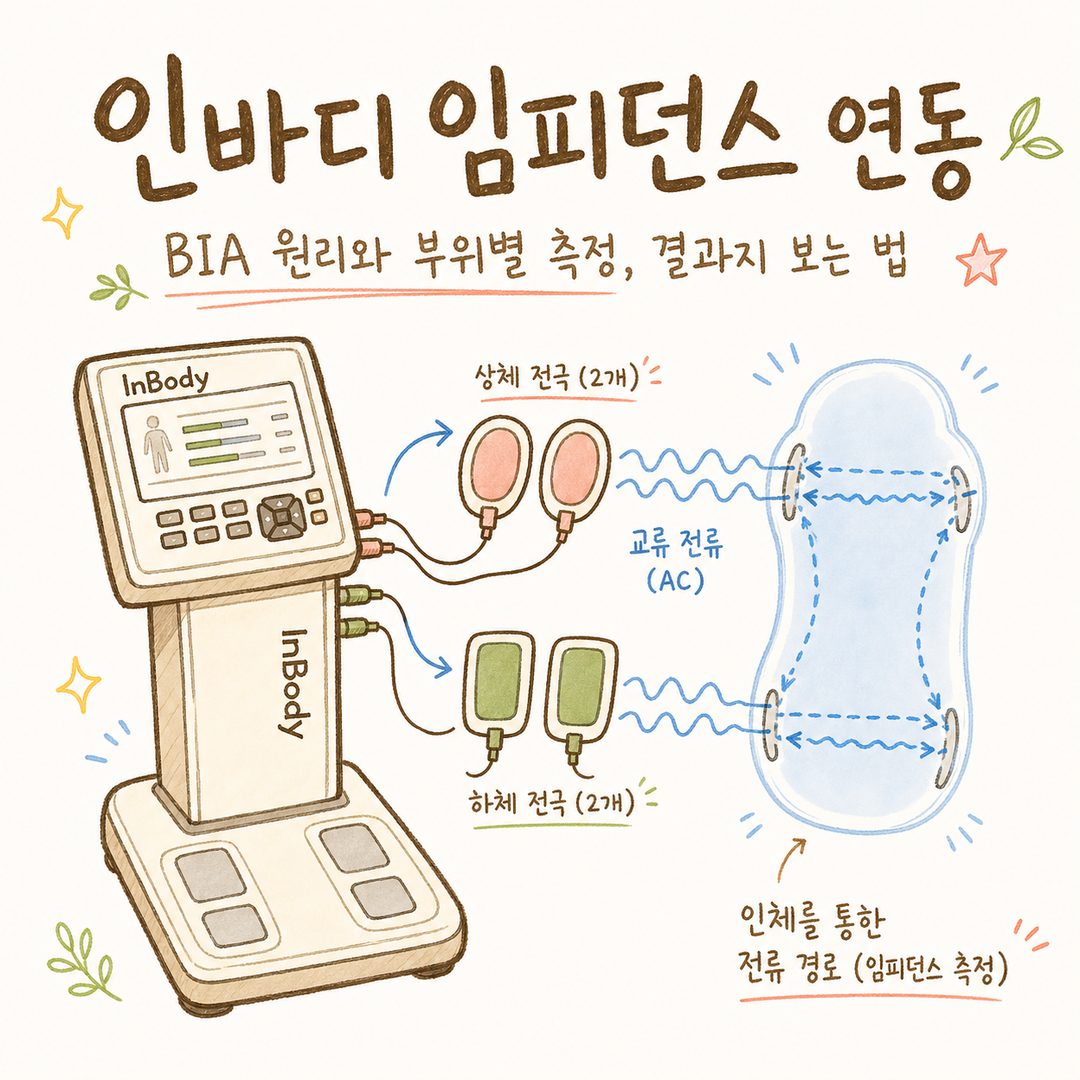
The key value this machine measures is impedance. It sends a very mild alternating current through the body and measures how much this current flow is impeded - essentially measuring electrical resistance. This is expressed as the ratio of voltage to current, similar to resistance in AC circuits.
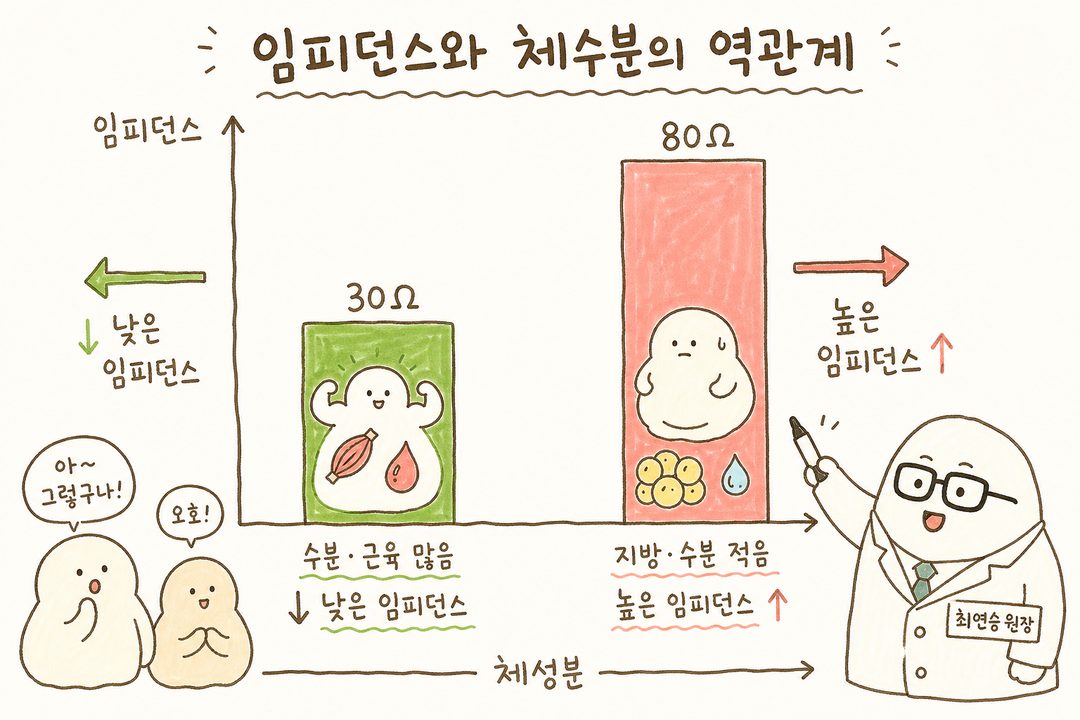
Here's the crucial principle: Tissues with high water content like muscle and blood conduct electricity well, showing low impedance, while tissues with low water content like fat and bone conduct electricity poorly, showing high impedance. InBody uses this difference to estimate body composition.
BIA Principles - What Happens When Current Passes Through the Body
The official name for InBody's measurement method is Bioelectrical Impedance Analysis (BIA). It works by sending a mild alternating current through electrodes on the hands and feet, then measuring the impedance that occurs in each body segment.
Key points to remember:
Higher water content means lower impedance. More body water allows better current flow, resulting in lower impedance readings.
InBody uses various frequencies from 1 kHz to 3 MHz to distinguish between intracellular and extracellular water for better accuracy.
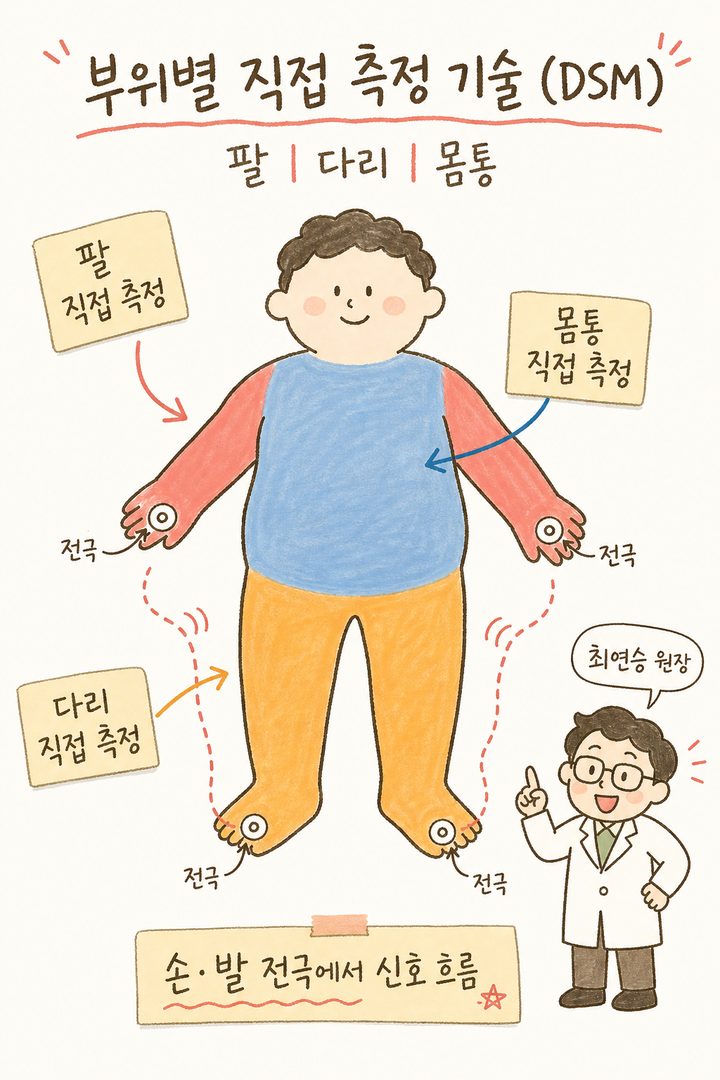
Direct Segmental Measurement (DSM) technology separately measures arms, legs, and torso for more precise regional body composition analysis.
So what InBody actually measures is impedance. Based on this value, it calculates total body water, intracellular/extracellular water, and regional body fat percentage. While "impedance analysis" might sound complex, it's essentially a chain of: impedance values from current passing through the body → water content estimation → body composition calculation.
Key Interpretation Points on the Results Sheet
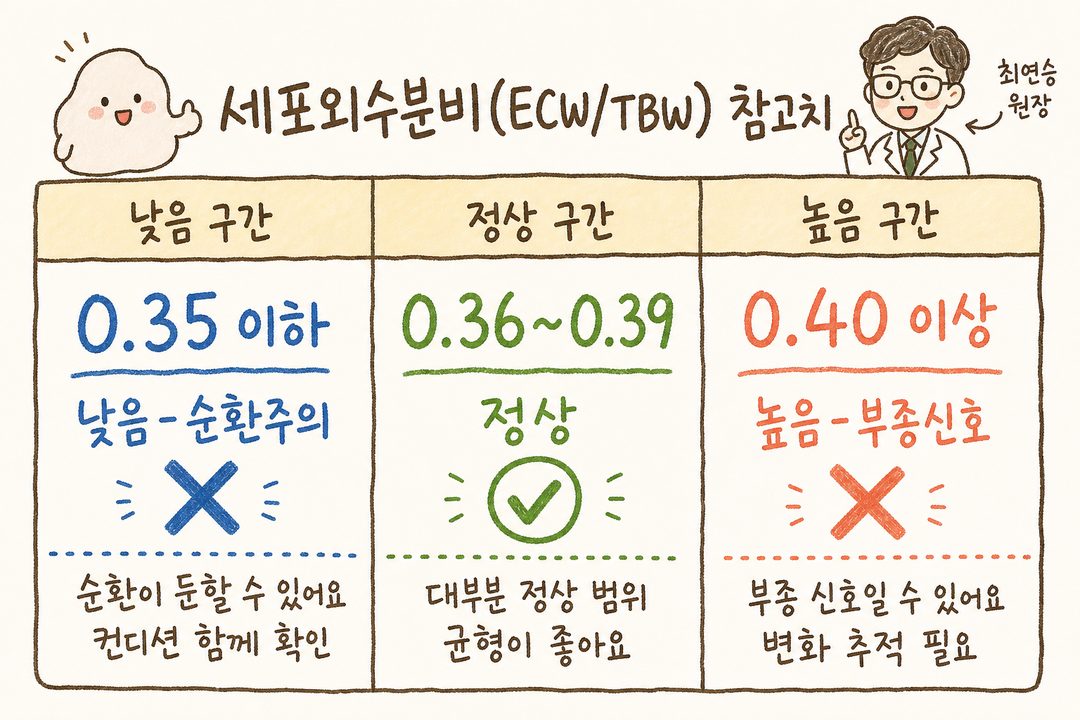
When reviewing results with patients, we often discuss the extracellular water ratio (ECW/TBW). The typical reference range is 0.36 to 0.39, and deviations from this range can provide clues about your body's condition.
Another important aspect is how impedance changes with frequency. We typically check if impedance decreases as frequency increases, which serves as a consistency check for the measurement.
For interpreting impedance values:
Low impedance suggests relatively higher water and muscle mass, and potentially lower fat percentage.
High impedance may indicate lower water content or higher fat percentage.
However, these are general interpretations that assume proper measurement conditions (posture, hydration, equipment status). Remember that drinking large amounts of water right before measurement, or testing immediately after exercise or meals, can affect the results.

Baekrokdam's Perspective on InBody Analysis
In our clinic, we don't view InBody numbers as "report cards." Instead, we see them as windows into your body's water distribution and body composition. In Korean medicine, we don't just see the body in terms of fat and muscle mass - how water metabolism flows is an important clue.
If your extracellular water ratio is higher than usual, it might indicate a constitutional tendency toward edema or circulation issues. If impedance varies significantly between body segments, we might examine circulation and muscle condition in that area. Remember that InBody results are estimates. We never make judgments based solely on these numbers, but rather interpret them alongside dietary patterns, sleep, lifestyle rhythms, and constitutional diagnosis.

How to Prepare for Your InBody Test
Here are the key preparation tips we often share with patients:
Avoid drinking large amounts of water right before testing as it can cause impedance fluctuations.
Avoid testing immediately after meals or exercise - test in a stable state for comparable results.
Measure at the same time of day - morning fasting or consistent timing makes it easier to track changes.
Maintain consistent posture - inconsistent positioning can cause regional value variations.
Focus on trends, not single numbers - patterns across multiple measurements are more meaningful than one result.
Following these guidelines significantly improves result reliability. When you view your results this way, impedance values become more than just numbers - they become a map showing how water, muscle, and fat are distributed in your body.
If you're experiencing weight plateaus or confusing InBody results, bring your results to our clinic. At Baekrokdam, we interpret InBody data alongside constitutional diagnosis to develop personalized treatment plans with Baekrok Gambi-jung and lifestyle management strategies. Let's uncover the story behind the numbers together.