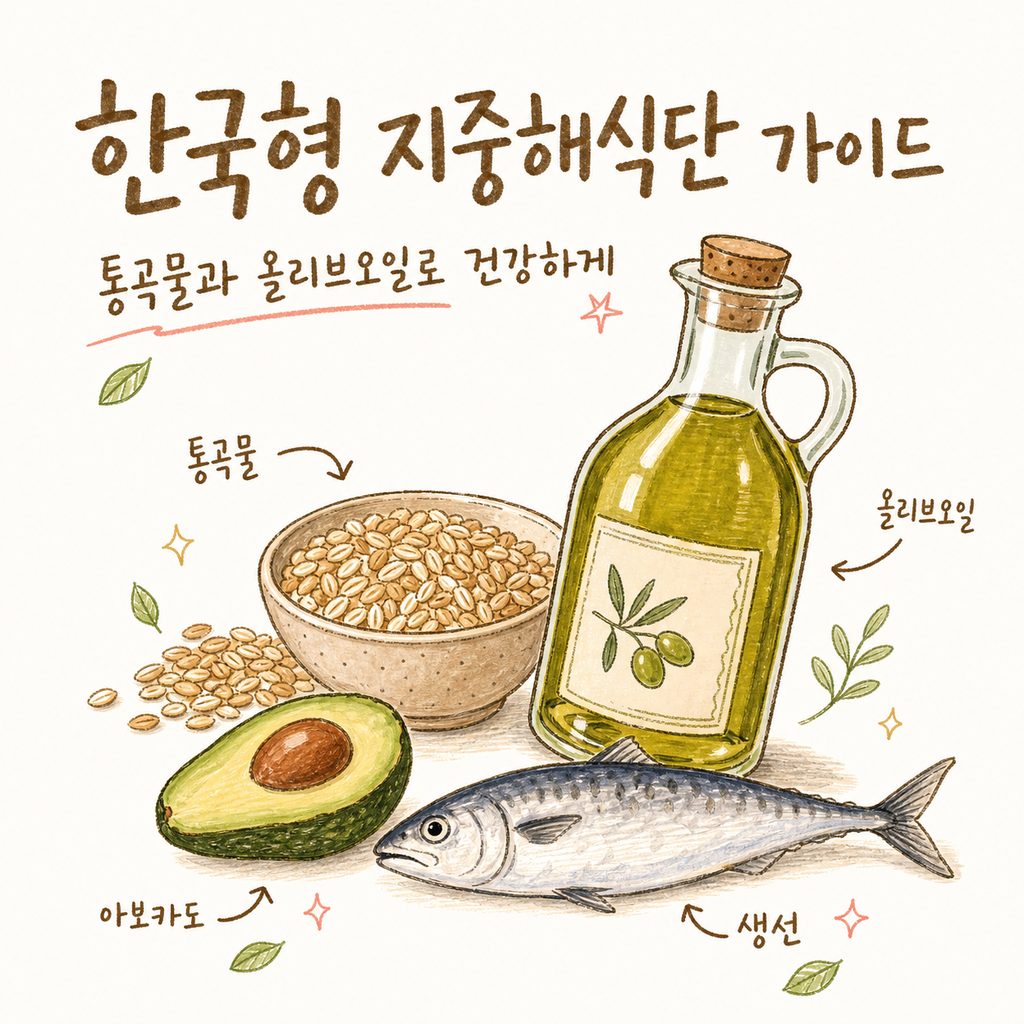
Mediterranean Diet: A Korean Guide to Whole Grains & Oil

Table of Contents
- Core Principles and Direction of the Mediterranean Diet
- K-MEDAS: A Mediterranean Diet Adherence Tool for Koreans
- Korean-style Mediterranean Meal Composition Recommended in the Clinic
- The Value of the Mediterranean Diet from a Korean Medicine Perspective
- Points for Immediate Practice Starting Today
- Warm Advice for Healthy Change
- References
Thinking of starting a Mediterranean diet for your health, but not sure how a Korean person should prepare meals daily? Since it centers on Western ingredients like olive oil and cheese, it’s tricky to bring directly to our table. In my clinic, I often hear the question, "Doctor, what should I eat for a Korean-style Mediterranean diet?"

Core Principles and Direction of the Mediterranean Diet
The Mediterranean diet is not about eating specific foods, but about balancing the quality and nutrients of your intake. The core principles are simple: eat plenty of whole grains, vegetables, fruits, legumes, nuts, fish, and extra virgin olive oil.

Instead, try to reduce red meat, processed meats, sugary drinks, and refined grains like white rice and white bread. Poultry, eggs, and dairy products like yogurt are sufficient as side additions. In terms of nutritional ratios, we recommend a balance of carbohydrates, protein, and fat at approximately 5:2:3.
There is one thing you shouldn't miss: this is not a low-fat diet that avoids fat at all costs. The key is actually filling 30–40% of your daily calories with healthy fats, such as olive oil or fish oil. Numerically, this means consuming about 67–88g of lipids per day.
K-MEDAS: A Mediterranean Diet Adherence Tool for Koreans
So, how can we measure how well Koreans are following the Mediterranean diet? A study published in 2020 developed a survey tool called K-MEDAS (Korean Mediterranean Diet Adherence Screener) tailored to our dietary habits.
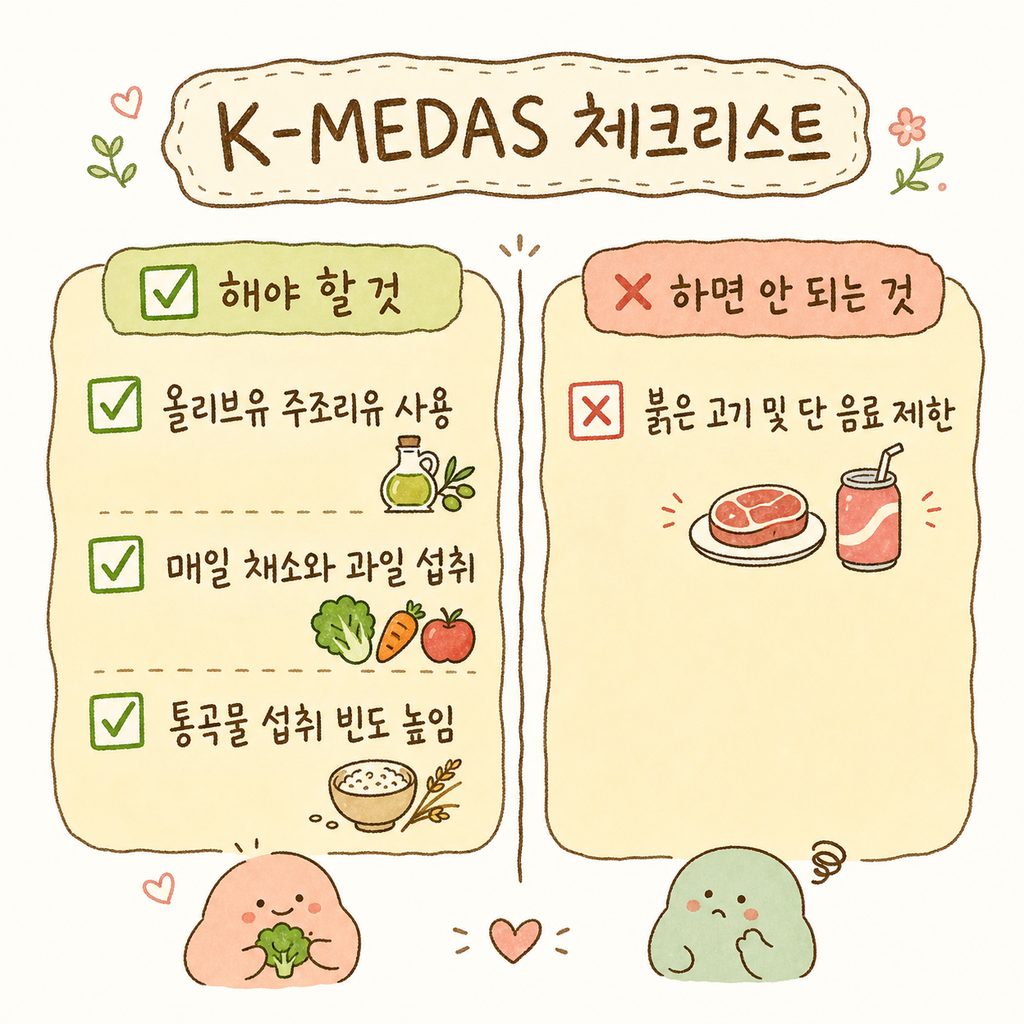
The tool was validated with 327 participants, including 211 health check-up recipients and 116 patients with obesity or high cholesterol. It consists of 14 items, translating the Spanish MEDAS questions into Korean and adding items suitable for our eating habits.
The questions ask whether you use olive oil or vegetable oil as your primary cooking oil, how many times a day you eat vegetables and fruits (excluding juice), and how often you consume whole grains. Your score also includes how much fish, legumes, and nuts you eat in a week, and how well you avoid red meat and sugary drinks.
Korean-style Mediterranean Meal Composition Recommended in the Clinic
The Korean-style Mediterranean diet I actually recommend to my patients looks like this. You don't necessarily have to eat bread and pasta. A bowl of rice mixed with barley or brown rice paired with 100g of grilled fish like mackerel or saury is more than enough.

Add 3–4 vegetable side dishes such as namul (seasoned greens), salad, or muchim (seasoned vegetables), and use a bit of olive oil or sesame oil when cooking. Complete the meal with a bowl of seaweed soup or vegetable soup and a medium-sized apple (approx. 95 kcal[1]) for dessert to create a wonderful Korean-style Mediterranean meal.
However, please remember that the total daily calories and the proportion of each meal vary from person to person depending on weight and existing health conditions. Therefore, it is safest to adjust detailed calorie intake in consultation with a nutritionist to suit your body.
The Value of the Mediterranean Diet from a Korean Medicine Perspective
Korean medicine places great importance on the properties and balance of food. The whole grains and fresh vegetables emphasized in the Mediterranean diet are ingredients that help clear the body's Qi and expel waste products.
Reducing refined sugar and processed meat aligns with calming "Dameum" (metabolic waste/phlegm-fluid) and inflammatory responses within the body. Olive oil and fish, which are rich in unsaturated fatty acids, help blood circulation and keep metabolism running smoothly.
Rather than just a diet for weight management, it is better to view it as a "healing diet" that cleanses the body's overall metabolic environment and soothes inflammation.
Points for Immediate Practice Starting Today
It’s not easy to create a perfect meal plan starting tomorrow. That’s why I’ll highlight a few realistic methods I often recommend in the clinic.

Designate just one day a week as a "meat-free day." Fill your protein needs with tofu, beans, and fish instead of beef or pork. Try to build a habit of reducing red meat consumption to about once a week.
You can also slightly adjust your cooking methods. Use perilla oil or sesame oil for stir-fries and seasoned dishes, but use more olive oil for main dishes or salads. For snacks, a handful of almonds or walnuts is much better than crackers.
For carbohydrates, try replacing white rice with brown rice, multi-grain rice, or whole-wheat bread. Focusing on complex carbohydrates causes blood sugar to rise and fall slowly, making you feel less hungry.
Warm Advice for Healthy Change
Changing your diet is not just about swapping menus; it’s about taking care of your entire lifestyle. If you are too strict from the beginning, you will burn out quickly. Therefore, I recommend changing one ingredient at a time.

As you personally feel your body becoming lighter, you will soon find yourself enjoying this diet. When dietary control is combined with management tailored to your constitution, the results will be even more solid.
If you join the Baekrok Gambi-jung program, you can expect even clearer results as it supports metabolic function. Try the diet I shared today and be sure to tell me how your body has changed during your next visit.
References
[1] Development and Validation of a Questionnaire to Measure Adherence to the Mediterranean Diet in Korean Adults. (Nutrients, 2020) — https://pubmed.ncbi.nlm.nih.gov/32316107/
References