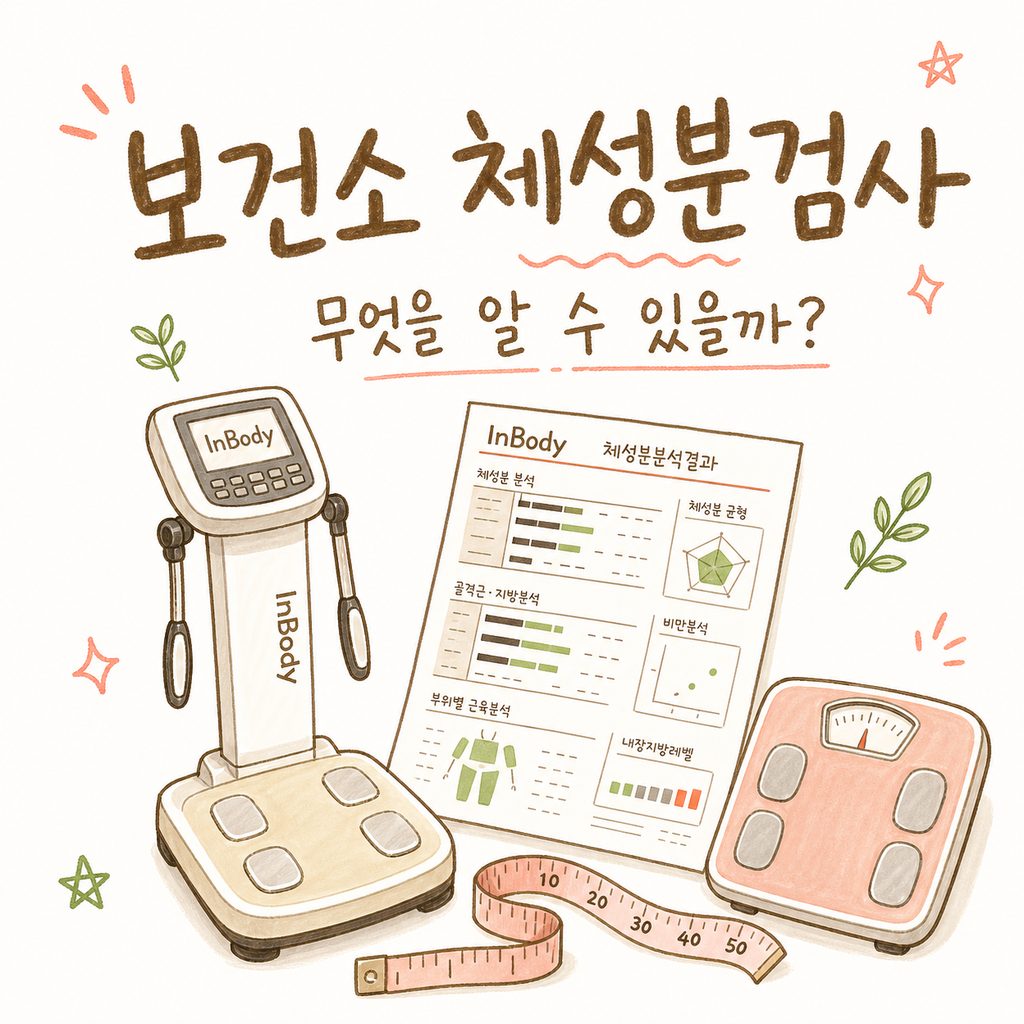
Public Health Center Body Composition: Muscle, Fat, & BMI

Table of Contents
"Doctor, I had an InBody test at my local public health center. Is it the same as the one done at a clinic?" This is a common question from patients visiting my office to plan their diet/weight management. Many people turn to public health centers first when they want to check their body condition without spending much money.
Items Measured in Public Health Center Body Composition Analysis
Let me give you the answer first. The body composition analysis (InBody) performed at public health centers is almost identical to the items measured at general hospitals or clinics. While the specific configuration may vary slightly by local government, there are core indicators captured everywhere.
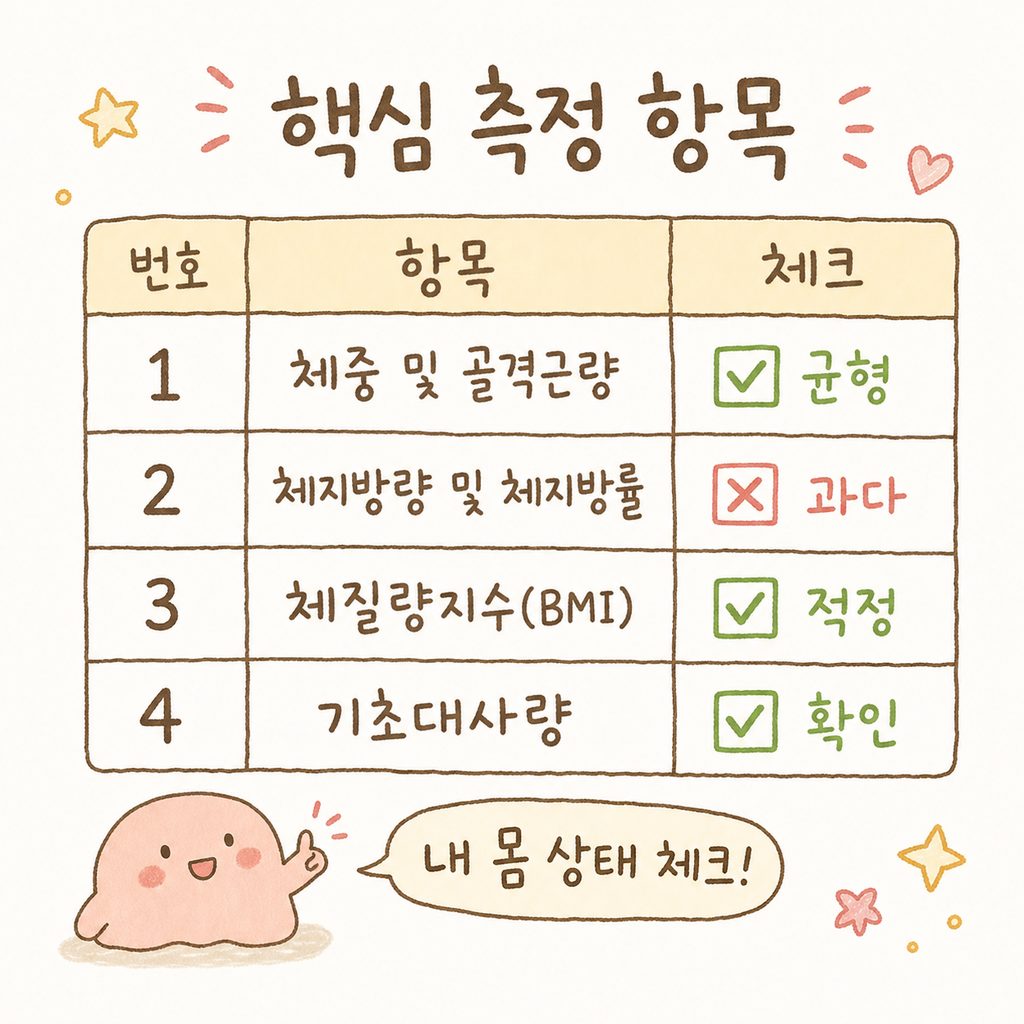
It measures the most basic weight, muscle mass (skeletal muscle mass), as well as body fat mass and body fat percentage. Some centers also include detailed body composition items such as body water (extracellular water ratio, etc.), protein, and minerals.
Indicators such as body fat percentage and abdominal fat ratio, which gauge the degree of obesity, can also be viewed. Since it analyzes not just weight but also physical balance and the distribution of muscle and fat by body part, you can pinpoint which areas of your body need more attention. In many cases, the Body Mass Index (BMI) and Basal Metabolic Rate (BMR) are also printed on the result sheet, so be sure to check those as well.
Preparation and How to Use the Service
Body composition analysis at public health centers is usually free. However, it is not available to everyone immediately. Many centers limit the service to local residents, employees working within the district, or students. Furthermore, most operate on an appointment system, so you must book in advance via phone, Kakao channel, or the internet before visiting.

You must bring an ID card when you visit. If you are an employee or student in the district, some places may require a business card or student ID. Operating hours are usually from weekday mornings to afternoons, but remember that they are closed during lunch hours.
There are a few things to follow for an accurate measurement. It is best to avoid excessive exercise before the test. Some public health centers prohibit food or water intake 2–3 hours before measurement. Many places also recommend or limit re-testing until after 3 months, so keep this interval in mind if you want to record changes periodically.
A Korean Medicine Doctor's Perspective on the Numbers
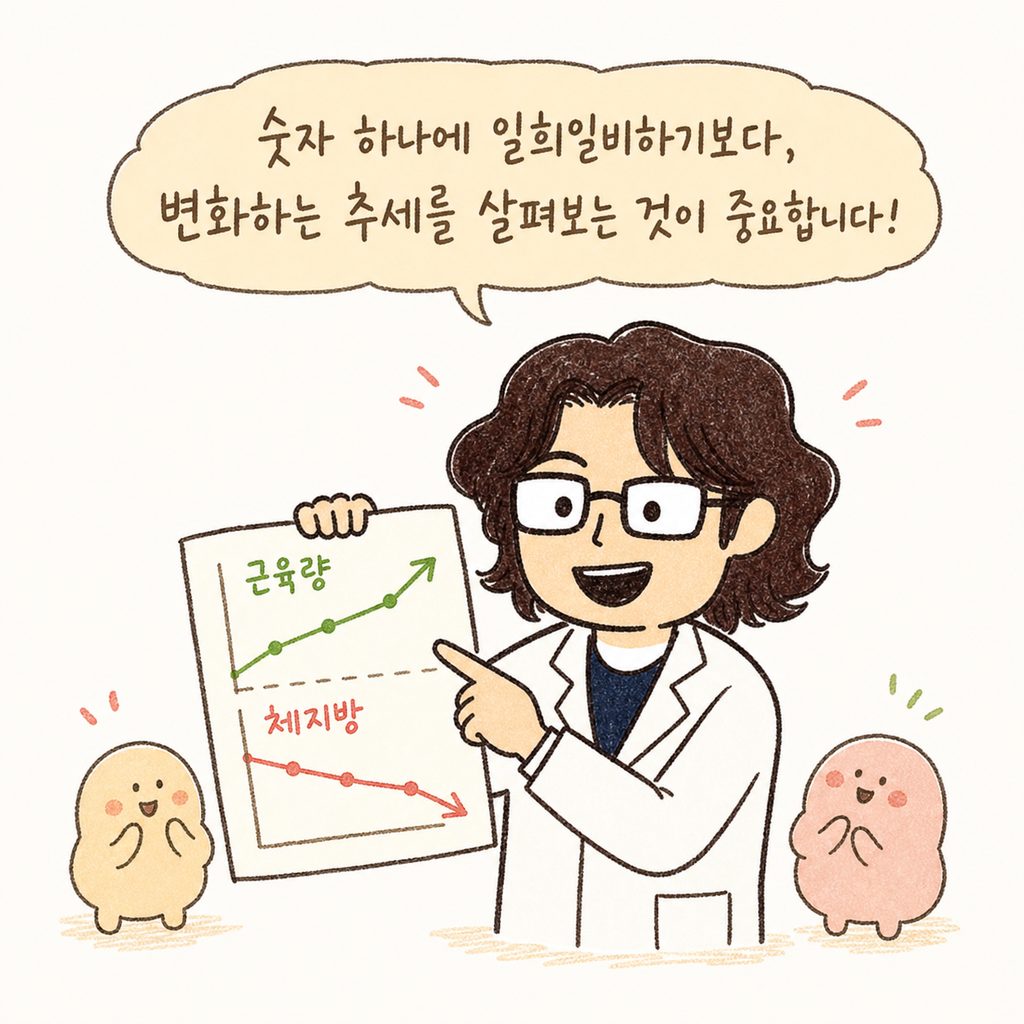
When I look at a patient's InBody result sheet in the clinic, I always emphasize the 'direction' rather than the 'numbers themselves.' Since body composition analyzers use electrical resistance (BIA) for estimation, slight errors are bound to occur depending on how much water you drank that day or your physical condition.
Therefore, I look at the trend of how things change over a 3-month interval rather than a single measurement. If your weight remains the same but your skeletal muscle mass has increased and your body fat percentage has decreased, it is a sign that a very successful improvement in metabolism is occurring.
In Korean medicine, we consider it important not just to strip away fat, but to revive the circulation of Qi and blood and the body's metabolism. For those with very low muscle mass or severe edema (increased extracellular water ratio), activating metabolism suited to their constitution is a priority over a reckless starvation diet/weight management.
How to Manage Your Body Starting Today
If you have received your public health center test results, the key now is how to use those figures. First, check if your BMI and body fat percentage fall within the standard range. If your muscle mass is lower than the standard, you should plan to include strength training while consuming more protein, rather than just doing simple aerobic exercise.

If your BMR is low, your body may be in a 'power-saving mode' to conserve energy. In this case, restoring your metabolic rhythm through regular meals and sufficient sleep is more important than a forced low-calorie diet.
Check the reservation system of your local public health center and confirm your body's current status within this month. Only by knowing your current state accurately can you develop an efficient diet/weight management strategy that fits you.
Once you have properly identified your body's condition, systematic management tailored to it is necessary. With the Baekrok Gambi-jung program, you can expect more effective weight loss tailored to your individual constitution and metabolic state. Feel free to bring your result sheet for a consultation, and check for even healthier figures at your next test.
References