Cleanse Juice Guide: Calories, Sugar, and Dosage Tips

Table of Contents

title: "Cleanse Juice Guide: Calories, Sugar, and Dosage Tips" ---
When deciding to start a diet, many people begin by searching for cleanse juices. In my clinic, I hear questions like, "Doctor, wouldn't I lose weight if I just lived on juice for three days?" at least a few times a week. I completely understand the sentiment. After a week of overtime and company dinners, your body feels heavy, and you feel the urge to "empty it out." However, if you look closely at the labels, even under the same name of "cleanse juice," there are significant differences in calories, sugar, and dosage. Today, rather than just listing recommended products, I will explain what to look for when choosing them and how to drink them properly.
Base — What is the juice made of?
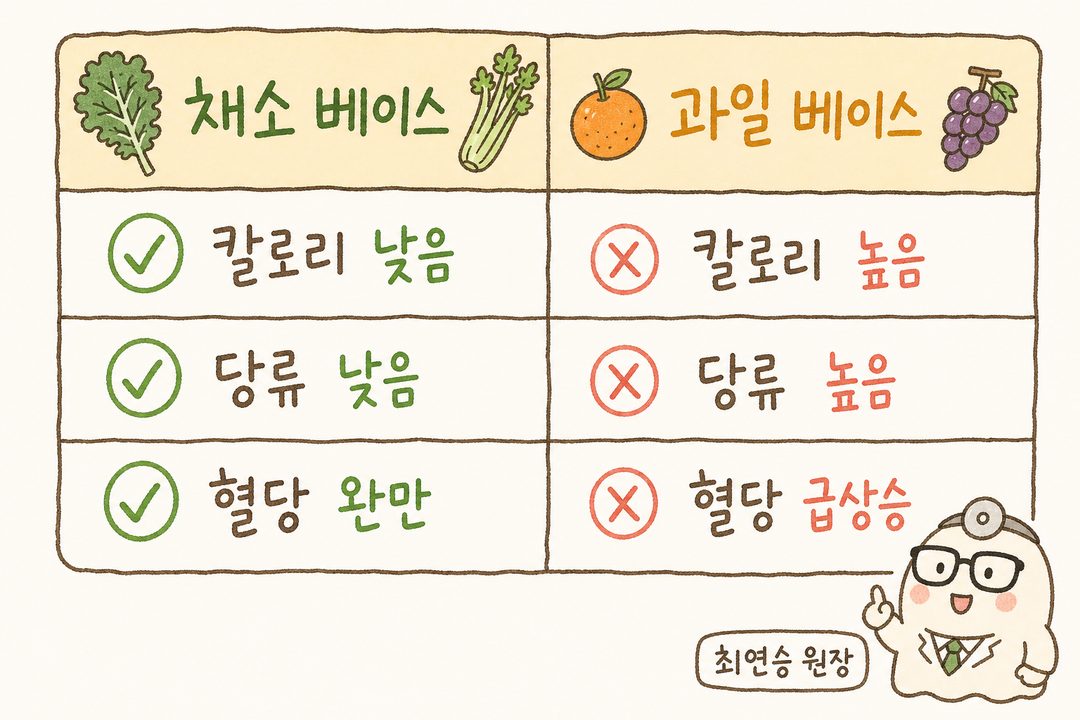
The first thing you should check is the base, which means the main ingredients. Products with a high proportion of vegetables like apples, carrots, beets, celery, and kale differ from those where sweet fruits like oranges, pineapples, and grapes are the stars, even if they come in the same bottle.
If you choose a vegetable base, the sweetness is mild, so it might taste a bit bland at first. However, because nutrients like dietary fiber and potassium are relatively balanced, your blood sugar won't spike all at once after a glass. Conversely, fruit-centered juices are palatable and easy to drink, which might lead you to reach for another bottle without thinking. But since this also means more sugar intake, it doesn't align with weight management goals.
I advise patients to prioritize "products containing more than 50% green or red vegetables." If the first ingredients listed on the label are apple concentrate or grape concentrate, you should essentially consider it a fruit juice.
Calories — How much is appropriate per bottle?
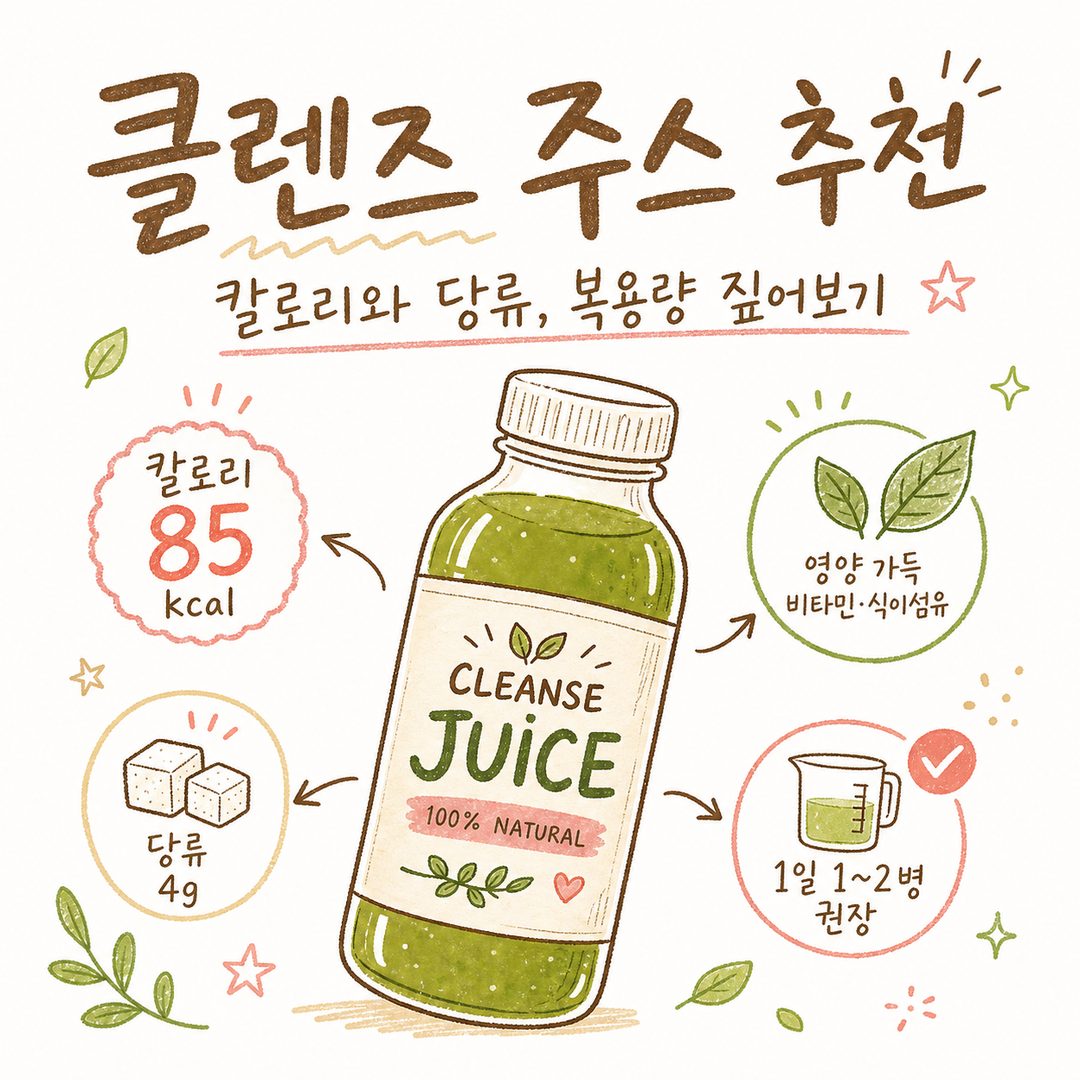
Next is the calorie count. Most commercial cleanse juices contain about 80 to 150 kcal per bottle (200–300 mL). This is almost the same range as regular fruit and vegetable juices.
Try using these selection criteria:
If it's for a snack, 100–150 kcal per serving is reasonable.
If it's to partially replace a meal, products under 50 kcal are too low and will leave you hungry quickly.
If a bottle exceeds 200 kcal, it contradicts the image of a "low-calorie drink," so you should reconsider.
There is one common misunderstanding here: "Isn't it better as long as the calories are low?" The core of a cleanse juice is not simply eating less, but acting as a supplementary tool to fill the nutritional gap between solid meals. If the intake is too low, it becomes similar to skipping a meal, which increases the risk of binge eating in the evening.
Sugar — The item you should actually care about most
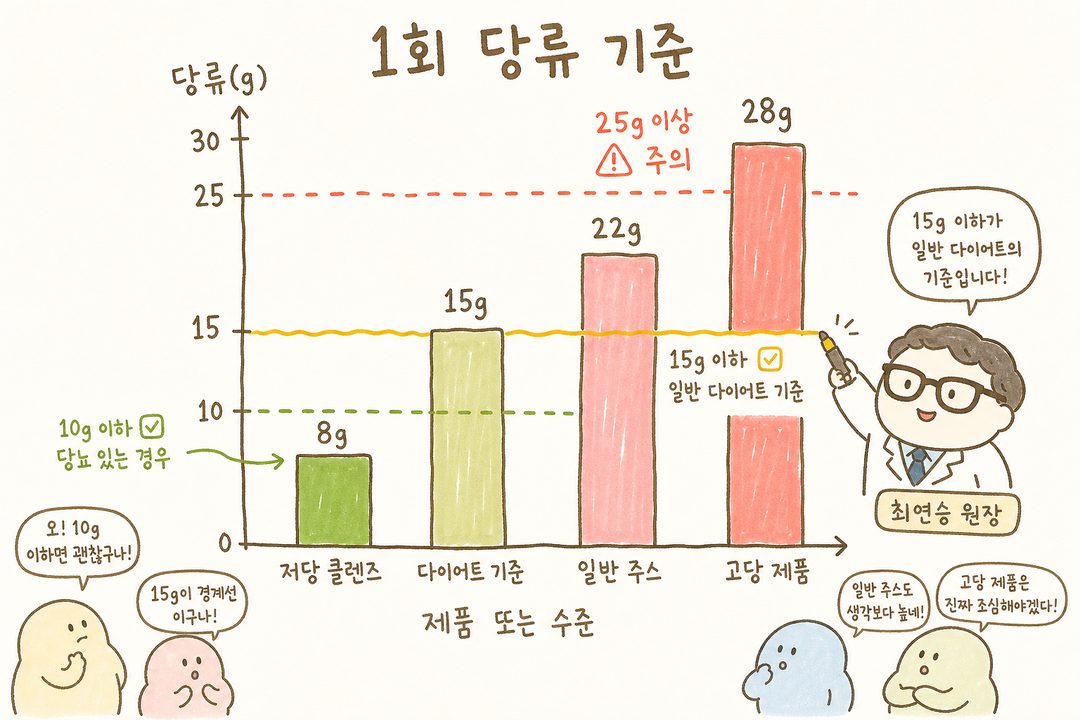
You must check the sugar content even more carefully than the calories. It is common for a single bottle to contain 10 to 25 g of sugar. Since 25 g is equivalent to about 8 sugar cubes, it's quite a lot for something considered a diet drink.
The criteria I recommend are simple:
Set 15 g of sugar or less per serving as your first cutoff.
If you have been diagnosed with diabetes or insulin resistance, narrow it down further to products with 10 g or less.
Products labeled with 0–1 g of sugar are a signal that they are closer to being vegetable-centered.
The MFDS (Ministry of Food and Drug Safety) investigated 94 commercial cleanse juice products and found that not a single one had scientifically proven "diet or detox" effects. Their nutritional components were no different from regular fruit and vegetable juices. Rather than being swayed by the word "detox," it is safer to make decisions based solely on the numbers written on the label.
Dosage and Timing — When and how many glasses?
The final variable is how you drink it. This is also the part I correct most often in the clinic.
Let's summarize the basic principles:
For snack purposes, 1 to 2 glasses a day (200–250 mL per glass) is appropriate.
When using it as a meal replacement, replace only one meal a day and ensure the other two meals are regular meals containing protein.
Using it lightly for 1 to 3 days at the beginning is fine, but I do not recommend methods where you stop all solid food and only drink juice and water for 1 to 5 days.
In particular, "3-day juice-only plans" are widespread on the internet, but research has reported that such plans can disrupt the balance of gut and oral microbiomes and are associated with changes related to inflammation and cognitive decline. While you might try it once, those who repeat it every month should think again.
As for timing, 20 minutes before a meal is better than immediately after waking up on an empty stomach. This helps blunt the rapid rise in blood sugar and assists in controlling meal portions. Drinking a bottle on an empty stomach in the morning can easily cause heartburn for those with weak stomachs.
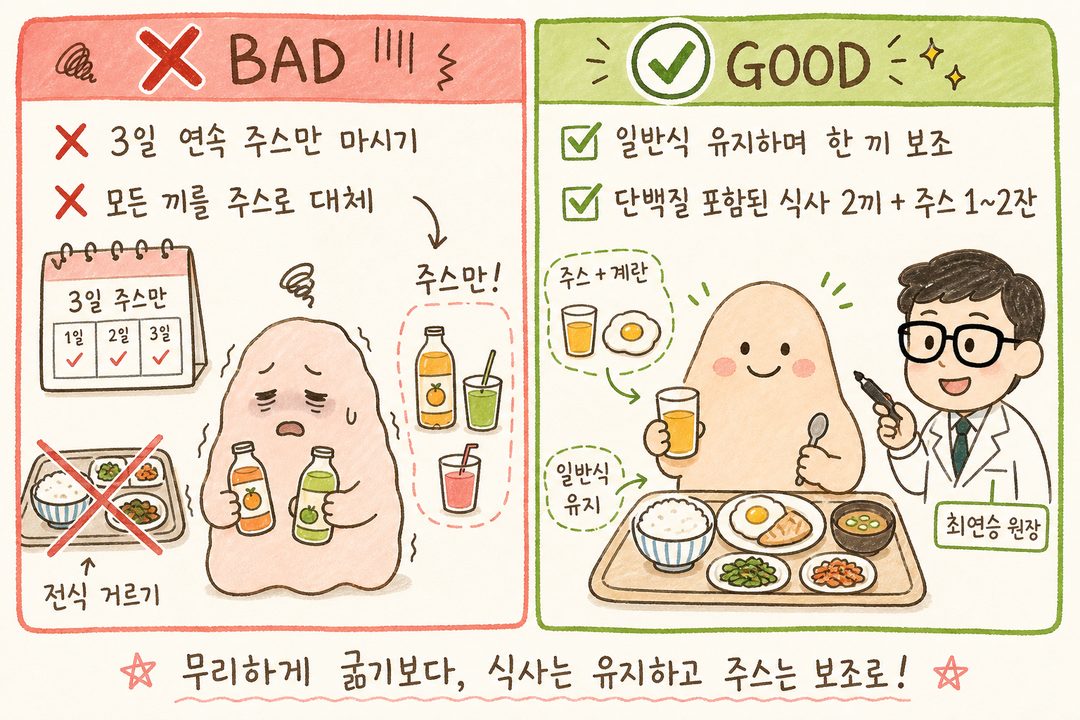
Wrong Use vs. Safe Use
Since the results vary even with the same product, here is a summary:
❌ Replacing all three meals with juice, a continuous 3-day fasting cleanse.
✅ Maintaining regular meals while adding one glass between meals.
❌ Buying based on "detox" marketing without checking calories and sugar.
✅ Buying after confirming 100–150 kcal and 15 g of sugar or less per serving on the label.
❌ Consuming only juice for a whole week to quickly lose 2 kg.
✅ Two regular meals including protein + 1 to 2 glasses of cleanse juice as a supplement.
❌ Starting based on self-judgment while having kidney disease, diabetes, or undergoing cancer treatment.
✅ Consulting with medical staff first if you have underlying conditions.
Even if it looks like you've lost weight in the first few days, that is the result of losing water and glycogen. Once you return to regular meals, you will quickly return to your original weight. It's better to lower your expectations of "losing it all with a few days of juice" and view it as a supplementary tool to avoid disappointment.
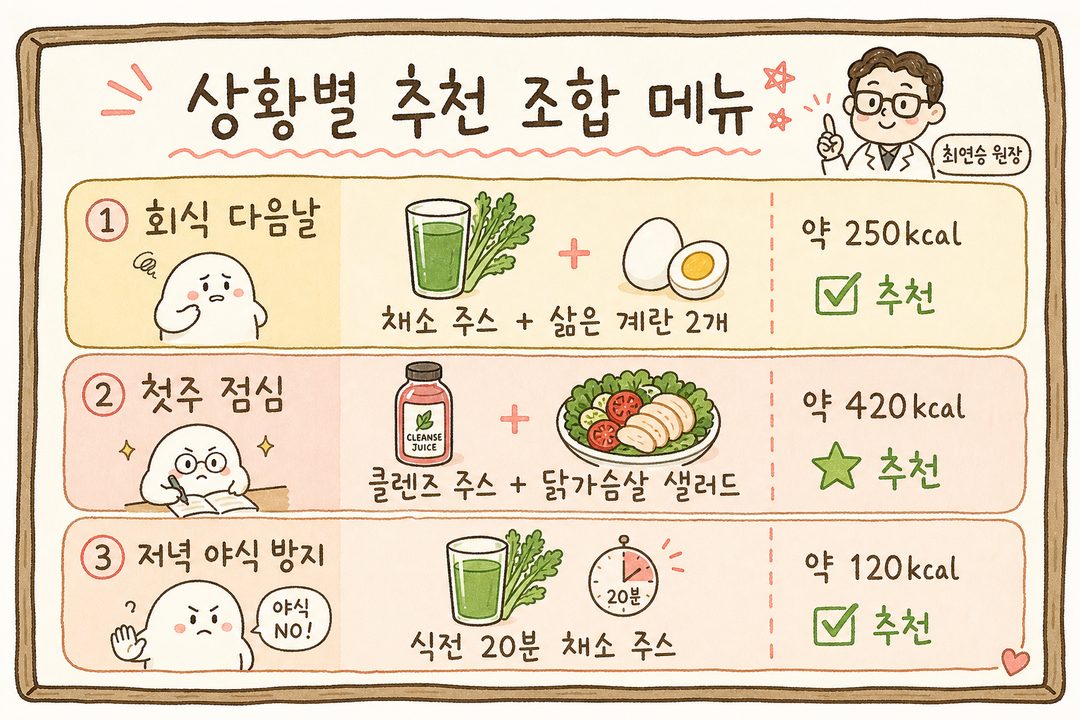

3 Recommended Combinations for Different Situations
Finally, here are three combinations I frequently suggest in the clinic.
1) When your stomach feels heavy the day after a company dinner — 1 glass of vegetable-based juice + a protein-rich breakfast
If you skip breakfast entirely because you overate the night before, you will binge again at lunch. A combination of one glass (200–250 mL) of vegetable-based cleanse juice with two boiled eggs or a cup of soy milk is appropriate. This combo keeps the stomach light while providing protein.
2) The first week of starting a diet — Partial replacement of just one lunch
If you suddenly reduce your food intake in the first week of a diet, your willpower will quickly crumble. It is more realistic to have one glass of cleanse juice with a small bowl of chicken breast salad for lunch. This has much higher sustainability than replacing a whole meal.
3) Evenings when you want to stop late-night snacking — One glass before dinner
Drinking a vegetable-based juice slowly about 20 minutes before dinner naturally reduces your meal portion. It also dampens the urge for late-night snacks. However, drinking high-sugar fruit juice late at night can interfere with sleep, so choose a low-sugar product.
All three combinations share the same principle: juice does not replace a meal but helps it. As long as you follow this premise, cleanse juice can be fully utilized as a diet tool.
If you've read this far, one thing should be clear: it is difficult to lose significant weight with commercial cleanse juices alone, and if used incorrectly, they can even disrupt your nutritional balance. If you are looking to combine herbal prescriptions and dietary coaching while considering your constitution, lifestyle habits, and underlying conditions, you may want to consult with our Baekrok Gambi-jung program at Baekrokdam Clinic. We are prepared to help you with everything from reading labels to managing your daily meals.