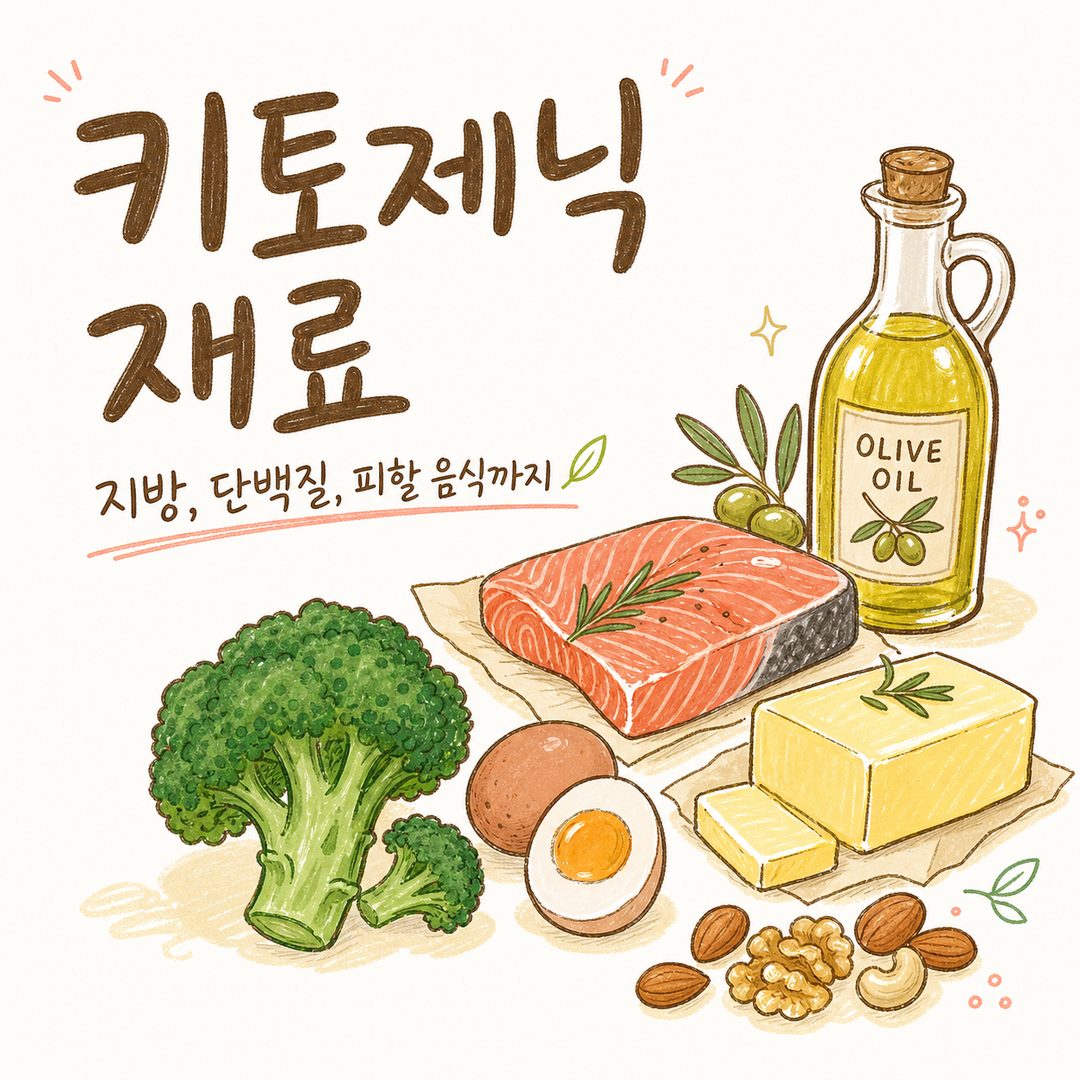
Keto Ingredients: Fats, Proteins, and Foods to Avoid

Table of Contents
In our weight management consultations, we often hear 'I want to try keto but don't know what to buy.' Many people feel overwhelmed when trying to fill their shopping carts with the right ingredients.
What Exactly is Ketogenic?
Ketogenic combines 'ketone' and 'genic,' meaning a dietary approach that changes your body to produce more ketones. Our bodies typically use glucose as their primary energy source, but when you significantly reduce carbohydrates, they start burning fat instead, producing energy molecules called ketones. This state is called ketosis.
Originally developed as a medical diet for treating neurological conditions like pediatric epilepsy that don't respond well to medication, it gained popularity for weight management and blood sugar control. Many people ask, 'Isn't this just low-carb, high-fat (LCHF)?' While LCHF allows up to 120g of carbohydrates, ketogenic strictly limits carbs to under 50g to trigger significant ketone production.
What's the Ideal Nutrient Ratio?
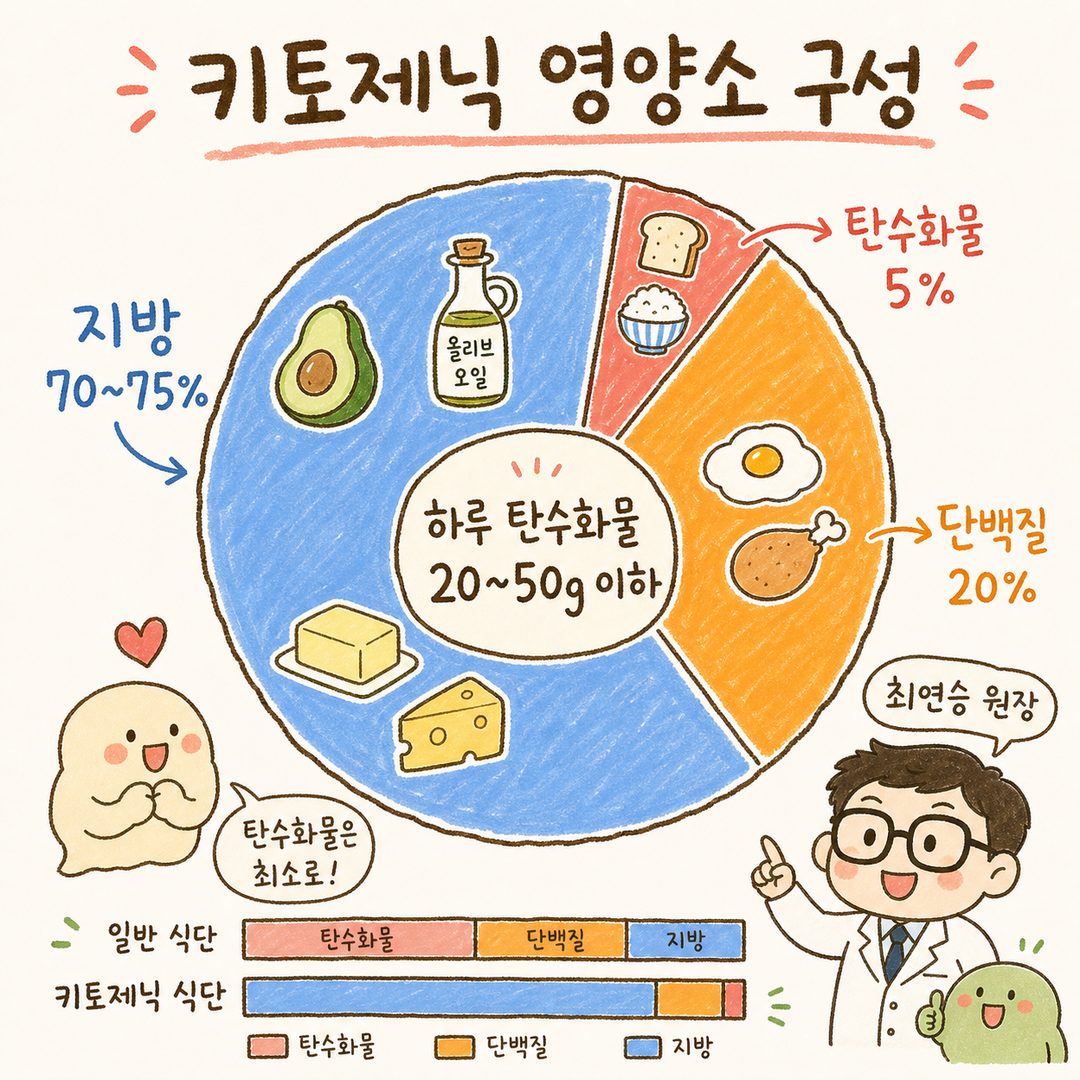
Ratios vary slightly across sources, but the commonly suggested breakdown is 70-75% fat, 20% protein, and 5% carbs. Some sources suggest a broader range of 60-80% fat, 15-20% protein, and 5-10% carbs. The key is keeping daily carbohydrates under 20-50g, which aligns with the recommended net carb intake in practice.
Beginners often struggle with memorizing ratios. Just remember: mostly fat, moderate protein, very few carbs. Nutrition experts note that limiting carbs to around 20g for several days helps transition your metabolism to burn fat and ketones instead of glucose.
Must-Have Ingredients
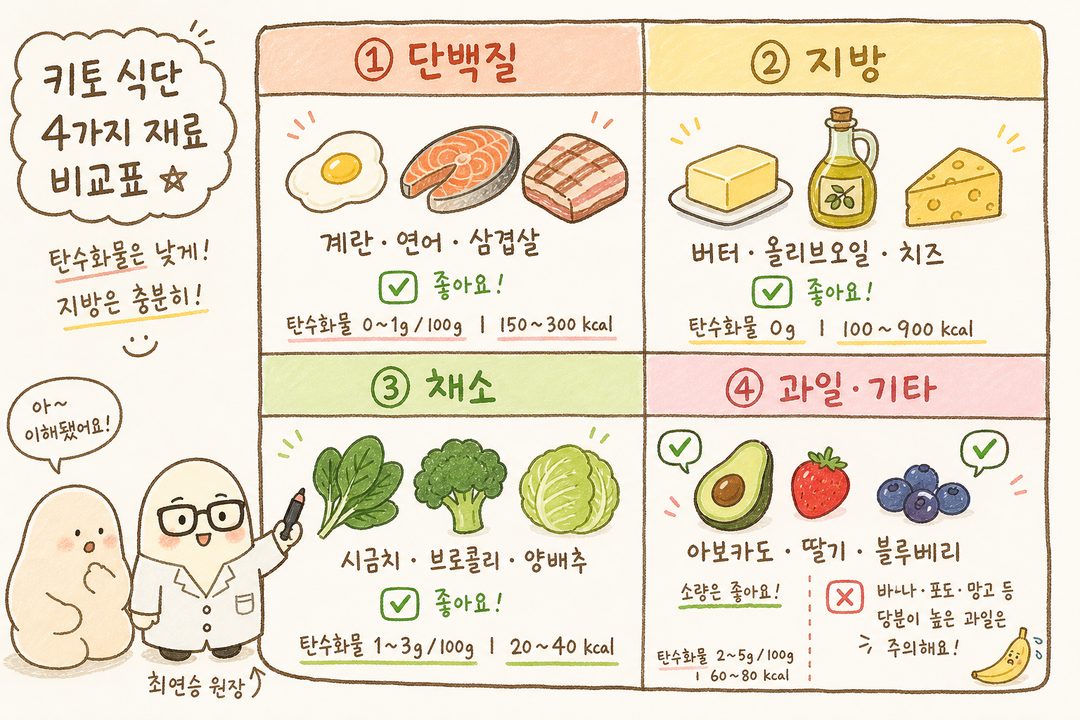
Ketogenic ingredients generally fall into four categories:
Protein sources: Eggs, salmon, mackerel, pork belly, ribeye, short ribs, chicken thighs, seafood, organ meats
Fat sources: Butter, cheese, olive oil, avocado oil, coconut oil, MCT oil, lard, ghee, perilla oil, nuts
Vegetables: Spinach, kale, romaine, arugula, broccoli, cauliflower, asparagus, cabbage, bok choy, cucumber, perilla leaves, zucchini, seaweed
Fruits & others: Low-sugar options like avocado, strawberries, raspberries, blueberries, lemon, lime
For those who frequently consume bread and flour, try these substitutes: almond or coconut flour instead of wheat flour, and erythritol or allulose instead of sugar. These make following keto bread and dessert recipes much easier.
Ingredients to Avoid
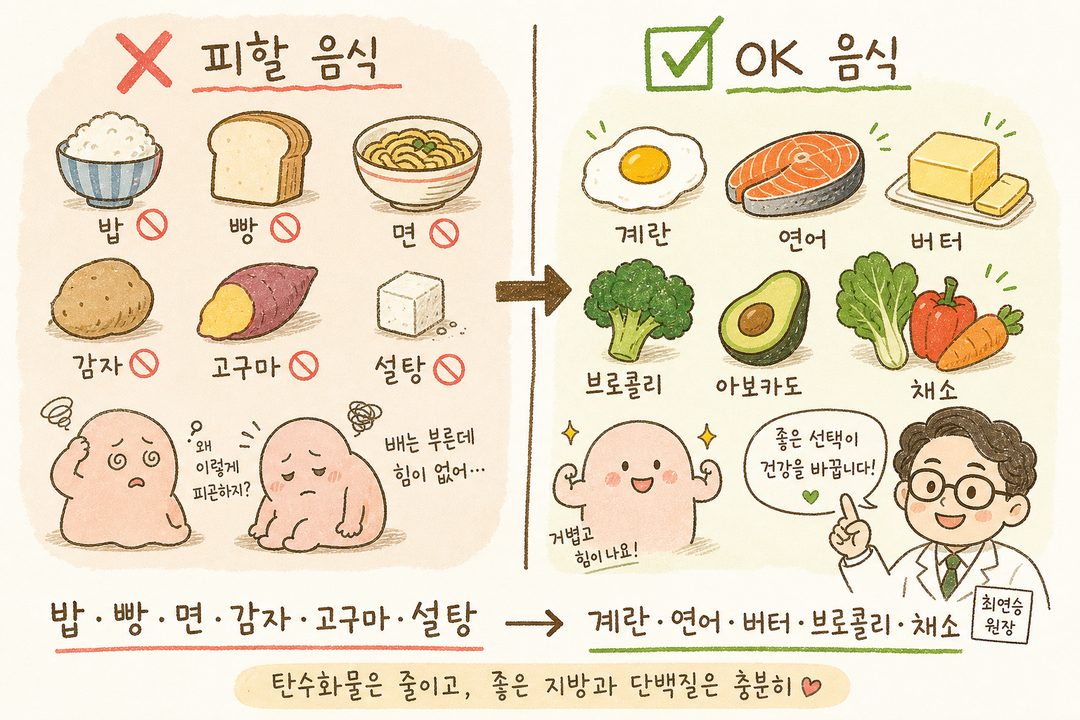
To avoid confusion, remember these foods to eliminate: rice, bread, noodles, potatoes, sweet potatoes, corn, buckwheat, acorns, sugar, high-fructose corn syrup, and flour—all high in carbohydrates. Many ask, 'But aren't sweet potatoes healthy carbs?' However, the quantity makes them challenging for achieving ketosis. Remember the 50g daily limit.
Baekrokdam's Perspective on Keto
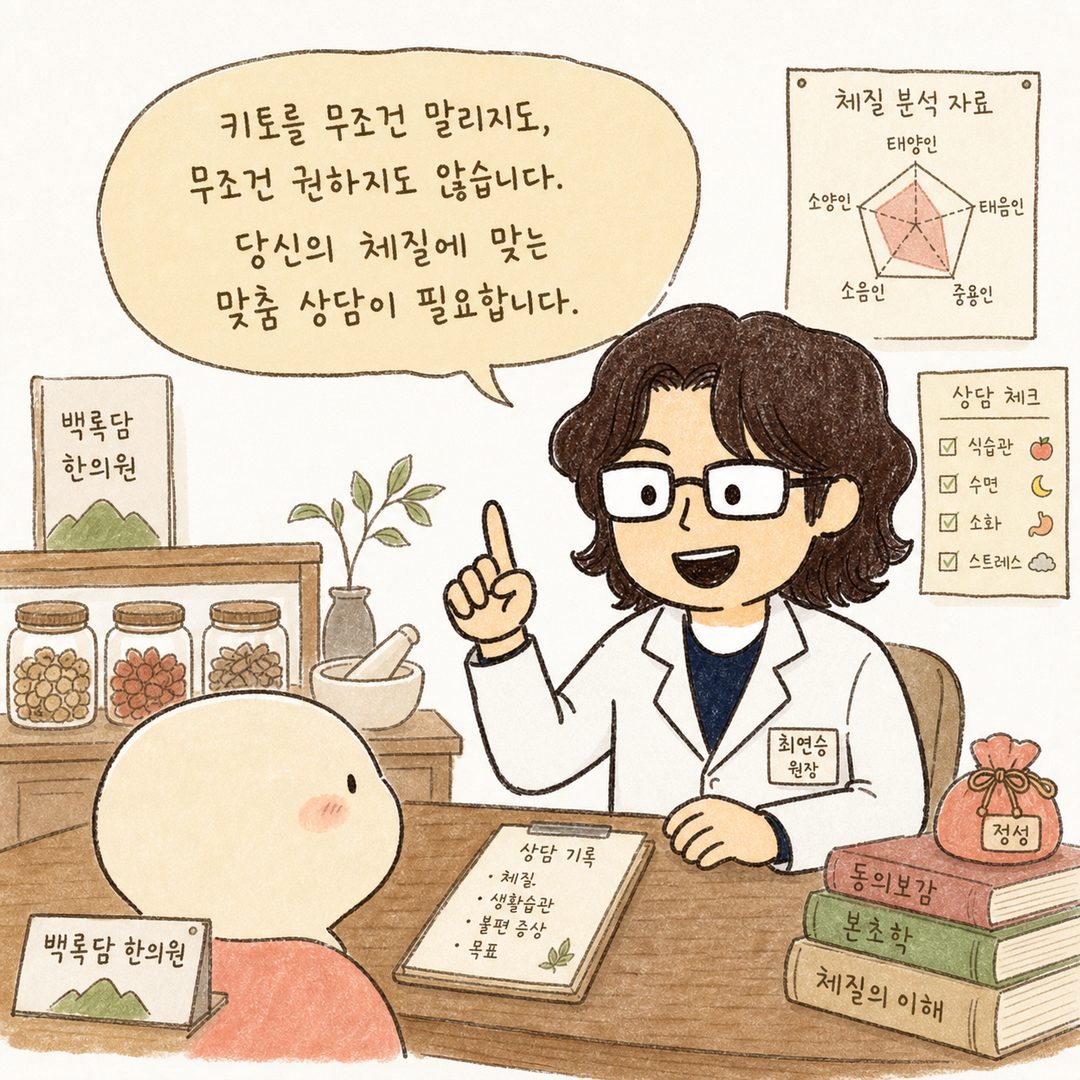
In our practice, we observe varied responses to the same ketogenic diet. Korean medicine recognizes that each person has a unique constitution, digestive capacity, and metabolic state. Those with weak digestion may experience bloating or diarrhea when suddenly consuming high-fat foods, while others with poor appetite control often find their cravings naturally decrease during ketosis adaptation.
We neither discourage nor universally recommend keto. However, we advise checking your constitution first and slowing down if you experience severe dizziness or headaches during adaptation. Since keto originated as a medical diet, those with diabetes, kidney, or liver conditions must consult a specialist first.
Actionable Steps You Can Take Today
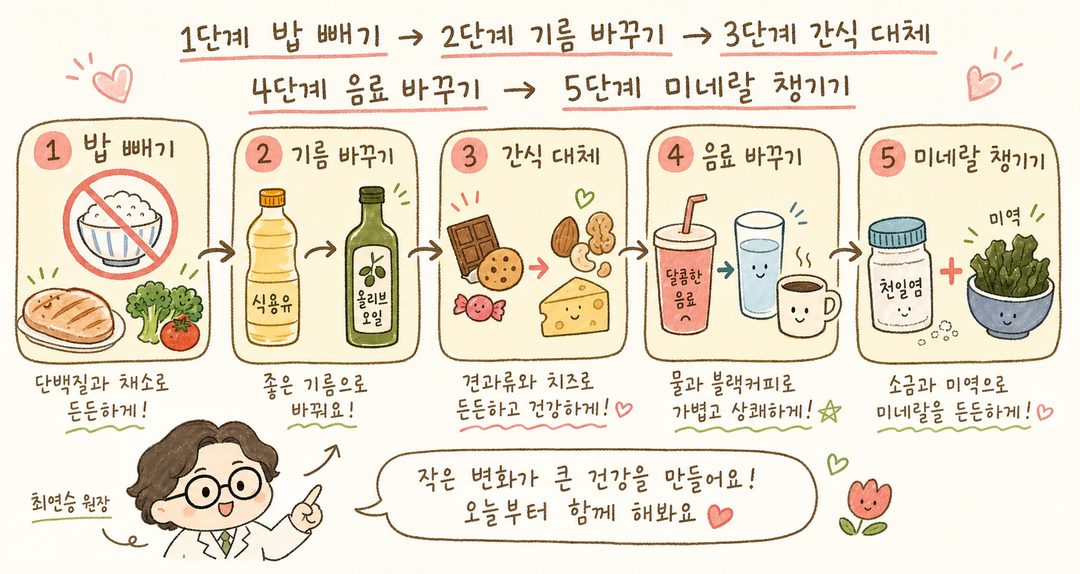
Start small:
Replace one meal of rice/noodles/bread with protein and vegetables
Switch to olive oil/ghee and reduce margarine/vegetable oil
Snack on nuts, cheese, or berries
Choose water, black coffee, or unsweetened tea over sweetened drinks
If dizzy during adaptation, ensure adequate mineral intake (seaweed, salt)
The first 1-2 weeks are an adaptation period as your body shifts to ketone metabolism. Rather than focusing on rapid weight loss, prioritize making the diet sustainable in your daily life.
Conclusion
Ketogenic ingredients are surprisingly simple: quality fats, moderate protein, and leafy greens. However, success depends on balancing ratios with your constitution and lifestyle. If you find the diet challenging or experience adaptation difficulties, consider combining it with Baekrok Gambi-jung and personalized Korean medicine weight management consultation. Visit us at Baekrokdam Korean Medicine Clinic for expert guidance.