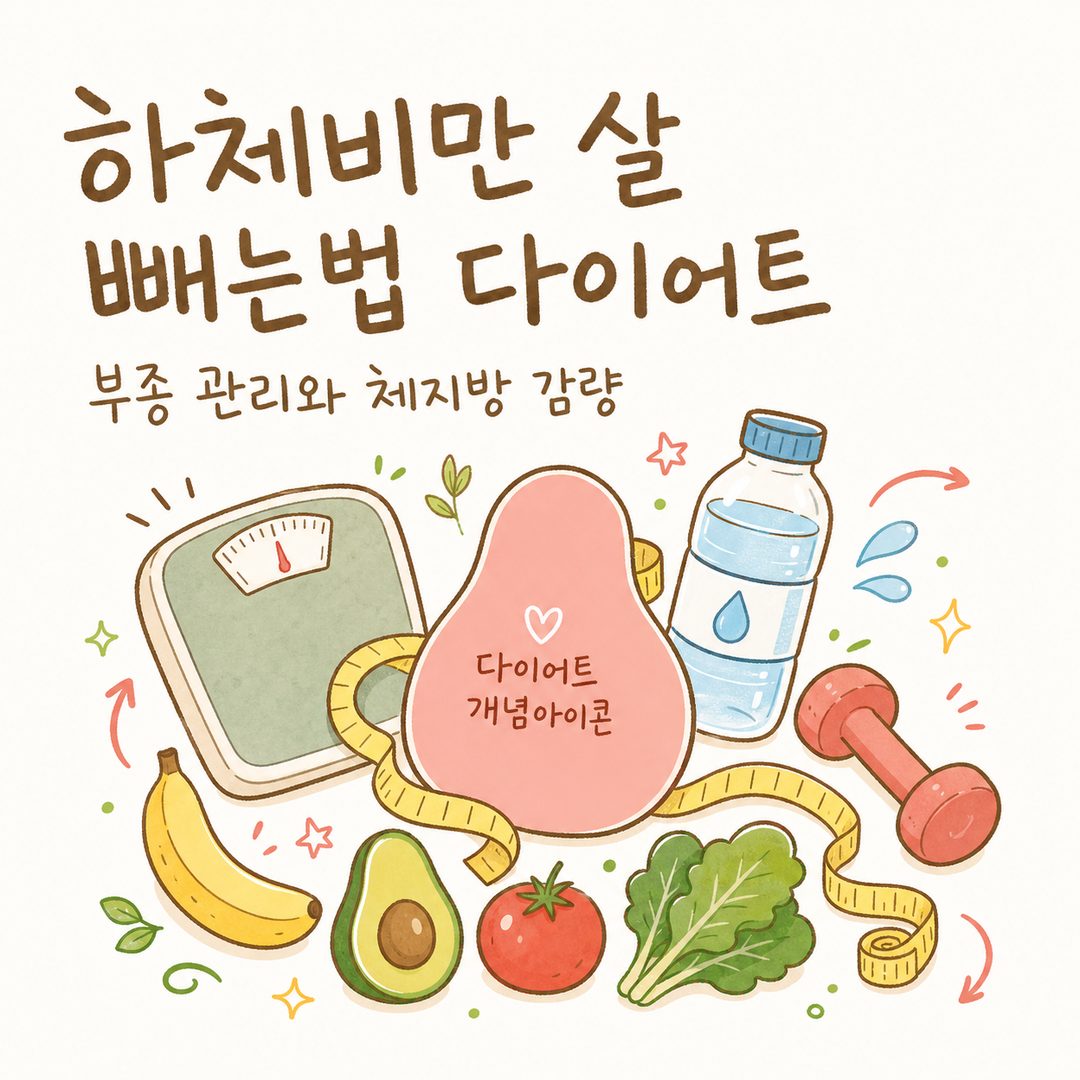
Lower Body Weight Management: Edema and Fat Loss

Table of Contents
Do you sigh every time you see your thighs and calves in the mirror? Many patients tell me, "My upper body is fine, but I just can't lose weight in my lower body." As someone who solves these concerns with my patients, I will explain how to view lower body obesity and where to start.
Why Fat Accumulates Easily in the Lower Body
Lower body obesity is not just a state of "having a lot of fat in the lower body." In the clinic, most cases are a mix of excess body fat and edema (swelling). When you sit for long periods, blood and lymphatic circulation in the pelvis and legs decreases, preventing waste and water from draining. When body fat is added to this, thick layers of fat settle in the thighs, hips, and calves.
Adding salty foods, flour, and sweets to this creates a vicious cycle where swelling and fat accumulate together. Therefore, rather than looking for a way to "lose weight only in the lower body," your lines will only improve if you combine total body fat reduction + circulation and edema management.
What Type of Lower Body Obesity Do I Have?
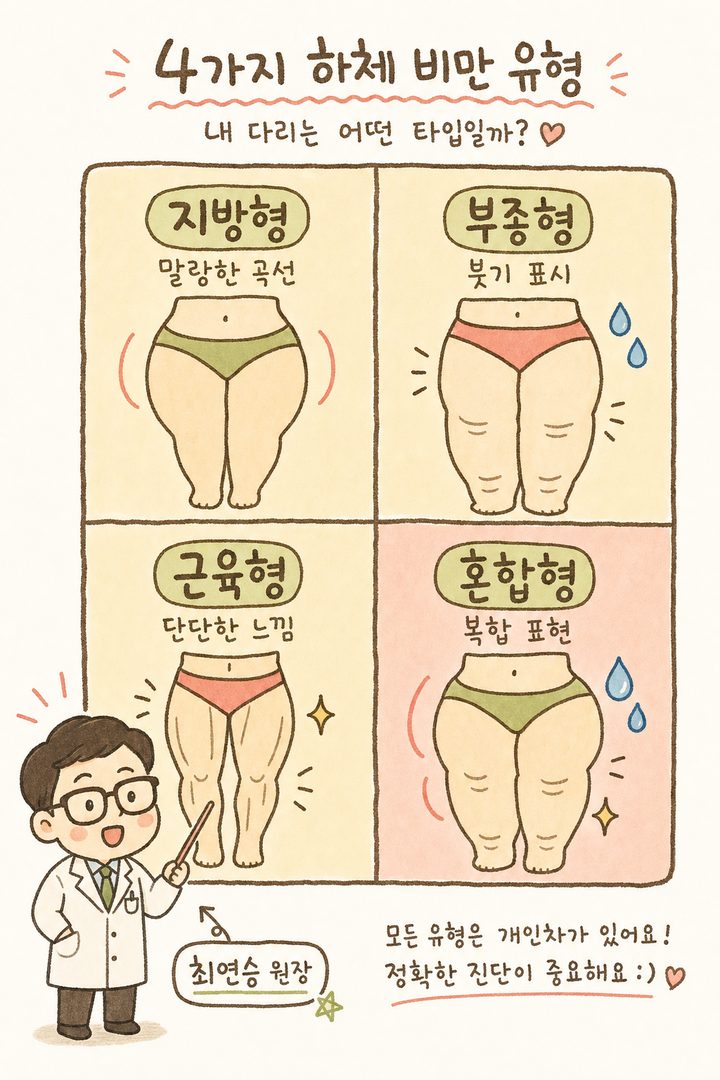
It is best to check your type before deciding on a method. You can get a general idea by touching your thighs and observing how much your legs swell in the evening.
Fat Type: The flesh is soft and feels generally chubby. Total body fat reduction is key.
Edema Type: Legs feel heavy in the afternoon/evening, and finger marks remain for a long time when pressed. Sodium and circulation management are key.
Muscular Type: Calves and thighs are firm with distinct contours. Reduce excessive lower body strength training and focus on stretching and cardio.
Mixed Type: A type that has both fat and frequent swelling. Proceed with body fat reduction and edema management simultaneously.
Even for the same lower body obesity, the direction of exercise changes depending on the type. If you have the edema type but only repeat heavy squats, your calves will inevitably look thicker.
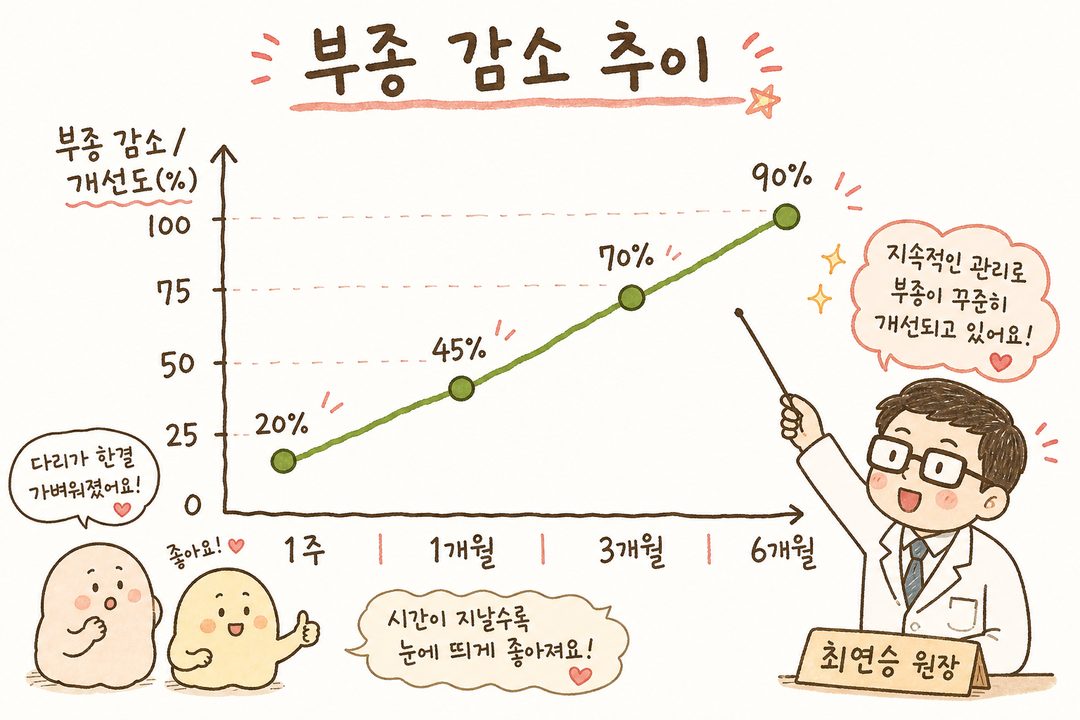
Changes Seen in the Clinic — The 3-6 Month Flow
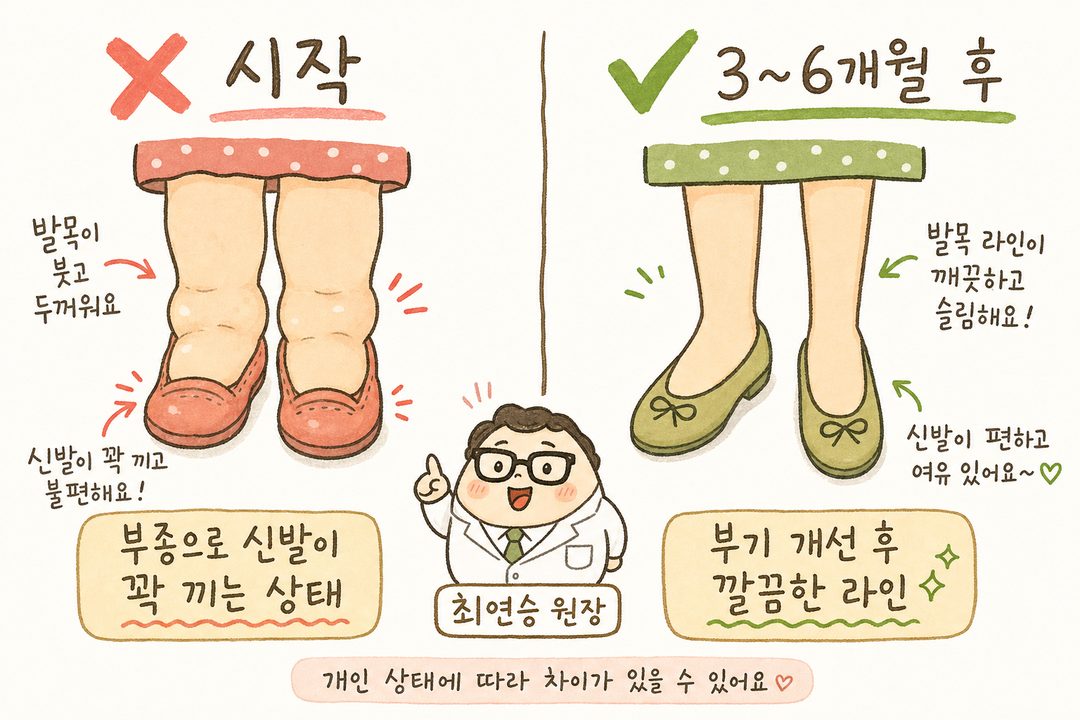
Last year, an office worker in her 30s came to me saying, "I want to clean up my thigh lines before my wedding." Upon measurement, she was a mixed type with both fat and edema. She started dietary adjustments and edema management together and said her legs felt lighter within just one week.
Looking back after about 6 months, her overall weight had naturally decreased, and most importantly, the discomfort of shoes feeling tight due to evening swelling had almost disappeared. Body lines usually change noticeably when managed consistently for 3 to 6 months. Rather than expecting dramatic changes in a short period, it is more realistic to proceed while first feeling the changes in swelling and overall condition.
How Baekrokdam Clinic Views Lower Body Obesity
In Korean medicine, lower body obesity is viewed as a "state where Qi, Blood, and water metabolism are stagnated together." If the Spleen and Stomach are weak and cannot process water properly, the legs swell easily, and if lack of exercise and poor eating habits are added, fat accumulates.
Therefore, rather than an approach that only reduces calories, we recommend a combination of prescriptions tailored to your constitution, dietary correction, and lifestyle management to reduce swelling. Even for the same lower body obesity, some people need to reinforce Spleen and Stomach functions, while others need to prioritize resolving water metabolism. This is why we determine priorities by looking at your constitution in the clinic.
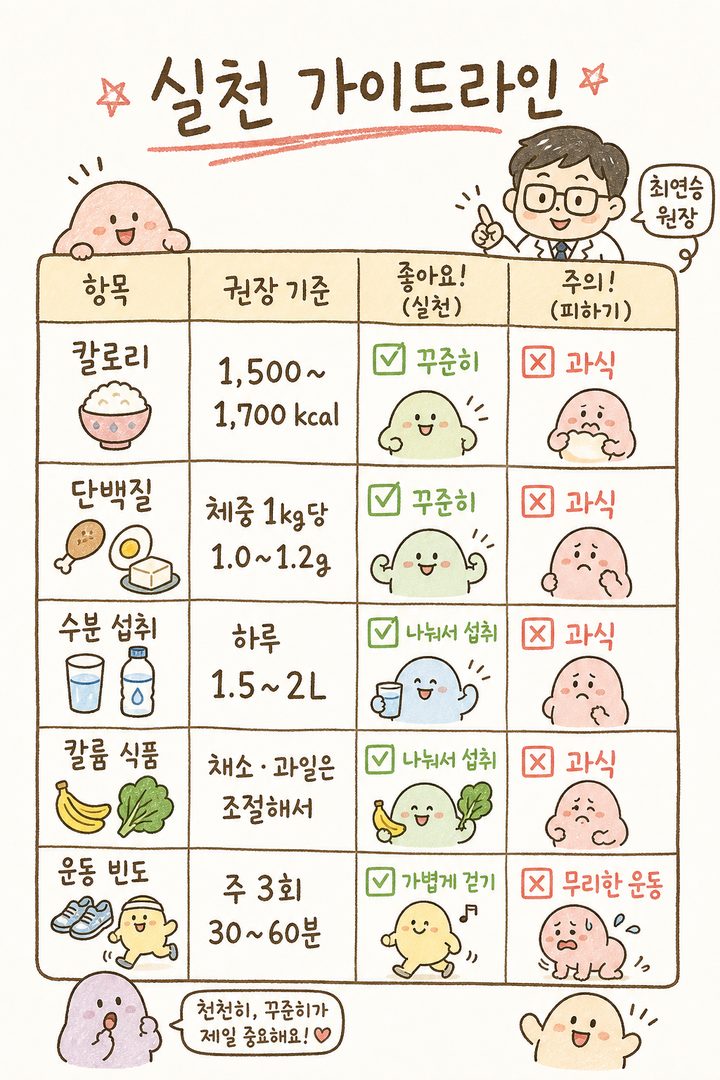
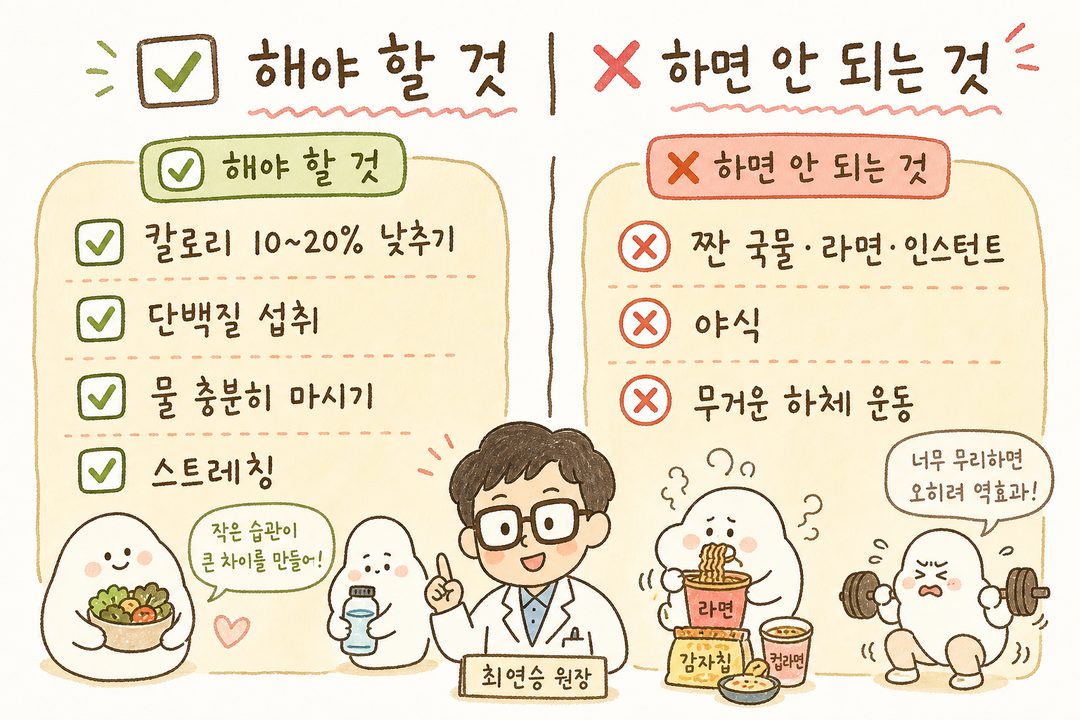
Action Points You Can Start Today
I recommend starting with small changes rather than grand plans.
Lower your daily calorie intake by about 10-20% and reduce it slowly. If you usually eat about 1,900 kcal, 1,500-1,700 kcal is a reasonable range.
Aim for 1.0-1.2g of protein per 1kg of body weight to help reduce muscle loss during weight management. For 60kg, the standard is about 60-72g per day.
Drink 1.5-2L of water a day and consciously reduce salty soups, ramen, and instant foods. This is the starting point for edema management.
Frequently include potassium-rich foods (bananas, spinach, potatoes, tomatoes, seaweed) in your diet.
Consistently perform cardio such as brisk walking or cycling for 30-60 minutes at least 3 times a week. These are good for both swelling and fat while putting less strain on the lower body.
Even for a short time before bed, lie down with your legs raised and stretch your calves. Your condition the next morning will be different.
If you are the muscular type, take a break from heavy lower body strength training; if you are the edema type, start by cutting out salty foods and late-night snacks. Even with the same effort, you must set the direction according to your type to see results.
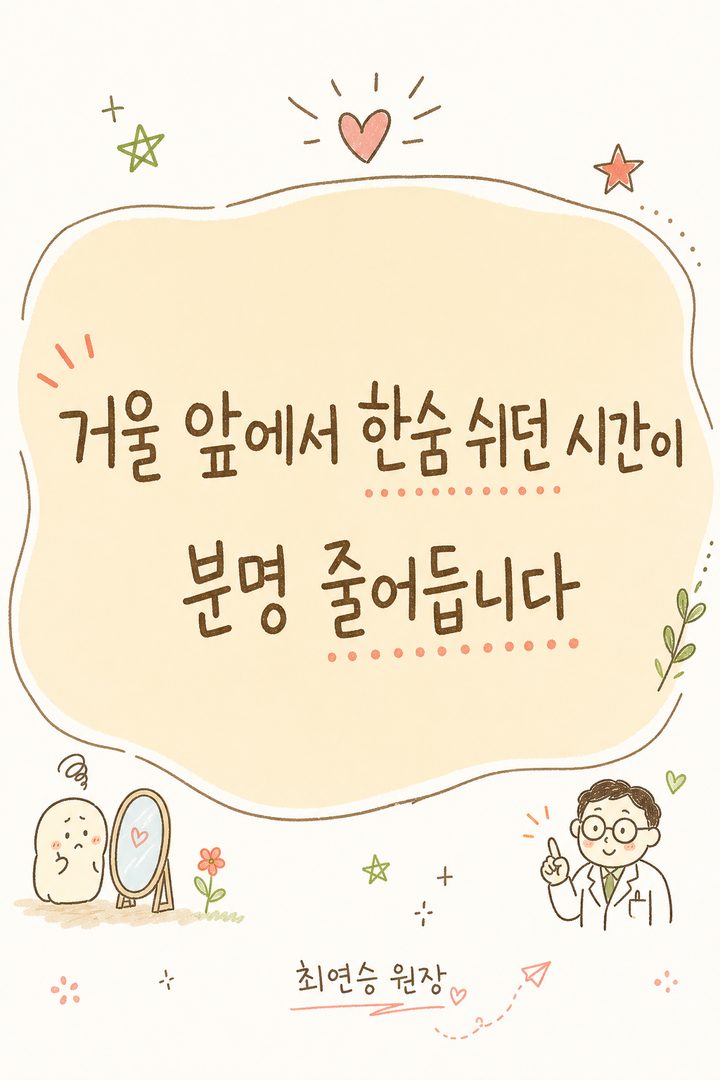
Conclusion
Lower body obesity is not a problem that can be solved all at once in a short period. However, if you know your type and combine diet, exercise, and edema management, the time spent sighing in front of the mirror will surely decrease. If you find it difficult to set a direction on your own, consult Baekrokdam Clinic for a constitutional diagnosis and customized management. We will design a plan including prescriptions such as Baekrok Gambi-jung and lifestyle management. Why not start today by having one less serving of salty soup?