Metabolic Decline in Your 30s — Why Your Body Gains Weight Even When Eating Less: Mechanisms and Solutions

Table of Contents
- Metabolic Decline in Your 30s — Why Your Body Gains Weight Even When Eating Less: Mechanisms and Solutions
- Why Does Weight Remain Stubborn Despite Reduced Food Intake in Your 30s?
- What Are the Mechanisms of 'Phlegm-dampness (痰飮)' and 'Liver Stagnation (肝鬱)' That Accelerate Metabolic Decline?
- What Should You Check First to Overcome Metabolic Decline in Your 30s?
- What Are Efficient Ways to Turn the Metabolic Switch Back On?
- Frequently Asked Questions
Metabolic Decline in Your 30s — Why Your Body Gains Weight Even When Eating Less: Mechanisms and Solutions
When I see patients in their 30s at the clinic, the most common complaint I hear is: 'Doctor, in my 20s I could lose weight just by skipping a few meals, but now even when I eat very little, my weight stays the same or even increases.' They feel frustrated. Honestly, I too remember when I was young and could maintain my weight even with careless eating and no exercise, so I understand their feelings well. But at some point, the 'cost-effectiveness of effort' begins to decline. This is the beginning of what we commonly call metabolic decline in your 30s.
While it's easy to simply blame it on age, 30 is still too young. However, our body's engine (metabolism) adjusts its efficiency more honestly than we think. Let me explain why this happens and how Traditional Korean Medicine views this issue.
Why Does Weight Remain Stubborn Despite Reduced Food Intake in Your 30s?
Many people only understand metabolic decline as a simple 'decrease in basal metabolic rate.' But in reality, a process called metabolic adaptation plays a bigger role. Our bodies are designed for survival. When you suddenly reduce food intake, your body thinks, 'Oh? Emergency! Energy is running low!' and extremely increases energy efficiency. In other words, it lowers the engine output so it can run on less fuel.
A common condition that arises during this process is spleen deficiency (脾虛). In Traditional Korean Medicine, the spleen is responsible for digestion, absorption, and the transport function that sends energy throughout the body. When excessive dieting or irregular eating habits repeat, these functions weaken. Fuel comes in, but the engine fails to burn it properly and stagnates. The reason weight doesn't drop despite eating less isn't a lack of willpower—it's because your body has entered 'energy-saving mode.'
What Are the Mechanisms of 'Phlegm-dampness (痰飮)' and 'Liver Stagnation (肝鬱)' That Accelerate Metabolic Decline?
Your 30s are when you reach the peak of your career. Excessive work stress and sleep deprivation become decisive variables that provoke metabolic decline. Here, we need to examine the concept of liver stagnation (肝鬱). When energy flow is blocked due to stress, a bottleneck occurs in your body's energy metabolism pathway.
This stagnant energy creates phlegm-dampness (痰飮), which is essentially unnecessary waste product in the body. Phlegm-dampness is like 'sticky garbage.' It interferes with blood circulation and blocks metabolic flow between cells, creating an environment where fat accumulates more easily and is harder to lose.
If you feel dizzy fatigue and your body feels heavy, this isn't simply a calorie problem—it's a signal that your body's 'cleaning system' is broken. At this point, blind starvation causes the body to enter an even deeper energy-saving mode, ultimately leading to a vicious cycle where metabolic decline worsens.
What Should You Check First to Overcome Metabolic Decline in Your 30s?
Blindly increasing exercise or tightening your diet can actually become harmful. First, you need to check whether your body is 'ready to burn energy.'
Check sleep quality: When you lack sleep, the balance of appetite-regulating hormones, leptin and ghrelin, is disrupted. If you can't sleep, your body tries to store more energy and metabolic rate drops significantly.
Harmony of muscle mass and activity level: Rather than obsessively doing heavy-weight training to increase basal metabolic rate, increasing daily activity (NEAT) is more effective in preventing metabolic adaptation.
Restore digestive function: If you have spleen deficiency, supplements or high-protein diets may actually burden the intestines and trigger phlegm-dampness (痰飮). Recovering digestive capacity first with warm foods and regular meals is helpful.
What Are Efficient Ways to Turn the Metabolic Switch Back On?
Now you need to restart the stalled metabolic engine. Rather than forcefully pushing through, you need a strategy that allows your body to feel safe and use energy.
First, abandon extreme low-calorie diets and switch to 'nutrient-dense eating.' Your body needs to recognize 'I don't have to starve anymore' to exit energy-saving mode. Additionally, from a Traditional Korean Medicine perspective, you may need a process to reduce internal heat and expel waste products by applying the principles of formulas like Fang Feng Tong Sheng San (防風通聖散), which helps unblock stagnant energy.
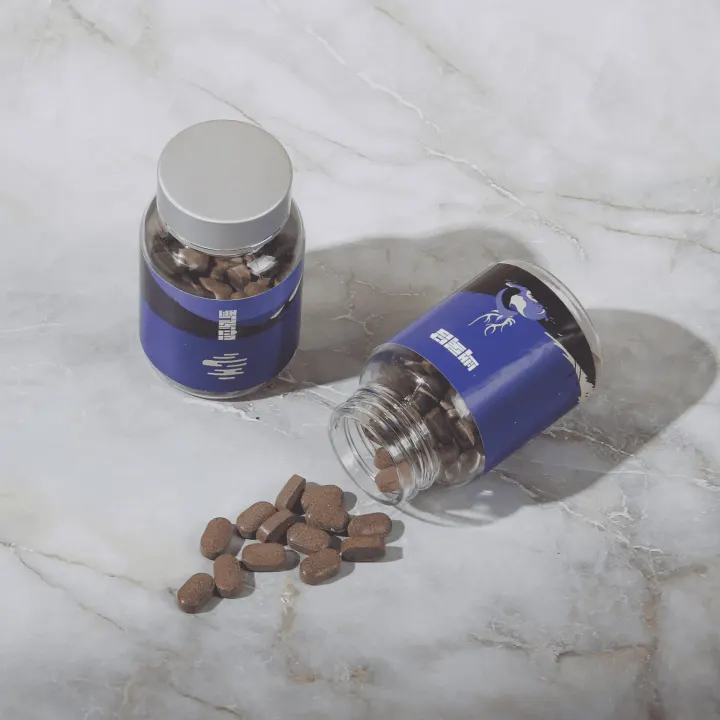
Recently, rather than simply tailoring to constitutional types, formulas like Baekrok Gamble Jeong (白鹿減肥精) using standardized extract tablets are being used to help people quickly escape the metabolic decline phase by regulating appetite and promoting smooth fluid metabolism. This isn't about forced starvation—it's about creating an environment where body weight naturally decreases by normalizing the body's metabolic flow.
Frequently Asked Questions
Q. I've really cut down my food intake significantly, but my weight remains the same. Is it because I lack willpower?
No. In fact, you're probably working too hard, and your body has entered 'survival mode (metabolic adaptation).' When incoming energy is too low, your body lowers consumption to match. At this point, you need a strategy to reassure your body by slightly increasing food intake or adjusting nutritional components.
Q. Does basal metabolic rate really drop drastically when you turn 30?
Rather than decline due to age itself, the influence of lifestyle habits is greater—decreased activity compared to your 20s, reduced muscle mass, and persistent liver stagnation (肝鬱) from stress. In other words, it's often metabolic decline due to 'aging of lifestyle patterns' rather than biological aging, so recovery is absolutely possible.
Q. How does Traditional Korean Medicine actually help with metabolic decline?
Traditional Korean Medicine doesn't simply suppress appetite. It helps improve spleen deficiency (脾虛) to enhance digestive absorption capacity, and removes waste products like phlegm-dampness (痰飮) to cleanse the energy metabolism pathway. Think of it as the process of cleaning the gunk from an engine so fuel can burn more efficiently.
The key to overcoming metabolic decline lies not in 'whipping' your body but in 'optimization.' I hope you learn to read your body's signals and turn the metabolic switch back on through appropriate intervention. If you need a more detailed metabolic checkup, checking your current state through [Baekrokdam's Metabolic Improvement Program] is also a great approach.