
Eating Only Bread Makes My Stomach Gurgle | IBS Bread

“My Stomach Rumbles When I Eat Bread” | IBS and Bread
“My stomach rumbles when I eat bread.”
Many of the office workers in their 20s to 40s whom I meet in my clinic express this difficulty.
They tell me that a simple piece of bread, easily enjoyed amidst a busy daily life, sometimes causes excruciating pain or unpredictable diarrhea, ruining their entire day. I deeply empathize with the discomfort these individuals experience.
Rather than focusing on bread itself, I've paid attention to why individuals experience discomfort specifically when consuming bread, and the unique ‘gut sensitivity patterns’ of each person.
| “Going to the bakery with colleagues during lunch is my only joy, but if I eat bread, my stomach rumbles and I get gassy, so I can't concentrate during meetings. Some days, I'm so anxious about having to rush to the restroom that I avoid making plans altogether.” In the voice of Jihun (pseudonym), an office worker, I heard a deep concern about quality of life, extending beyond mere indigestion. |
This is not merely a digestive issue; it can escalate into a broader problem where meal times, which should be enjoyable, turn into agony, and even social life becomes restricted.
So, how can we overcome this 'bread trauma' and enjoy bread again?
Through the stories of patients recorded in my clinical notes and academic principles, I aim to uncover the clues together.
Why does my stomach rumble when I eat bread? – Deciphering the Gut's 'Secret Code'
Feeling discomfort after eating bread is not just Jihun's (pseudonym) story. Countless patients with Irritable Bowel Syndrome (IBS) struggle with this issue.
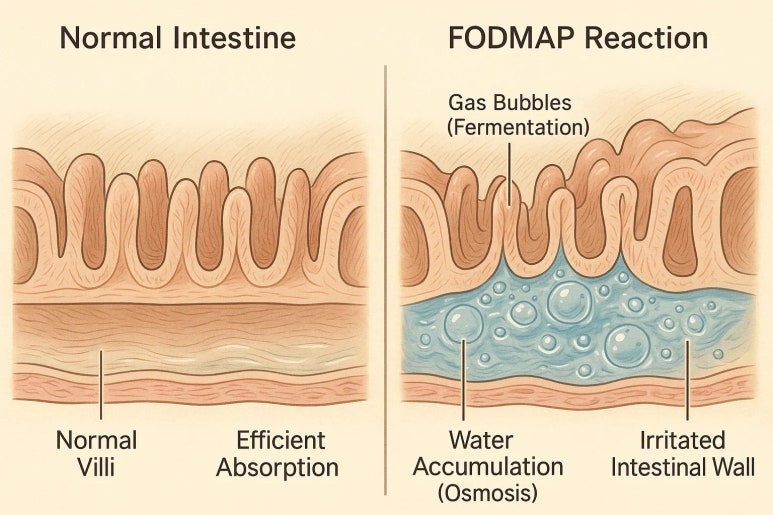
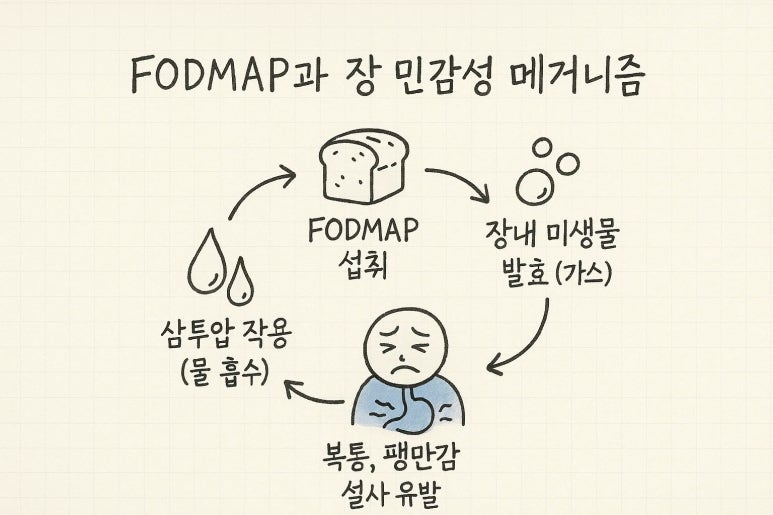
One of the main reasons is the short-chain carbohydrates called ‘FODMAPs’ commonly found in bread.
FODMAPs are poorly absorbed in the small intestine, and upon reaching the large intestine, they are rapidly fermented by gut microbes, producing gas.
Simultaneously, they draw water into the small intestine through osmosis, causing the bowel to distend, which in turn leads to symptoms like abdominal pain, bloating, and diarrhea.
| I liken the reaction FODMAPs cause in our gut to a ‘city of water’. When gut microbes encounter FODMAPs, they suddenly release gas as if a grand feast were underway (fermentation), and at the same time, they draw surrounding water towards themselves (osmosis). The intestine then expands like a suddenly swollen river, and that pressure stimulates the intestinal wall, causing pain and discomfort. This phenomenon is particularly pronounced in patients with Irritable Bowel Syndrome who have visceral hypersensitivity. |
However, not all FODMAP components affect everyone in the same way. Individual sensitivity patterns vary greatly; some may be sensitive to fructans, while others react more to GOS.
Jihun's (pseudonym) 'Bread Trauma' – Clues from a Clinician's Perspective

| Jihun (pseudonym), an office worker in his 30s, always skipped breakfast and started his day with an Americano and a bagel upon arriving at work. After lunch, he habitually reached for bread and coffee, and the stress from frequent overtime and company dinners made his gut even more distressed. Initially, he dismissed it, thinking, “It’s probably just fatigue,” but over time, abdominal bloating and frequent diarrhea became his norm, and he found himself anxious about needing to use the restroom even during important meetings or business trips. He noted that his symptoms were particularly severe when he ate regular white bread or whole wheat bread, and interestingly, he reported fewer symptoms when eating the same bread on weekends in a relaxed state, which led me to focus on the connection between stress and gut sensitivity. In this case, the type of bread and the circumstances of its consumption provided crucial clues about its impact on the gut. |
Clues gathered from patients' voices like these become the starting point for complex clinical reasoning. It's not simply about telling someone not to eat bread; it's crucial to understand which ingredients in which type of bread cause problems, and under what circumstances.
Is all bread bad? – FODMAPs, Gluten, and Finding 'Your Own Bread'
One of the most frequent questions I get from people diagnosed with Irritable Bowel Syndrome is, “Does this mean I can never eat bread again?” To put it simply, not necessarily.
Not all breads are high in FODMAPs, and gluten sensitivity is a different issue from FODMAP sensitivity.
For example, traditionally fermented sourdough bread has a low fructan content, making it relatively suitable for a low-FODMAP diet.
Additionally, among gluten-free breads made with rice flour or corn flour, there are options that are low in FODMAPs.
| The FODMAP content of soy milk varies greatly depending on its manufacturing method. Soy milk made from whole soybeans is a high-FODMAP food, but soy milk made from soy protein isolate is categorized as a low-FODMAP food. Therefore, when choosing soy milk to drink with bread, it's important to check the ingredient list for ‘soy protein’. Such small differences can have a significant impact on your gut health. |
The important thing is to understand which ingredients an individual's gut is more sensitive to, and adjust the type and amount of bread consumed accordingly.
Just because a bread is gluten-free doesn't automatically mean it's low-FODMAP, so it requires the wisdom to carefully check ingredient labels and try small amounts.
The Wisdom to Enjoy Bread Again – Balancing Diet and Lifestyle for Yourself
What I always emphasize to my patients is that absolute restriction is not always the best solution. Extreme dietary restrictions can actually lead to nutritional imbalances, and by taking away the joy of eating, they can exacerbate stress.
While a low-FODMAP diet is certainly effective in alleviating Irritable Bowel Syndrome symptoms, there's a risk of insufficient intake of certain nutrients such as B vitamins, calcium, iron, and zinc. To address this, a step-by-step approach is essential.
First, after temporarily restricting high-FODMAP foods, it's necessary to gradually reintroduce them to find each individual's reaction threshold, thereby discovering their personal 'tolerance level'.
| Strictly restricting certain foods on your own can lead to long-term nutritional deficiencies or obsessive eating habits. In particular, since the symptom triggers for Irritable Bowel Syndrome vary greatly from patient to patient, it is most important to receive an accurate diagnosis and personalized dietary guidance from a specialist rather than relying on indiscriminate self-diagnosis. I recommend you design your recovery path with healthcare professionals who carefully consider your entire body, including myself. |
Furthermore, beyond diet, the impact of overall lifestyle improvements, including adequate sleep, regular exercise, and stress management, on gut health cannot be overlooked.
Being able to comfortably enjoy a piece of bread again goes beyond simply not having an upset stomach; it means reclaiming the small joys and vitality of life.
Understanding the cause of discomfort and finding a balanced solution that suits you is perhaps like a journey of creating your own 'recovery recipe' for a chronic problem.
On this journey, I will be by your side, listening carefully and helping you uncover clues, interpreting them thoughtfully, and serving as a partner to help you illuminate your own path to recovery. So, don't be too disheartened by your current discomfort, but take courage and let's move forward together, one step at a time.