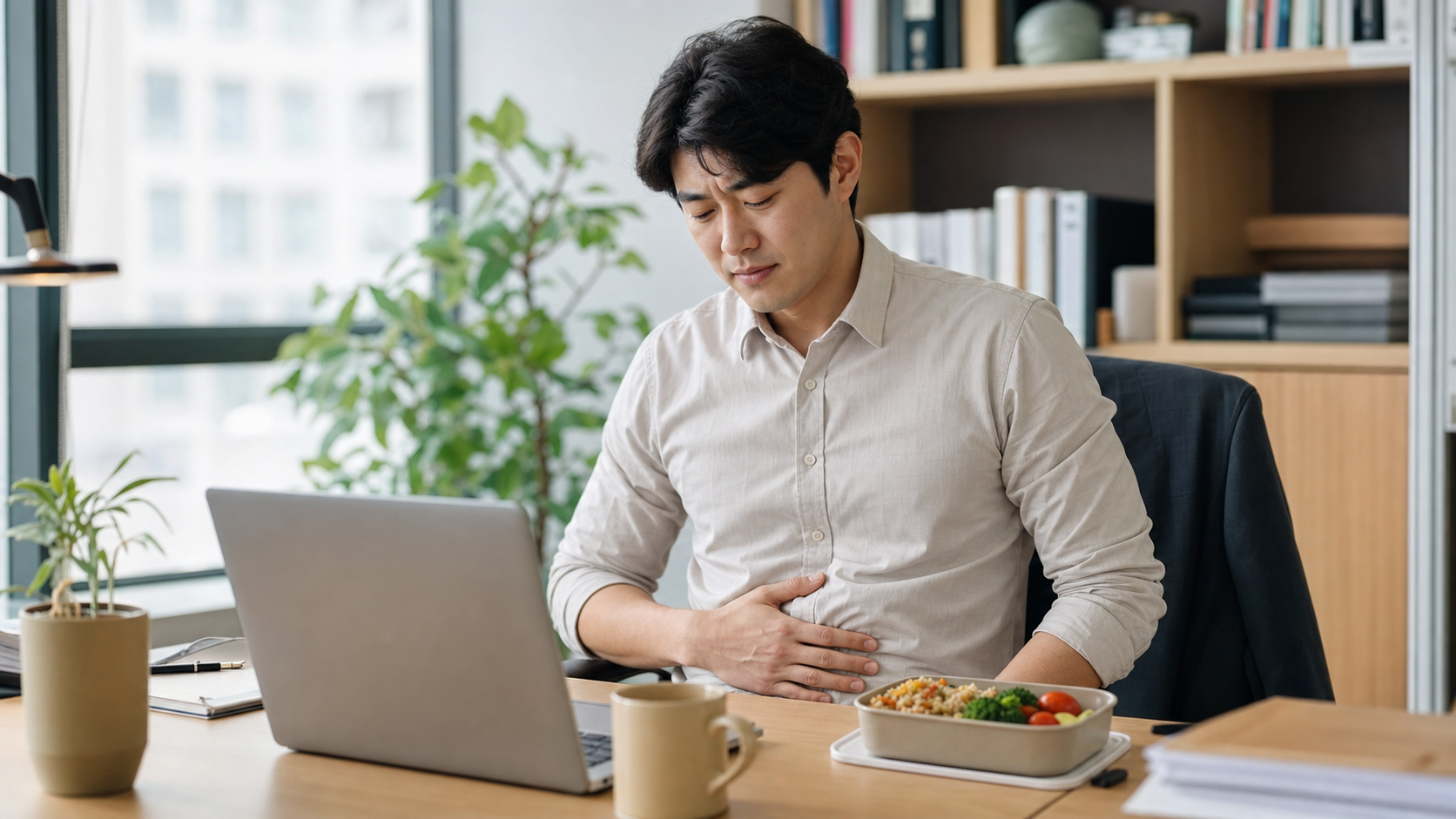
I Get Bloated Just From Dieting | A 30-Something Office Worker's Traditional Korean Medicine Constitutional Improvement

Table of Contents
- I Feel Bloated When I Diet | Constitutional Improvement for 30s Office Workers from a Korean Medicine Perspective
- 3 Reasons for Indigestion During a Diet
- 1. Irregular Meals and Excessive Fasting
- 2. Side Effects of Extreme Diets
- 3. The Vicious Cycle of Stress and Digestive Function
- Diet-Related Indigestion from a Korean Medicine Perspective
- 4 Steps to Recovery
- Step 1: Restore Meal Rhythm (Weeks 1-2)
- Step 2: Digestion-Friendly Diet (Weeks 2-4)
- Step 3: Stress Management and Exercise
- Step 4: Korean Medicine Supportive Therapies
- Hyunsu's Transformation After 3 Months
- Conclusion: Prioritize Digestion Before Dieting
I Feel Bloated When I Diet | Constitutional Improvement for 30s Office Workers from a Korean Medicine Perspective
"I regulate my diet and exercise, but I'm not losing weight, and I just feel bloated. After lunch, I'm always drowsy and tired in the afternoon, which leads to a vicious cycle of drinking coffee."
This is a common complaint I hear in my clinic. Let's look at the case of Hyunsu (pseudonym), an office worker in his 30s.
| Hyunsu was a marketing professional in his mid-30s. Due to the nature of his work, which involved frequent deadlines, irregular meals and lack of sleep were part of his daily routine. For his diet, he skipped breakfast, ate salads for lunch, and had dinner after 9 PM when work was over. Initially, he lost 2kg, but after three months, he experienced a yo-yo effect, making his situation more challenging than before. Particularly after lunch, he always felt bloated, and his concentration would drop around 3 PM, making him rely on coffee. His intestines often felt swollen, and he experienced alternating constipation and diarrhea. |
|---|
Surprisingly, many people, like Hyunsu, complain of indigestion during a diet. Why does this happen?
3 Reasons for Indigestion During a Diet
1. Irregular Meals and Excessive Fasting
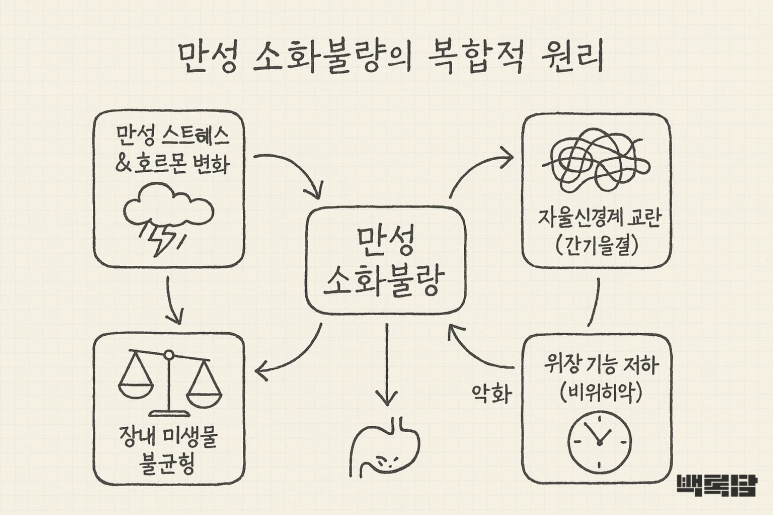
Our stomach secretes digestive fluids according to a fixed rhythm. Skipping breakfast, or skipping one meal and overeating at the next, disrupts this rhythm. In particular, prolonged fasting irritates the stomach lining with stomach acid, causing heartburn or abdominal discomfort.
| Hyunsu's eating pattern, such as skipping breakfast → salad for lunch (excessive fiber) → overeating at dinner, causes significant disruption to the digestive system. The stomach prepares for digestion in the morning but receives no food, then at lunch, it takes in a large amount of raw vegetables, irritating the stomach lining. And in the evening, overeating in a fatigued state leads to a vicious cycle of indigestion. |
|---|
2. Side Effects of Extreme Diets
Suddenly drastically reducing carbohydrates or switching to a raw food-centric diet for weight loss can disrupt the balance of intestinal microbiota. Trillions of microorganisms live in our intestines, and their distribution varies depending on the types of food we eat.
| Sudden dietary changes can lead to intestinal microbial imbalance (Dysbiosis). In particular, excessive carbohydrate restriction can reduce the food source for beneficial gut bacteria and lead to severe short-term constipation. Conversely, eating only raw foods or salads can lead to insufficient energy for digestion, causing food to linger in the intestines, ferment, and produce gas and abdominal distension. |
|---|
3. The Vicious Cycle of Stress and Digestive Function
Stress is the enemy of digestion. When severe work stress causes cortisol to be secreted, gastric motility slows down, and stomach acid secretion decreases. This is also known as 'stress gastritis'.
| If you prematurely start a diet while experiencing severe deadline stress, like Hyunsu, your body switches to survival mode. To minimize energy consumption, the basal metabolic rate decreases, and weight may not decrease or even increase. This is called 'stress-induced obesity,' and forcing a reduction in food intake in such a state leads to nutritional imbalance and impaired digestive function. |
|---|
Diet-Related Indigestion from a Korean Medicine Perspective
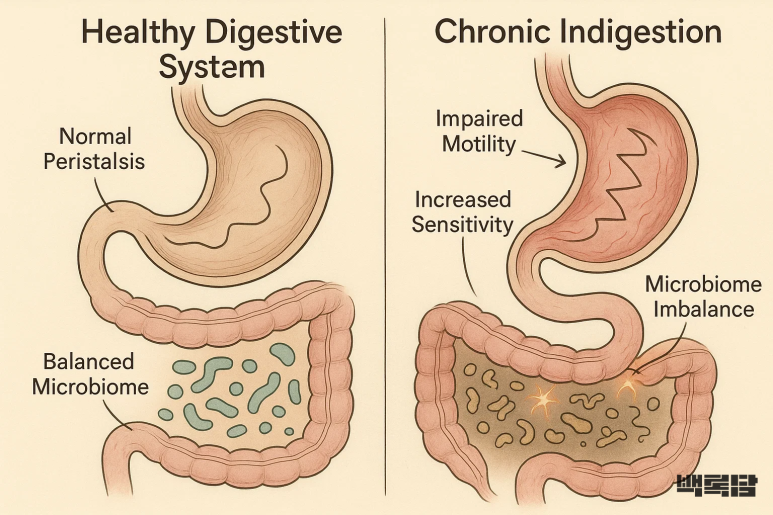
In Korean medicine, these symptoms are explained as 'Bihyeo Huyak (Spleen and Stomach Deficiency)' and 'Giul-uk (Qi Stagnation)'.
Spleen and Stomach Deficiency refers to a weakened state of the digestive organs. It is caused by irregular meals, overeating, or cold foods, and is accompanied by symptoms such as indigestion, abdominal distension, diarrhea or loose stools, and fatigue.
Qi Stagnation is a state where the flow of Qi (vital energy) is blocked due to emotional stress. It often presents with a feeling of stuffiness in the stomach, discomfort or pain in the epigastric region, and a good appetite but difficulty digesting food after eating.
| In Hyunsu's case, he had a complex condition where his Spleen and Stomach function was weakened, and Qi flow was blocked due to prolonged irregular eating and work stress. The priority was not simply to lose weight, but rather to restore digestive function and promote smooth Qi circulation. |
|---|
4 Steps to Recovery
Step 1: Restore Meal Rhythm (Weeks 1-2)
Establishing regular meal times is paramount. To revive your biological rhythm:
Breakfast: Lightly within 1 hour of waking (choose one from porridge, milk, or fruit)
Lunch: Around noon, focusing on warm foods
Dinner: Lightly before 7 PM, no food after 9 PM
| If breaking the habit of skipping breakfast is difficult, try to have at least a glass of milk or a banana. Resolving the fasted state alone can improve gastric motility. For lunch, choose a meal with warm soup or broth rather than a salad. For dinner, eat a quantity that doesn't burden digestion, and it's best not to consume anything other than water after 9 PM. |
|---|
Step 2: Digestion-Friendly Diet (Weeks 2-4)
Restore digestive function with easily digestible foods:
Recommended Foods:
Multi-grain rice, scorched rice (nurungji)
Doenjang-jjigae (soybean paste stew), Fish cake soup
Sweet pumpkin, lotus root, yam
Ginger tea, Jujube tea
Foods to Avoid:
Iced drinks, cold fruits
Fried foods, greasy foods
Flour products, instant foods
Excessive raw vegetables
| When digestive function is weak, replacing meals solely with raw vegetables or fruits can actually burden digestion. Focus on warm, cooked vegetables and proteins, and chew more slowly and thoroughly. When the intestines are warm, digestive function naturally recovers. |
|---|
Step 3: Stress Management and Exercise
Digestion is directly linked to one's mental state. Find ways to relieve work stress:
Light walk: 15-20 minute walk after lunch
Abdominal breathing: 5 minutes of meditation during work
Foot bath: 15-20 minute foot bath in lukewarm water before sleep
Sleep: Go to bed before 11 PM, 7-8 hours of sleep
| Regularity is more important than intensity when it comes to exercise. Just a 30-minute light walk a day can significantly improve intestinal motility. Foot baths, in particular, are excellent for restoring digestive function by promoting lower body blood circulation. Since sleep is when digestive organs recover, make it a habit to go to bed before 11 PM. |
|---|
Step 4: Korean Medicine Supportive Therapies
Herbal medicine prescriptions that aid in restoring digestive function:
Bo Gan So Hwa Tang: Protects liver function and improves digestion
Hyang Sa Pyeong Wi San: Strengthens gastric function and alleviates abdominal distension
So Yo San: Promotes smooth Qi flow to relieve stomach discomfort
| Herbal medicine prescriptions vary according to an individual's constitution and symptoms. Unlike simple digestive aids, they are characterized by restoring systemic balance. In Hyunsu's case, a prescription that simultaneously addressed strengthening Spleen and Stomach function and promoting Qi circulation led to significant improvement in his digestive condition after 4 weeks. |
|---|
Hyunsu's Transformation After 3 Months
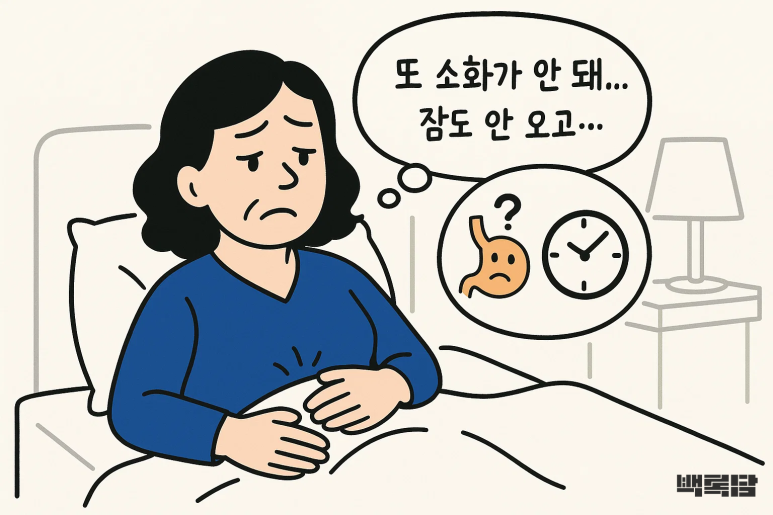
Hyunsu focused on restoring his meal rhythm and managing stress. He stopped skipping breakfast, had warm soup or broth for lunch, and a light dinner before 7 PM. He practiced abdominal breathing for 5 minutes during work and consistently took foot baths before bed.
| After 3 months, Hyunsu's digestive condition returned to normal. The bloating disappeared, and afternoon fatigue also decreased. Remarkably, he naturally lost 3kg of weight. This was a result of improved digestion, restored basal metabolic rate, and reduced stress. Hyunsu said, "Digestion came before dieting," and he is now maintaining a healthy diet and managing his weight. |
|---|
Conclusion: Prioritize Digestion Before Dieting
A healthy diet begins with good digestion. Excessive dieting amidst irregular meals and stress can actually harm your health and make weight loss difficult.
| When digestive function is restored, you can properly absorb nutrients from food, and metabolism becomes active, enabling natural weight loss. Above all, fatigue is reduced, and vitality increases, improving the quality of daily life. For those who have failed at dieting, the first recommendation is a 'digestive health check-up.' |
|---|
At Baengnokdam Korean Medicine Clinic, we provide constitutional diagnosis and personalized prescriptions for those struggling with indigestion during a diet. We help you achieve healthy and sustainable weight management by restoring digestive function.
This content provides general health information and may vary depending on individual health conditions. For accurate diagnosis and prescription, please visit a professional medical institution for consultation.