
Why Do Complications Occur After Bell's Palsy? | Incheon Bell's Palsy

Table of Contents
Among the patients I see in my clinic, many complain of profound anxiety along with uncomfortable facial expressions after experiencing facial palsy.
Especially for male patients in their 40s, who are often in the prime of their social lives, experiencing unexpected changes can lead to vague fears about the unfamiliar face in the mirror, wondering 'What if my face stays like this permanently?'
This anxiety often becomes a significant obstacle to understanding their condition properly and formulating a recovery plan. I deeply understand the feeling of having lost a part of oneself.
| “Doctor, every time I look in the mirror, it feels like I'm seeing someone else's face. When I smile, my eye closes involuntarily, and sometimes tears come out when I eat. Will this last forever? Am I doing something wrong…? It's so frustrating.” |
My clinical notes contain no small number of similar patient voices.
These individuals suffer not only from facial asymmetry but also from sequelae such as synkinesis, where unintended muscles move when smiling or speaking; contracture, where the face feels stiff and pulls; and crocodile tears, where tears flow during meals.
When there is a lack of clear information about why these phenomena occur and what the future holds, anxiety is bound to increase.
Why Do Facial Palsy Sequelae Occur? - The Story of Neural Rewiring
Facial palsy occurs due to damage to the facial nerve, which is the cranial nerve responsible for facial expressions.
The facial nerve is like a complex highway with countless roads intertwined, leading to the facial muscles.
If this nerve experiences inflammation or damage, the roads can be severed, or the signaling system can break down.
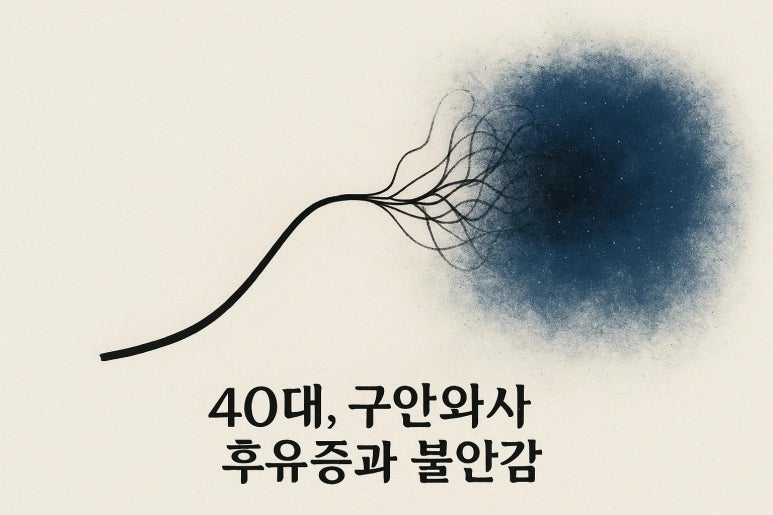
During the nerve's recovery process over time, paths can sometimes reconnect incorrectly, or other nerves might attempt to use the severed paths, leading to various sequelae.
We also refer to this phenomenon as 'neural rewiring' (Rewiring).
Key Facial Palsy Sequelae: Their Nature and Prognosis?
So, what specific sequelae appear, and how should we understand these phenomena?
1. Synkinesis: Malfunction from Incorrectly Reconnected Paths
What is it?
It is one of the most common sequelae, where unintended facial muscles move together. For example, when trying to close the eyes, the corner of the mouth might lift, or when smiling, the eyes might narrow, and the cheek might pull.
It's like turning on a light switch, but the air conditioner also turns on.
Why does it occur?*
It occurs during the recovery process of a damaged nerve when it deviates from its original pathway and incorrectly connects with adjacent muscle nerves.
Prognosis and Management:
While complete elimination is challenging, consistent rehabilitation and appropriate traditional Korean medicine management* can help reduce the intensity of the malfunction and restore natural facial expressions. It is important to calm excessive nerve excitability and relax unnecessary muscle tension.
2. Contracture: Overly Tense Facial Muscles
What is it?
This phenomenon involves the facial muscles on the paralyzed side becoming stiff or feeling automatically tense and pulling. Sometimes, the paralyzed side may even appear smaller, or nasolabial folds may deepen.
Why does it occur?
It occurs because the muscles maintain a state of chronic excessive tension after nerve damage, or they lose flexibility as fibrosis progresses.
Prognosis and Management:
In traditional Korean medicine, the focus is on alleviating contracture by relaxing stiff muscles and improving blood circulation through acupuncture, pharmacopuncture, and herbal medicine. Self-massage and stretching are also very important.
3. Crocodile Tears: When Tears Flow Instead of Saliva
What is it?
This phenomenon involves tears flowing profusely from the eye on the paralyzed side, as if a faucet has been turned on, when eating or smelling food.
Why does it occur?
It occurs when nerve fibers that ordinarily innervate the salivary glands are incorrectly rewired to stimulate the lacrimal glands (tear glands). Thus, tears flow when saliva should be produced.
Prognosis and Management:
While it can cause significant inconvenience in daily life, it may gradually alleviate over time. Traditional Korean medicine treatments that regulate excessive nerve responses, along with dietary habit adjustments, can also help reduce discomfort.
So, Will These Sequelae Last Forever?
Frankly, it's difficult for all sequelae to disappear completely.
However, what's crucial here is to understand the 'nature' of the sequelae and recognize that they are part of my 'recovery process'.
These symptoms are the result of our body's attempt to reconnect damaged pathways, albeit imperfectly.
| Case Study CASE: Mr. Kim OO, a male in his 40s Mr. Kim visited me 6 months after the onset of facial palsy, experiencing synkinesis where his eyes would close every time he smiled, and stiff facial contracture. Initially, he suffered from severe depression and |
| “My colleagues at work look at my expression strangely.” |
| He expressed significant psychological distress. I thoroughly explained the principle of neural rewiring to Mr. Kim, emphasizing that synkinesis and contracture were evidence of the nerve's attempt to 'recover'. Along with acupuncture treatment, I prescribed herbal medicine to relax his facial muscles and guided him on gentle stretching and massage techniques he could do at home. Three months later, the intensity of his synkinesis had significantly decreased, and the pulling sensation from contracture had also greatly improved. Mr. Kim stated, |
| “Now, I'm not afraid to look in the mirror. Feeling myself getting better little by little has brought me peace of mind.” |
| He said. |
The Path to Recovery, and My Role
Facial palsy sequelae require more than just symptom suppression; they necessitate a process of improving the environment of the damaged nerve and regulating the tension of imbalanced facial muscles.
From a traditional Korean medicine perspective, the focus is on aiding Qi and blood circulation around the damaged nerve, promoting regeneration, and enhancing overall immunity and recuperative power.
This approach, much like untangling a complex skein of yarn, aims to stabilize incorrectly rewired neural pathways and enhance the vitality of surrounding tissues, thereby laying the groundwork to help the nerves find a more correct path.
The Importance of Being an Active Participant in Your Recovery
Instead of making false promises of a complete cure, I tell my patients that consistent attention and effort, much like tending to trees in an old garden, are crucial.
Nerves grow very slowly and sometimes connect in unexpected ways. What's important is to keenly recognize these changes, consult with specialists, and combine rehabilitation with traditional Korean medicine management in a way that respects your body.
Vague anxiety can be alleviated through information. By understanding your condition and knowing the mechanisms by which sequelae appear, we can actively participate in this journey with a sense of agency in recovery instead of fear.
Even if not with me, I sincerely recommend that you find a medical team who will meticulously examine your entire body and genuinely support your recovery, and continue with consistent management.
Recovery is not a journey you take alone, and I will always be with you as your companion on that path.