Got Belly Fat After Frequent Work Dinners? Wondering How to Lose That Beer Gut?

With frequent office dinners and drinking gatherings, an unavoidable reality, how should we manage the growing 'alcohol belly'?
Your body gradually becomes heavier, and your waistline, before you know it, expands by an inch or two, beginning to settle in under the name 'alcohol belly'.
Though you vow to quit drinking every time, the reality is that contemplating next week's appointments makes it feel overwhelming.
| “Doctor, I regret it every time an office dinner ends. When I wake up in the morning, my face is swollen, and my pants buttons won't even close. I can't just completely stop drinking... Is there really no way to get rid of this darn alcohol belly?” |
I hear these concerns very often in the consultation room.
The alcohol belly isn't simply a matter of 'alcohol calories' alone.
It's the result of changes in the 'body's environment,' manifesting complexly as the process of alcohol entering and being metabolized in the body, the resulting disruption of liver function and sleep, and the intertwining of stress.
In a reality where it's difficult to completely stop drinking, how can we succeed in this stubborn belly fat diet?
Why is the alcohol belly more stubborn than other types of belly fat?
| The moment alcohol enters the body, it is recognized as a 'toxic substance'. The liver, primarily responsible for detoxification, puts all its effort into breaking down alcohol into acetaldehyde, and then into acetic acid. During this process, the liver temporarily halts other important tasks, namely fat metabolism. While the liver is expending energy on alcohol detoxification, fats ingested through food or already present in the body are left in an environment prone to accumulation. This is especially true for visceral fat accumulation in the abdomen. This also aligns with the tendency of Dam-eum (Damp-Phlegm) formation in Traditional Korean Medicine (TKM). Dam-eum refers to a state where the body's fluid metabolism is stagnant, leading to the accumulation of viscous and turbid waste products. The inflammatory responses and water metabolism disturbances that occur during alcohol metabolism promote the generation of Dam-eum. The feeling of a heavy and swollen body, much like a damp sponge, can be a clue to this Dam-eum. Alcohol also degrades sleep quality, stimulates the secretion of stress hormones (cortisol), and affects appetite-regulating hormones (leptin, ghrelin), making it easy to induce overeating or late-night snacking the next day. These complex factors make the alcohol belly even more stubborn. |
How do we diagnose and approach my body's alcohol belly pattern?
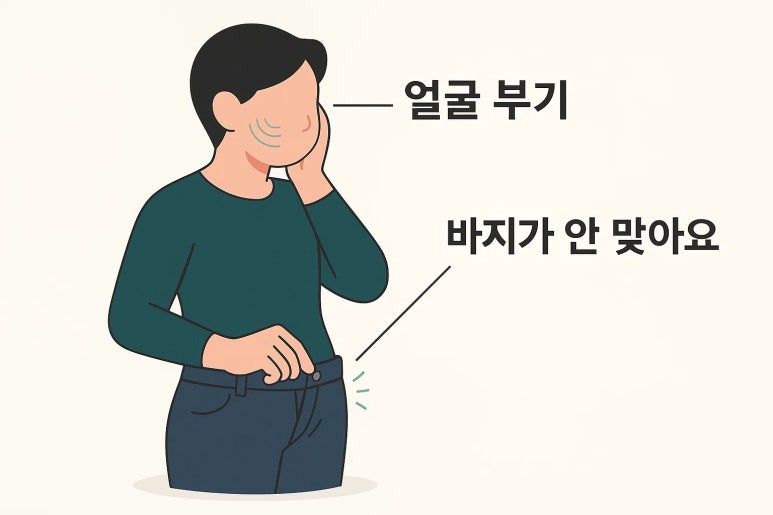
| Minsu (pseudonym), a professional in his 40s, was a typical workaholic with office dinners 2-3 times a week. He always thought, "If I just quit drinking, I'd lose it," but realistically, it was impossible. The morning after drinking, his weight was always up by more than 2kg, and during the day, he felt lethargic and craved greasy foods. His liver enzyme levels were also borderline. Minsu usually enjoyed carbohydrate-heavy meals and preferred carbohydrate-based snacks during drinking sessions. Correction Point: Minsu needed to address more than just reducing 'alcohol calories'; he needed a comprehensive approach to the worsening liver health due to alcohol metabolism, the issue of sleep quality improvement, and the resulting disruption of appetite signals. In particular, establishing a post-office dinner management routine was crucial. |
As such, an alcohol belly is not the result of a single cause, but of several intertwined factors.
Knowing which link in your body is vulnerable is the first step.
Realistically Sustainable Ways to Get Rid of an Alcohol Belly: Drinking Habits and Liver and Sleep Management
Correcting Drinking Habits: Quality over Quantity, and Timing
| Drink with Water: Alternating one glass of alcohol with one glass of water can slow down alcohol absorption, prevent dehydration, and reduce hangovers and the inducement of overeating the next day. Protein-rich Appetizers: The liver requires protein during alcohol metabolism, and greasy or carbohydrate-heavy snacks place a greater burden on the liver. Choose lean meats, fish, tofu, or seafood with low-fat content. Eat Before Drinking*: Drinking on an empty stomach rapidly raises blood alcohol concentration, burdening the liver and causing you to get drunk faster. It's best to have a light meal before going to a drinking gathering. |
It is dangerous to attempt abrupt abstinence or fasting with the thought of getting rid of your 'alcohol belly' all at once. Our bodies react to sudden changes with stress, which can instead lead to a yo-yo effect. Especially if you already have liver function issues or are taking medication, you must adjust your drinking habits after consulting with a specialist. If alcohol dependence is suspected, it is also important to seek help from a medical institution. |
Diet/Lifestyle Routine for Liver and Sleep
Adequate Protein Intake*:
The liver requires a lot of protein during the detoxification process.
Consistently consume 1.2-1.6g of protein per 1kg of body weight daily to support liver recovery and prevent muscle loss.
Antioxidant Vegetables and Fruits: Vegetables and fruits rich in vitamins, minerals, and antioxidants support liver detoxification functions.
Consume plenty of broccoli, kale, berries, etc.
Improve Sleep Quality: Alcohol may help you fall asleep, but it interferes with deep sleep.
On nights you drink, try to improve sleep quality by taking a warm shower or calming your mind with meditation before bed.
It's also important to ensure at least 7 hours of regular sleep on normal days.
Adequate sleep not only aids liver recovery but also has a significant impact on appetite control.
Stress Management and Appetite Signal Reset: The Last Link to the Alcohol Belly
Stress Relief Routine: Create your own routine to relieve stress through methods other than alcohol.
Light walks, listening to favorite music, and meditation can be good alternatives.
Slow Eating Habits: Whether at a drinking gathering or during regular meals, the habit of slowly and thoroughly chewing your food helps you feel full and reduces overeating.
Remember that it takes about 20 minutes for food to send 'I'm full' signals to the brain.
Balanced Diet*: The craving for carbohydrates or sweet foods the day after drinking is due to unstable blood sugar levels caused by alcohol metabolism.
For breakfast the next day, have a balanced meal focused on protein and vegetables to stabilize blood sugar and prevent overeating.
The alcohol belly does not disappear with just one or two attempts.
In the reality of frequent office dinners, it requires a continuous process of transforming the 'body's environment' by understanding alcohol metabolism, improving liver health, sleep quality, and managing Dam-eum.
Taking it one step at a time, creating healthy changes at a pace that suits you, will be the true way to get rid of your alcohol belly and the beginning of a sustainable belly fat diet.