
My head feels foggy, what's the cause? | Brain Fog

Table of Contents
Brain Fog: The Cause Was in the 'Gut,' Not the Brain
Minor work mistakes and anxiety—it all started with that day's presentation.
"It feels like there's a fog in my head."
Mr. A, a developer in his late 30s, can't forget the day he ruined an important presentation.
The content was clearly in his head,
but the moment he looked at the screen, his vision blurred, and everything went blank.
It wasn't like this before,
but recently, he's noticed his mental processing has definitely slowed down.
Minor work mistakes became frequent,
and with each mistake, the anxiety of 'What if I make another mistake?' only grew like a snowball.
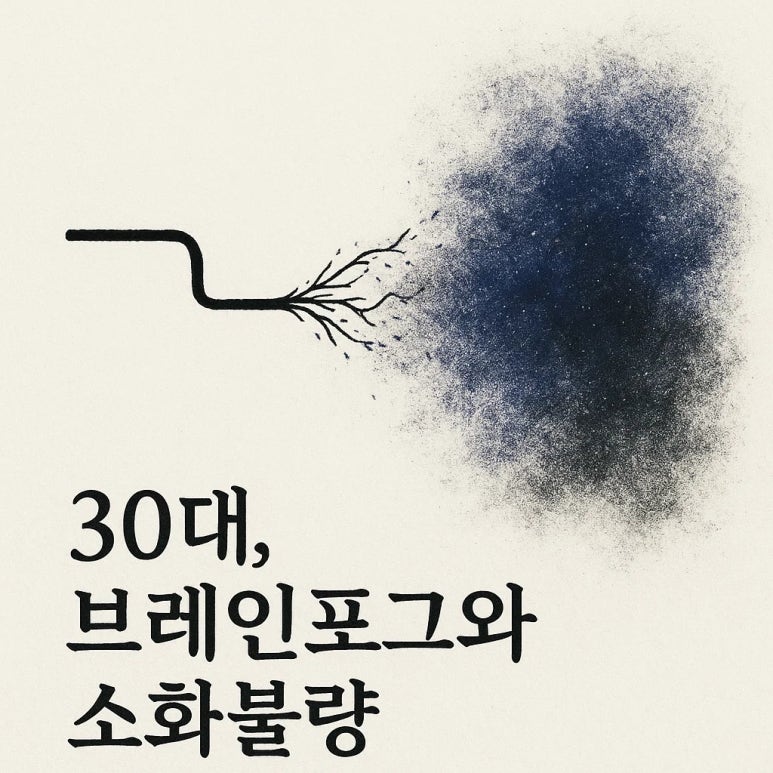
Like smoke left behind by a mysterious spark.
Mr. A thought all of this was due to excessive stress and anxiety.
So he tried meditation,
and after work, he consciously tried to block out work-related thoughts.
But the fog in his head wouldn't lift easily.
Instead, he just felt a deepening sense of 'Am I mentally weak these days?'
self-reproach.
The clue he overlooked was in an unexpected place.
It was the indigestion that habitually followed his dinners, which were often late-night meals from frequent overtime and delivery food.
He would simply take an antacid like Gelfos whenever he had indigestion,
and think nothing of it.
The Collapsed 'Fortress Wall' and the 'Spark' Spreading Throughout the Body
What if Mr. A's fuzzy head and frequent indigestion
were actually related to a single event?
What if the anxiety wasn't the cause of this event,
but merely another victim?
To find the real culprit behind this event,
we need to turn our attention to the place furthest from the brain, the 'gut'.
The intestinal lining of our body
is like a robust 'fortress wall' protecting us from external harmful substances.
However, frequent stress, processed foods, and lack of sleep can
start to create cracks in this fortress wall.
This is called 'Leaky Gut'.
When the fortress wall collapses,
'enemies' like undigested food particles or harmful bacteria
unlawfully invade our bodies through the bloodstream.
In traditional Korean medicine, sticky internal waste products resulting from impaired digestive function
are called 'Dam-eum (痰-飮)'.
This 'Dam-eum' circulates through the blood,
and was seen as obstructing the ascent of clear vital energy (淸陽) to the head,
thereby creating a fog.
This concept remarkably aligns with modern medicine's understanding of neuroinflammation.
Our body's immune system, in response to these invaders,
sounds an alarm and triggers an inflammatory response.
This is the 'small spark that originated in the gut'.
The problem is that this spark travels through the bloodstream and spreads throughout the entire body.
And one of the places where this spark has the most detrimental impact
is the 'brain'.
Brain Fog: Finding the Real Culprit
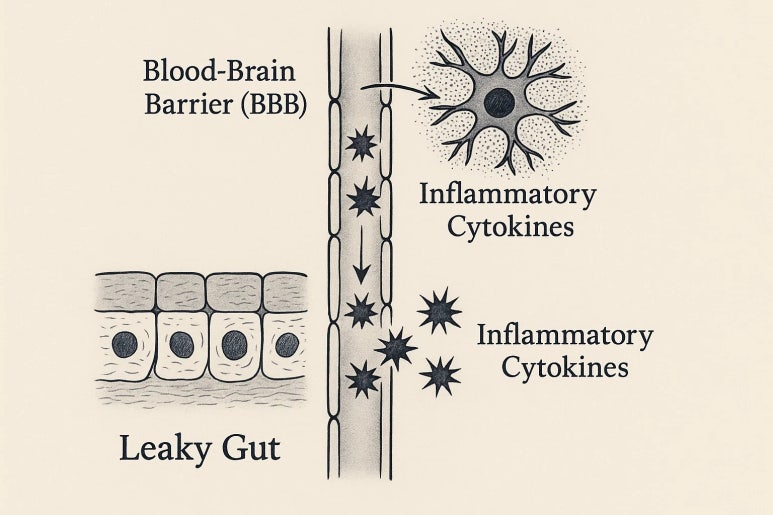
The brain also has an impenetrable 'border checkpoint' called the 'Blood-Brain Barrier (BBB)',
which prevents any substance from passing through.
However, chronic inflammatory signals originating in the gut
gradually compromise the integrity of this border checkpoint.
Eventually, inflammatory substances penetrate the checkpoint and infiltrate the brain,
causing 'neuroinflammation'.
This is precisely the moment when the spark originating in the gut
finally ignites a dense fog in the brain.
A dull head, decreased concentration,
and impaired memory—'brain fog'—
is an emergency signal sent by brain cells that are unable to function properly due to neuroinflammation.
In fact, one patient experiencing symptoms similar to Mr. A's
showed high levels for dairy products and gluten in an IgG Food Intolerance Test.
When they eliminated these foods, not only did their indigestion improve,
but their brain fog also showed a noticeable pattern of improvement.
Ultimately, the problem plaguing Mr. A
was not an issue of 'willpower' or 'mental strength'.
It was a systemic issue where the collapsed 'fortress wall (intestinal barrier)' was not repaired in time,
allowing the 'smoke' of inflammation to spread throughout the body,
and paralyzing the function of the most crucial 'command center (brain)'.
Could the 'brain fog' you're experiencing perhaps stem from a slice of bread you ate yesterday,
or a glass of milk you drank late last night?
Finding clues to extinguish the 'spark' in the gut and repair the 'fortress wall',
that is the greatest first step to navigating through the fog.
#BrainFog
#MyHeadFeelsFuzzy
#ReasonsForBrainFog