
Constant Burping and Flatulence: A Red Flag for Your Gut Health?

Table of Contents
| “What on earth is the problem? Did I eat something wrong? I can't even eat properly, so why do I keep burping and passing gas? It's so embarrassing when I'm in a quiet study room or meeting room….” |
B, a job seeker in their late 20s, expressed their frustration. They said that as they became more sensitive preparing for document screenings and interviews, the unusually frequent gas made their stress worse. They hadn't made any particular changes to their diet, but they constantly felt bloated and uncomfortable, and they said the smell of their gas had worsened to the point where they developed social anxiety. Desperate, they tried gas relievers or digestive aids, but it was only a temporary fix.
Burps and Farts: Same Gas, Different 'Roots'?
Burps and farts are both natural phenomena where gas is expelled from the body. However, the two originate from fundamentally different 'roots.' Burping is primarily the phenomenon where swallowed air, ingested with food or drinks, exits the stomach through the esophagus. On the other hand, farts are gases produced when intestinal microbes break down undigested food residue that has reached the large intestine. Therefore, foul-smelling farts are likely not simply a problem of swallowed air.
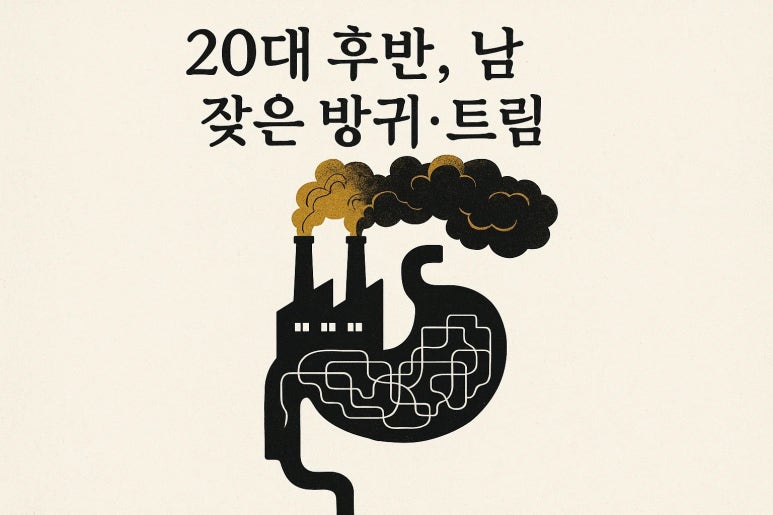
| Imagine your gut as a 'small chemical factory.' This factory produces gas using food as its raw material. When the factory operates normally, it produces clear, odorless gas. However, if the raw materials (food) aren't processed on time and accumulate, or if there's an issue with the composition of the workers (microbes), impure and foul-smelling gas will be produced. |
If Your Gas Smells Foul, It's a Sign Your Gut is 'Decaying'
In a healthy gut, beneficial bacteria predominate, leading to a process of 'fermentation' of food residues. The gases produced during this process are mainly carbon dioxide, hydrogen, and methane, which are almost odorless. However, if the gut environment is disrupted due to stress or irregular eating habits, harmful bacteria proliferate. Harmful bacteria 'decompose' undigested proteins or fats, producing foul-smelling gases like hydrogen sulfide.
This is like throwing filth and garbage into a garden patch instead of good fertilizer. The garden patch (gut) begins to rot, and a foul odor is emitted in the process. This phenomenon is not merely uncomfortable; it can lead to inflammation of the intestinal wall, hinder nutrient absorption, and even weaken immunity. Foul odors are nothing short of a cry for help, indicating that your gut health is at risk.
💡 The solution isn't to 'reduce' gas, but to 'improve' your gut environment. Simply holding in gas or constantly relying on digestive aids to eliminate frequent burps or farts is merely a temporary fix. The real solution is to restore the balance of your gut microbiome, helping your gas factory operate normally again. |
Conclusion: Listen to Your Gut
Frequent burps and farts are not just embarrassing bodily functions. They are warning signs from your gut and an 'honest voice' indicating an imbalance in your body and mind. Especially if the odor is foul, it's strong evidence that the imbalance in your microbiome has worsened. Right now, examine your diet, sleep patterns, and stress management. Your gut health directly reflects your lifestyle.
Of course, not all gas issues are signs of a disease. However, if you're tired of recurring symptoms, it's time to pay attention to the clue of 'odor' and have the courage to fundamentally reassess your gut environment. Your gut is your most honest health diary.