
My Stomach Feels Bloated and Uncomfortable | A 40-Something Housewife's Chronic Indigestion

Table of Contents
Chronic Indigestion: Why Am I the Only One Suffering?
Chronic indigestion is more than just discomfort; it significantly diminishes our quality of life.
For middle-aged women in their 40s, digestive issues are often accompanied by blood sugar fluctuations.
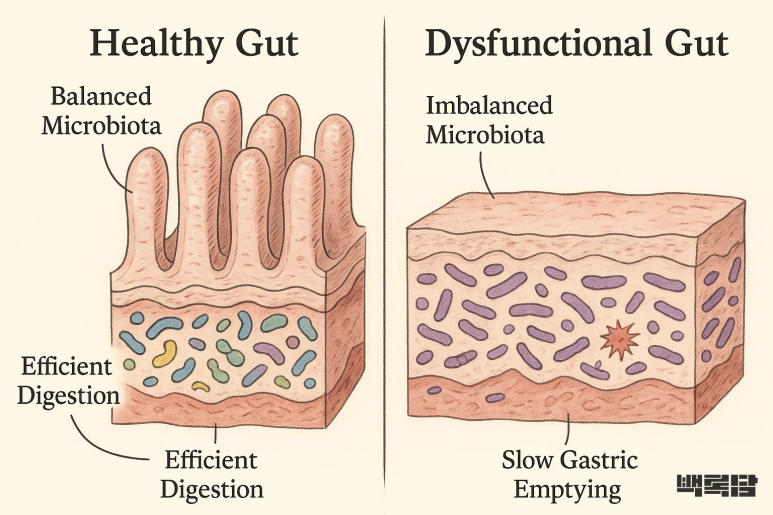
According to research, an imbalance in gut microbiota can contribute to insulin resistance and impaired blood sugar control.
When digestive function declines, it can lead to disruption in the secretion of gut hormones that regulate blood sugar. Conversely, high blood sugar can slow gastric emptying, thereby worsening indigestion.
These complex gastrointestinal issues require the wisdom to understand and manage the body's signals.
The Wisdom of Listening to Your Body: Acupressure on Acupoints

For patients who come to me exhausted by such complex symptoms, I have explored methods that go beyond solely relying on medication, focusing instead on helping the body rediscover its own healing power.
One such method is acupressure on acupoints, based on traditional Korean medicine principles, which can be easily tried at home.
This acupressure doesn't merely suppress symptoms; it aims to improve overall body circulation and restore balance.
A Path to Recovery in Daily Life: Acupressure Methods
So, how should you start with this acupressure method? Let's delve into several acupoints and their principles that individuals experiencing chronic indigestion, like Sun-young (pseudonym), can apply in their daily lives.
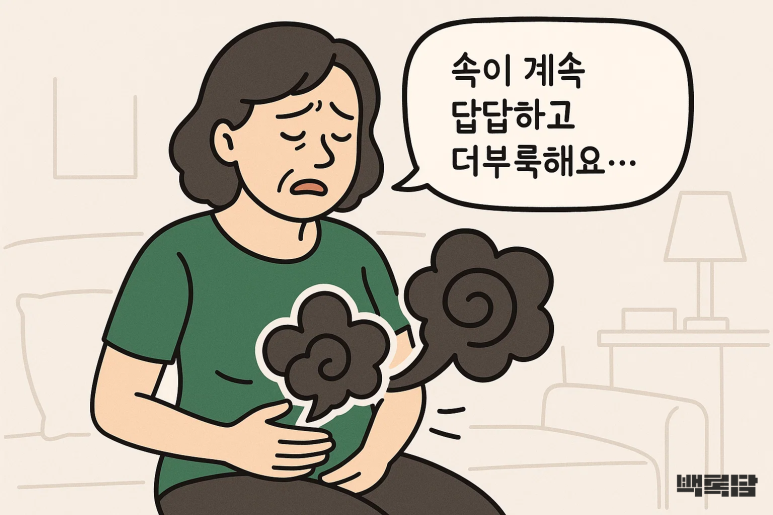
| In the initial stages of treatment, Sun-young (pseudonym) particularly suffered from epigastric pain, along with constant gas, abdominal distension, and frequent belching. These symptoms worsened significantly after meals, making daily life difficult. I instructed Sun-young (pseudonym) on several acupoints that directly aid digestive function and recommended consistent acupressure. |
The first acupoint I'd like to introduce is Hegu (合谷).
Hegu is an acupoint located on the back of the hand, between the thumb and index finger.
| Hegu (合谷) belongs to the Large Intestine Meridian and demonstrates excellent efficacy in regulating the flow of Qi in the digestive system, thereby relieving stagnation and alleviating pain. It is also useful for indigestion caused by stress. It plays a role in clearing blocked Qi. Next is Zusanli (足三里), a key point for stomach function. Zusanli is located approximately four finger-widths below the outer depression of the kneecap. Zusanli is an acupoint belonging to the Stomach Meridian. Historically known as the 'point of a hundred diseases,' it plays a crucial role in strengthening overall Qi and blood circulation and gastrointestinal function. It aids in the secretion of digestive enzymes and activates gastric peristalsis, thereby helping to improve gastrointestinal issues like bloating and abdominal pain. Furthermore, it contributes to overall vitality restoration. Finally, the Neiguan (內關) acupoint. Neiguan is located on the inner forearm, about two finger-widths above the wrist crease, between the two tendons. Neiguan belongs to the Pericardium Meridian and is particularly effective for upper digestive symptoms such as queasiness, nausea, and vomiting. It connects the energies of the heart and stomach, helping to calm stress-induced indigestion and chest tightness. It's like a switch that comfortably relaxes a tense body and mind. |
For these acupressure techniques, consistency is key.
For 5 to 10 minutes daily, gently press with your thumb or an acupressure tool, adjusting the pressure until you feel a refreshing sensation without pain, rather than pressing too hard.
| In addition to acupressure for indigestion relief, dietary adjustments and regular lifestyle habits are essential. It's best to eat small, frequent meals and avoid spicy, greasy foods, and carbonated drinks as much as possible. Taking a light walk after meals instead of lying down immediately is also a good health management practice that aids gastrointestinal movement. |
| Acupressure is a non-pharmacological solution that can certainly help alleviate chronic indigestion, but it is not a panacea for all symptoms. If symptoms do not improve after acupressure, or if severe symptoms such as rapid weight loss, bloody stools, or severe abdominal pain are present, it is wise to visit a nearby medical institution for a professional diagnosis and treatment. Especially if you have underlying conditions like diabetes, it is safer to start acupressure after consulting with a professional. |
Consistency and Professional Advice: The Two Pillars of Health Management
Our body is a complex interconnected organism.
In my clinic, I consistently observe that impaired digestive function is not merely a stomach issue but is closely related to stress, blood sugar regulation, and even a general decrease in vitality.
Acupressure on acupoints is one facet of traditional Korean medicine wisdom that understands these complex connections and helps the body find its own balance.
As a result of combining consistent acupressure with dietary and lifestyle improvements, Sun-young (pseudonym) gradually felt more comfortable and was able to sleep soundly at night.
While the journey to recovery can sometimes be slow and requires consistent effort, proactive health management habits that involve understanding and caring for one's own body and mind ultimately become the greatest strength.
I sincerely hope that the story I shared today becomes a small seed of comfort and hope for the bodies and minds of those struggling with chronic indigestion.