Personal Diet Recommendations: From Chicken to Zero Drinks

Table of Contents
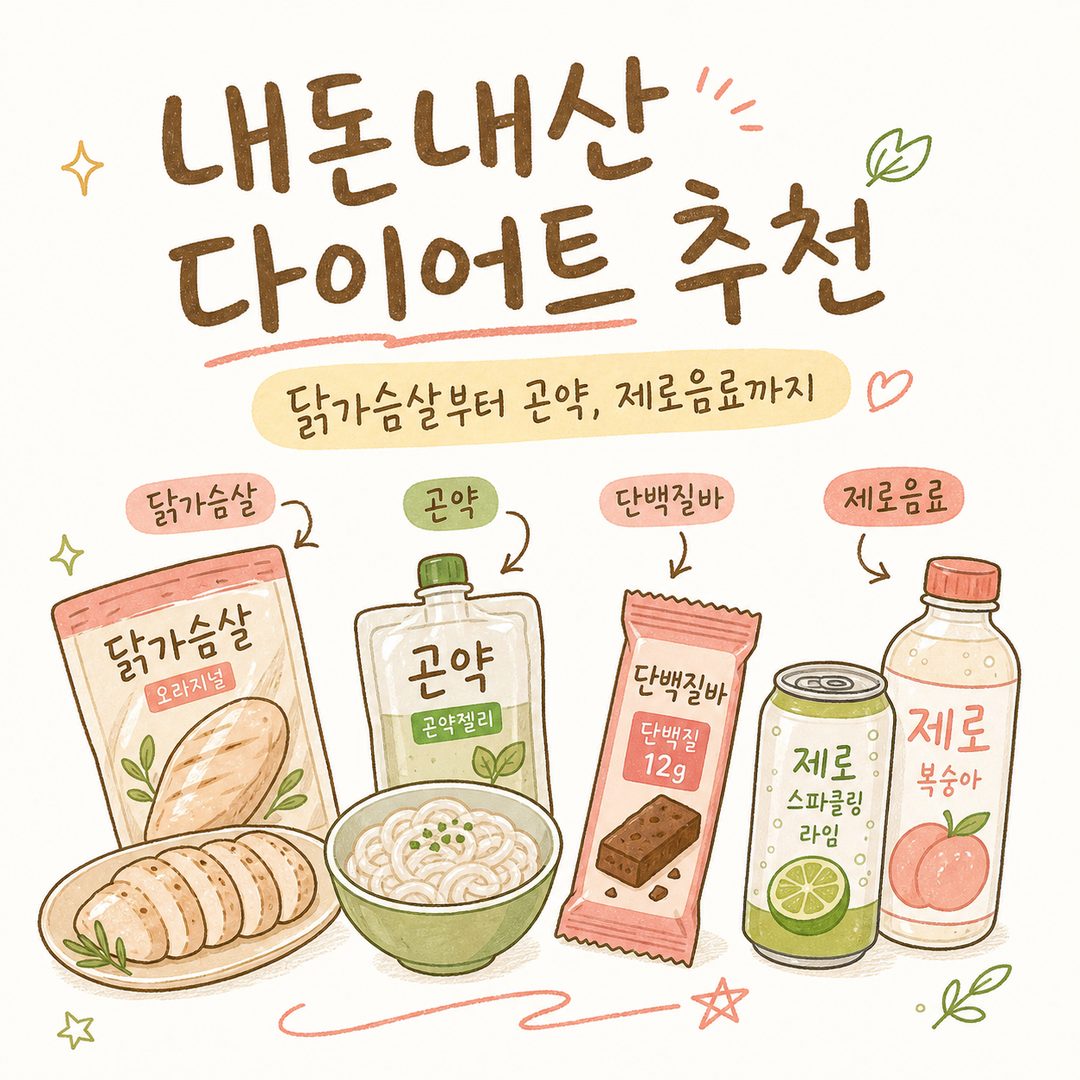
When providing diet consultations in the clinic, I am frequently asked, "Doctor, what do you usually eat besides medicine?" For those who are dragged to social dinners, stop by convenience stores after working late, and open delivery apps first thing on weekends, the word "diet" can be overwhelming. As someone who has shared those same concerns, I have compiled a list of diet items I have actually purchased and tried, categorized for your convenience—no sponsored reviews here. The core strategy is simple. If you evenly fill the four categories of base (carbohydrates), protein, side snacks, and drinks, your meals will surprisingly fall into place.

Base — Replacing Carbs Lightly
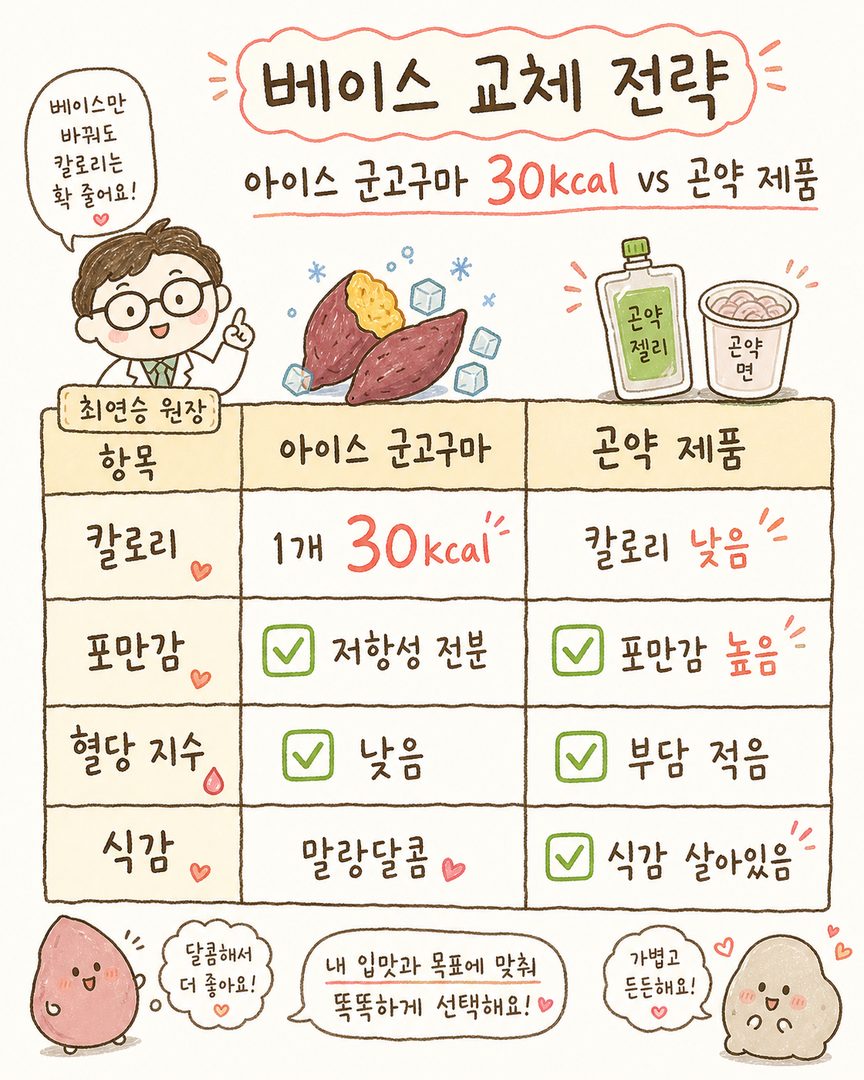
If you completely eliminate rice and bread, you will likely give up within a few days. Therefore, I recommend a base replacement—choosing items that provide the same volume and satiety but with fewer calories.
Ice Roasted Sweet Potato: Some products are introduced at around 30 kcal per piece. These are great to have instead of cake or bread in the afternoon when you crave something sweet. Reports suggest that eating them cold preserves the sweetness while the resistant starch helps flatten the post-meal blood sugar curve.
Konjac Foods: Products that replace noodles with konjac, such as konjac tteokbokki or konjac cold buckwheat noodles, are consistently recommended. The advantage is that they reduce calories while maintaining a chewy texture and volume, leaving you with the feeling that you've had a "proper meal."
During the first week of changing your base, you might feel a bit unsatisfied. However, after just 2–3 days, your palate will adjust. Just avoid pairing them with overly spicy seasonings or sugary sauces.
Protein — Filling One Hand per Meal
Protein is the category that most often falls short in a diet plan. You must fill about one palm-sized portion of every meal with protein to slow down the rate of muscle loss.
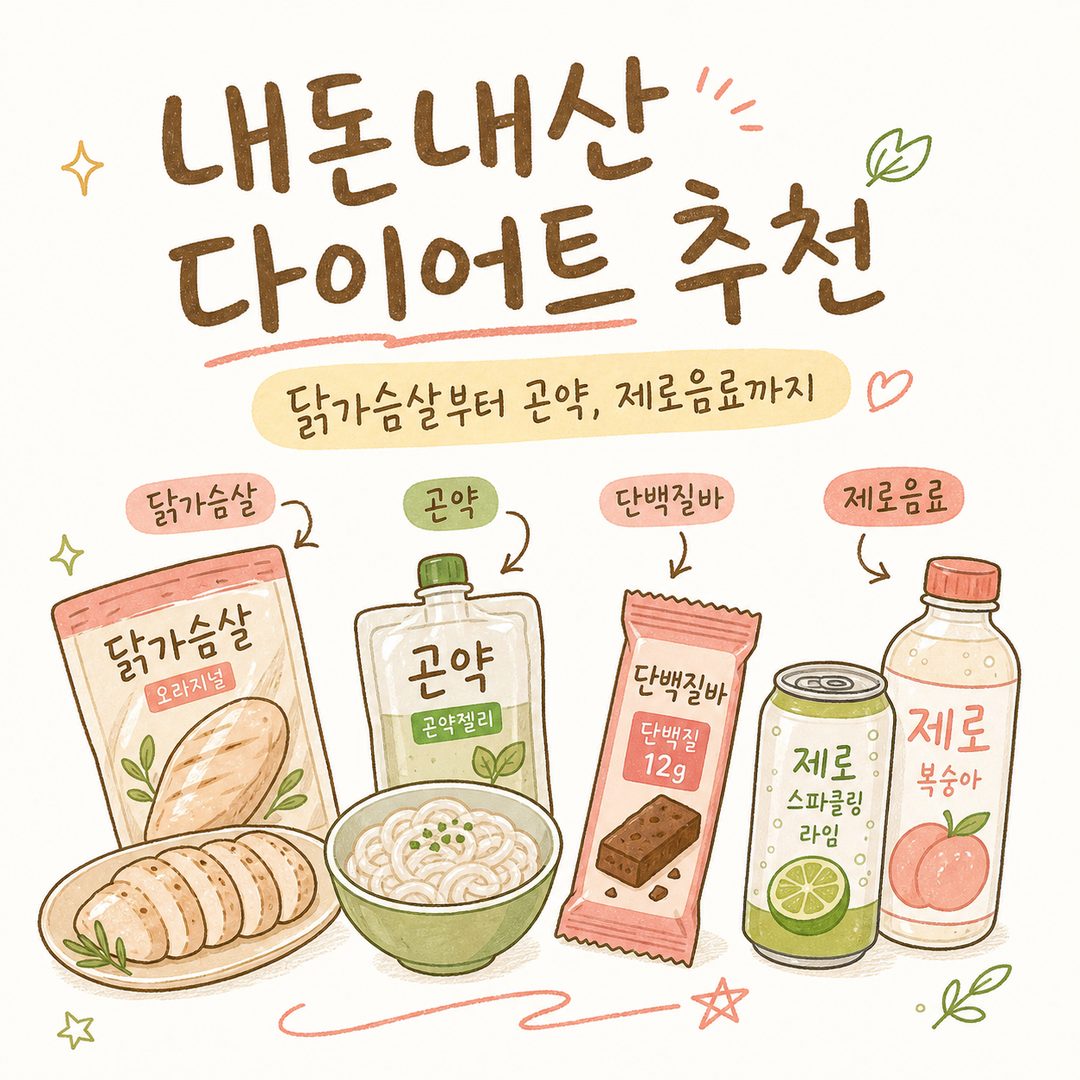
Chicken Breast: Often mentioned as the staple of weight management. One video recommended refrigerated chicken breast as a go-to item. With many varieties available—including smoked, steak, and sausage types—it is easy to rotate them without getting bored.
Protein Bars: One product is introduced with 150 kcal, 0.7g of sugar, and 12g of protein. These are great as a convenient snack. They are handy to keep in your bag for the gaps between consultations, right before meetings, or whenever you need a quick bite.
Use protein bars only as a supplement. While you might survive a few days replacing entire meals with protein bars, your food satisfaction will plummet in the long run.
Side Snacks — Satisfying Sweet and Salty Cravings
As a diet continues, the point of failure is often the craving for sweet and salty flavors. Rather than suppressing these until you binge, it is much safer to pre-select alternative snacks with a lower calorie burden.
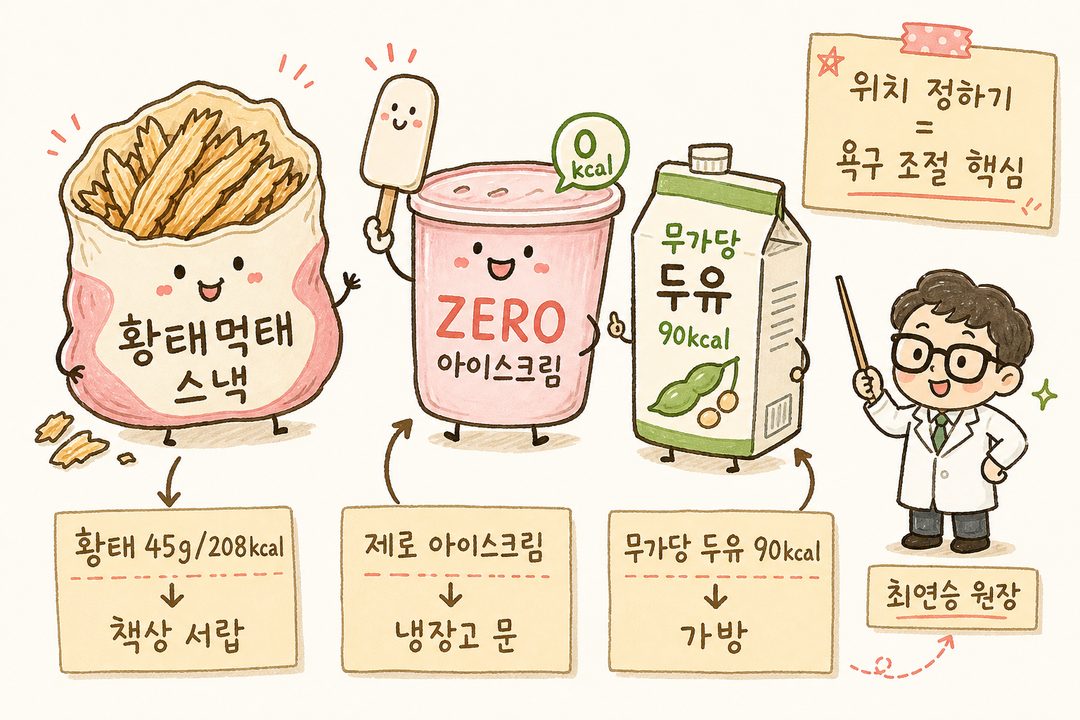
Dried Pollack Snacks: Honey-flavored dried pollack is introduced at 208 kcal per 45g. It satisfies both sweet and salty cravings at once. The key is to portion it into a small dish rather than finishing the whole bag.
Zero-Calorie Ice Cream: This is a great alternative to regular ice cream in the evening when sweet cravings are strong. Reviews often mention that "the sweetness is there, but the guilt is less."
Unsweetened or Low-Sugar Soy Milk: One product is around 90 kcal. Grabbing a pack when you're at risk of skipping breakfast allows you to supplement protein, fat, and a small amount of carbohydrates.
I keep dried pollack snacks in my desk drawer and soy milk in the refrigerator door. The time spent agonizing over what to eat when a craving hits is often when a diet fails. Setting a designated spot for these items significantly reduces the "decision cost."
Drinks — The Weight of a Single Glass
Surprisingly, drinks are where most calories leak during a diet. It is common for a single latte or a bottle of fruit juice to contain the calories of a full meal. I advise my patients to simplify their beverage choices to three things: "water, tea, and zero-calorie drinks."
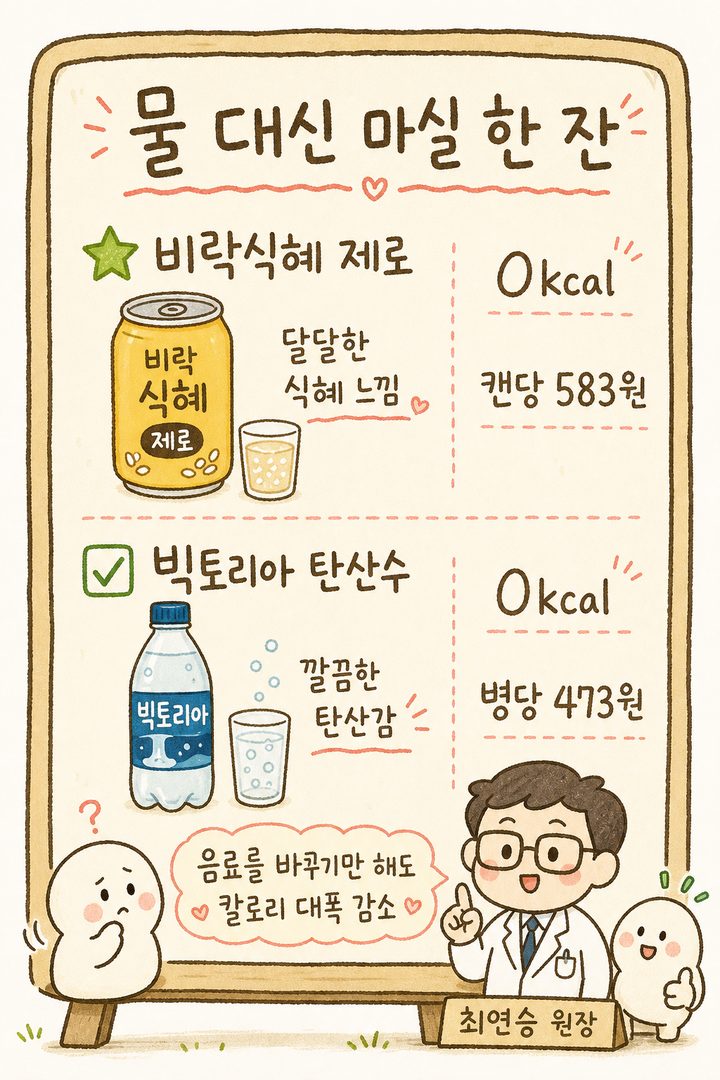
Vilac Sikhye Zero: A zero-calorie version of the traditional rice drink. Reviews say it is 99.9% similar to regular sikhye. The price is about 14,000 KRW for 24 cans (238mL), roughly 583 KRW per can. It’s a great choice when you crave sikhye. However, since the sweetness in zero-calorie drinks can still stimulate appetite, it is safer to limit yourself to 1–2 cans a day.
Victoria Sparkling Water: With 0 kcal and 0g of sugar, carbs, fat, cholesterol, and sodium, it is essentially a water substitute. At about 18,900 KRW for 40 bottles (500mL), or roughly 473 KRW per bottle, it is very affordable. Flavors like green grape, lemon, and lime provide a nice variation when plain water becomes boring.
Many people can significantly reduce their daily calorie intake just by changing their drinks. If you find it hard to change your meals, start with your beverages.
Failing Patterns vs. Successful Patterns
Even for the same office worker in the same week, the results depend on where the "leaks" occur. When I organize patient cases anonymously, the difference is clear.
❌ Failing Pattern: Skipping breakfast → Lunch out (heavy soups or cutlets) → Afternoon latte and cookies → Late-night delivery after overtime. This is a flow where the drink and snack categories are empty until they are filled by binge eating.
✅ Successful Pattern: One pack of unsweetened soy milk for breakfast → Regular lunch but with half a bowl of rice → Afternoon protein bar or dried pollack snack + Victoria Sparkling Water → Dinner combination of chicken breast and konjac noodles. No meal is skipped, yet the total calories are reduced.
The key is not "not eating," but "repositioning." You fill all four categories—base, protein, snacks, and drinks—but you play the lightest card in each category.

3 Easy-to-Follow Combos
Planning a new menu every time is the fastest way to get exhausted. That’s why I tell my patients, "Just memorize these three combinations."
Commuter Morning Set: Unsweetened soy milk + 1 ice roasted sweet potato. Easy to eat while heading to work. A 90 kcal soy milk and a 30 kcal sweet potato create a base that will last until lunch.
Afternoon Crisis Escape Set: Protein bar (150 kcal, 12g protein) + Victoria Sparkling Water. This is the combo to pull out before or after meetings, right before your hand reaches for a bag of cookies. Many find that their urge to snack decreases once their protein needs are met.
Late-Night Defense Set: A bowl of konjac noodles + one piece of chicken breast + Vilac Sikhye Zero. Rather than trying to block late-night eating entirely, having a light snack at the same time reduces the risk of a major binge.
Rotating just these three combinations makes your weekly meal planning much simpler. As the number of decisions decreases, so do the opportunities for your diet to fail.
A Line of Korean Medicine to Support Your Diet
Personal diet items are ultimately tools that make daily small decisions easier. In my clinic, I first help patients adjust their diet, exercise, and sleep, and then recommend supplementary aids based on their constitution. If you have managed your diet but remain at a plateau, it may be helpful to look into Baekrok Gambi-jung, which is prescribed after a constitutional diagnosis. Please feel free to contact your nearest Baekrokdam Clinic.