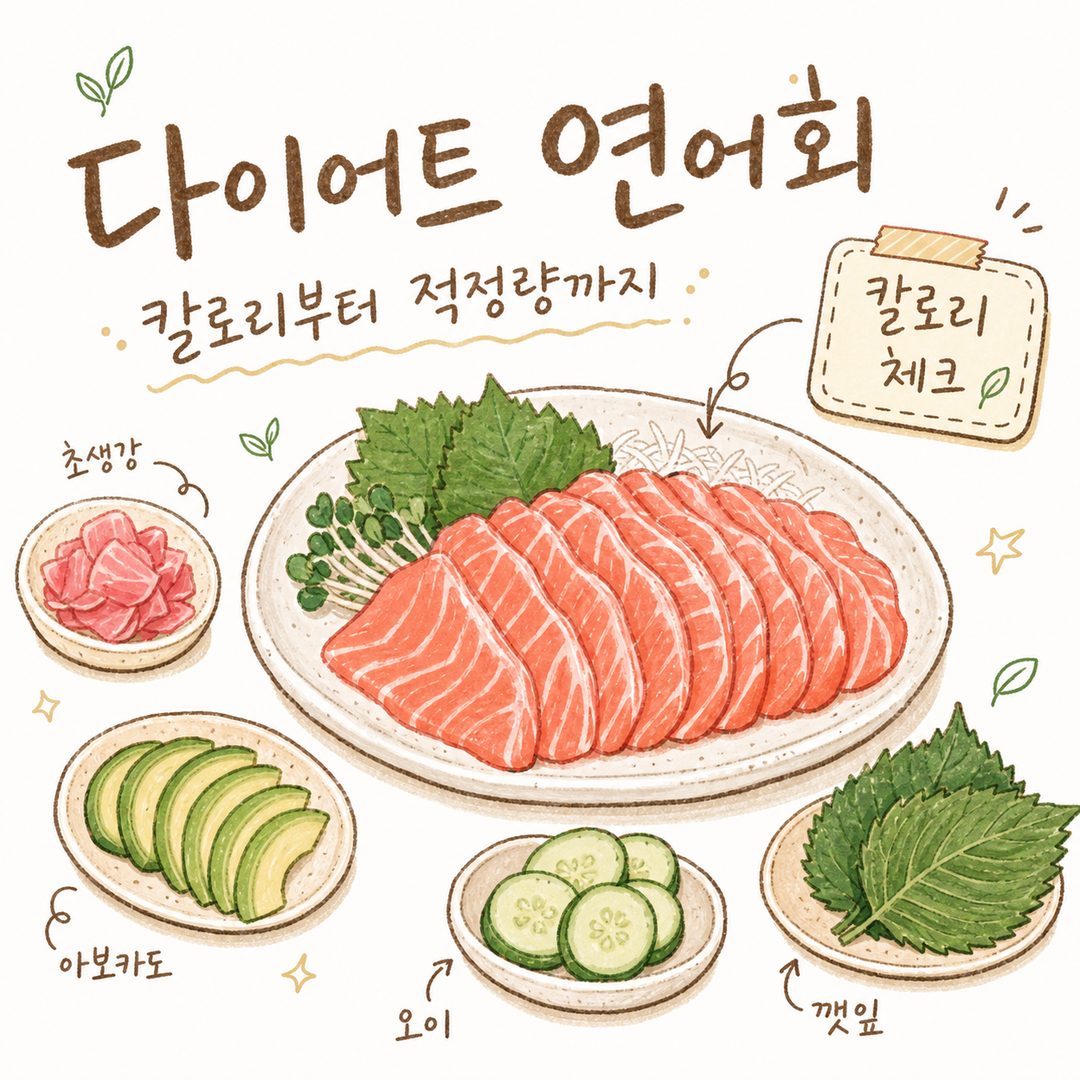
Salmon Sashimi for Weight Management: Calories & Tips

Table of Contents
Many people search for "Is a plate of salmon sashimi okay?" while dieting. I often get this question in the clinic, and the answer is: "You can eat it, but 'how' you eat it is everything."
![Nutritional comparison table based on 100g of salmon. Rows show [Salmon Sashimi alone], [+Mayo Sauce], [+Sushi Rice], [+Beer], and columns distinguish Calories, Protein, and Carbohydrates.](/api/files/assets/2026-06/fa0bcdfc.jpg?sig=aa0a95d3925d7b1235f75a4fca332bac13243c96be2b0d8a84930964e3a75c51)
Why Salmon Sashimi Works Well in a Diet Plan
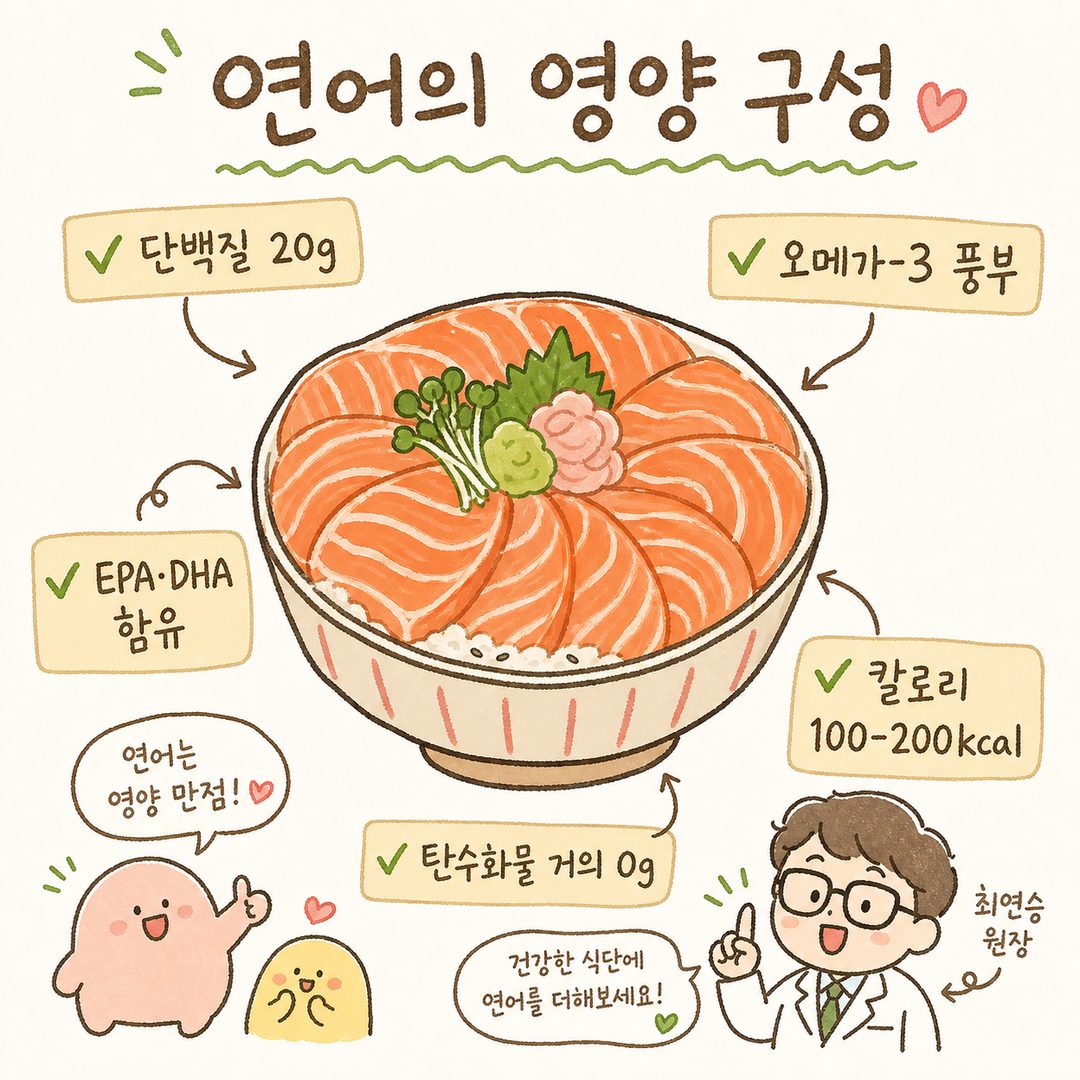
Salmon sashimi is high in protein and contains almost no carbohydrates. While data varies slightly, 100g of raw salmon or salmon sashimi provides about 20g of protein, with some sources citing up to 20–22g. Carbohydrates are near zero, at approximately 0.2g, meaning it is unlikely to cause rapid blood sugar spikes. Since protein takes longer to digest, it provides lasting satiety. This naturally leads to a reduction in snacking or late-night hunger cravings.
Most of the fat in salmon consists of unsaturated fats, specifically Omega-3 (EPA·DHA). Research indicates that Omega-3 helps reduce inflammation, lowers triglycerides and cholesterol, and boosts the basal metabolism, aiding in body fat reduction. Furthermore, salmon is a species with low mercury content, making it a safer choice for those managing their weight compared to other large fish.
Why Do People Say "I'm Not Losing Weight Despite Eating Salmon Sashimi"?
This is the crucial part. Salmon sashimi itself is not excessively high in calories. Some data suggests about 106 kcal per 100g, while other sources list it between 160–200 kcal for the same amount. This discrepancy arises from the specific type of salmon and its fat content. To summarize: 100g of salmon sashimi is roughly between 100–200 kcal, with about 20g of protein and nearly 0g of carbohydrates.
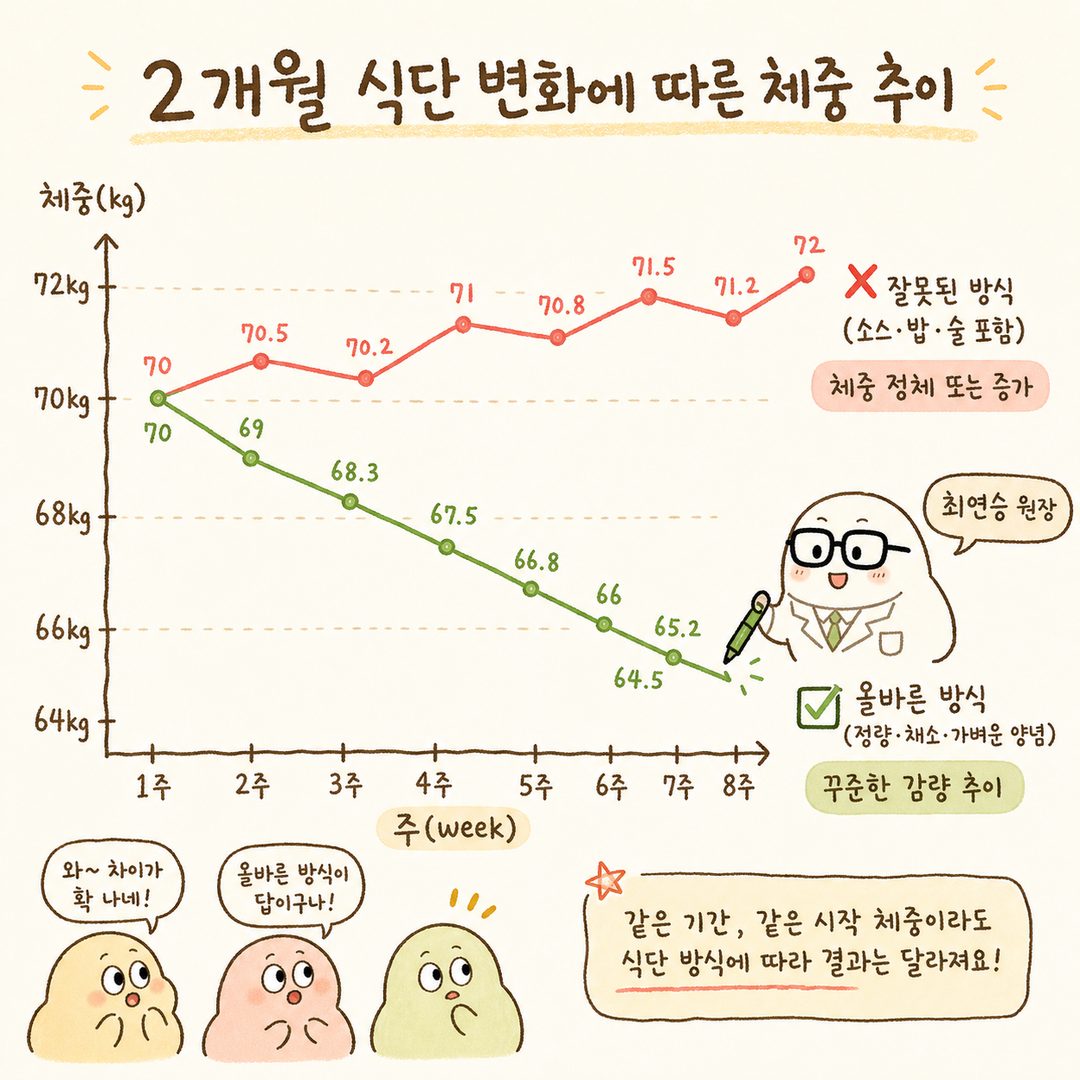
The problem lies in the "extras" that come with it. When reviewing diet logs in the clinic, the patterns are similar: salmon bowls topped with heavy mayonnaise, sweet teriyaki sauce, vinegared sushi rice, and accompanying beer or sake. Even if a plate of salmon sashimi is only 200 kcal, the total caloric intake skyrockets once sauces, rice, and alcohol are added. Data clearly points out that side dishes significantly increase the calorie count.
Trends Observed in Two-Month Diet Logs
Patients often come to our clinic saying, "I only ate salmon sashimi because I heard protein is good." However, when we look at their diet logs together, we frequently find that while the salmon portion is appropriate, the intake of carbohydrates and fats from side menus has increased significantly. Conversely, those who eat plenty of vegetables first, limit salmon to 100–150g per serving, and reduce alcohol and sushi rice see different results. Their complaints of hunger decrease, and their late-night snack impulses subside.
This isn't because "salmon is a magic food." It's because by increasing the proportion of protein and removing refined carbohydrates and alcohol, the very structure of the meal becomes favorable for weight management.
Salmon Sashimi in Korean Medicine — Cold Nature and Digestive Burden
In Korean medicine, we don't just look at the calories of a food; we consider the individual's constitution and the state of their spleen and stomach (digestive system). Since salmon sashimi is consumed raw, it is considered to have a "cold" nature. For those who typically have cold hands and feet, frequent bloating, or a tendency toward diarrhea after eating cold food, consuming large amounts at once can easily burden the spleen and stomach.
Therefore, even for the same "2–3 servings of salmon per week," we recommend pairing it with warm soup or vegetables that complement its nature, such as ginger, perilla leaves, or radish sprouts. Many people's digestive systems become sensitive during a diet. In such cases, combining cold sashimi with cold drinks and sweet seasonings can cause one's physical condition to drop faster than the weight falls. Weight management is a marathon that lasts months. A dietary approach that your stomach can sustain is the one that lasts the longest.

Five Tips You Can Apply Right Now
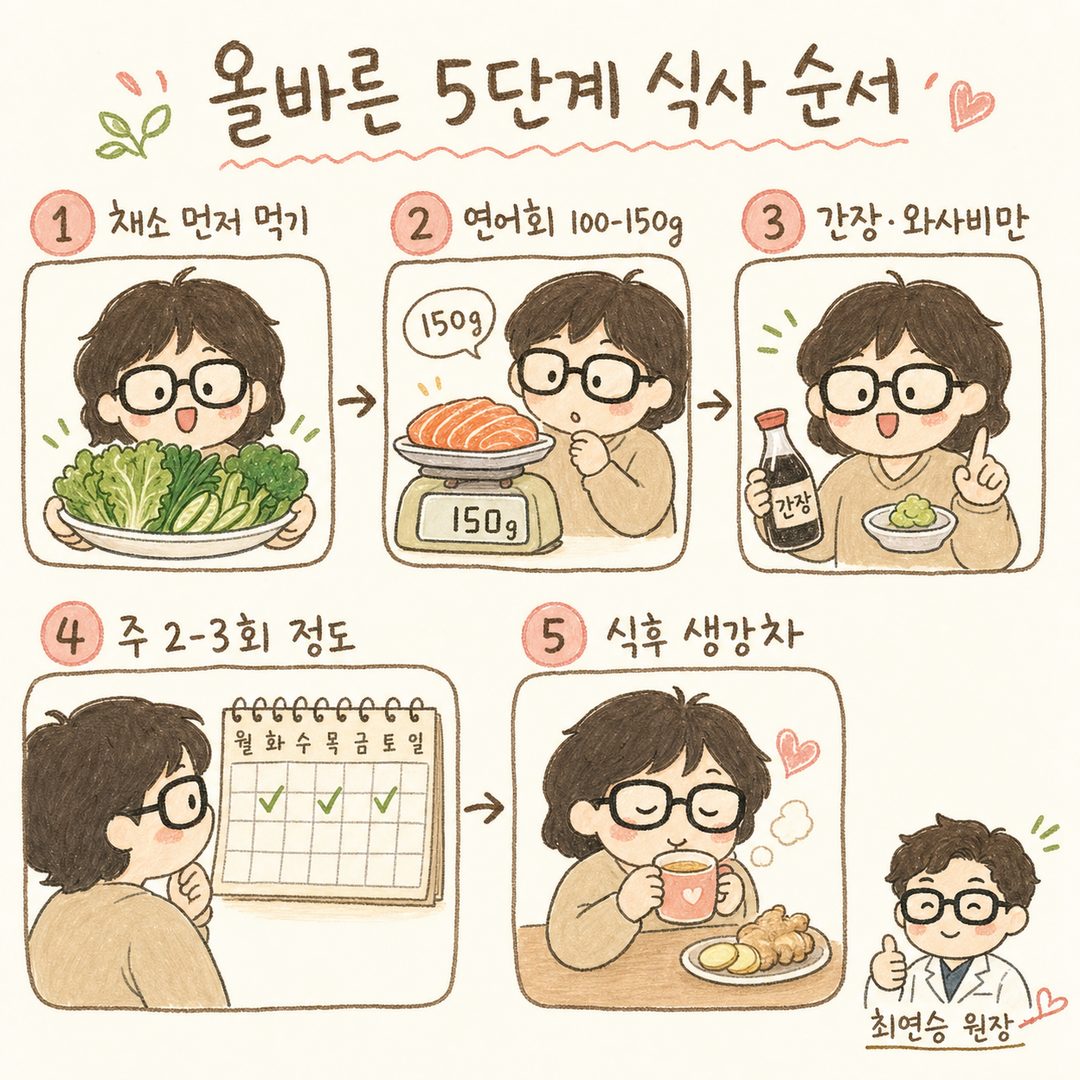
Here are some practical points you can use immediately without complex calculations:
Set the portion to 100–150g per serving. Don't eat straight from the platter; plate your portion in advance.
Limit salmon to 2–3 times a week. Spread it out rather than replacing every meal with salmon sashimi.
Eat vegetables first, then salmon. Pair it with wrap vegetables, salads, or seaweed.
Keep sauces light, like soy sauce and wasabi. Minimize mayo, teriyaki, and sweet chili sauces.
Calculate sushi rice and alcohol separately. These often hinder progress more than the salmon itself.
One more thing: if you have a cold constitution or a weak stomach, I recommend having a cup of warm barley tea or ginger tea after your meal. It's a small habit that eases the burden on the spleen and stomach, and you'll likely feel the difference in your condition after just a few days.
When used correctly, salmon sashimi can be a satisfying meal in a diet plan. However, the result depends not on the fact that you "ate salmon," but on "how you ate it." At Baekrokdam Clinic, we don't just help with a low-calorie diet; we help you revitalize your digestive system and refine your eating habits according to your constitution. When you look at your diet log alongside Baekrok Gambi-jung, you will see clearly where your efforts were leaking. Stop worrying about whether you "can eat" a plate of salmon sashimi and come in for a comfortable consultation.