InBody Measurement Errors: From Electrodes to Posture

Table of Contents
title: "InBody Measurement Errors: From Electrodes to Posture"
Ever stood on an InBody machine only to see an error message, or been shocked by drastically different readings from one day to the next? In my practice, I often hear patients say, "Doctor, I know I haven't gained weight, so why does it show this?"
Why Do InBody Errors Keep Occurring?
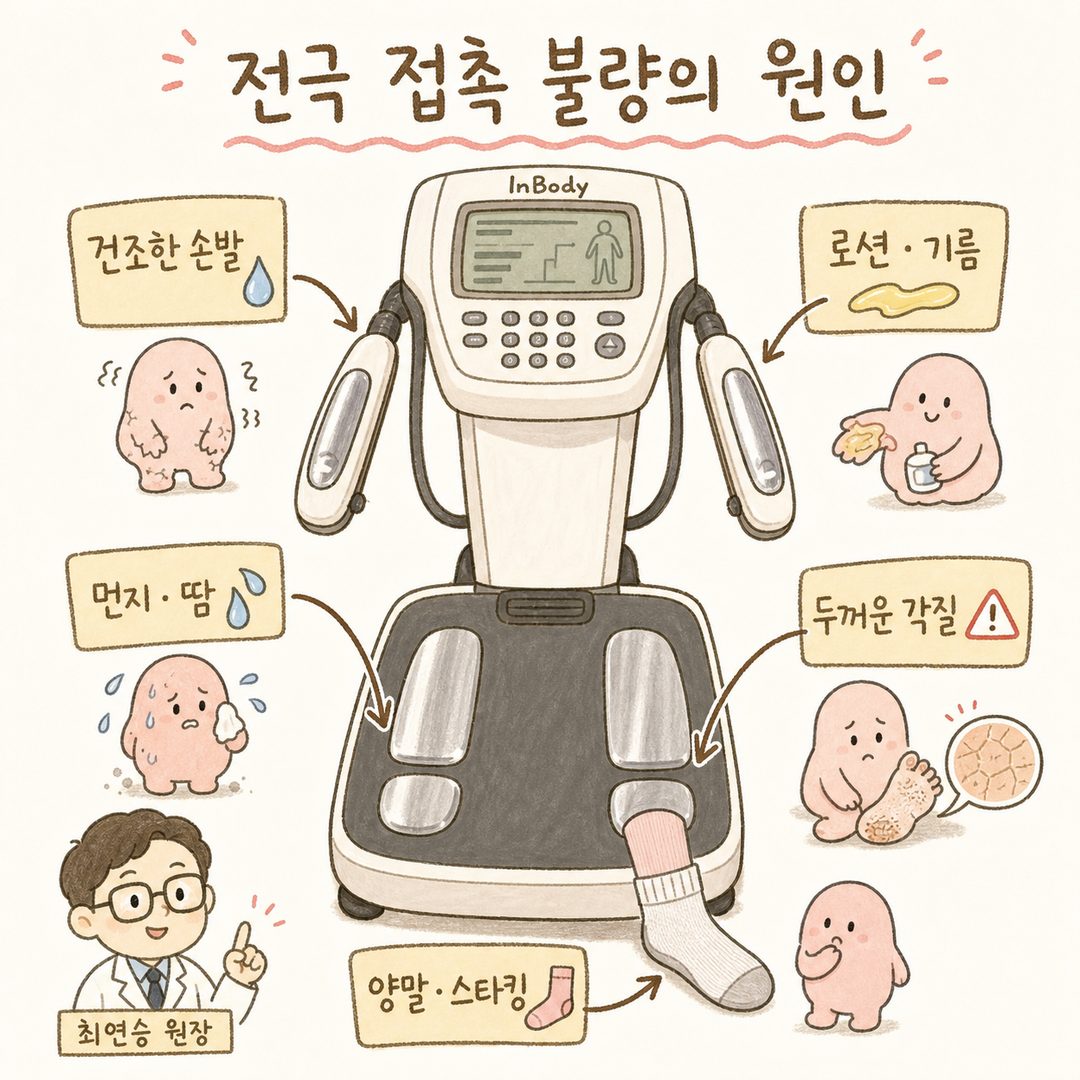
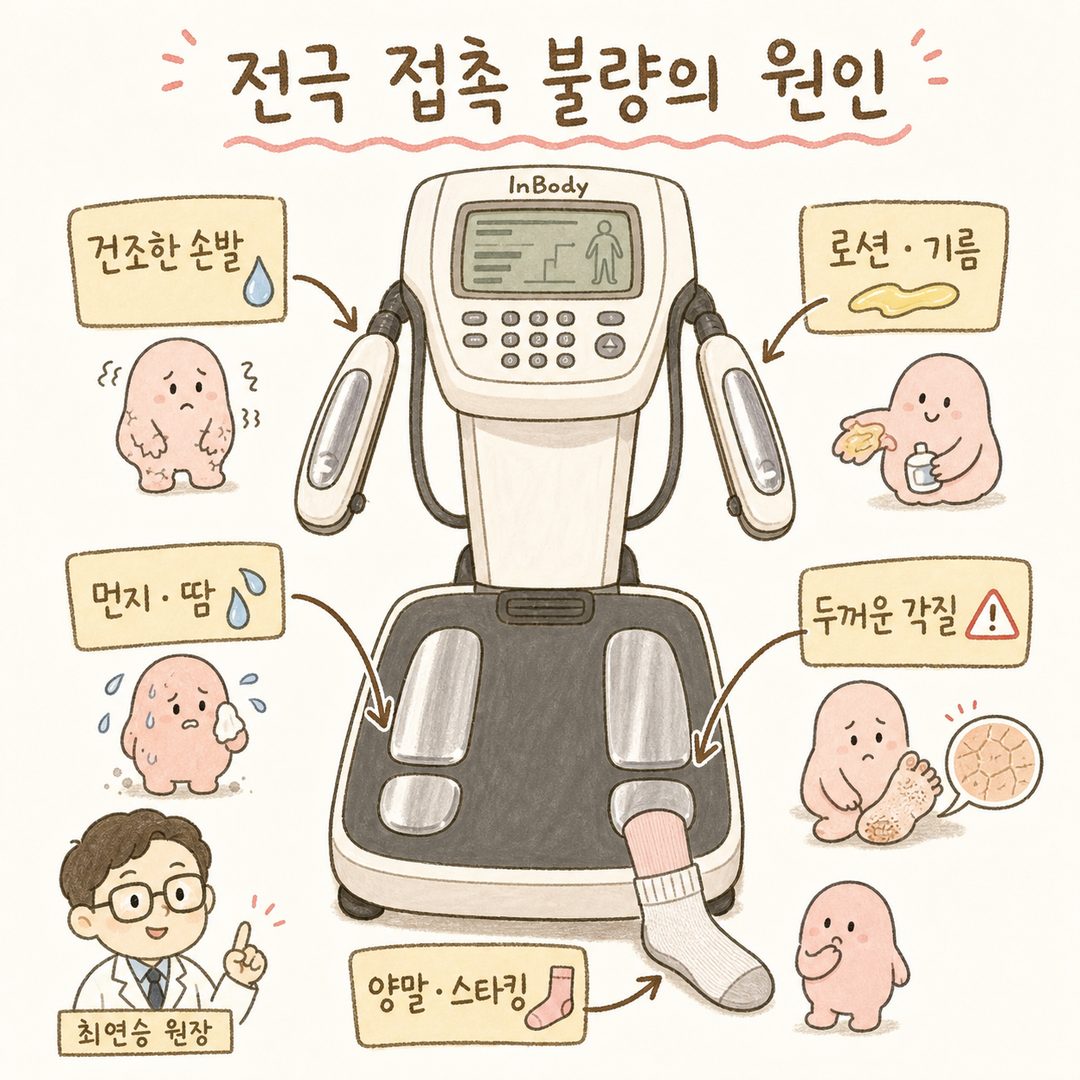
First, let me reassure you: InBody errors or anomalies are much more likely to be user or environmental issues than machine malfunctions. The principle is simple. The machine sends a weak electrical current through your hands and feet that travels around your body. If this current doesn't flow properly or measurement conditions aren't ideal, readings become inconsistent.
The most common issue is electrode contact problems. When hands or feet are too dry, when there are thick calluses on the soles, when lotion or oil is on the skin, or when dust or sweat remains on the footpads, the current doesn't flow well. Surprisingly many people step on with socks or stockings still on, which completely prevents skin-to-electrode contact.
Posture also plays a role. If your armpits or thighs are touching, the current can't properly circulate through your torso and instead leaks sideways. This means even the same person can get different results on the same day just from posture changes. Strong electromagnetic fields or power outlet interference nearby can also cause errors.
Why the Same Person Can Show Up to 1kg Difference
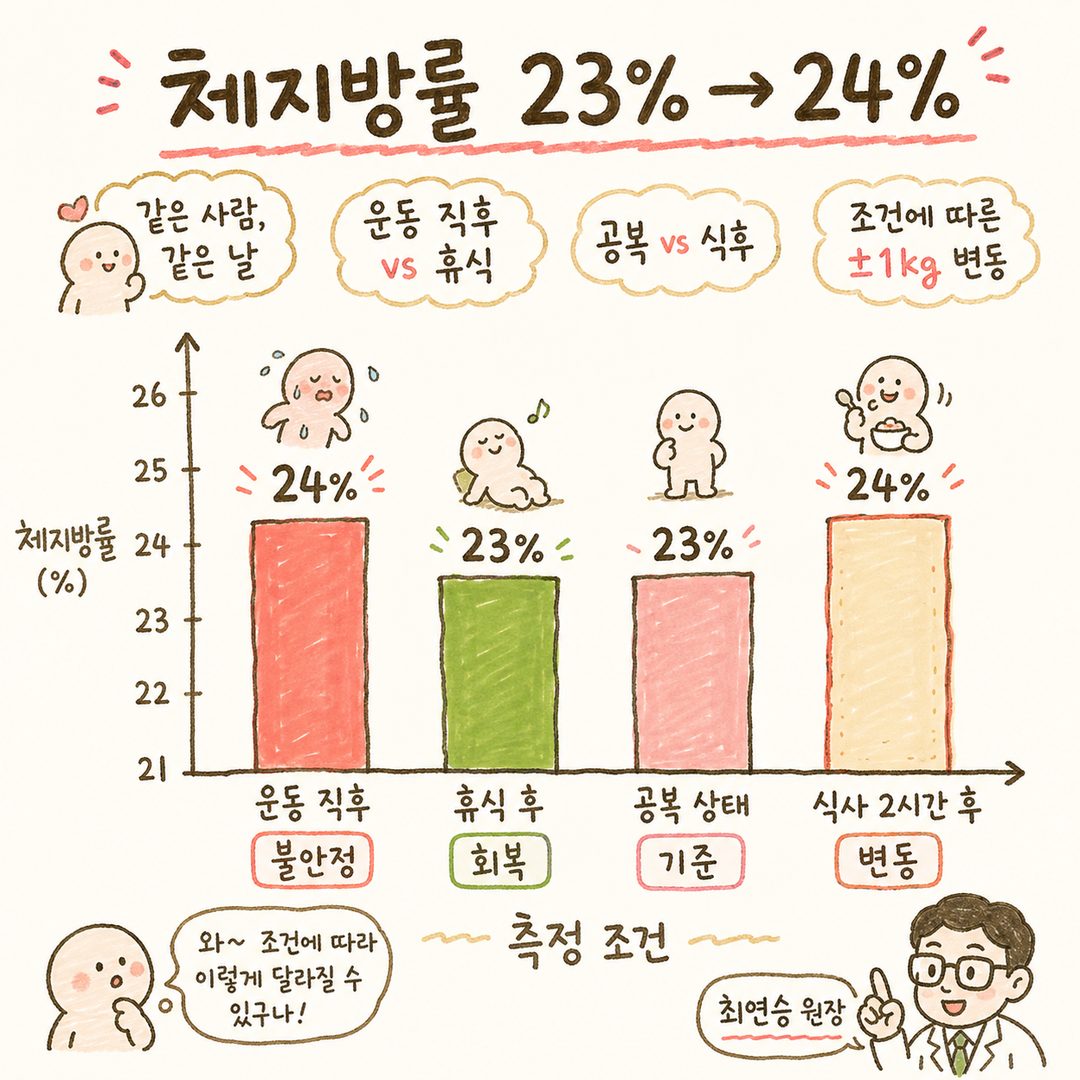
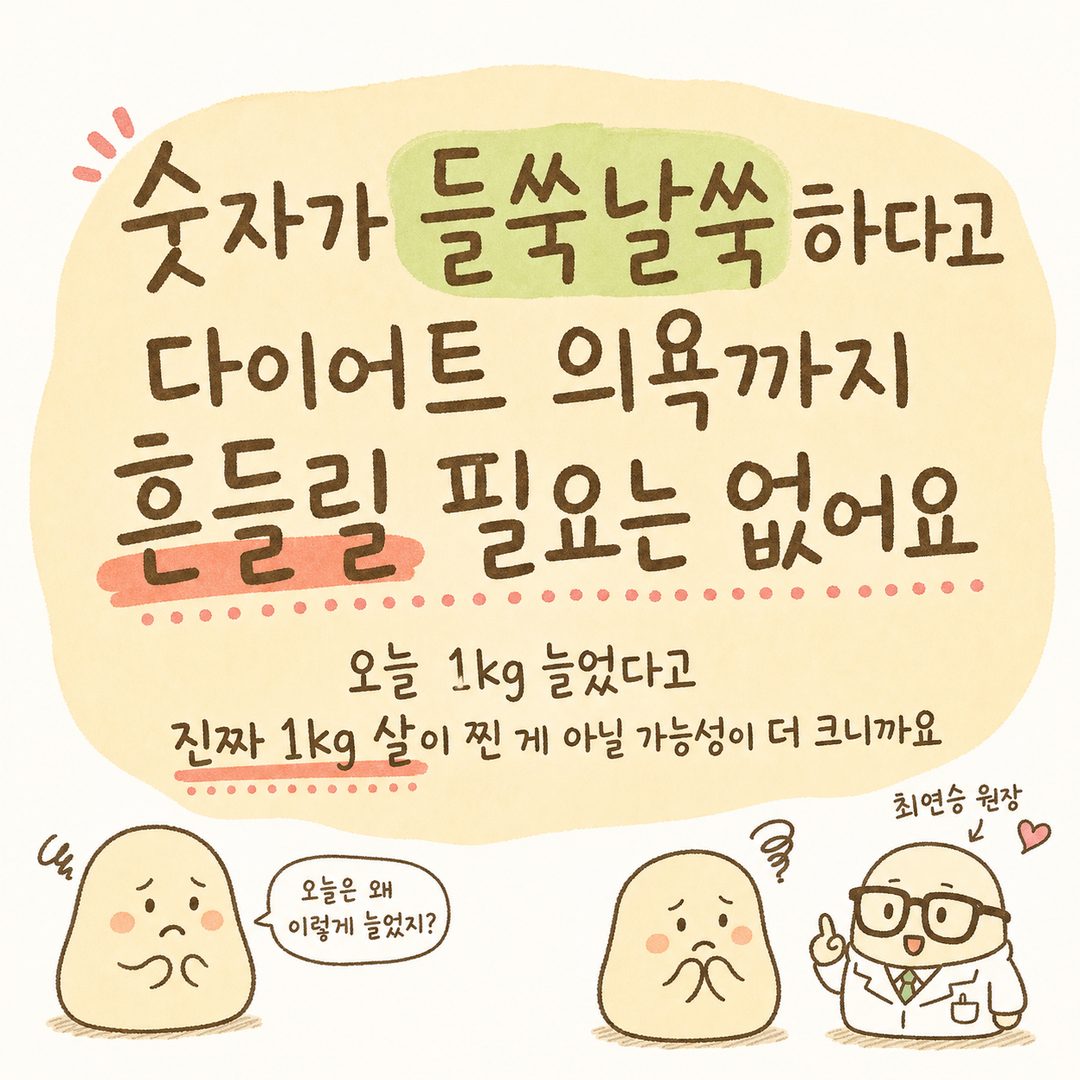
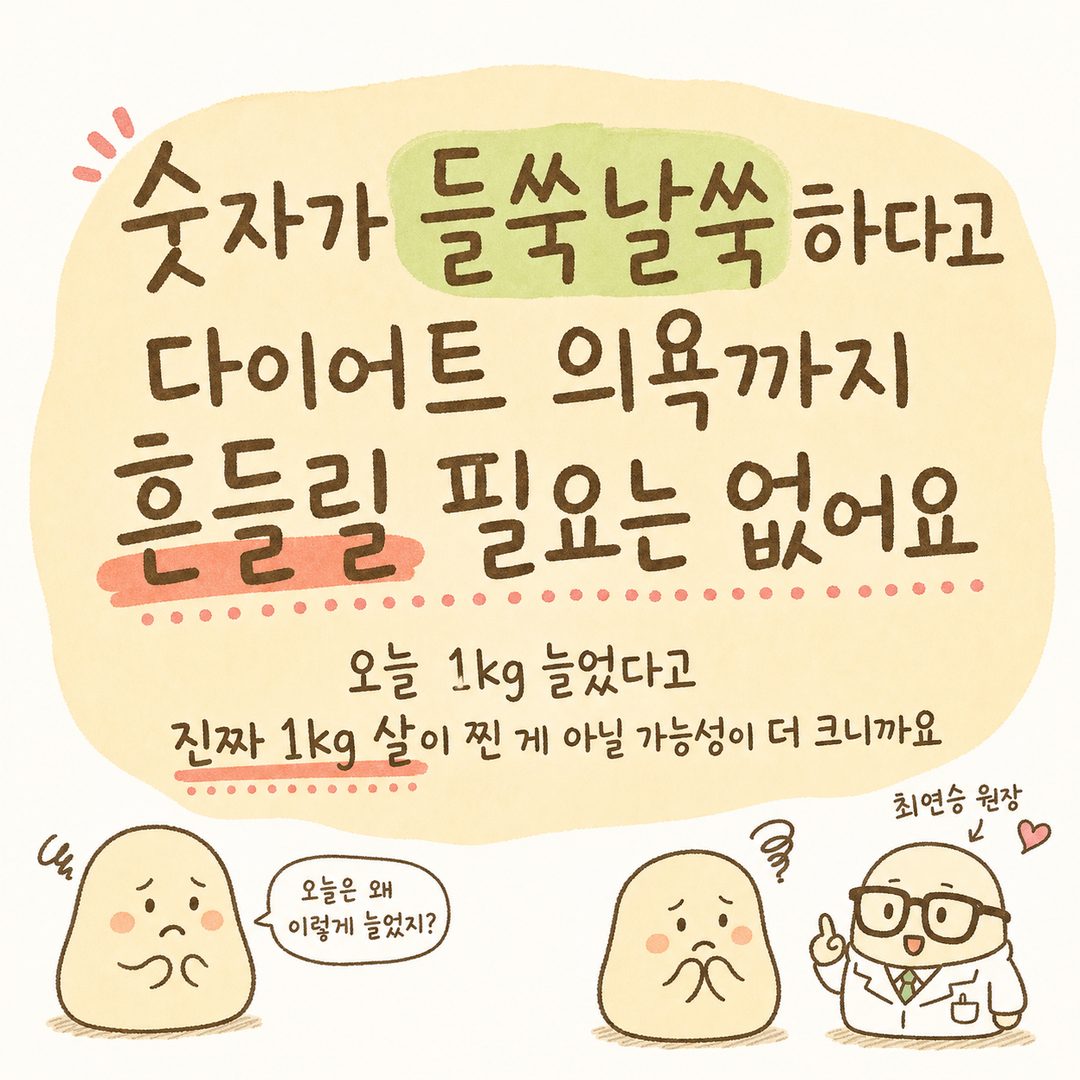
Here's an important point: Even for the same person, body fat measurements can vary by 0.5-1kg depending on posture and condition. If you measured 23% yesterday and 24% today, it doesn't mean you gained 1% body fat overnight.
Let me share a brief story about a patient. They were upset because they measured on their gym's InBody right after working out and thought they'd "lost muscle." Post-exercise, water distribution and blood flow are unstable, leading to unusual readings. The same applies right after showering. When they measured again a few days later on an empty stomach, the numbers returned to normal.
Readings can also fluctuate after meals or excessive water intake. The most stable measurements come when fasting. It's recommended to measure 2 hours after eating or 24 hours after drinking alcohol. There's no need to stress over a single measurement that doesn't meet these conditions.
The Korean Medicine Perspective on InBody
At Baekrokdam Korean Medicine Clinic, we view InBody as "a mirror reflecting your body's condition that day." It's not an absolute truth but rather a measurement sensitive to conditions. Comparisons only become meaningful when using the same machine at the same time of day with the same posture.
From a Korean medicine perspective, long-term weight management is more about overall trends than daily scale numbers. We look at weekly patterns: how well edema reduces, whether muscle mass is maintained, and how body water levels change. The focus is on seeing the bigger picture rather than getting caught up in daily fluctuations.
If errors persist or results seem unreasonable, consider environmental factors before assuming your body has suddenly changed. I always ask patients questions like, "Did you have salty food last night?" or "Did you just exercise?"
Your Measurement Checklist for Next Time
Here's a simple checklist for accurate measurements:
Remove all socks and stockings; stand barefoot
Wipe hands and feet with a tissue to achieve slightly damp skin
Clean the footpads and handgrip electrodes
Manage thick calluses on feet regularly
Keep arms slightly away from body to prevent armpit contact
Stand with space between thighs
Raise handgrips only to navel height
Remain completely still and silent during measurement
Timing matters too. Avoid measuring right after exercise or showering. Fast if possible, or wait at least 2 hours after eating and 24 hours after drinking alcohol. For comparisons, consistency in timing and conditions is key.
Check the equipment too. Ensure it's on a solid, level surface and check power connections. For home devices, simply replacing all four batteries often resolves recurring errors. Keep other electronics at a distance.
Following these guidelines will minimize errors and fluctuations. The key is balanced trust in the measurements—neither too much nor too little.
Don't let fluctuating numbers discourage your weight management journey. That 1kg increase today is more likely a measurement variation than actual fat gain. At Baekrokdam, we look beyond a single InBody reading to consider your constitution, lifestyle, and edema patterns when planning your weight management strategy. If measurement errors are affecting your motivation, consider starting with a Baekrok Gambi-jung consultation to understand your body's true patterns.