InBody Visceral Fat & WHR: Levels and Apple-Shaped Bodies

Table of Contents
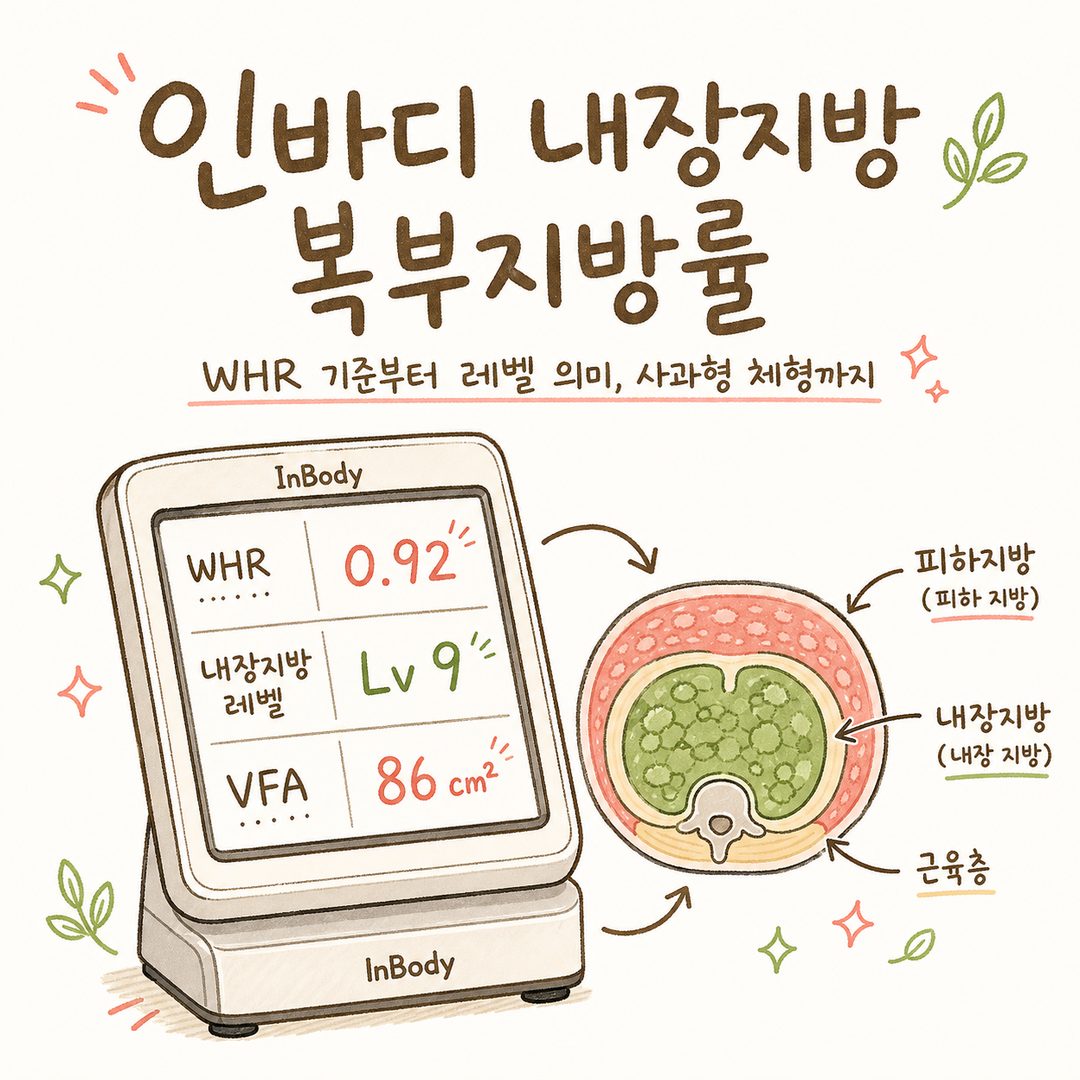
In the clinic, the items patients point out most often on their InBody results are Waist-Hip Ratio (WHR) and visceral fat level. Many say, "Doctor, my weight is the same, but these two numbers keep going up." I remember being confused about what these numbers meant when I first started reviewing results with patients, so today, I’ll explain them in detail.

What Exactly is the InBody Waist-Hip Ratio (WHR)?
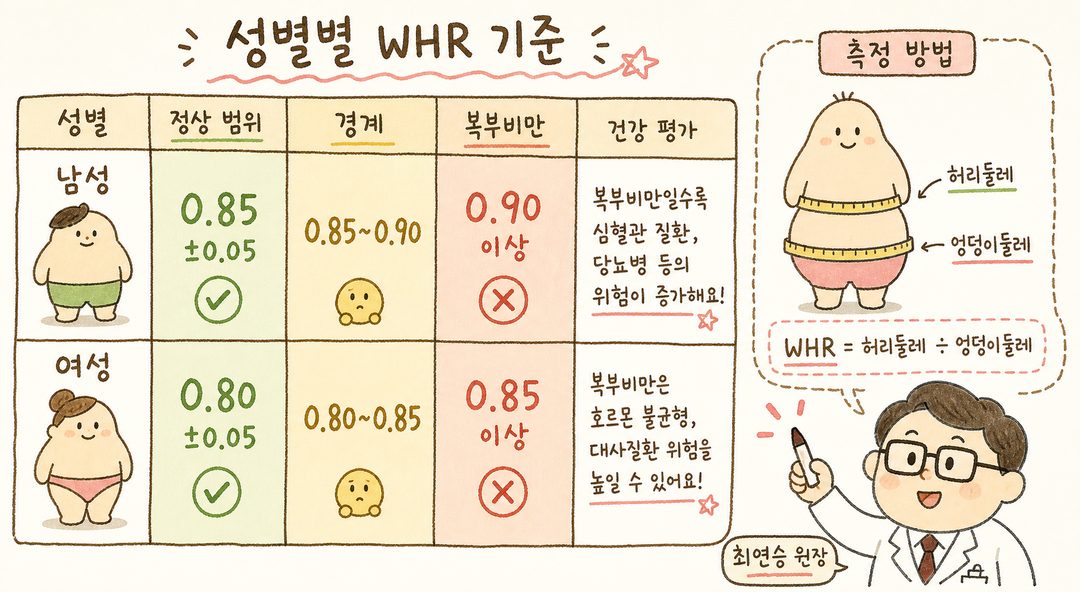
InBody's Waist-Hip Ratio (WHR) is calculated as waist circumference ÷ hip circumference. The result sheet displays the value obtained by dividing the waist circumference at the navel by the circumference of the most prominent part of the hips. InBody estimates this ratio based on bioelectrical impedance analysis (BIA) values.
While standards vary slightly by source, the generally accepted thresholds in Korea are similar. Abdominal obesity is diagnosed if the ratio is 0.90 or higher for men and 0.85 or higher for women. The standard range is approximately 0.85±0.05 for men and 0.80±0.05 for women. Generally, a ratio around 0.80 for men and 0.75–0.80 for women is considered healthy.
Visceral Fat Level: The Meaning Behind the Number
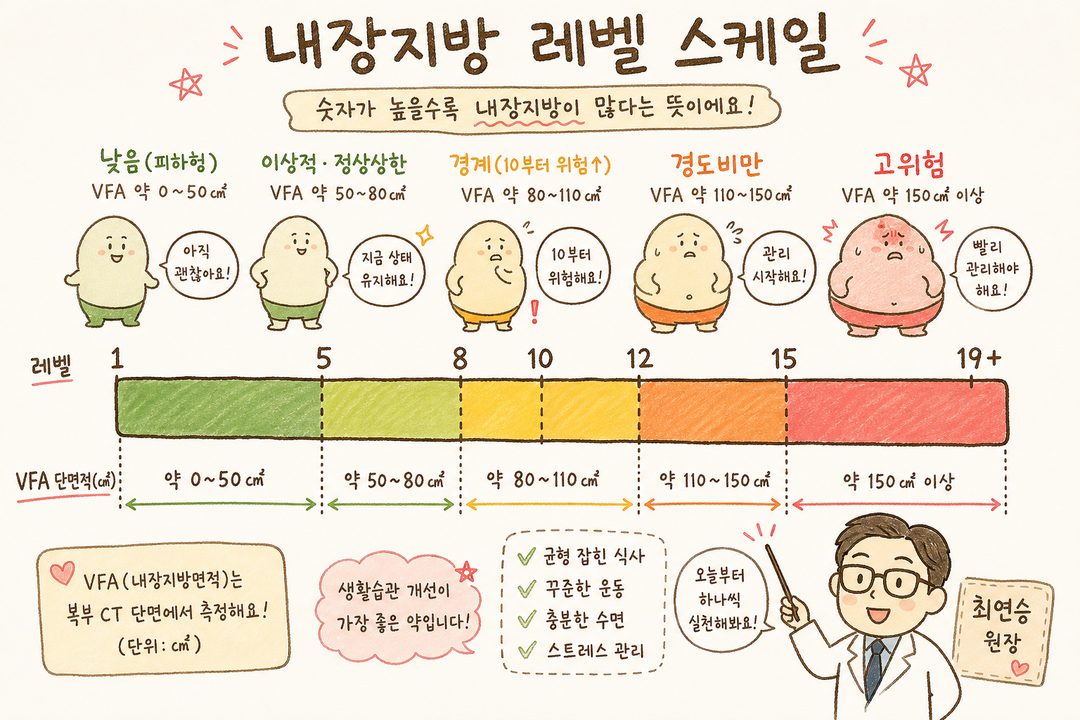
Displayed alongside the WHR is the visceral fat level. Since it cannot measure the area directly like a CT scan, it is an indicator that simplifies the visceral fat area (VFA) into a score from 1 to 20. According to InBody's explanation, Level 1 corresponds to a visceral fat area of approximately 10㎠. Level 5 is about 50㎠, and Level 10 is about 100㎠.
The normal range for visceral fat area is generally set at 50–100㎠ for men and 40–80㎠ for women. Converted into levels, it looks like this:
Levels 1–5: Low visceral fat, subcutaneous body type
Around Level 5: Often cited as the ideal range
Levels 6–8: Balanced or near the upper limit of normal
Levels 9–11: Borderline, the start of the excess range (many sources consider 10 or higher as increased risk)
Levels 12–15: Mild visceral obesity
Levels 16–19: High-risk range
Why Do These Numbers Keep Rising?
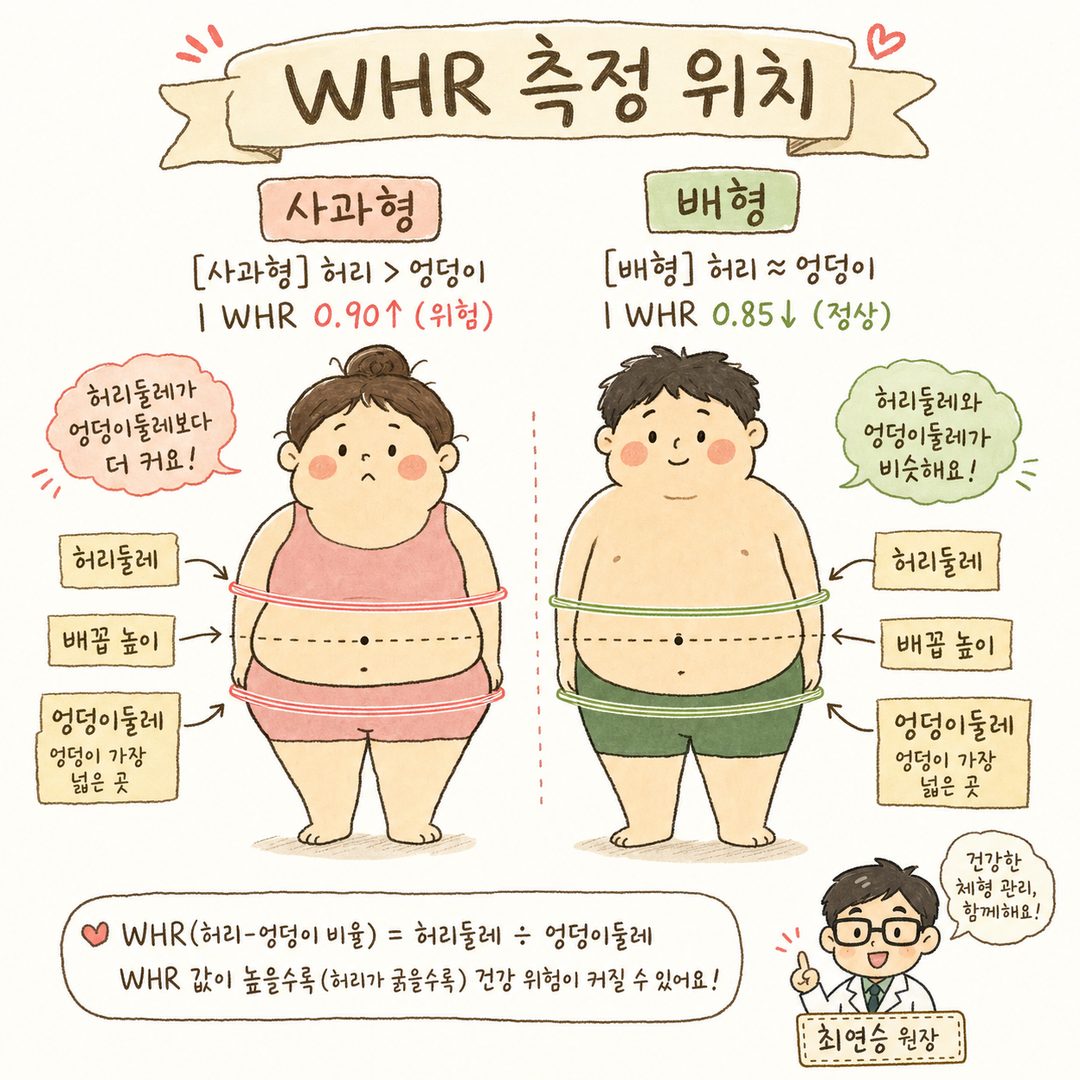
A high WHR indicates an apple-shaped body type, where the hips are narrow relative to the waist and fat is concentrated in the abdomen. It’s not just about how much weight you’ve gained, but where the fat is stored. Medical data explains that the higher this value, the more likely you are to have high visceral fat, which leads to increased risks of hypertension, diabetes, dyslipidemia, and cardiovascular disease.
In the clinic, I see many office workers in their 30s and 40s whose weight remains almost the same, but their WHR has risen from 0.85 to nearly 0.90. This is the cumulative result of overtime, late dinners, and prolonged sitting. As muscle mass decreases, visceral fat fills the void.
How Does Actual Progress Look?
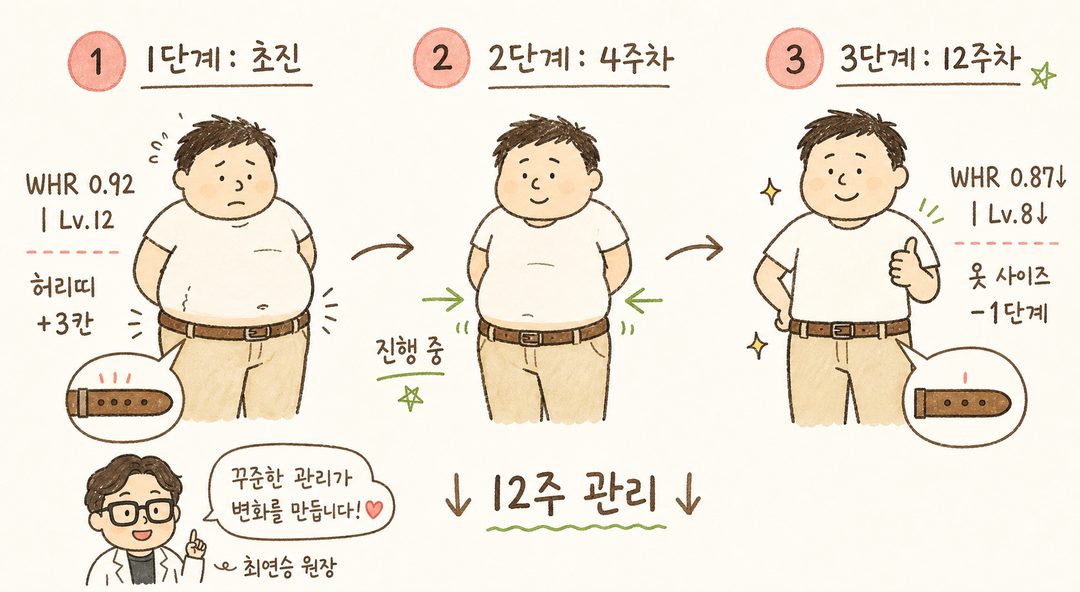
Let’s look at a case of a male patient in his 40s. When he first visited, his WHR was 0.92 and his visceral fat level was 12. He described it as "my belt keeps needing another notch." After about 12 weeks of management, including reviewing his eating patterns and activity levels, his WHR dropped to 0.87 and his visceral fat level fell to 8. Although the total weight loss wasn't massive, his waist circumference decreased, and his clothing size dropped by one.
These changes don't happen overnight. They appear gradually when diet, sleep, and movement change together. Visceral fat has a faster metabolic turnover than subcutaneous fat, so it tends to respond relatively well to lifestyle changes.

Abdominal and Visceral Fat from a Korean Medicine Perspective
In Korean medicine, abdominal fat is not viewed simply as "excess energy." It is seen as a state where water and waste products (phlegm and dampness) stagnate in the abdomen due to weakened Spleen and Stomach (脾胃) function. Therefore, even for the same abdominal obesity, some people experience bloating and edema, while others experience heat sensations and thirst.
The approach varies by constitution. For those with weak Spleen and Stomach function, we must assist both digestion and circulation to effectively lower the WHR. For those with high internal heat and a strong appetite, we focus more on appetite control and metabolism. This is why we must look at the patient's constitution and lifestyle patterns, not just the InBody numbers.
Action Points You Can Start Right Now
To manage both WHR and visceral fat levels, you need to adjust several factors simultaneously.
Aerobic exercise: Aim for 150–300 minutes per week. Whether it's brisk walking, cycling, or swimming, choose something you can do consistently. The goal is the 300-minute mark.
Strength training: 2–3 times a week, ideally 3 times. Stimulating large muscle groups (thighs, back, chest) revitalizes your basal metabolism.
Daily calorie reduction: Around 300–500 kcal. Reducing it too drastically leads to muscle loss while the WHR remains unchanged. Staying within 500 kcal is safer initially.
Protein intake: 1.0–1.5g per kg of body weight. You must protect muscle mass so that visceral fat doesn't return to the space it left. Aiming closer to 1.5g is even better.
Don't obsess over weight; look at your InBody WHR and visceral fat level monthly. Many people see these two numbers drop significantly even if they lose only 1kg.
Moving your late-night snacks or dinner time up by just one hour will show changes in your next test.
Aiming for a 10–20% reduction in total body fat percentage over 6 months is reasonable. Those who achieve near 20% are usually those who have adjusted their diet, exercise, and sleep together.
The WHR and visceral fat level on your InBody sheet are signals, not the final answer. Use them as a cue to check your diet and movement when the numbers start to creep up. If you find it difficult to manage on your own, or if you feel your abdominal line is thickening even though your weight isn't dropping, take some time to examine your constitution and lifestyle. At Baekrokdam Clinic, we help move your WHR and visceral fat levels through personalized prescriptions, including Baekrok Gambi-jung, and lifestyle coaching. Feel free to visit with your result sheet.