Low-Calorie Snack Guide: Calorie & Protein Standards

Table of Contents
When consulting for weight management, the most common sigh I hear is: "Doctor, I can cut down on meals, but I just can't quit snacking." I know that feeling well. Whether it's that sluggish feeling after lunch, sitting on the sofa after work, or hesitating in front of the fridge near midnight—we've all been there. The problem is that "enduring" doesn't last long. Snacks blocked by willpower are bound to return as binges a few days later. That's why I tell my patients, "Don't quit snacking; change your snack standards." Today, I'll go over four variables to keep in mind for a low-calorie snack diet that you can enjoy without guilt.
Key Variable 1 — Setting a Per-Serving Calorie Standard
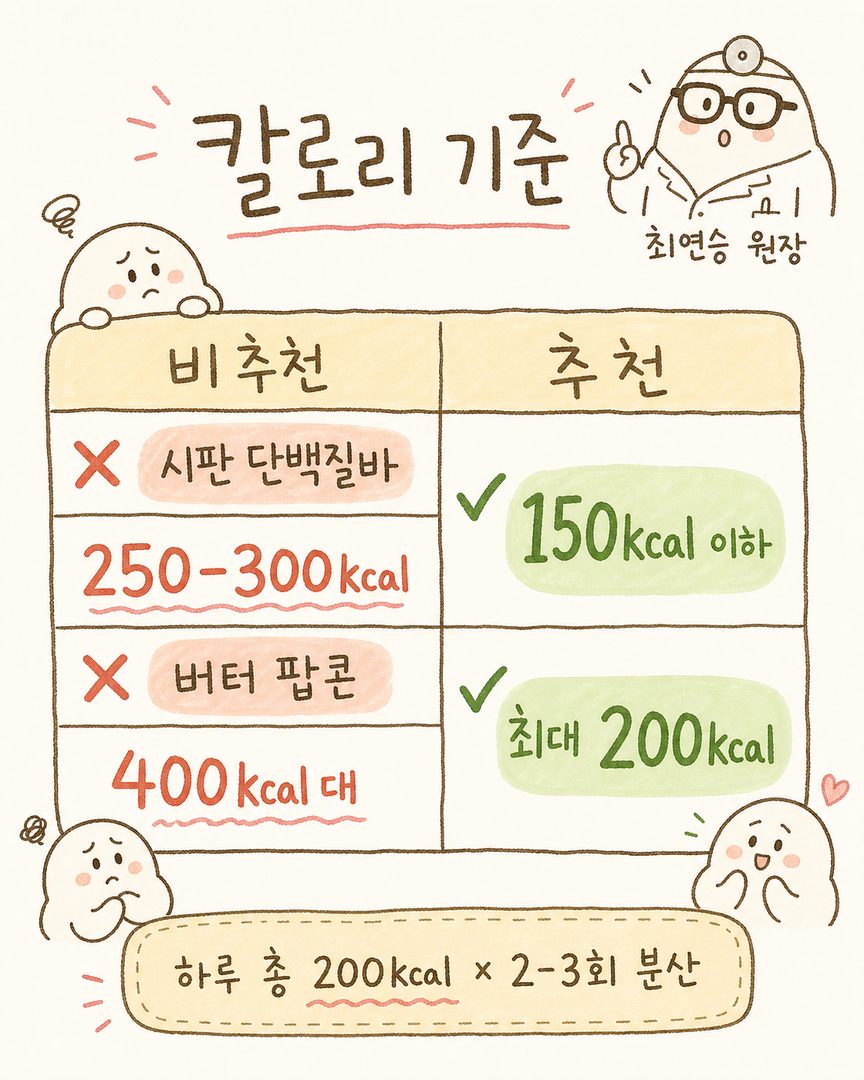
The first thing that's helpful to establish is a per-serving calorie range. Looking at compiled weight management resources, a single snack is usually recommended to be around 150kcal, with a maximum of 200kcal. More conservative guides suggest choosing within 50–150kcal per serving. For total daily intake, it's recommended to divide around 200kcal into 2–3 servings.
This is important because many commercial products labeled as "diet snacks" often exceed 250–300kcal per unit. Emptying one bag can be equivalent to eating nearly a full bowl of rice. That's why I tell patients, "Just look at one line of the calorie count before you eat." Simply checking the number helps many people reduce unconscious consumption. Having the single standard of "under 150kcal" in mind can completely change how you view the selection at a convenience store.
Key Variable 2 — Half of Satiety Comes from Protein
Is lowering calories enough? Many people find themselves hungry again just 30 minutes later. The real variable is protein. Nutritional guidelines recommend aiming for at least 8g of protein per snack serving. Snacks that are low in calories but have almost no protein (rice crackers, puffed grains, commercial jellies) only cause a slight spike in blood sugar before it crashes again. This leads to reaching for more food.
Here are some recommended protein bases:
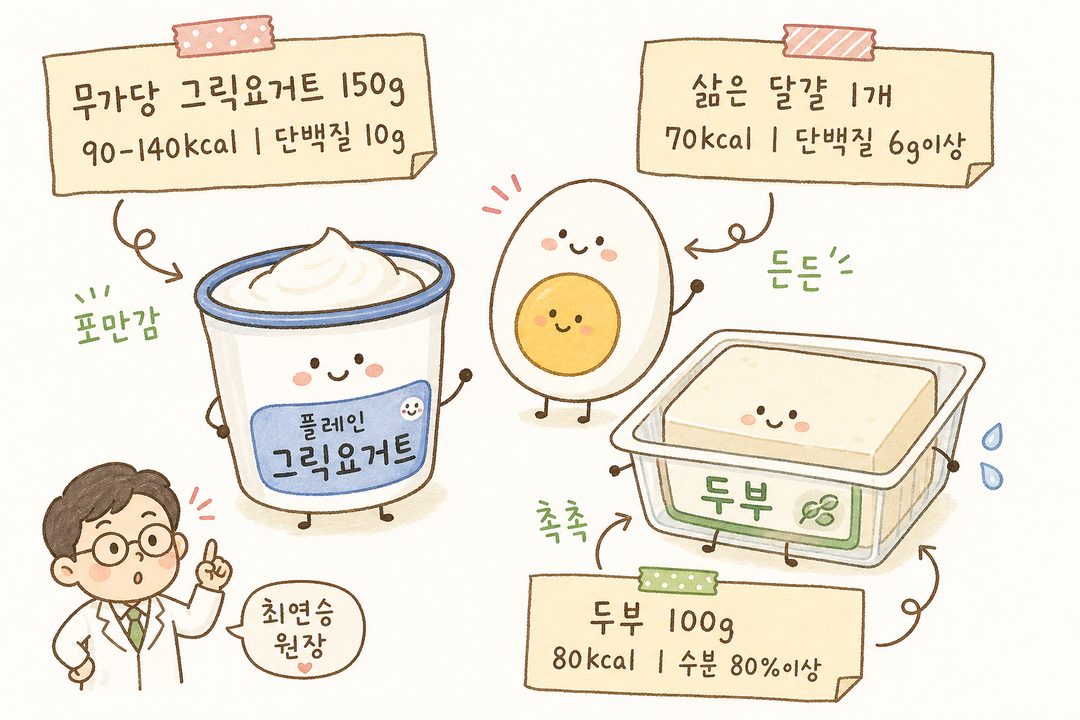
150g Unsweetened Greek Yogurt: Approx. 90–140kcal, approx. 10g protein
1 Boiled Egg: Approx. 70kcal, at least 6g protein
100g Tofu: Approx. 80kcal, with over 80% water content, aiding both satiety and metabolism
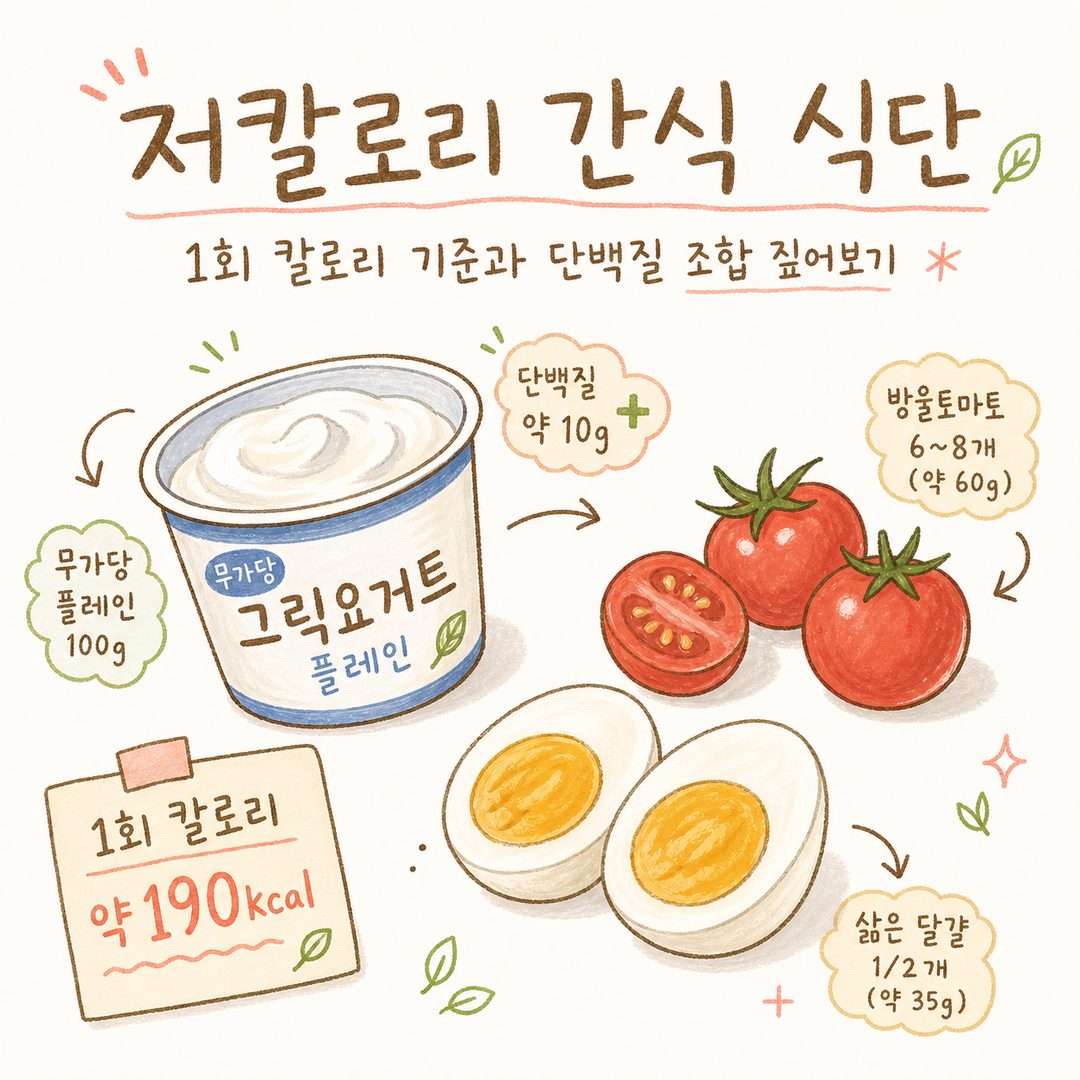
In the clinic, I most often recommend "a cup of Greek yogurt when hungry around 3–4 PM, and a boiled egg when working late." Both are within the 150kcal limit and, most importantly, provide the energy to last until the next meal. Snacks containing protein significantly reduce the urge for "just one more bite."
Key Variable 3 — Filling the Stomach with Fiber and Volume
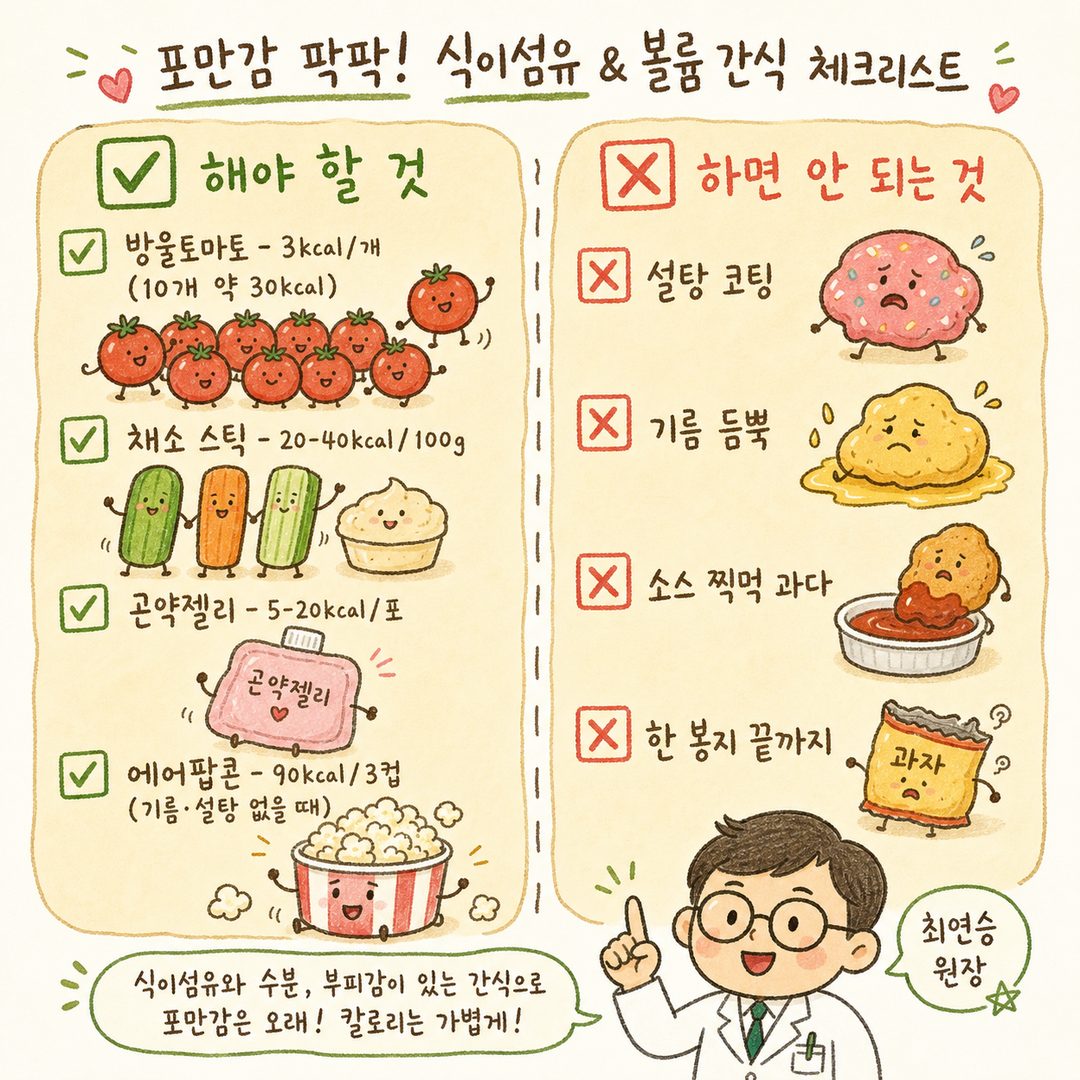
The next variable after protein is dietary fiber and volume. Nutritional guides highlight the combination of "protein + dietary fiber + high-volume foods (water-rich vegetables)" as the key to satiety. Even with the same calories, foods that require more chewing and take up more space in the stomach increase satisfaction.
The champion here is the cherry tomato. At only 3kcal per piece (approx. 12g), eating 10 at once is only about 30kcal. They have a slight sweetness, making them a good dessert substitute, and they are guilt-free even when you're craving something late at night. Vegetable sticks like cucumber, carrot, and celery are around 20–40kcal per 100g, filling the stomach with fiber and water to make the wait until the next meal much easier.
Konjac jelly is also useful for adding volume to the stomach. Commercial konjac jellies are usually between 5–20kcal per pouch, which is close to zero. Many people find that eating one pouch before a meal naturally reduces their food intake. However, I don't recommend eating too many at once just because they are low in calories. Use them as a supplementary card to soothe your palate.
Air-popped popcorn is an unexpected option. If made without oil, sugar, or butter, 3 cups are only about 90kcal, making it a low-burden snack for movie nights. However, commercial popcorn often contains butter and syrup, doubling or tripling the calories for the same volume, so I recommend popping it yourself at home.
Key Variable 4 — Look at Two Numbers: Sugar and Sodium
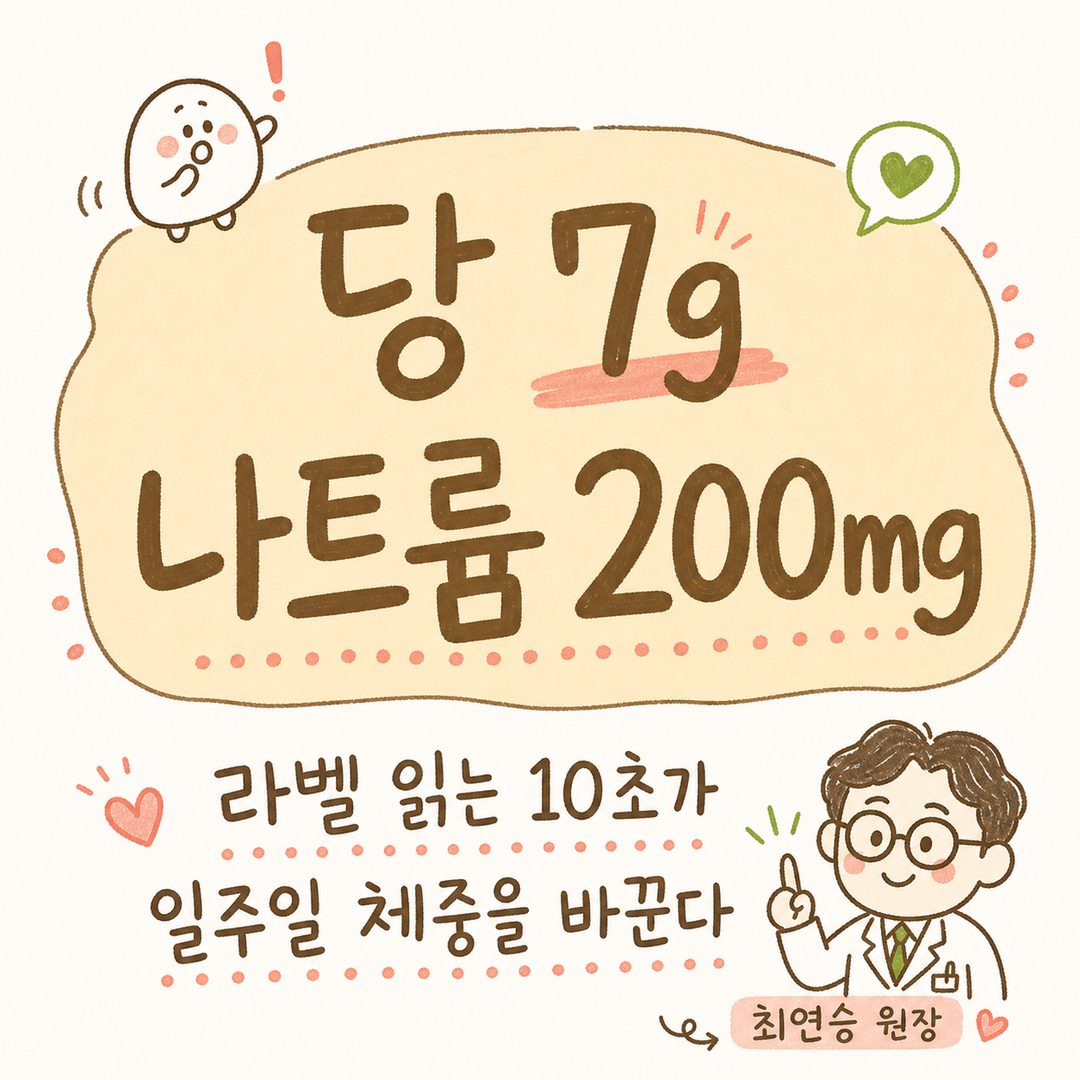
The final variables are sugar and sodium. According to nutritional standards, the recommended limits for a single snack are 7g or less of sugar and 200mg or less of sodium. Checking just these two numbers on a label will drastically improve your accuracy in choosing weight management snacks.
If sugar exceeds 7g, it's essentially a dessert, even if it's labeled a "healthy snack." You'd be surprised how many granola bars and protein bars contain 12–15g of sugar. Sodium is the same. Salty crackers, commercial jerky, and processed cheeses often exceed 400mg of sodium even if they are low in calories. High sodium causes water retention (edema), leading to fluctuations on the scale the next day, which many people mistake for a weight loss plateau.
I suggest memorizing these two numbers: "Sugar 7, Sodium 200." The 7–10 seconds it takes to read a label can change your weight for the entire week.
Bad Snacks vs. Smart Snacks
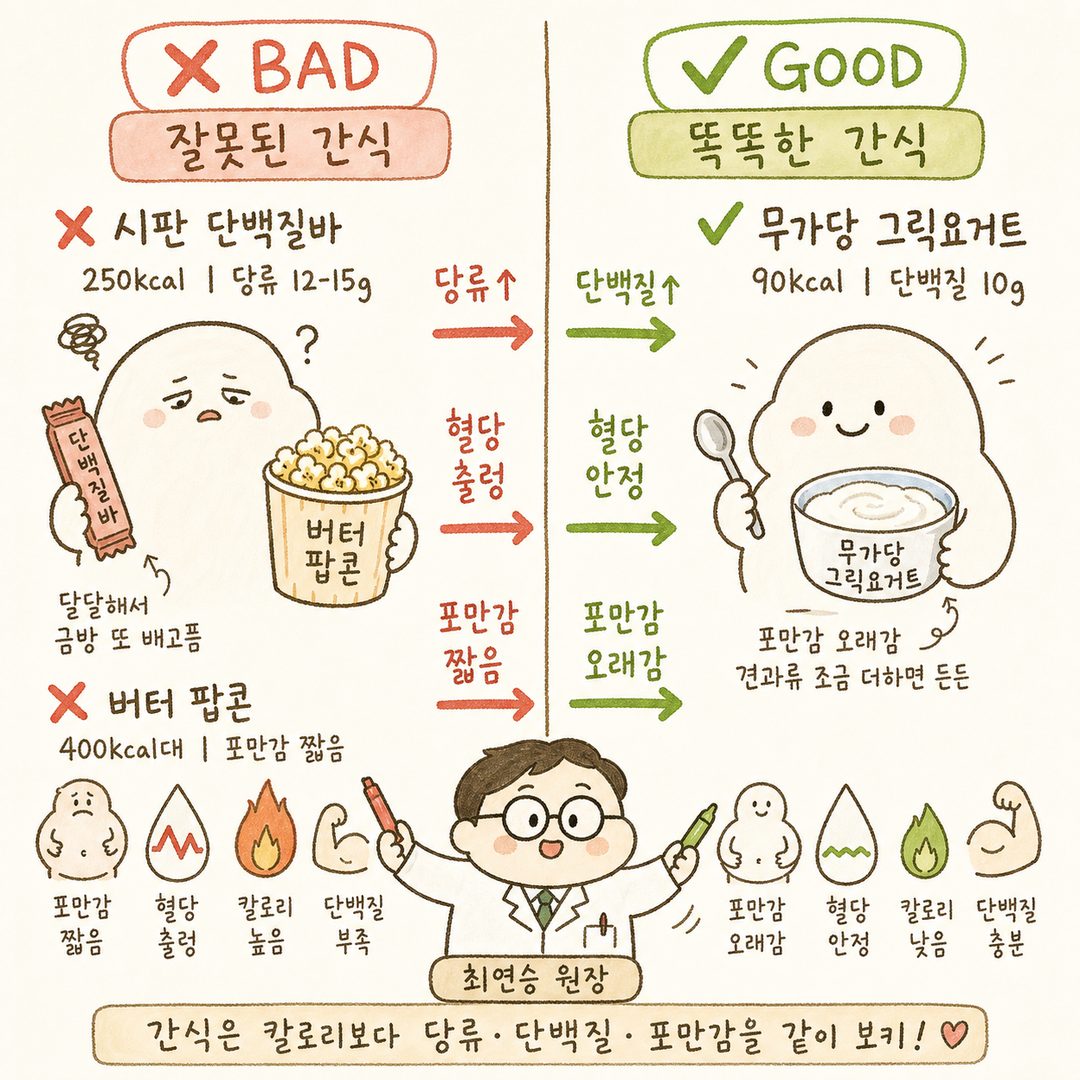
Even when soothing the same "hunger," the results can be quite different. Here are a few comparisons:
❌ 1 Commercial protein bar (Sugar 12–15g, 250kcal) → ✅ 150g Unsweetened Greek yogurt (approx. 90kcal, approx. 10g protein)
❌ 1 Bag of butter popcorn (400kcal range) → ✅ 3 Cups of air-popped popcorn (approx. 90kcal)
❌ 1 Cup of commercial fruit juice (120kcal, 20g+ sugar) → ✅ 10 Cherry tomatoes (approx. 30kcal)
❌ 1 Bag of rice crackers (150kcal, nearly 0 protein) → ✅ 1 Boiled egg (approx. 70kcal, long-lasting satiety)
❌ Commercial rice cakes (200kcal range, high sugar) → ✅ 100g Tofu (approx. 80kcal, 80%+ water content)
Even if the calories are similar, the satisfaction until the next meal changes depending on whether protein and fiber are included. Choose snacks from the perspective of "preventing the next binge" rather than just "eating less."
3 Ready-to-Use Smart Combinations
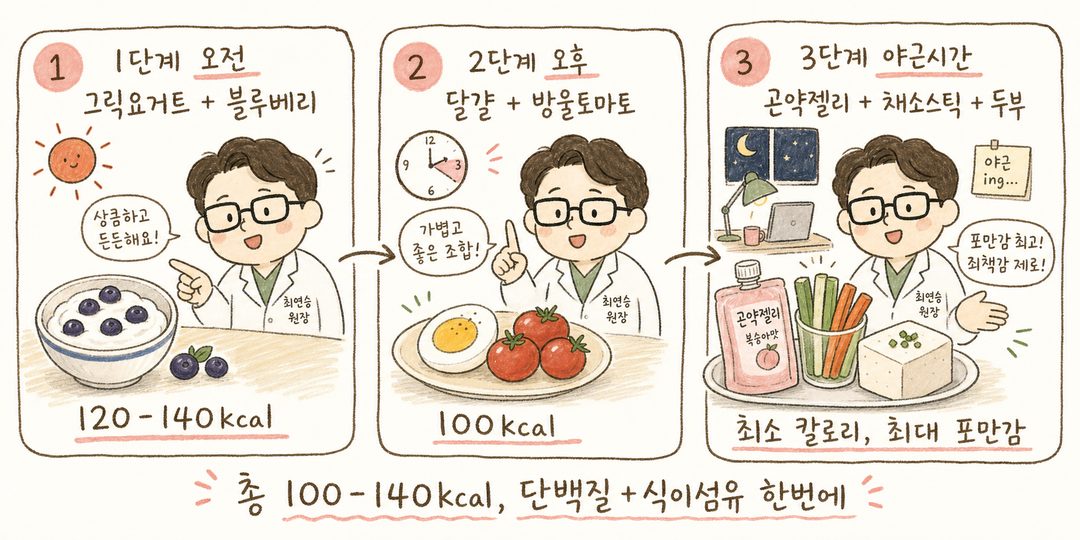
Here are three combinations you can follow without complex calculations. All are within the 150kcal limit per serving.
- When hungry in the morning — 150g Unsweetened Greek Yogurt + 50g Blueberries
Greek yogurt is approx. 90kcal, blueberries are approx. 25–30kcal, totaling 120–140kcal. This combo provides protein and antioxidants, keeping you full during long morning meetings.
- When craving sweets in the afternoon — 1 Boiled Egg + 10 Cherry Tomatoes
The egg is approx. 70kcal, cherry tomatoes are approx. 30kcal, totaling under 100kcal. The combination of savory and tart flavors surprisingly calms the urge for "something sweet."
- For overtime or late-night danger zones — 1 Pouch of Konjac Jelly + Veggie Sticks + 1 Slice of Tofu
With konjac jelly at 5–20kcal, plus veggie sticks and about 50g of tofu (under 40kcal), the total is very low. It fills the stomach volume sufficiently to help suppress late-night cravings.
All three combinations share a common structure: one protein pillar and one volume pillar. Remembering this structure allows you to create instant combinations even at a convenience store.
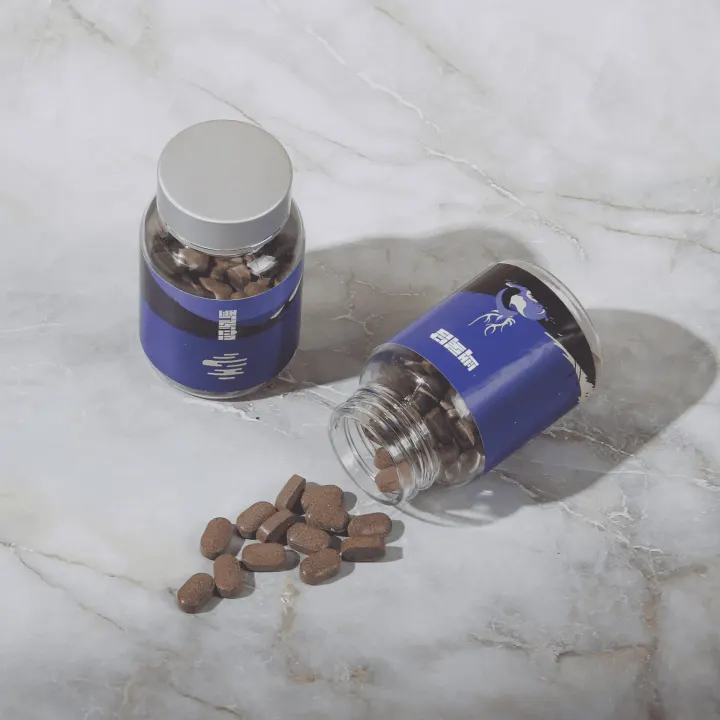
Choosing snacks well won't make you lose weight instantly. However, once the vicious cycle of "enduring then binging" is broken, the effects of your meals and exercise finally begin to accumulate. If your appetite remains difficult to control even after adjusting your snack patterns, or if you are struggling with late-night binges or plateaus, it may be helpful to receive a constitutional diagnosis. At our clinic, we examine appetite, digestion, and sleep patterns to prescribe Baekrok Gambi-jung tailored to your constitution. Weight management is most effortless when a snack strategy and Korean medicine prescriptions work together. Try sticking to the 150kcal per serving standard today. You'll surely see a different result in a week.