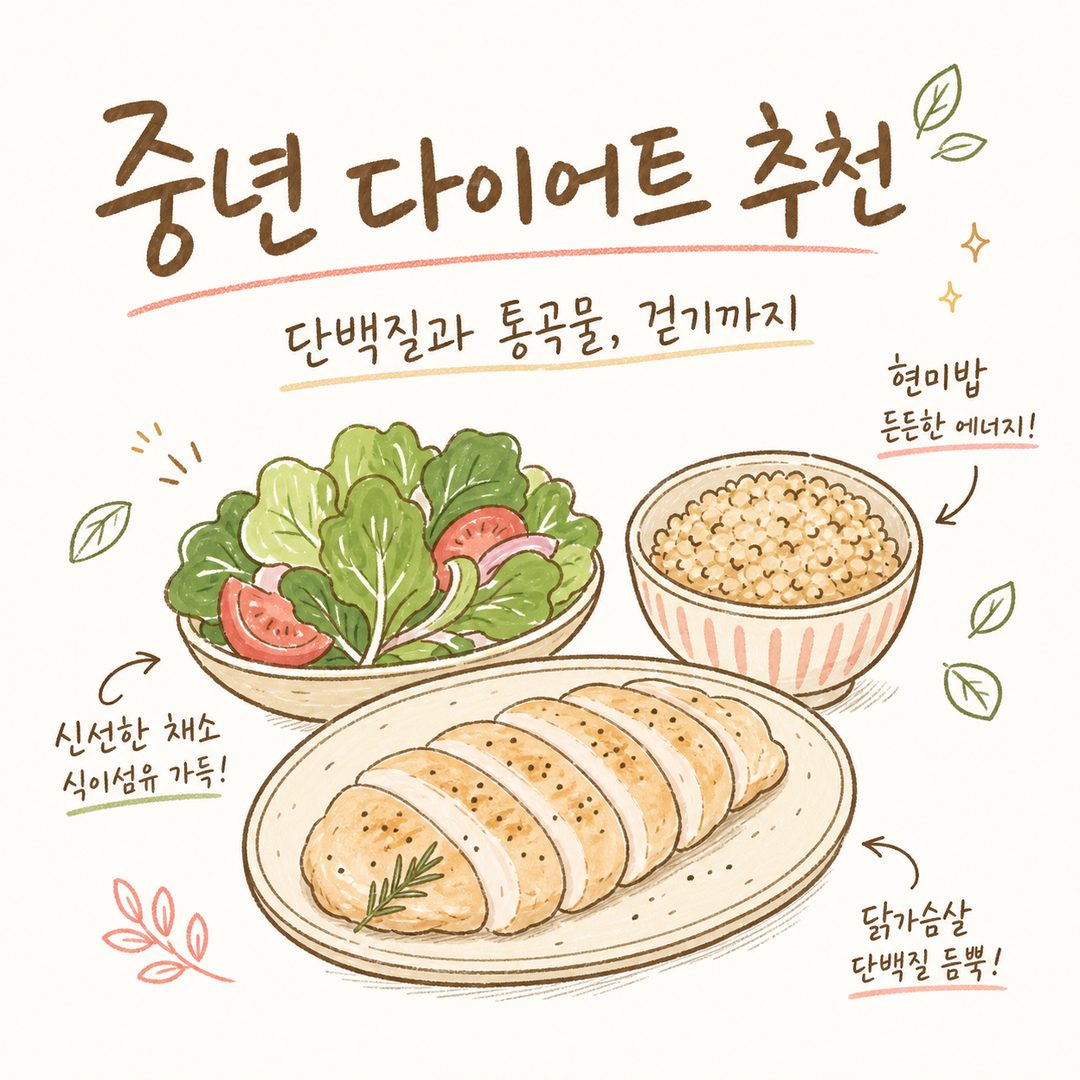
Diet Tips for Middle Age: Protein, Grains, and Walking

Table of Contents
Once you pass forty, you might notice your belly growing even if you eat the same amount, and once the weight is gained, it refuses to leave. In my clinic, I often see patients who say, "When I was younger, I could lose weight just by skipping one meal, but now nothing works," which is a common concern. However, if you push middle-aged weight management toward starvation, you lose muscle first. This ultimately results in a body that gains weight even more easily. So today, I will summarize recommended middle-aged weight management methods to lose weight while protecting your muscles without starving.
Start by Reducing Food Intake Slightly
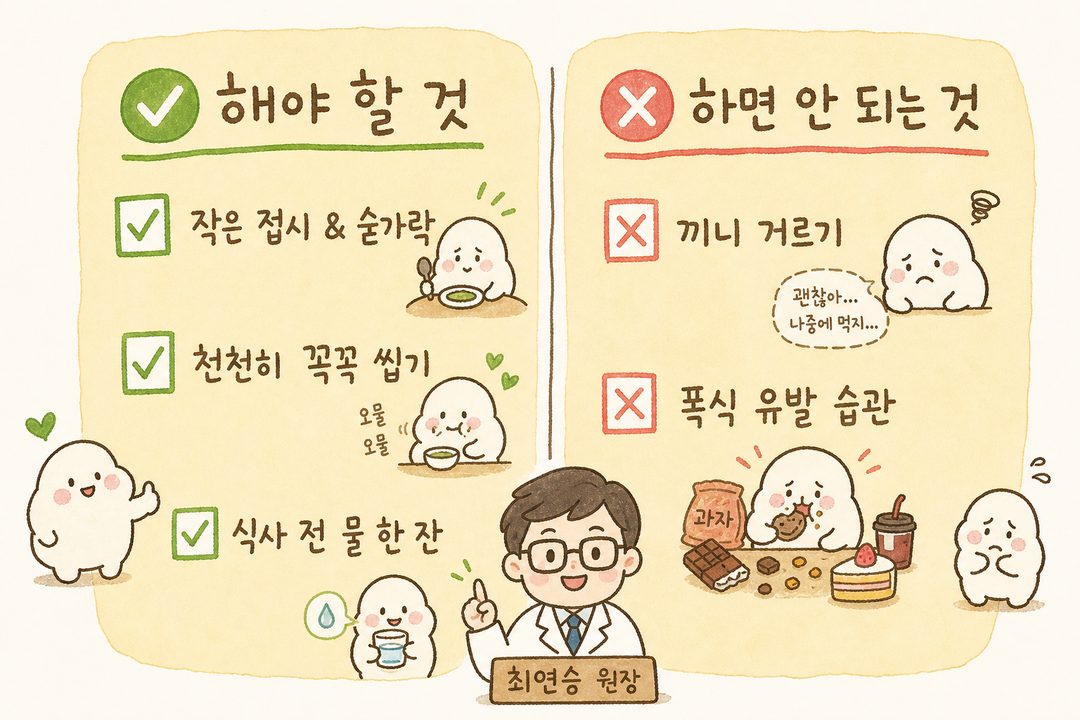
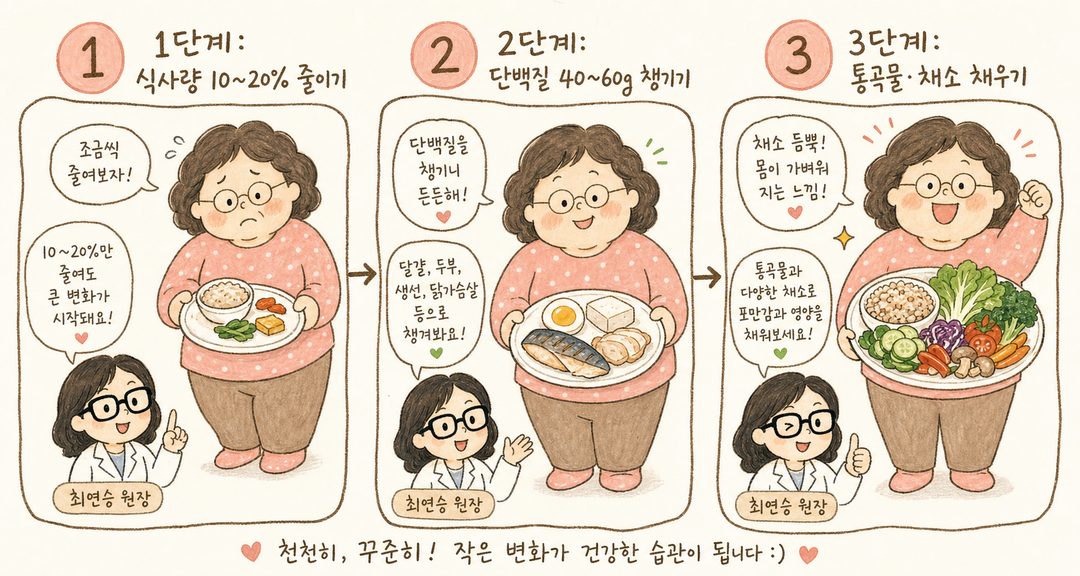
The first thing to address is the amount of food you eat. Medical data suggests that the foundation of middle-aged weight management is to eat three regular meals a day but reduce the portion size by about 10–20% from your previous intake. It’s not about skipping a whole meal, but rather slightly reducing the amount you usually eat.
Why is this recommended? Skipping meals makes it easy to binge at the next meal and causes blood sugar to fluctuate, increasing cravings for sweets. If you reduce your intake by only 10–20%, your stomach has time to adjust, and the energy needed for daily activities is maintained.
Practical tips are also simple. The same data suggests that using small plates and small spoons, chewing thoroughly and slowly, and drinking water before meals help reduce overeating. This is something I often tell patients in the clinic: just reducing your bowl size by one notch can make a noticeable difference after a month.
Protein is the Real Key
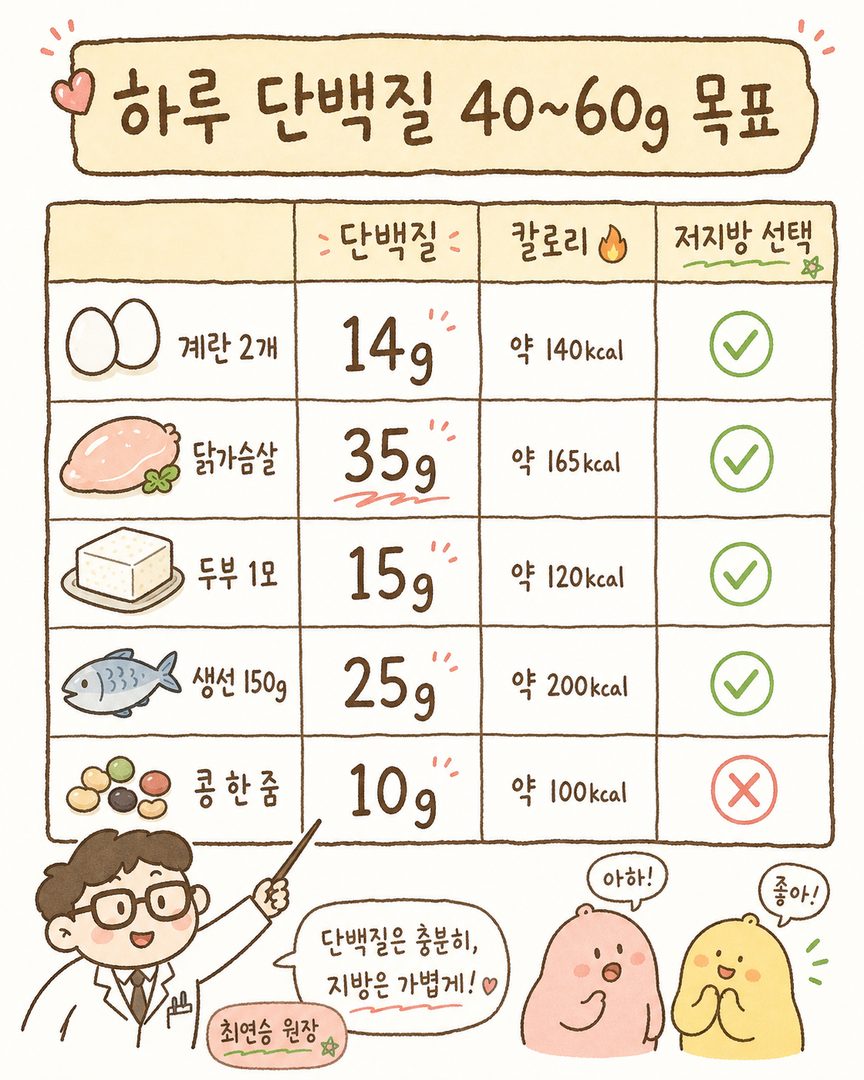
If you miss out on protein during middle-aged weight management, you lose muscle instead of fat. According to data, to minimize muscle loss during weight loss, you should aim for a daily protein intake of 40–60g. This is especially important for those who usually lack protein in their diet.
Frequently recommended protein sources include low-fat proteins such as chicken breast, lean meat, eggs, beans, and tofu. Including just one type in each meal makes it easy to reach your daily goal. Consciously having two eggs in the morning, tofu or chicken tenderloin for lunch, and a handful of beans for dinner will significantly fill the gap.
Adding lower body strength exercises ensures that the protein actually builds muscle. Data also points out that strengthening lower body muscles helps maintain the basal metabolism. Try squats or standing up and sitting down from a chair consistently at a comfortable intensity. For those who find exercise burdensome, you can start by walking more than 7,000 steps a day.
Fill Up with Vegetables and Whole Grains
Vegetables and whole grains should take up the remaining space on your plate. The same data recommends vegetables and whole grains like oats, brown rice, and barley as the basis for a middle-aged diet. It’s not about completely eliminating white rice or white bread, but rather replacing a portion of them with whole grains.
Whole grains are high in dietary fiber, so you feel full longer even with the same amount of food. The fact that blood sugar rises slowly is also a huge advantage for middle-aged individuals. Try setting a small portion of brown rice for lunch and topping it with protein and seasoned vegetables.
You don't need to set a specific amount for vegetables. Aiming to fill two palms' worth per meal is sufficient. In particular, a light dinner centered on vegetables is frequently recommended. As the digestive burden decreases, you'll notice a difference in your condition the next morning.
Seasoning and Eating Habits Make a Difference
Even with the same ingredients, the results vary depending on how you eat. The eating habit tips summarized in the data are simple: use small plates and small spoons, chew slowly and thoroughly, and drink a glass of water before meals. Following these three steps naturally reduces the amount you eat.
Be careful not to lean too much toward salty or sweet seasonings. Salty seasonings call for more rice, and sweet seasonings increase your appetite for the next meal. In the clinic, I often see that weight management progresses much slower for those who frequently eat out with heavily seasoned food.
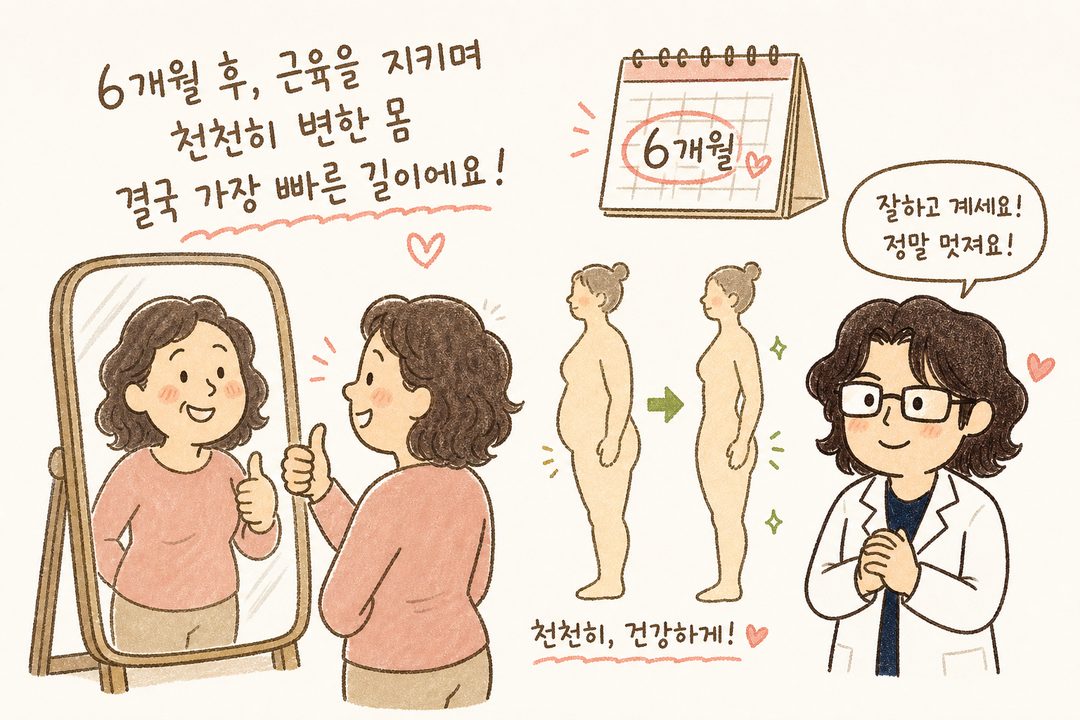
Goal setting should also be moderate, just like seasoning. The data suggests that a realistic and safe goal is to reduce 5–10% of your current body weight over 6 months rather than rapid weight loss. For someone weighing 70kg, that’s about 3.5–7kg in 6 months. While the numbers may seem small, this is the range where weight can be maintained without the yo-yo effect.
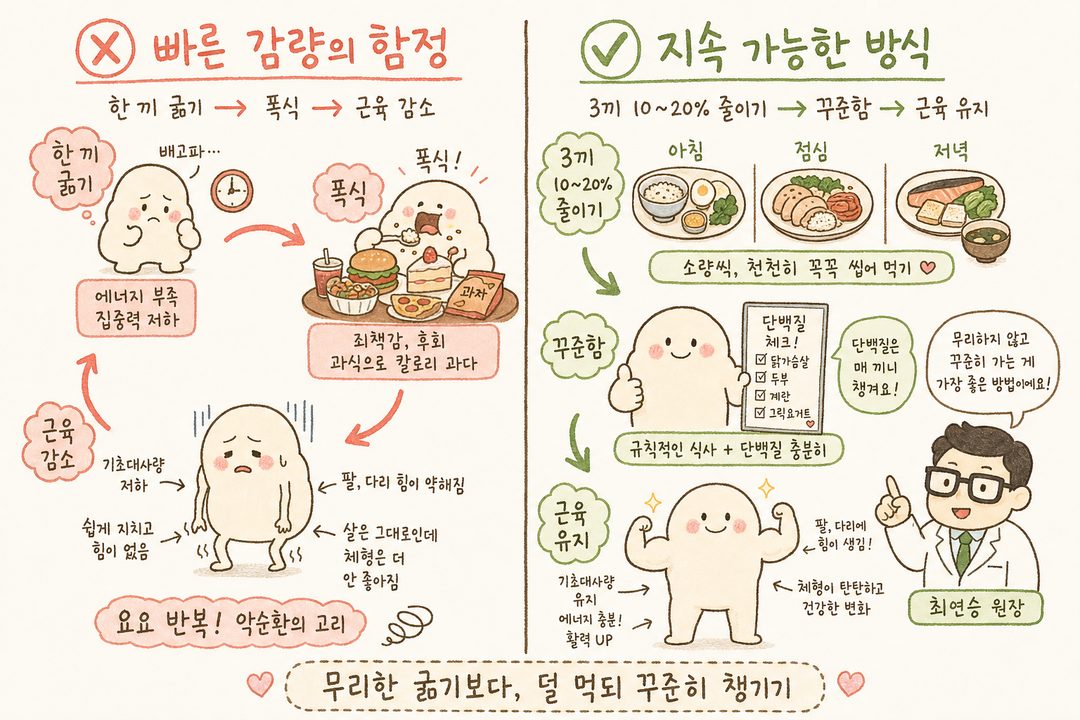
❌ Starvation Diet vs. ✅ Muscle-Preserving Diet
Even for middle-aged weight management, the results vary completely depending on the approach. Let's compare the two methods side-by-side:
❌ Skipping a whole meal → ✅ Eating 3 meals a day but reducing portions by 10–20%
❌ Reducing only rice/side dishes without considering protein → ✅ Aiming for 40–60g of protein daily
❌ Sticking to white rice/white bread → ✅ Replacing a portion with whole grains like oats, brown rice, and barley
❌ Relying only on cardio → ✅ Combining 7,000 steps of walking with lower body strength exercises
❌ Unreasonable goals like "10kg in a month" → ✅ A goal of 5–10% weight loss over 6 months
❌ Frequent dining out with heavy seasoning → ✅ Focusing on vegetables/herbs and drinking water before meals
❌ Looking for supplements with "fast effects" first → ✅ Using supplements only as an aid based on diet and exercise
The former may show a drop in numbers in the short term, but muscle is lost as well, eventually creating a body that gains weight more easily. The latter may seem slow, but the results after 6 months or a year are markedly different.
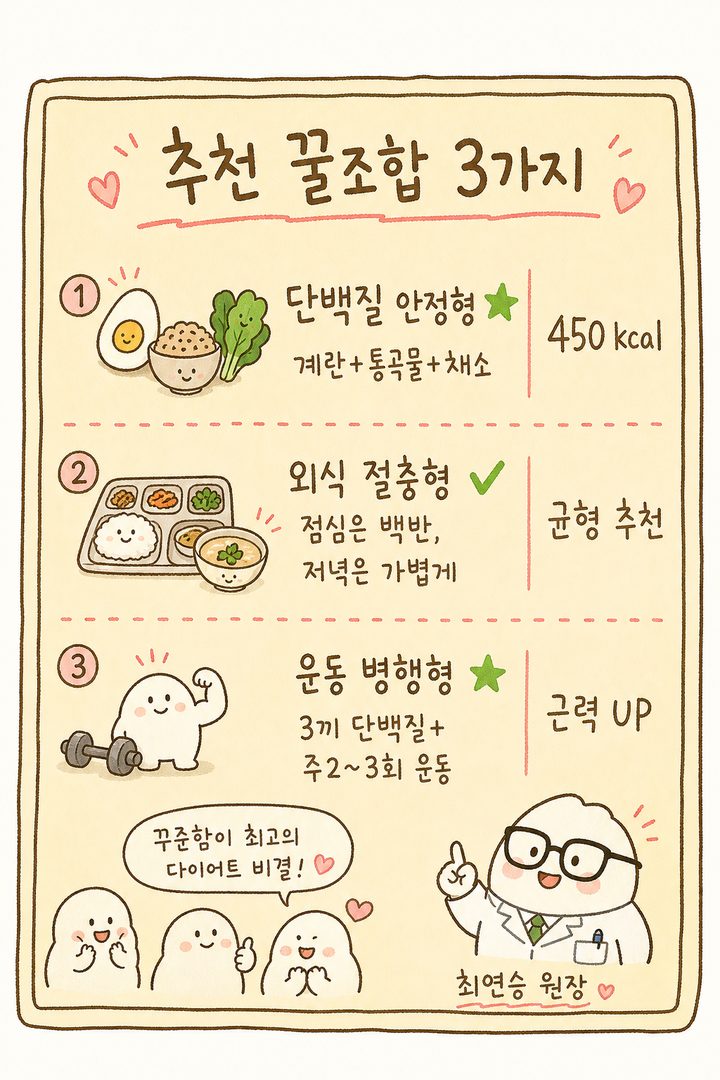
3 Recommended Meal Combinations
Here are the daily meal combinations I often recommend to patients in the clinic, based on examples from the data.
1) Protein-Stable — For those with low activity levels
Breakfast: 2 eggs + 1 slice of whole grain bread + vegetables
Lunch: Small portion of brown rice + tofu + seasoned vegetables
Dinner: Light meal centered on vegetables
This works well for those who spend more time sitting than working outside. Protein is consistently supplied, and the light dinner ensures you don't feel heavy the next morning.
2) Compromise for those who frequently eat out
Breakfast: 2 eggs + vegetables
Lunch (Eating out): Focus on Korean set meals (Baekban), eating about 70–80% of the usual rice portion
Dinner: Tofu/chicken tenderloin + seasoned vegetables + fresh vegetables
If you must eat out for lunch, it is realistic to ensure you get enough protein and vegetables for breakfast and dinner. This allows you to eat lunch without guilt, making it easier to stay consistent.
3) Strength Training Combo
Breakfast: 2 eggs + 1 slice of whole grain bread + soy milk
Lunch: Small portion of brown rice + fish or chicken tenderloin + seasoned vegetables
Dinner: Tofu + vegetables
Additional: Walking over 7,000 steps a day + lower body exercises 2–3 times a week
The key is to distribute protein evenly across three meals. To see the full effect of exercise, it is more advantageous to spread out protein intake rather than eating it all in one meal.
Many people also ask about supplements like green tea extract or Garcinia. Data from family medicine indicates that the effects of ingredients recognized by the Ministry of Food and Drug Safety for body fat reduction are mostly at a level of about 1 kg of weight loss on average. In the case of green tea extract, a weight loss of about 1.7 kg and a BMI reduction of 0.6 have been reported. It is accurate to view them as an aid to be added on top of diet and exercise.
For middle-aged weight management, going slowly while preserving muscle is ultimately the fastest route. Just remembering these five things—reducing food intake by 10–20%, consuming 40–60g of protein, filling up on whole grains and vegetables, walking 7,000 steps, and aiming for 5–10% weight loss in 6 months—is enough to set the right direction. If you feel you've reached a limit with diet and exercise alone, or if you want to proceed while considering your constitution and underlying health conditions, consulting with a Korean medicine obesity prescription like Baekrok Gambi-jung is also an option. In the clinic, I can help you find the right strategy by looking at your constitution and lifestyle patterns together.