
Mediterranean Diet: Whole Grains, Olive Oil, Blood Sugar Management

Table of Contents
Many patients visit the clinic wanting to change their diet but feeling overwhelmed about where to start. I completely understand the desire to find a healthy eating approach that lasts longer than the typical cycle of starving and enduring.
Why the Mediterranean Diet Is Gaining Global Attention
The Mediterranean diet is a traditional eating pattern passed down through generations in Spain, Greece, and Italy. Far from a fleeting trend, its value has been validated by thousands of research papers. The framework is surprisingly simple: focus on whole grains, vegetables, fruits, olive oil, and fish, while minimizing red meat, processed meats, and refined sugars.
U.S. News & World Report named the Mediterranean diet the best diet of 2025, awarding exceptionally high scores across multiple evaluation criteria: inflammatory marker improvement, blood sugar management, gut health, and cholesterol level enhancement. The underlying mechanism involves olive oil providing balanced essential fatty acids and whole grain complex carbohydrates raising blood sugar gradually to sustain satiety.
Physical Changes and Health Benefits from Actual Research
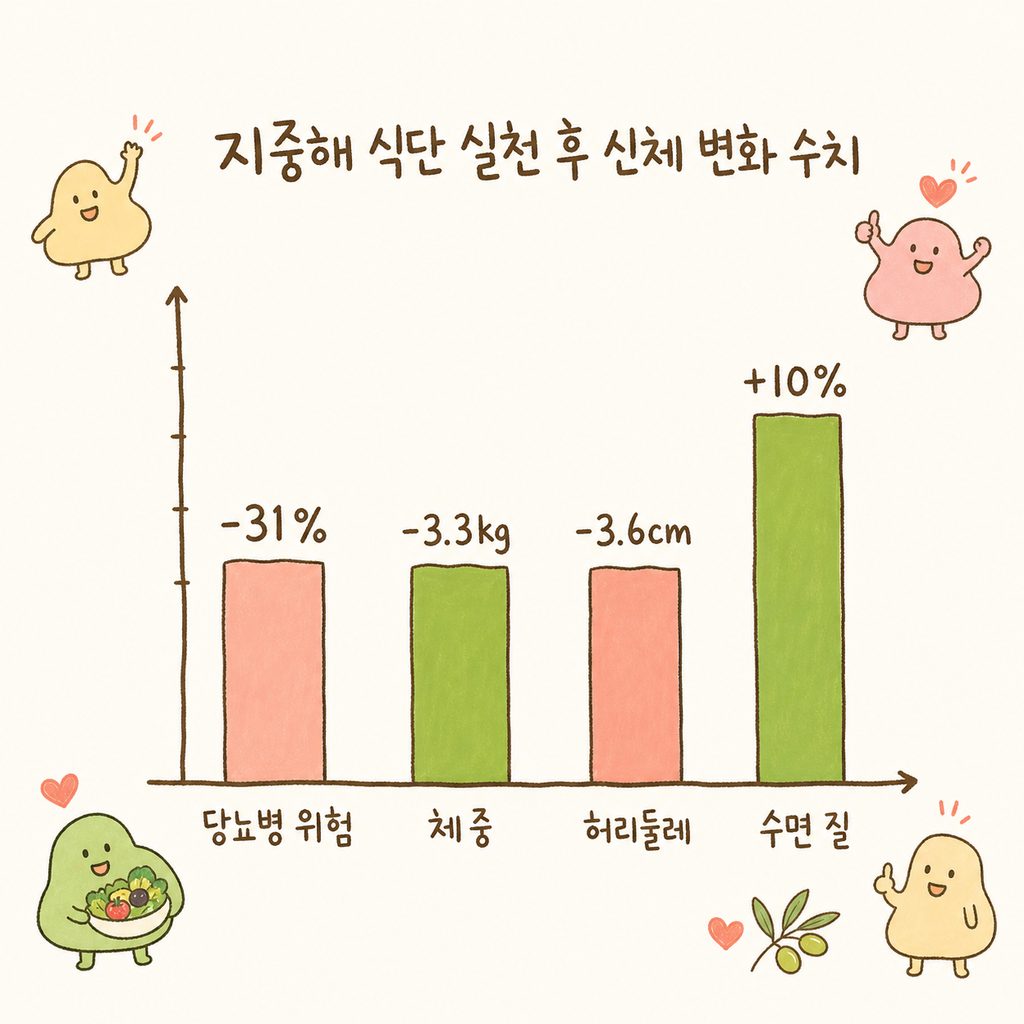
Seeing the numerical data makes the body's transformation from the Mediterranean diet much more tangible. According to a joint research team from Harvard T.H. Chan School of Public Health and the University of Navarra, the group that followed the Mediterranean diet while reducing caloric intake and exercising showed a remarkable 31% lower risk of type 2 diabetes compared to those who did not.
![A comparison table of core recommended and restricted foods in the Mediterranean diet. [Recommended: whole grains, olive oil, fish, vegetables] vs [Restricted: red meat, processed meat, refined sugars]](/api/files/assets/2026-08/6d477ed1.jpg?sig=9cd1319e39000b069c56deb9fd9f83218fb7122fbcaff599fee0a904e06299e9)
Weight changes are also noteworthy. Participants who practiced all three conditions averaged 3.3 kg of weight loss and 3.6 cm reduction in waist circumference. Diet quality even affects sleep. Research has shown a correlation where higher Mediterranean diet scores correspond to approximately 10% better sleep quality[1]. A single diet can positively influence not only blood sugar and weight but also overall quality of life and mood disorder alleviation.
The Harmony of the Mediterranean Diet from a Korean Medicine Perspective
In Korean medicine, correcting bodily inflammation and metabolic imbalance is considered paramount. The vitamins, minerals, and polyphenols in fresh vegetables and fruits emphasized by the Mediterranean diet are components that help expel bodily toxins and promote the circulation of Ki and Blood. Particularly, unprocessed whole grains are slowly absorbed during digestion, helping to stabilize energy and prevent blood sugar spikes.
Most importantly, the key lies in healthy fats. In Korean medicine, appropriate dietary fats are believed to protect the organs and soften the blood. Unsaturated fatty acids like olive oil improve harmful cholesterol levels in the blood, building a foundation for vascular health. The direction the Mediterranean diet aims for aligns well with Korean medicine's approach of controlling inflammation and restoring metabolism.
Mediterranean Diet Practice Points You Can Start Today
Drastically changing your diet overnight isn't realistic. Here are some practical methods I recommend to patients in the clinic.
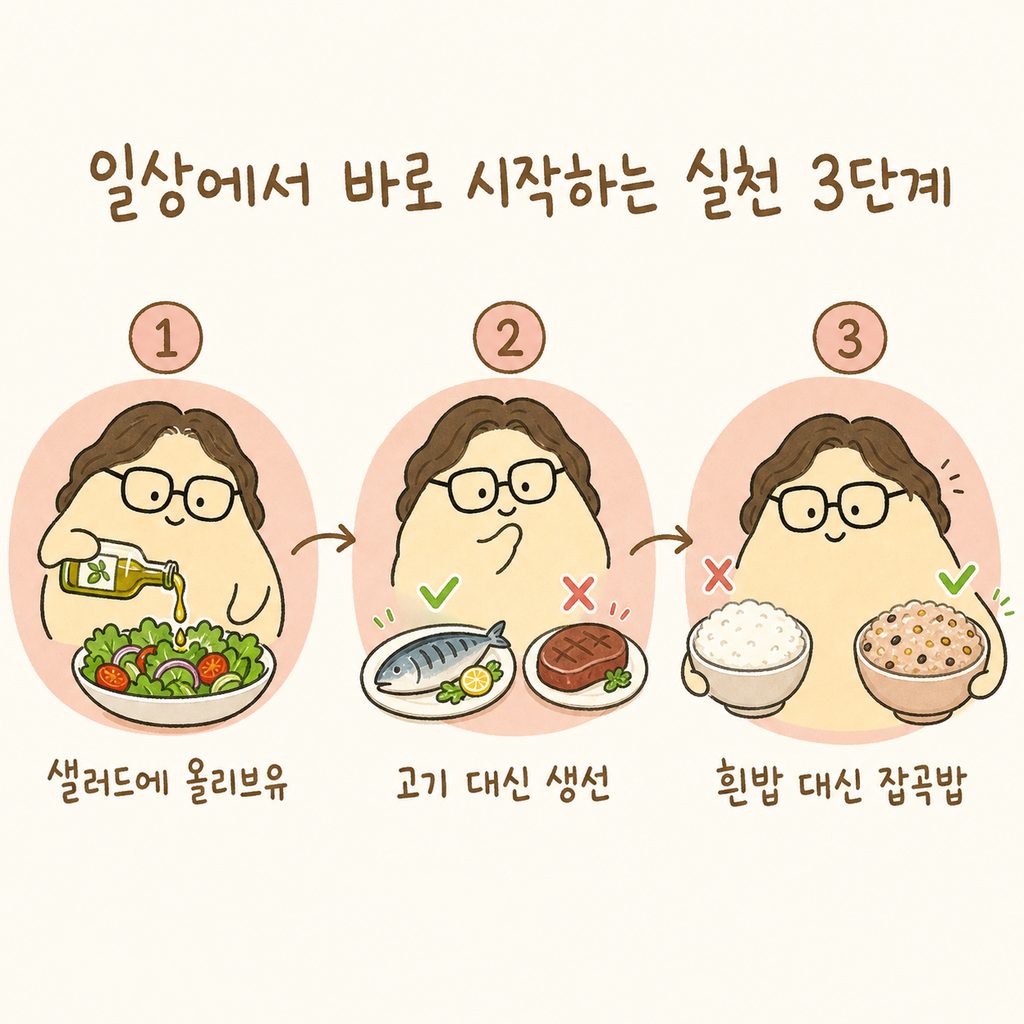
Start by improving the quality of your fat intake. It's ideal to fill 30-40% of your daily caloric intake with healthy fats like olive oil or salmon. Quantitatively, this is approximately 67-88g. Try drizzling olive oil generously on salads or using it in cooking.
Your protein-eating habits just need minor adjustments. Mediterranean region populations enjoy seafood at least three times per week. If you enjoy meat, instead of cutting it out entirely, try planning your diet to include fish instead of red meat at least twice a week.
Place whole grains and vegetables on your table first. Simply choosing multigrain rice or whole wheat bread instead of white rice and adding plenty of fresh seasonal vegetables increases your dietary fiber intake. Fiber-rich foods keep you full longer with fewer calories, naturally supporting weight management.
Diet management can feel unfamiliar and confusing at first. However, if you think of it as a process of gradually filling your body with good ingredients, you'll be able to continue much more enjoyably.
If you combine a constitution-appropriate diet with the support of the Baekrok Gambi-jung weight management program, your results will be even more pronounced. Try changing your diet little by little with the methods shared today, and please let me know during your next visit what changes you've experienced.
References
[1] Adherence to the Mediterranean Diet and Its Association With Sleep Quality and Chronotype Among Youth: A Cross-Sectional Study. (Frontiers in Nutrition, 2021) — https://pubmed.ncbi.nlm.nih.gov/35127790/
References