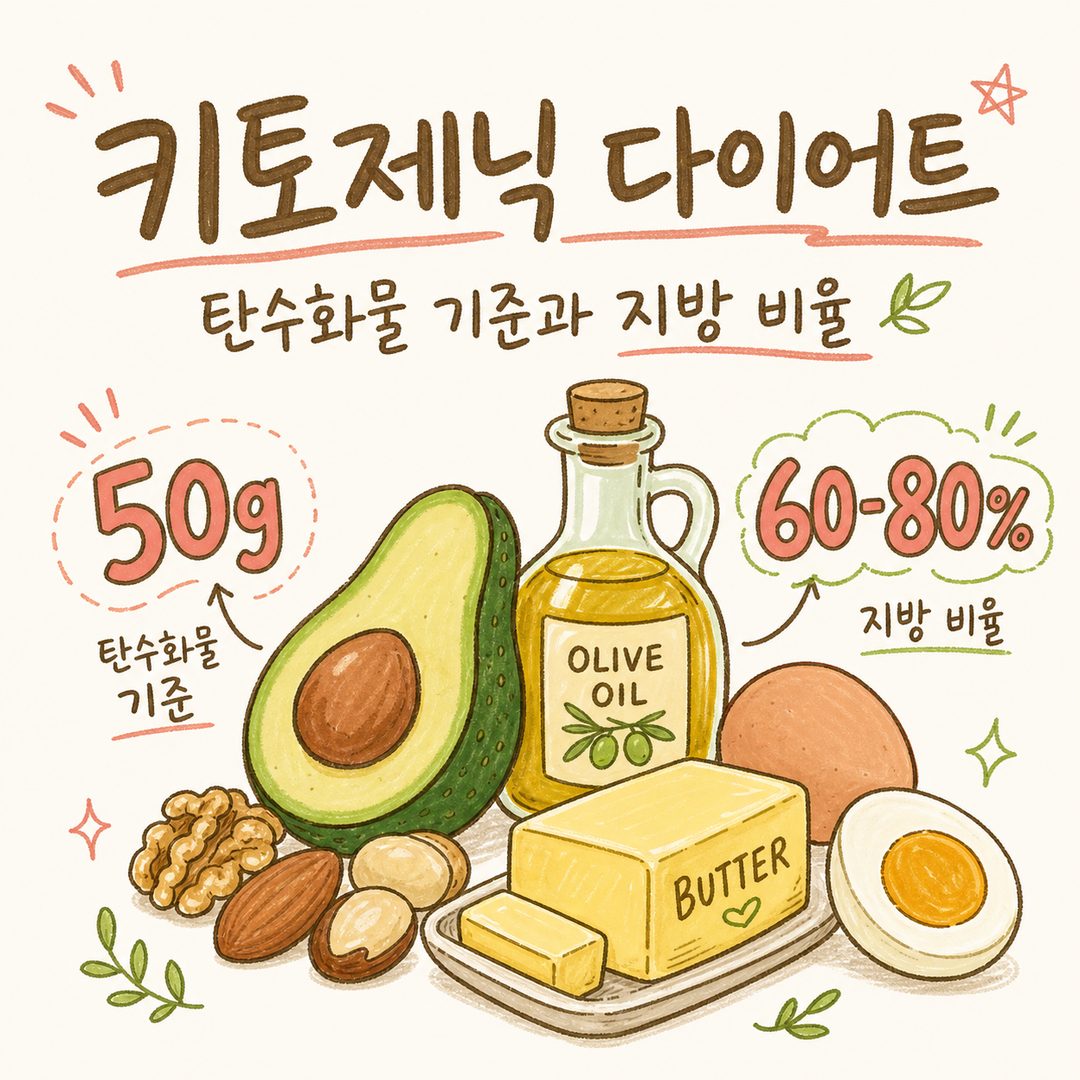
Ketogenic Diet: Carb Limits and Fat Ratios

Table of Contents
Many patients visit the clinic saying, "Doctor, I started keto, and I've been feeling dizzy for a week." While it's a trending diet, few people know the exact ratios, often leading to physical strain when starting.
Why We Must 'Drastically' Reduce Carbohydrates
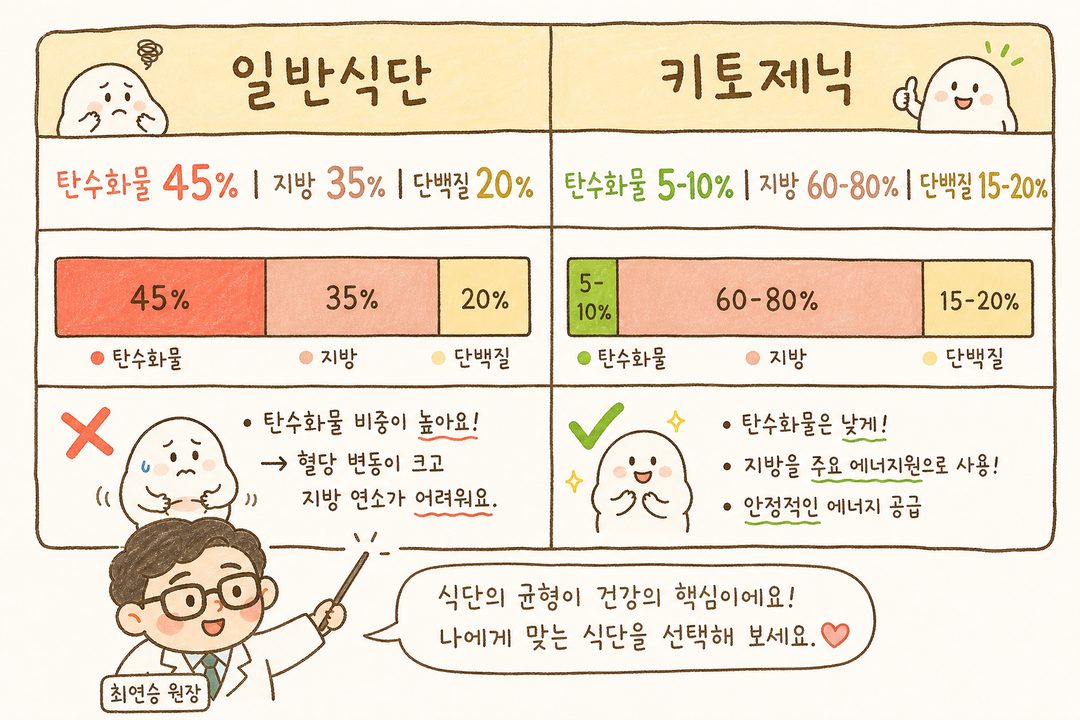
The starting point of the ketogenic diet is simple. Normally, our bodies use glucose made from carbohydrates as the primary fuel. However, if you significantly reduce carbohydrates, the body switches to a state called ketosis, where it breaks down fat to create 'ketone bodies' for energy. According to nutritional data, ketogenic diets often limit daily carbohydrates to 50g or less, and for weight management purposes, a range of 20–50g or less is commonly used. Some domestic data even recommend 20g or less.
When converted into ratios, the standard is approximately 60–80% fat, 15–20% protein, and 5–10% carbohydrates of total calories. Other sources provide a simpler guideline of 70% fat, 20% protein, and 5% carbohydrates. While the commonly known 'Low-Carb High-Fat' (LCHF) diet covers a broad range of up to 120g of carbohydrates per day, the ketogenic diet is a more extreme form of carbohydrate reduction.
Originally, this diet was not a weight management tool. Medical articles introduce the ketogenic diet as a dietary therapy used to treat neurological diseases such as pediatric epilepsy that cannot be controlled by medication. This means it is a method that significantly alters the body's metabolism.
Initial Physical Changes You May Encounter
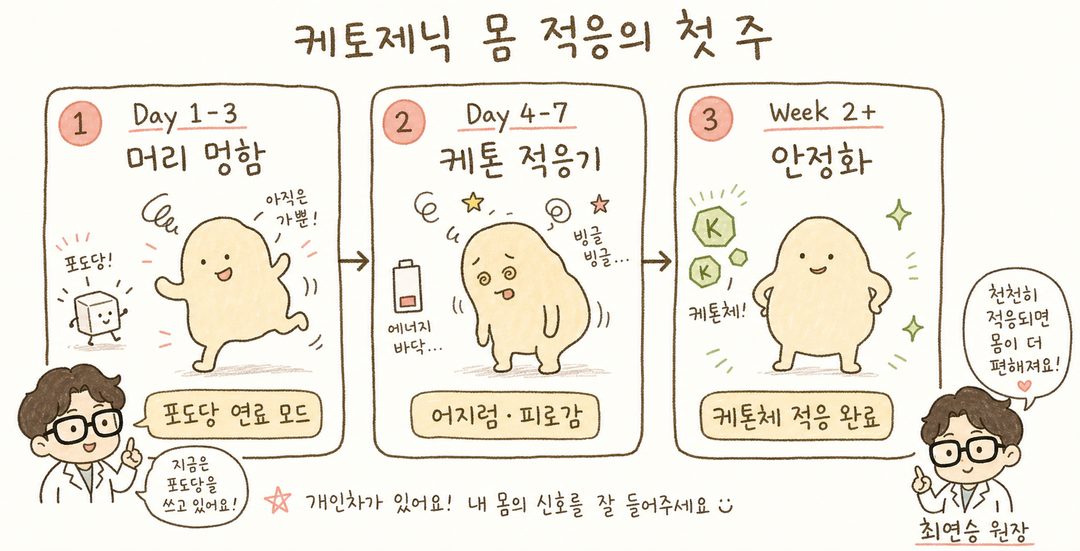
The theory is clean, but in practice, the first few days can be quite uncomfortable. It is like suddenly switching an engine that has run on gasoline its whole life to diesel. For the first week, many people feel brain fog and low energy. Patients often worry, "Am I doing something wrong?" but this is a common occurrence during the adaptation period as the fuel source shifts to ketone bodies.
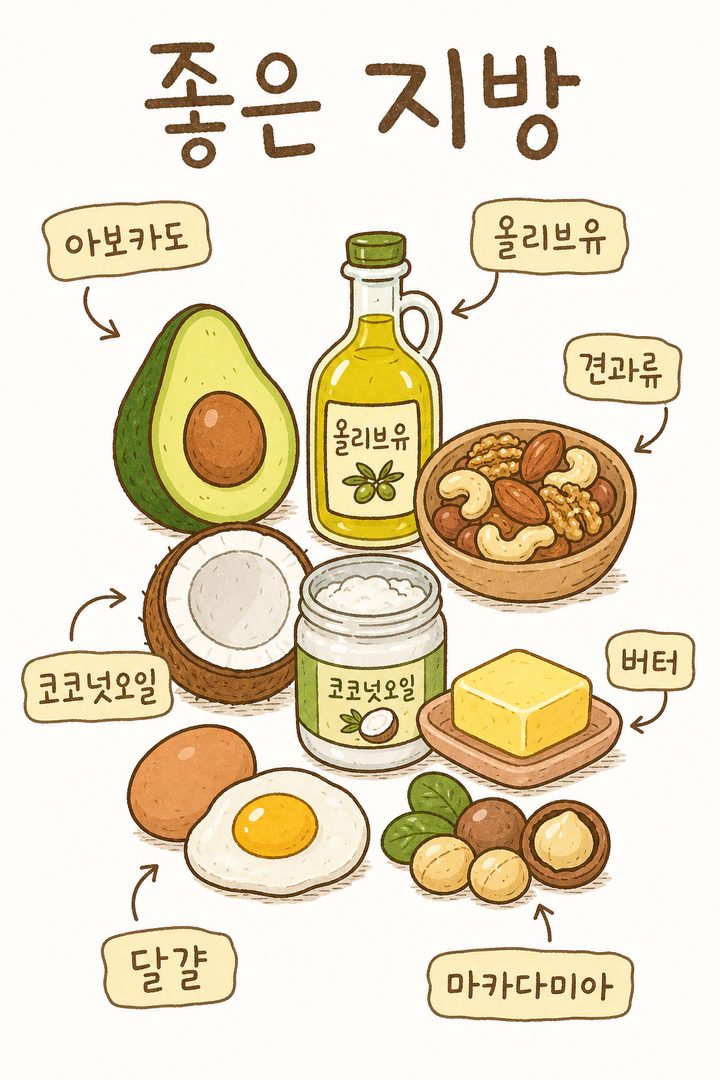
To get through this period, the quality of the food you eat must be clear. One dietary guide recommends avocado, coconut, macadamia oil, olive oil, butter, and nut oils as good fats. Protein is filled with meats like beef, pork, lamb, and chicken, as well as eggs (whole eggs, fried eggs, omelets), fish, and shellfish. Since the recommended protein intake for an average adult is about 56g/day for men and 46g/day for women, you can think of it as having a palm-sized portion of protein with every meal.
The problem lies in the traditional Korean table. Rice, noodles, rice cakes, bread, fruit, and seasonings are the foundation of almost every meal. To match the ratios, the entire diet must be redesigned. I often see people who start by thinking, "I'll just leave the side dishes and skip the rice," only to end up lacking both protein and fat, which actually leads to a loss of vitality.

The Baekrokdam Clinic Perspective
In Korean medicine, food is viewed not just as 'calories' but as having properties that warm or cool the body, and circulate or anchor energy (Qi). Because the ketogenic diet has such a high proportion of fat, adaptation comes slowly for those with weak stomachs, those prone to 'phlegm-dampness' (痰飮), or those with a tendency toward constipation. Even on the same diet, some feel light while others feel bloated for a long time; this is a matter of constitution, not willpower.
If someone with weak energy cuts carbohydrates all at once, dizziness, headaches, and muscle pain can persist. In the clinic, I advise such patients, "Don't cut carbs all at once; start by halving your usual intake and gradually work your way down to around 50g a day." I also recommend taking more fluids and minerals than usual while changing the diet. I emphasize that a diet is a tool, not the answer, and there is no need to force the ratios while ignoring your body's signals.

Practical Tips You Can Start Today
A few small standards are more sustainable than a grand plan.
Set a numerical upper limit for carbohydrates. If you are aiming for serious keto, try 20–50g a day; if that's too much, start with under 120g.
Do not fear fat. Avocado, olive oil, nuts, butter, and egg yolks are your primary fuel. You must temporarily set aside the habit of 'using less oil.'
Include protein in every meal. Use 46g for women and 56g for men as a daily baseline and distribute it.
Keep a condition log for the first week. Note if your head feels foggy, how you are sleeping, and if your bowel movements are regular to quickly determine if keto suits your body.
Stop if you experience symptoms that are hard to endure. If dizziness doesn't go away or your energy continues to drop, you should adjust the ratio or consult an expert.
The ketogenic diet shows rapid changes, but it requires a close dialogue with your body. Remember that a single line about your condition is a more accurate signal than a ratio chart.
If your body feels constantly drained while adjusting your diet, or if you want to reduce the burden by tailoring it to your constitution, consulting for Baekrokdam Clinic's Baekrok Gambi-jung can be helpful. We don't just provide a prescription; we look at your usual diet, constitution, and lifestyle rhythm together to find the right direction for your body. Please stop by before you get exhausted by an excessive diet.