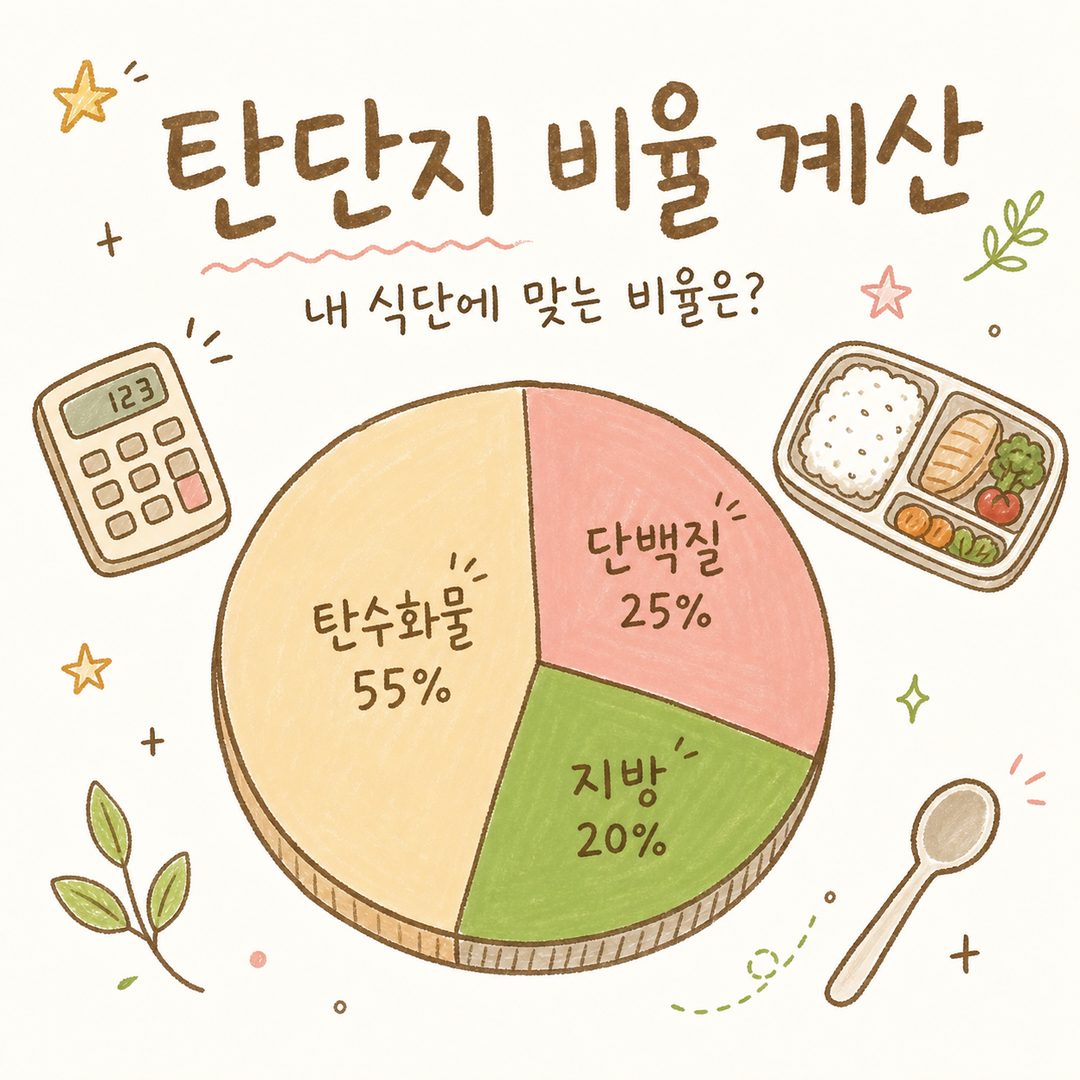
Macronutrient Ratio Guide: 1800kcal Formula to 50:30:20

Table of Contents
When planning a diet, the first stumbling block is often calculating the macronutrient ratio. You've probably heard of "50% carbs, 30% protein," but figuring out exactly how many grams of rice you should eat today can be overwhelming. As a practitioner, this is the most common question I receive during consultations. The good news is, it's not difficult once you know the formula. Today, I'll walk you through macronutrient ratio calculation from start to finish, complete with examples to help even those who struggle with numbers.

What Are Macronutrient Ratios and How to Calculate Them
Macronutrient ratios show what percentage of your daily calories come from carbohydrates, protein, and fat. The calculation process is simple: ① Calculate daily caloric needs → ② Set desired macronutrient ratio → ③ Convert to grams (g).
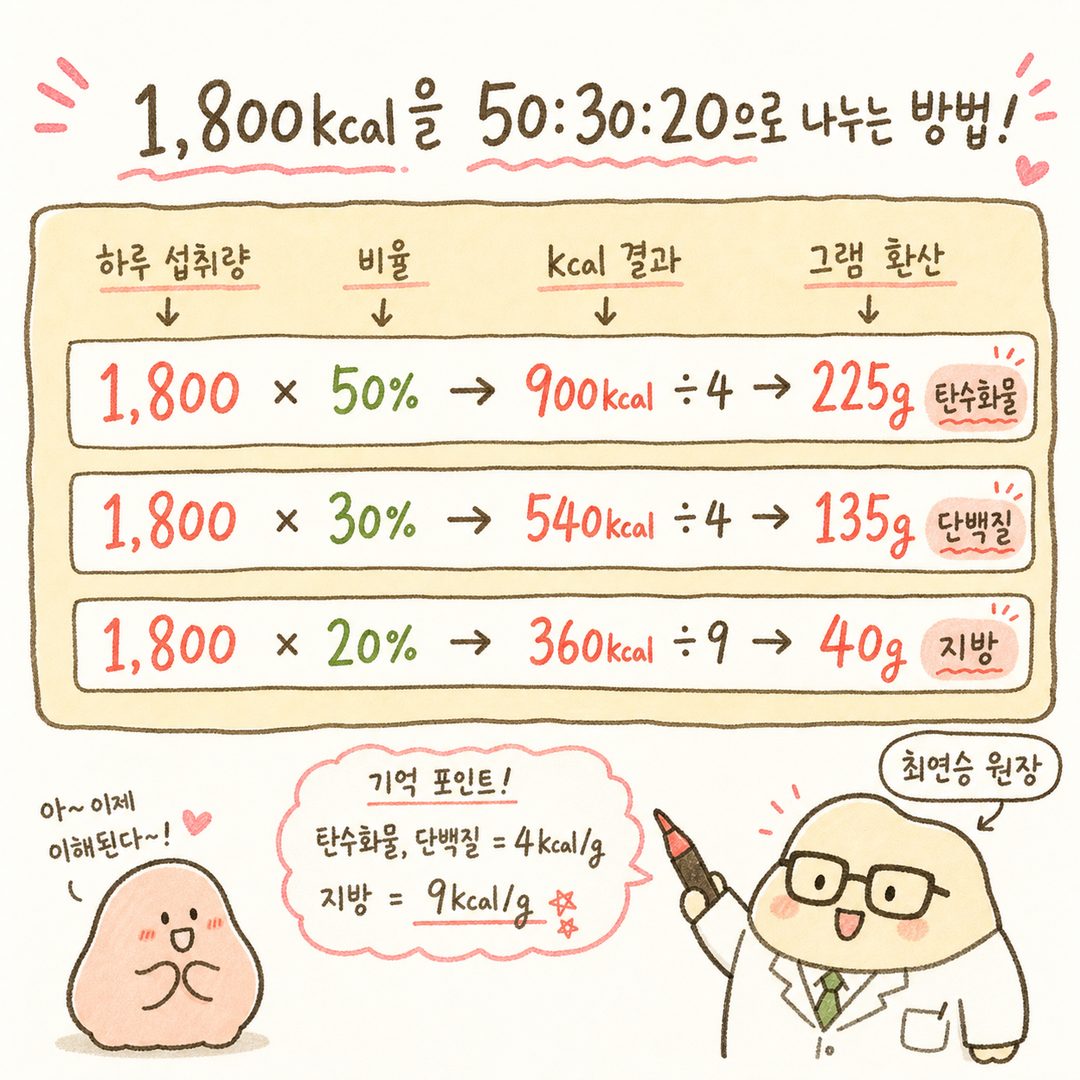
Remember these conversion constants: 1g carbohydrate = 4kcal, 1g protein = 4kcal, and 1g fat = 9kcal. The key point is that fat provides more than twice the calories per gram compared to carbs or protein. This is why you can't simply divide by 100 when converting ratios to grams—you must convert through calories first.
For reference, the most commonly used ratio for weight management is 50:30:20 (carbs:protein:fat). For more emphasis on fat loss, 40:40:20 with higher protein is often recommended. The 5:3:2 ratio (50:30:20) is considered the golden standard for preserving muscle mass during exercise.
Let's Calculate with 1,800kcal as an Example
Let's use actual numbers. First, use a calorie calculator to determine your daily needs. For this example, we'll use 1,800kcal/day for weight management.
Applying the 50:30:20 ratio, let's calculate calories for each macronutrient:
Carbohydrates: 1,800 × 0.5 = 900kcal
Protein: 1,800 × 0.3 = 540kcal
Fat: 1,800 × 0.2 = 360kcal
Now convert these calories to grams (carbs and protein: ÷4; fat: ÷9):
Carbohydrates: 900 ÷ 4 = 225g
Protein: 540 ÷ 4 = 135g
Fat: 360 ÷ 9 = approximately 40g
So, a 1,800kcal diet at 50:30:20 means planning meals to include 225g carbs, 135g protein, and 40g fat. It might seem complicated at first, but once you've done the math, you can simply add up the nutritional information from food labels.
How to Interpret the Results
Here are reference ranges for healthy adults (not dieting): Carbs 55-65%, Protein 15-20%, Fat 20-30%. For weight management, we typically adjust these ranges slightly lower for carbs and higher for protein. Common variations include 40:30:30 or 40:35:25, generally keeping protein 25-35%, fat 20-30%, with the remainder as carbs.
For lean muscle building, ratios typically shift to Carbs 40-50%, Protein 25-40%, Fat 15-30%. Beginners or those with higher body fat often prefer a 4:3:3 ratio. For intense training and muscle gain, the 5:3:2 pattern is recommended. Most importantly, don't reduce fat too much—maintain at least 15-30% of total calories for hormonal balance and skin health.
When This Formula Might Not Work
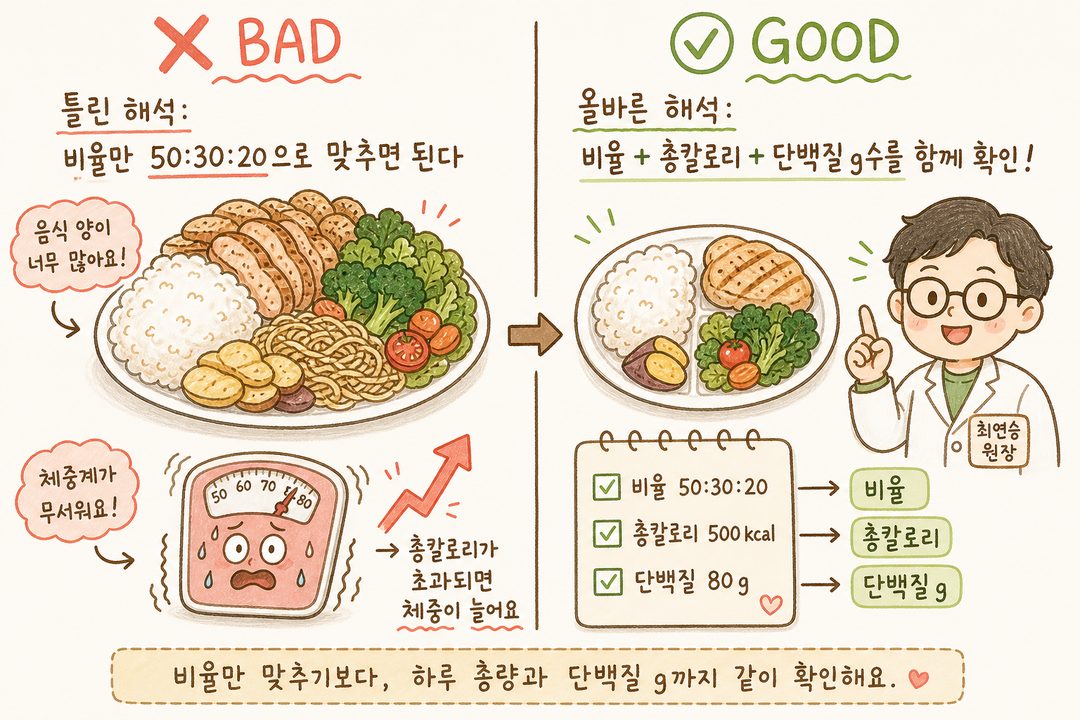
Remember that ratios are relative values. Even with perfect ratios, your weight might not change as expected if your total calories are too high or too low. Many resources emphasize that total calories and protein grams matter more than ratios.
For protein, aim for 1.6-2.2g per kg of body weight. For example, a 70kg person needs 112-154g of protein daily. Sometimes, 30% protein by ratio might fall short of this recommendation.
For muscle gain, consider increasing calories by 10-15% or 200-300kcal above maintenance. Conversely, cutting calories too aggressively during weight loss can lead to muscle loss and plateaus. Those with irregular schedules, night shifts, or digestive issues may need adjustments. The formula is just a starting point—adjust based on your body's response.


Complementary Metrics Beyond Ratios
Don't focus solely on macronutrient ratios. In clinical practice, we also monitor:
Body fat percentage: Affects dietary strategy even at the same weight
Muscle mass (skeletal muscle mass): Helps determine appropriate protein intake
Waist circumference and body shape changes: Often decrease even during weight plateaus
Basal metabolic rate (BMR): The foundation for calculating daily caloric needs
Fasting blood sugar and insulin sensitivity: Important for determining carb intake
Digestion, bowel movements, sleep, and energy levels: Early indicators of whether your diet suits you
From a Korean medicine perspective, the same ratio can have different effects depending on your constitution and digestive function. Rather than just matching numbers, considering your body's unique characteristics leads to more sustainable dietary habits. If you're struggling with calculations or not seeing results despite correct ratios, consider consulting at Baekrokdam for personalized dietary and exercise recommendations based on your constitution. Together, we can make your dietary plan clearer and more effective.