
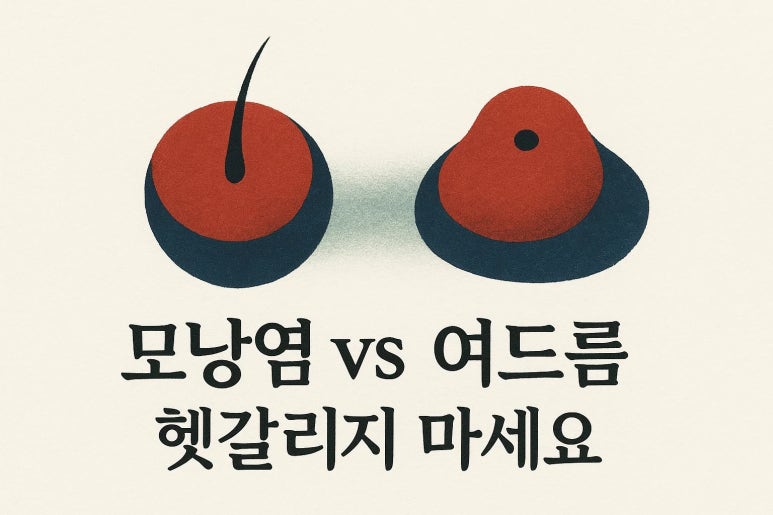
The Difference Between Folliculitis and Acne in Men in Their 20s | Incheon Folliculitis

Folliculitis vs. Acne in Men in Their 20s | Incheon Folliculitis
Stop Confusing Your Skin Troubles — Folliculitis vs. Acne: The Differences for Men in Their 20s
When I see male patients in their 20s in the examination room, I often hear complaints like, 'Something keeps appearing on my skin, and I don't know if it's acne or something else. Ointments only provide temporary relief.'
Many people, when they see redness and pus on their face, tend to automatically assume it's 'acne.'
But have you ever considered that your skin problem might actually be 'folliculitis' rather than 'acne'?
While the two may appear similar on the surface, their causes and treatments are entirely different.
Failing to distinguish them properly and managing them with incorrect methods can actually worsen symptoms or lead to chronic issues.
Today, we'll discuss common skin troubles experienced by men in their 20s, specifically the differences between folliculitis and acne, and how to address them correctly.
Folliculitis and Acne: Similar on the Outside, Different on the Inside
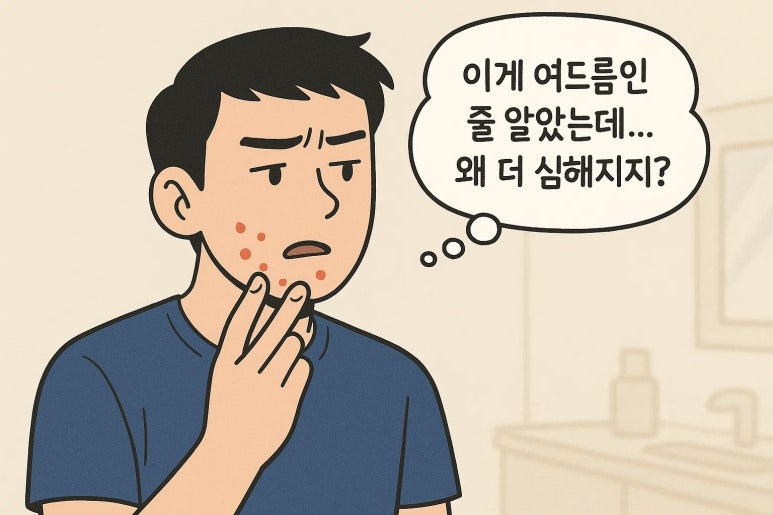
When I meet male patients in their 20s who are struggling with skin troubles, it's very common for them to confuse these two conditions.
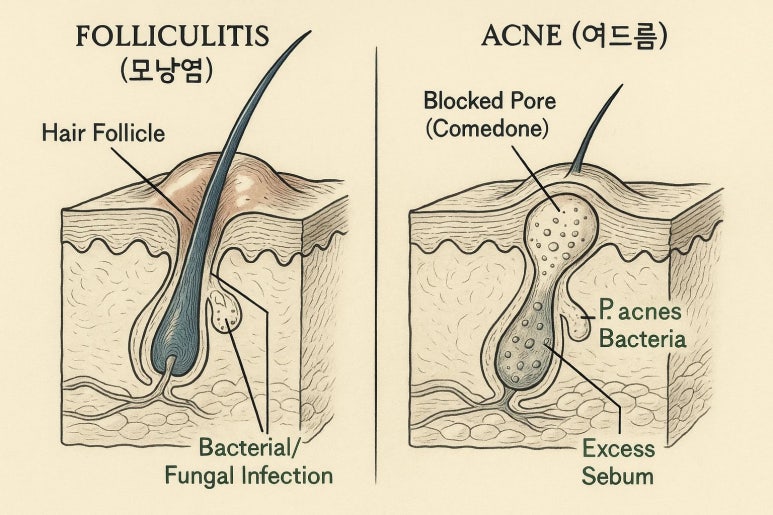
Folliculitis, simply put, is 'inflammation of the hair follicle'.
It typically arises due to bacterial or fungal infections and commonly appears after shaving.
In contrast, acne is a condition where excessive sebum production blocks pores, leading to inflammation within them.
The biggest difference between the two conditions lies in their 'causes'.
Causes
Folliculitis is primarily caused by bacterial (e.g., Staphylococcus aureus) or fungal (e.g., Malassezia) infections.
It is particularly prone to occur when micro-injuries form on the skin during shaving, or when bacteria thrive in humid and hot environments with excessive sweating.
The risk of occurrence also increases when immunity is lowered.
In contrast, acne develops through a complex mechanism where excessive sebum secreted by the sebaceous glands blocks pores, allowing acne bacteria (P. acnes) to proliferate within, leading to inflammation.
Beyond hormonal changes during puberty, for men in their 20s, stress, Westernized diets (high-sugar, high-fat foods), irregular lifestyles, and smoking are major factors that induce sebaceous gland hyperactivity and worsen acne.
Symptoms
Folliculitis typically begins as small, red papules, often with a hair visible in the center and pus formation.
It can be accompanied by itching or stinging, and sometimes multiple lesions may erupt simultaneously.
Acne starts with initial lesions called 'comedones' (blackheads, whiteheads), which can progress to red inflammatory papules, pustules (pus), and in severe cases, nodules or cysts.
Unlike folliculitis, a hair is usually not visible in the center, and patients primarily complain of tenderness (pain upon pressure) rather than itching.
The frequent occurrence of sebum plugs being extracted upon squeezing is also a significant difference distinguishing folliculitis from acne.
Affected Areas
Folliculitis can primarily occur on any hair-bearing area of the body.
It commonly appears in humid and friction-prone areas such as the beard area of the face, scalp, chest, back, and buttocks.
Especially for men in their 20s, frequent shaving and physical activity often lead to folliculitis around the chin and neck, as well as on the torso due to friction from sports.
Acne primarily occurs on areas with well-developed sebaceous glands, such as the face's T-zone (forehead, nose), U-zone (cheeks, jawline), chest, and back.
The difference in location of occurrence on various body parts also provides a useful clue for diagnosing skin troubles.
Incorrect Self-Treatment Creates a Vicious Cycle
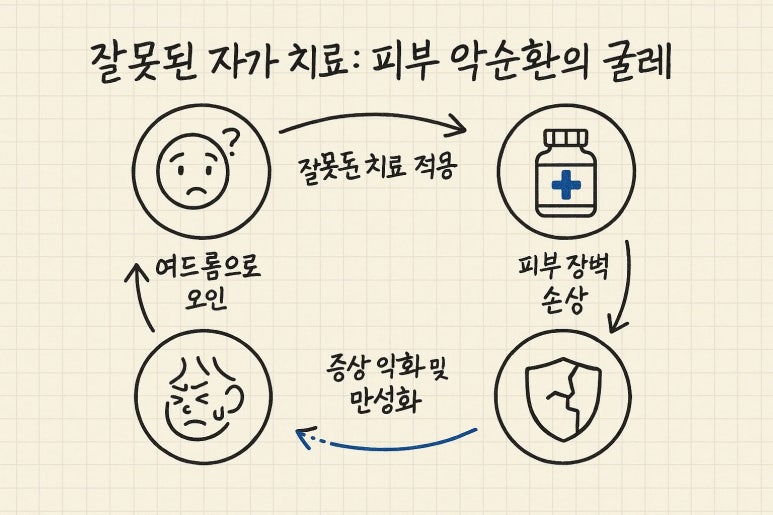
"I thought this was acne and kept applying acne ointment, but it seems to be getting worse instead."
|
If you fail to properly distinguish the difference between folliculitis and acne, you can easily fall into such a vicious cycle. Ointments used for acne treatment (e.g., salicylic acid, benzoyl peroxide, etc.) focus on sebum control or exfoliation, but they are ineffective for bacterial folliculitis and can even irritate the skin, worsening it. Damage to the skin barrier can even facilitate the penetration of other bacteria. Conversely, using antibiotic ointments, which are necessary for bacterial folliculitis, on acne does not address the fundamental sebum issue. Instead, it increases the risk of developing antibiotic resistance and can cause unnecessary irritation to the skin. In such cases, the skin continues to be irritated, and the inflammation becomes chronic, ultimately making treatment more difficult. |
|
Mr. A, in his mid-20s, was concerned about persistent small, red bumps appearing around his chin after shaving. Based solely on internet information, he self-diagnosed with acne and consistently used a strong acne-cleansing foam and an ointment containing salicylic acid, but his itching worsened, and the number of bumps increased. Upon examination, Mr. A's skin problem was diagnosed as typical post-shaving bacterial folliculitis. The folliculitis was caused by bacteria penetrating micro-injuries sustained during shaving, and the acne ointment had ironically weakened his skin barrier and dried it out, making it more susceptible to secondary infections. After proper folliculitis treatment and modification of his shaving habits, his skin was able to stabilize quickly. |
|
## How Should I Accurately Assess My Skin? So, how can you accurately determine whether your skin trouble is folliculitis or acne? The most definitive method is a diagnosis by a specialist, such as a dermatologist or a traditional Korean medicine practitioner. However, you can also make an educated guess based on a few clues. ### Self-Diagnosis Checklist 1. Is there a hair embedded in the center of the bump? If a small hair is visible in the center of a red bump, or if inflammation is concentrated around a hair, it is likely folliculitis. 2. Is itching or stinging the primary symptom? If itching or stinging is severe rather than pain, it could be folliculitis. Acne typically causes pain when touched. 3. Does it frequently occur after shaving? Red bumps appearing on the chin or neck area within a few days after shaving are a common pattern of folliculitis. 4. Does a sebum plug come out when extracted? If only yellow pus comes out upon squeezing the bump, or if nothing comes out and there's no sebum plug (blackhead/whitehead), it is more likely folliculitis. This is a key clue for distinguishing acne. Our body always sends us signals. Striving to understand these signals is the first step toward healthy skin. In traditional Korean medicine, skin troubles are not viewed as merely localized issues, but rather as a reflection of the body's overall inflammatory skin condition environment—that is, a problem of bodily balance involving immunity, digestive function, and stress response. It is considered crucial to carefully examine an individual's constitution and lifestyle habits. ## Personalized Management and Response Strategies Once an accurate diagnosis is made, appropriate management and response become crucial. The most important aspect here is 'consistency'. ### Folliculitis Management Maintain Hygiene and Disinfect:* Wash your face twice daily with lukewarm water and a mild cleanser. After shaving, use an alcohol-free, soothing aftershave or a product with mild antiseptic properties. Strict personal hygiene is key to folliculitis prevention. Improve Shaving Habits: Whenever possible, use an electric shaver or a disposable razor. Always keep razor blades clean and shave in the direction of hair growth to minimize skin irritation. Wet shaving can reduce skin irritation more than dry shaving. Avoid Humid Environments: Shower immediately after sweating, and wear breathable cotton clothing instead of tight synthetic fabrics to prevent skin from becoming damp. It's also important to shower promptly after workouts at the gym. ### Acne Management Sebum Control:* Use gentle cleansers along with skincare products that regulate excessive sebum production (e.g., salicylic acid, retinoids). Be careful not to over-exfoliate, as this can damage the skin barrier. Pore Management and Exfoliation: Regularly use exfoliants to prevent clogged pores, but it's best to choose products with enzyme or PHA ingredients that are less irritating to the skin. Proper Hydration: Adequate moisturizing to balance oil and water is essential for strengthening the skin barrier. Even oily skin can produce more sebum if dry, so consistent use of a light moisturizer is necessary. Dietary Improvement:* Reducing intake of high-sugar, high-fat foods (fast food, chocolate, some dairy products) and focusing on fresh vegetables, fruits, and whole grains can help regulate sebum production and reduce inflammation. This is an important part of acne management. For both conditions, stress and lack of sleep can be exacerbating factors. Sufficient rest, regular lifestyle habits, and appropriate exercise are important skin care practices for any skin problem. These overall lifestyle improvements are essential for maintaining the skin health of men in their 20s. ## Skin Health: Starting with Understanding Your Own Story Our bodies are like intricate systems. Skin troubles are not merely 'things to be eliminated,' but can be signals sent by the body's internal environment. Beyond distinguishing the differences between folliculitis and acne, it's crucial to listen to what state your body is in and embark on a journey to find the effective solutions that suit it. Rather than struggling alone, it is wise to consult a trusted expert to explore the most suitable folliculitis treatment or acne management plan for your skin. Please remember that healthy skin is not built overnight; it begins with consistent attention and correct understanding. I sincerely hope your skin becomes healthier, and you regain your confidence. Even a small, visible bump carries a complex story from our body. Only by accurately deciphering this story can we truly embark on the path to fundamental healing and recovery. Rather than making hasty judgments based solely on outward appearance, listening to what your body 'says' and seeking an expert's 'interpretation' is indeed the wisdom for maintaining true skin health. |