
Menstrual Pain in Your 30s Not Relieved by Painkillers | Incheon Menstrual Pain

Menstrual pain not resolved by painkillers, is it truly 'just a uterine problem'?
Among the many women in their 30s I see in my clinic, there are many for whom their monthly menstrual period is truly a 'time of agony'.
|
It feels like my abdomen is being stabbed with a knife. My lower abdomen feels heavy and painful, as if a stone is embedded there. Painkillers don't work. My lower back hurts as if it's breaking, and it's accompanied by headaches and nausea, making daily life impossible. |
This raises a question: Why does severe menstrual pain that isn't resolved by painkillers occur?
Is it truly the correct solution to simply dismiss it as solely a uterine problem and rely solely on painkillers?
In my clinical practice, I often find answers to these questions in my patients' bodies, and within the context of their lives.
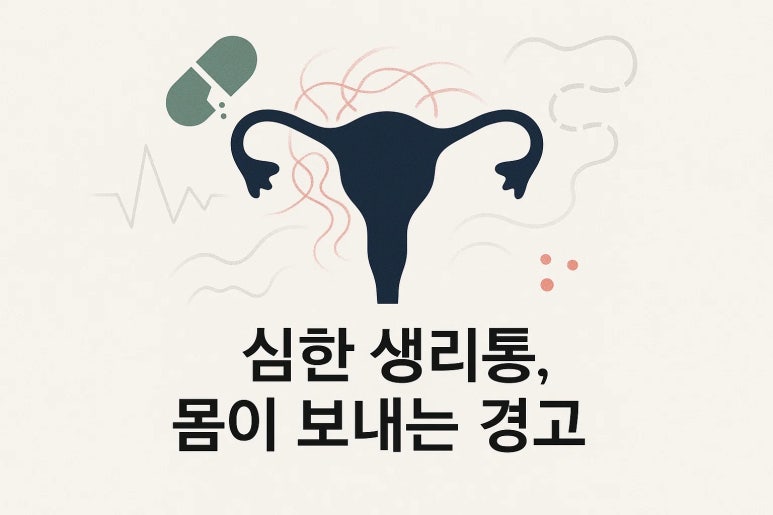
Menstrual Pain, The Body's 'Warning Light'
In my experience, menstrual pain that doesn't even respond to painkillers is usually not a problem confined to the specific area of the uterus. Rather, the body's overall complex imbalance manifests as a powerful pain, a 'signal,' in the uterine area. It's like an engine warning light appearing on a car's dashboard.
The warning light (pain) is the body's way of saying 'there's a problem with the engine, so check it,' and simply turning off the warning light won't solve the engine problem. Here, the clues corresponding to the body's 'engine problem' can be largely summarized into three categories: autonomic nervous system instability, blood circulation disorder, and chronic inflammatory response.
So how do these three factors intertwine and create menstrual pain?
Let me elaborate on the clues I observe in my clinic, one by one.
Three Key Clues: Autonomic Nervous System, Blood Circulation, and Chronic Inflammation
1. Tense Nerves: Autonomic Nervous System Instability
Our body's autonomic nervous system easily loses balance due to stress, irregular lifestyle habits, excessive work, and so on. Those who live with reversed day-night cycles or are constantly under tension often forget the brain and body's rest mode.
When the sympathetic nervous system is excessively activated, blood vessels constrict and muscles tense up, which can particularly impede blood flow around the uterus and lower the pain threshold. This aligns with the concept of 'cold energy stagnation' mentioned in ancient medical texts.
Experiences like your heart racing over minor things, difficulty falling asleep, and constantly feeling stiff are not unrelated to this autonomic nervous system instability. This state of tension further narrows the blood flow to the uterus.
2. Blocked Flow: Blood Circulation Disorder
Next, blood circulation disorder to the uterus is a major cause of worsening menstrual pain. Blood is like a river in our body, supplying oxygen and nutrients and transporting waste products.
If this river doesn't flow smoothly, the endometrial tissue becomes deficient in oxygen, and inflammatory substances accumulate, which can intensify the pain. It's like a fish tank where the water stagnates and begins to rot.
Just as water needs to circulate to stay clean, the area around the uterus also needs good blood flow to be healthy. Among the patients I see, many frequently describe having cold hands and feet or a chilly lower abdomen, which is an important clue that blood circulation around the uterus is not smooth.
3. Hidden Ember: Chronic Inflammatory Response
When chronic inflammatory response is added to this, the situation becomes even more complex.
Chronic inflammation silently progressing somewhere in the body increases overall pain sensitivity, and excessively stimulates prostaglandin secretion in the uterine lining, which can cause severe menstrual pain.
This is similar to a small ember spreading throughout the body, affecting various weak spots. Especially if allergic reactions are frequent, digestive function is always uncomfortable, or there are chronic skin issues, there is a high possibility that invisible embers of inflammation are hidden within the body. These embers become fuel that further amplifies uterine pain.
Ms. B's Story: Reading Complex Signals
|
Ms. B, a professional in her 30s whom I met in my clinic, always suffered from excessive stress and overtime work. It had been a long time since she had deep sleep, and she constantly complained of chest tightness and anxiety. This is a typical manifestation of autonomic nervous system instability. At the same time, Ms. B suffered from severe indigestion, chronic constipation, and frequent abdominal pain, which indicated an imbalance in her intestinal environment and was an important clue to a chronic inflammatory response within her body. This overall state of bodily tension and inflammation further constricted blood vessels around the uterus and hindered blood circulation, ultimately leading to "knife-stabbing" menstrual pain. It's important not to just look at the pain, but to read these complex signals sent by the entire body. |
Ultimately, painkillers only temporarily suppress the 'result' of this pain, but they do not resolve the 'fundamental cause' – the systemic imbalance – that triggered the pain. It's like temporarily turning off a warning light.
That's why many people say, "It only works when I take the painkillers," and gradually seek stronger painkillers or increase their dosage frequency. This can lead to a vicious cycle of ignoring the body's warnings.
Frankly speaking, the point where I focus when treating patients with chronic and persistent menstrual pain is precisely this.
Rather than just looking at the uterus, the site of pain, my focus is on holistically understanding and restoring the overall health of the body, including the balance of the autonomic nervous system, smooth blood circulation, and regulation of inflammatory responses within the body. It's a journey to find the root clues beyond the visible symptoms.
The Wisdom of Seeing Beyond Pain: Holistic Body Recovery
|
This approach goes beyond mere symptom relief and is an important process for laying the foundation for long-term women's health. The body always sends us signals. Rather than simply dismissing and suppressing these signals as mere discomfort, it is about wisely interpreting them and discerning what is truly needed. I believe that is the first step for us to establish a healthy relationship with our own bodies, and to move beyond pain, standing as the agents of our own recovery. |