
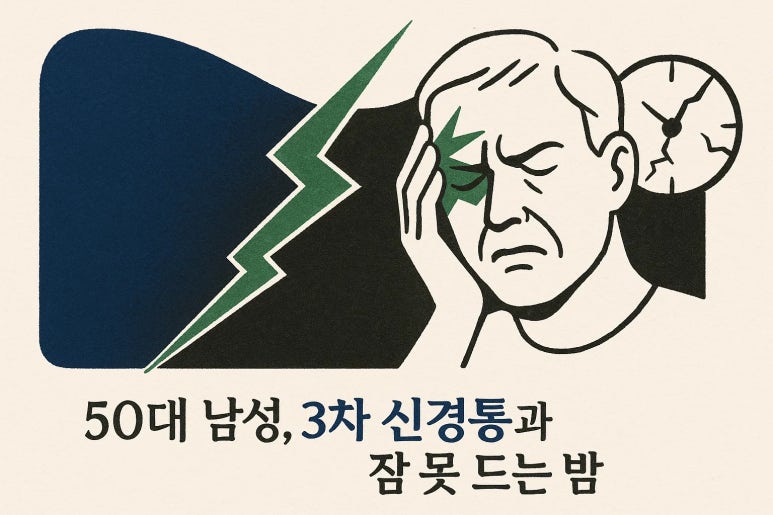
"I'm in Too Much Pain to Sleep" | 50-Year-Old Male, Trigeminal Neuralgia

“The Pain is So Severe I Can't Sleep” | Trigeminal Neuralgia in a Man in His 50s
|
“Doctor, I simply cannot sleep because of this pain. It feels like my face is being stabbed with a knife all night. Is this truly trigeminal neuralgia? Is there really no treatment for such intense pain?” |
|
The voice of Patient A, a man in his 50s entering the examination room, was laden with deep fatigue and despair. He mentioned that his reflection in the mirror felt unfamiliar. The excruciating facial pain was eroding his life, and especially at night, the pain would become even more pronounced, leading to sleepless nights. His eyes were deeply sunken from not having slept properly for several days and nights, and every word he spoke conveyed immense difficulty. |
Looking at Patient A, I suddenly asked myself these questions:
Why does our body activate such a terrible pain alarm, and why does it ring more intensely at night, precisely when we should be resting peacefully?
Is simply suppressing the pain the only solution?
Every time I hear the stories of many trigeminal neuralgia patients I see in my clinic, especially those like Patient A, I feel the need to delve deeper into the true nature of this suffering.
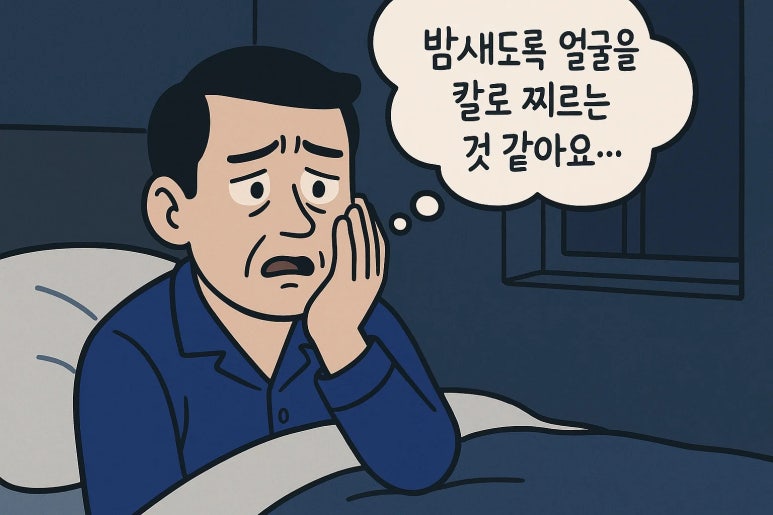
“Like being stabbed in the face with a knife...” Why does `facial pain` intensify at night?
In a word, Patient A's facial pain was excruciating.
He mentioned that even eating, brushing his teeth, or a cold breeze would trigger a pain like an electric shock or a knife stab in his left face.
Painkillers offered only temporary relief; as soon as their effect wore off, the pain would inevitably return, causing not only sleep disorders but also a complete breakdown of his daily life.
Trigeminal neuralgia is a condition caused by a problem in the trigeminal nerve, which is responsible for facial sensation, but why does it become more painful at night?
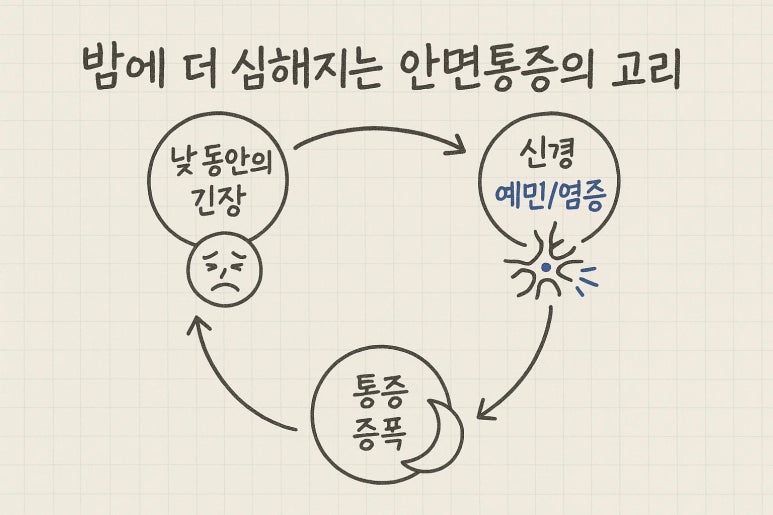
What I focused on was the result of nerves becoming more sensitive due to tension and activity during the day, and the accumulation of microscopic inflammation or pressure on surrounding tissues.
Our body is in 'activity mode' during the day and switches to 'recovery mode' at night.
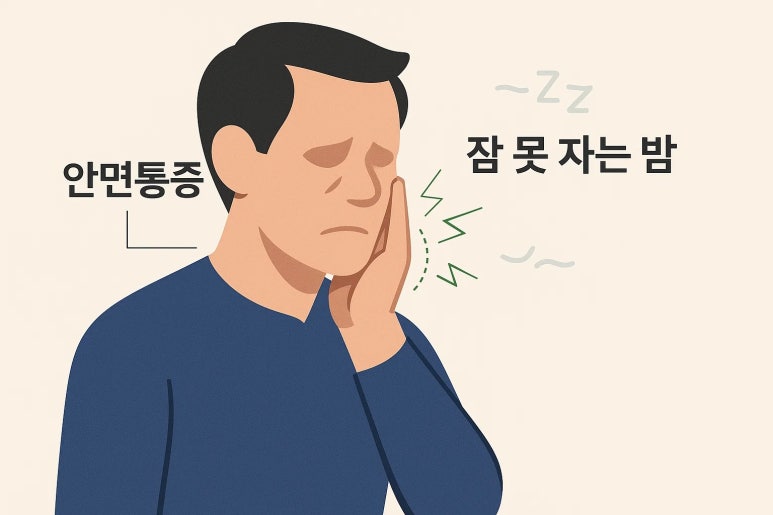
At this time, as the body's sensations become more sensitive and blood flow patterns change, subtle stimuli that were less perceived during the day can manifest as significant pain.
From a Traditional Korean Medicine (TKM) perspective, this is interpreted as 'qi and blood stagnation' or 'Yin-Yang imbalance.'
Night is the time for Yin, which should be quiet and stable, but the excessive activation of Yang energy, represented by pain, disrupts the body's balance.
Just as even a small pebble dropped into a calm lake can create significant ripples, during a night that should be peaceful, the hypersensitivity of the nerves is felt much more intensely.
I consider that beyond simply suppressing the nerves, this could also be a warning that the body's recovery system is not functioning properly.
`Trigeminal Neuralgia`, Why Pain Suppression Alone Isn't Enough
So, is simply managing this trigeminal neuralgia with painkillers a complete solution?
I don't view this problem merely as nerve compression.
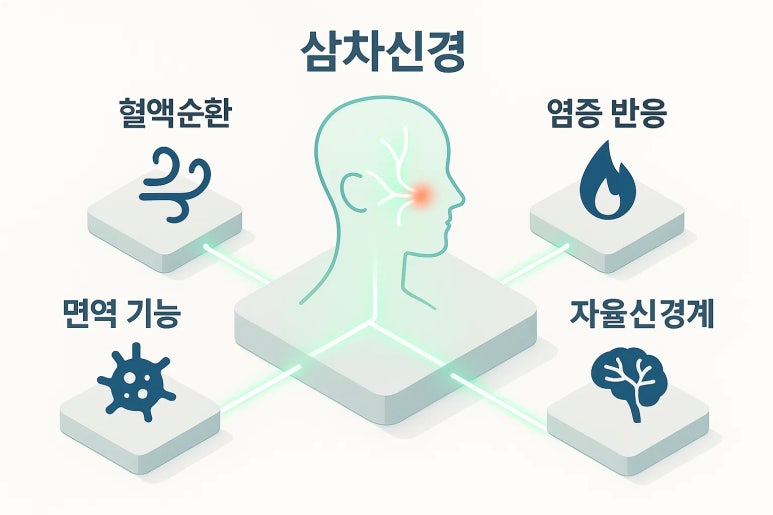
I believe we must consider the surrounding environment that affects the nerve, including blood circulation, inflammatory responses, immune function, and the overall balance of the body.
In Traditional Korean Medicine, trigeminal neuralgia is often seen as arising from blockages in specific meridians or imbalances in organ function.
For example, pain in the facial area is often interpreted in relation to stagnation in the Liver-Gallbladder meridian or Wind-Heat.
Behind the physical causes of nerve compression and inflammation, there is often a situation where the body's autonomic nervous system is overactivated due to stress or overwork, making the nerves even more hypersensitive.
Just as a sensitive antenna overreacts to small signals, our body's nervous system also changes its sensitivity in response to environmental changes.
Thus, I delve into the essence of trigeminal neuralgia from the perspective of both physical nerve damage and a systemic hypersensitive response.
`Sleepless Pain`, A 3-Step Approach to Recovery
When I approach the treatment of trigeminal neuralgia using herbal medicine, I don't aim solely for pain relief.
For patients suffering from sleepless pain like Patient A, I assist the body's recovery through three stages:
First, I use herbal remedies to calm overly excited nerves and alleviate inflammatory responses caused by pain.
Second, to address nighttime sleep disorders, I prescribe herbs that help relax the entire body and induce deep sleep.
This is not merely a sleeping pill, but a process to help the body regain its balance and rest comfortably on its own.
Third, in the long term, I focus on improving blood circulation around the nerves and promoting tissue recovery to prevent recurrence.
All these treatment processes are customized after a thorough analysis of each patient's constitution, symptom patterns, and lifestyle.
Patient A experienced gradual changes with consistent treatment.
Initially, he could only sleep for 2-3 hours at night, but gradually his sleep duration increased, and the intensity of his pain decreased.
Seeing the pain that had burdened this man in his 50s slowly dissipate, and witnessing him regain his rhythm and joy in life, was immensely rewarding for me.
Of course, the treatment of trigeminal neuralgia is not a magical overnight solution.
Sometimes it may feel slow, and there might be moments when the pain temporarily resurfaces.
However, what's important is to not give up during moments of suffering, to listen to one's body, and to steadfastly walk the path to recovery.
|
I hope that you can understand your own suffering and find the clues to recovery within it. To those who suffer from sleep disorders and sleepless pain due to the unwelcome guest of facial pain, I want to say: Your suffering is never yours alone, and there is certainly a way to understand it and move forward together. Even if it's not me, I sincerely recommend finding a companion who can carefully examine your entire body and listen to your voice. Within that, you will be able to become the complete master of your life once again. |