
Wheals appear after an increase in body temperature and sweating
When the body heats up and sweats, an immune response may occur in the skin, resulting in small wheals, redness, itching, or a stinging sensation.
Cholinergic urticaria is a type of induced hives where small wheals appear in situations where body temperature rises and sweating occurs, such as during exercise, in hot environments, during hot baths, after eating spicy foods, or under stress. Various mechanisms have been proposed, including reactions between acetylcholine and skin mast cells, increases in core body temperature, and reactions to sweat components, but the exact cause has not yet been confirmed. If you experience shortness of breath, wheezing, dizziness, or swelling of the lips or tongue during exercise, do not wait for it to resolve as a simple skin reaction; you must receive an emergency evaluation for anaphylaxis.
Guide to the Causes of Cholinergic Urticaria
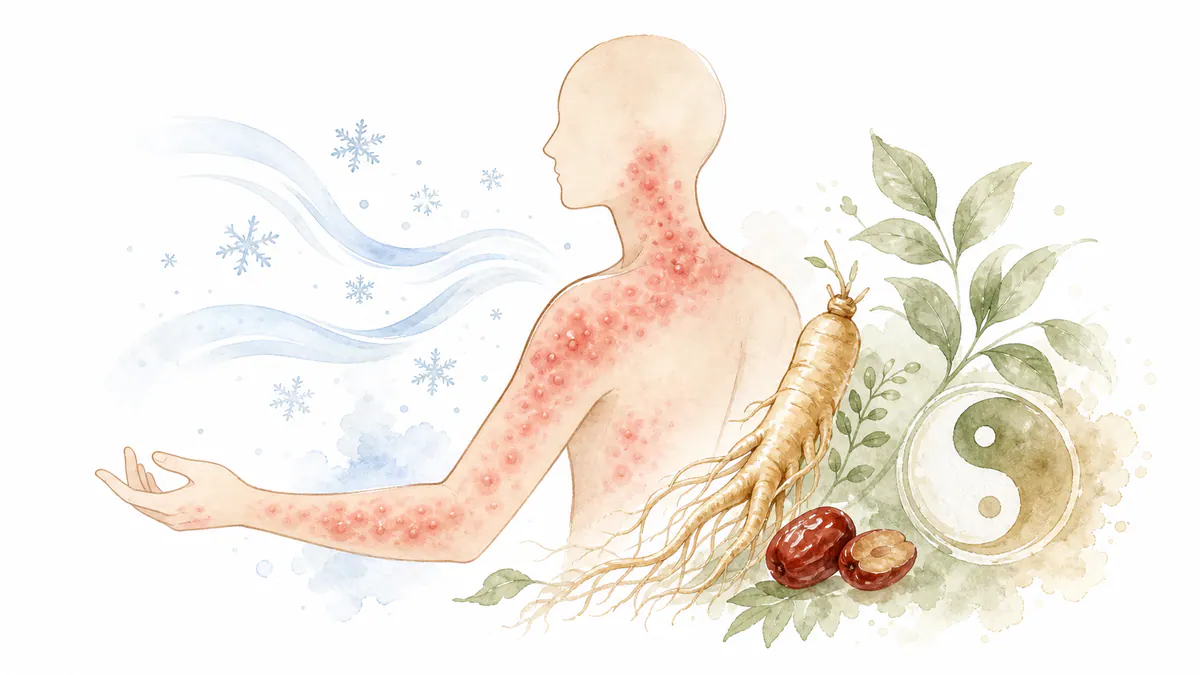
Distinguishing Triggers and Risk Levels
| Occurrence Scenario | Possible Interpretation | First Step |
|---|---|---|
| Small wheals appearing after starting to sweat from exercise | Possible typical pattern induced by increased body temperature and sweating | Record exercise intensity, time of onset and disappearance, and photos for a dermatology consultation |
| Repeated in hot showers, saunas, or warm indoor environments | Situation where body temperature and sweating have increased due to high-temperature exposure | Compare reactions by lowering the temperature, but avoid excessive self-induced testing |
| Occurs after tension, anger, anxiety, or eating spicy food | Possibility that emotional stimulation or increased sweating is the trigger | Record the situation and other accompanying factors; do not conclude it is caused by a single factor |
| Tightness in the throat, difficulty breathing, dizziness, or systemic swelling during exercise | Possibility of severe reactions such as exercise-induced anaphylaxis | Stop exercising immediately and call 119 or go to the emergency room |
What the clinic checks first
In cholinergic urticaria, the 'cause' should be understood by separating the triggers that raise body temperature and sweating from the mechanism of why wheals (hives) occur. While exercise is the most common trigger, this does not mean that exercise itself is the sole root cause of the disease. Since reactions to the same heat can vary, we check the onset time, duration, and skin symptoms together.
When the body heats up and sweats, an immune response may occur in the skin, resulting in small wheals, redness, itching, or a stinging sensation.
There are explanations that acetylcholine released from nerve endings and hypersensitivity of skin mast cells are involved, but this mechanism has not been confirmed in all patients.
There are also hypotheses that the change in core body temperature itself or an immune response to sweat components acts as the trigger; therefore, it is not concluded that one exact cause has been determined at this time.
Exercise is the most common trigger. Rather than the type of exercise, it is important to compare the time when body temperature rises and sweating begins with the time the wheals appear.
Hot weather, moving into a warm room, and hot showers, baths, or saunas can raise body temperature and sweating, triggering symptoms.
Stress, anxiety, anger, and spicy foods can also increase sweating and induce wheals. We do not excessively restrict the diet by concluding that a specific food is the sole cause.
It can occur not only during running or high-intensity activities but also during any movement that makes the body hot and causes sweating. Record how many minutes after starting exercise the symptoms appeared.
Hot outdoor or indoor environments, as well as hot showers, baths, and saunas, increase core body temperature and sweating. These are distinguished from other types of hives that only appear on areas touched by hot water through a medical examination.
Wheals may also appear in environments that increase body temperature and sweat, such as during a fever or when wearing non-breathable clothing. Avoid self-testing by intentionally overheating your body to find the cause.
Wheals may appear as body temperature and sweat increase following tension, anger, or anxiety, but not all symptoms should be attributed to psychological factors. Both the triggering situation and the skin/systemic reactions should be observed together.
Wheals may appear after eating spicy food causes the face and body to flush and sweat. Rather than broadly restricting all foods, record the recurring sequence of events.
Since lack of sleep or multiple environmental factors may overlap, check if the symptoms recur in the same situation. Dermatology clinics diagnose based on medical history and, if necessary, the triggering situations.
Cholinergic urticaria usually presents as small wheals that appear quickly after body temperature rises and subside once you rest and cool down. Keeping photos of the lesions and recording their duration helps in differential diagnosis.
If wheezing, shortness of breath, throat tightness, dizziness, a feeling of fainting, or systemic swelling occur during exercise, do not wait for it to resolve as simple hives; seek emergency help immediately.
Dermatology and allergy clinics distinguish acute systemic reactions from other types of induced hives. Consultations regarding the supportive role of Korean herbal medicine are only for chronic, recurring itching where acute risks have been ruled out.
Consultation on the causes of cholinergic urticaria at Baekrokdam
We first determine the need for an emergency evaluation by checking for shortness of breath, wheezing, throat tightening, lip swelling, or dizziness during exercise.
By comparing photos of wheals and the time of onset and resolution with exercise, heat, showering, or emotional changes, we avoid concluding that a single food or stressor is the sole cause.
While maintaining your diagnosis and safety plan, we track recurring itching and limitations in sleep and activity to consult on the supportive role of herbal medicine treatment.
Please prepare photos of wheals, the timing of onset and resolution relative to exercise, showering, or heat exposure, whether you experienced shortness of breath or dizziness, and records of dermatology diagnoses and medications, then consult with Baekrokdam.
When to seek urgent care
It is a type of induced urticaria where an immune response occurs following an increase in body temperature and sweating. Various mechanisms have been suggested, such as reactions involving acetylcholine, mast cells, and sweat components, but a single definitive cause has not yet been established.
Yes, it can. Hot showers, baths, saunas, and hot environments are common triggers that increase body temperature and sweating. A medical evaluation can distinguish this from other reactions that occur only where water touches the skin.
Emotional stimulation can raise body temperature and sweating, which may trigger symptoms, but it is not concluded to be the sole root cause. Please record when the symptoms started and whether exercise, heat, or food were involved.
If you experience difficulty breathing, wheezing, throat tightness, swelling of the lips or tongue, dizziness, or a feeling of fainting, stop exercising immediately and seek help from 119 or the emergency room.
Content reviewed:
This information supports, but does not replace, diagnosis or treatment by a qualified healthcare professional.