
Cold stimulation activates mast cells
When inflammatory substances such as histamine are released, skin blood vessels dilate and tissues swell, resulting in itchy wheals and deep angioedema.
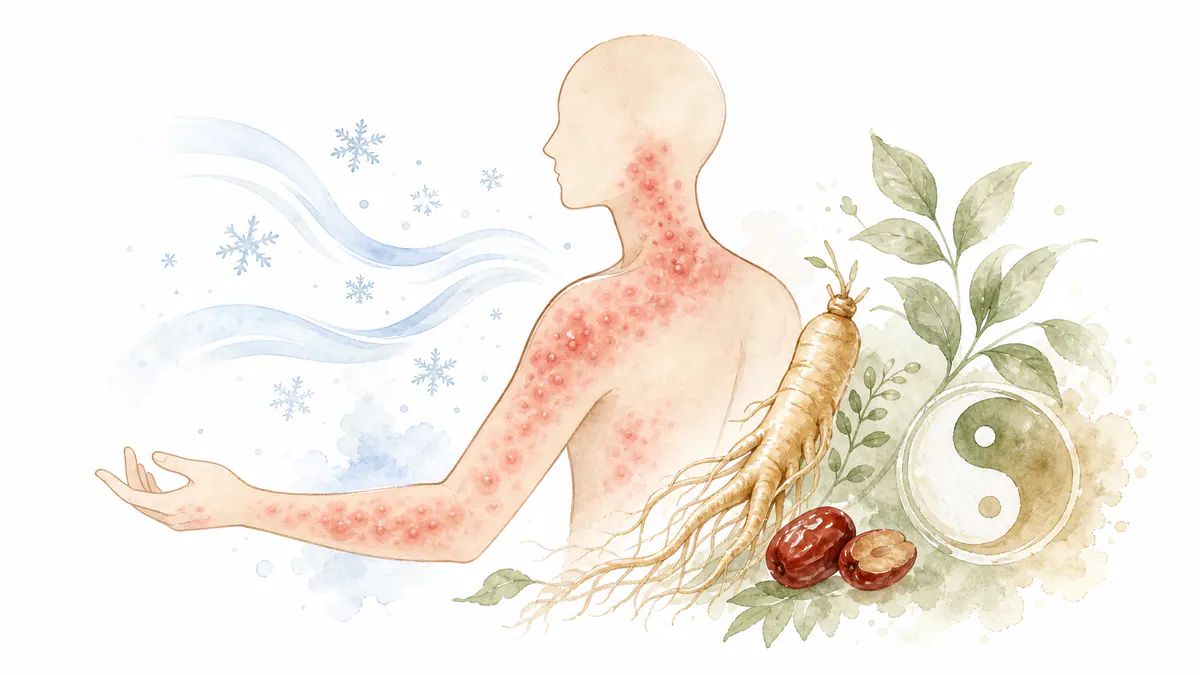
Cold urticaria is a chronic inducible urticaria where cold air, cold water, or cold objects stimulate mast cells in the skin to release inflammatory substances such as histamine, resulting in wheals (hives) and angioedema. In most cases, the exact reason why certain individuals react to cold stimuli is unknown, though it can rarely be associated with blood or infectious diseases. It is not attributed solely to a specific constitution, such as having a "cold body" or weak immunity. There is a difference in risk between localized contact, such as touching ice, and situations where the entire body cools rapidly, such as swimming in cold water; systemic cooling can cause severe reactions like difficulty breathing, hypotension, or fainting.
Guide to the Causes of Cold Urticaria
Distinguishing Trigger Situations
| Exposure Scenario | Possible Causal Flow | First Steps |
|---|---|---|
| Swelling only at the site of contact with a cold cup or object | Localized cold-stimulus mast cell reaction | Record photos of the exposed area, onset, and recovery |
| Wide wheals after cold wind or air conditioning | Broad skin cooling reaction | Record clothing, temperature, and extent of symptoms |
| Swelling of lips or throat after cold drinks | Possible angioedema from cold stimulation of mucous membranes | Seek immediate medical evaluation for breathing or swallowing symptoms |
| Systemic wheals or feeling of fainting after swimming in cold water | Risk of systemic cold-induced anaphylaxis | Immediate emergency response and avoidance of re-exposure |
| Accompanied by fever, joint pain, or systemic weakness | Evaluation for rare associated diseases required | Medical examination based on patient history |
What the clinic checks first
Cold urticaria is a reaction where mast cells in the skin release inflammatory substances following cold stimulation. We categorize the trigger temperature, extent, and systemic symptoms, and evaluate rare associated diseases only when there are clues in the medical history.
When inflammatory substances such as histamine are released, skin blood vessels dilate and tissues swell, resulting in itchy wheals and deep angioedema.
When a large area of skin is cooled simultaneously, such as during swimming in cold water, there is an increased risk of systemic wheals and reactions affecting breathing and blood pressure.
It is common that no clear underlying cause is found, and the condition is not attributed to diet, hygiene, or willpower.
Not only the exposure temperature but also the surface area of the skin and the speed at which body temperature drops can affect the extent of symptoms and the level of risk.
Working with refrigerators, ice makers, or cold water, as well as commuting in winter or strong air conditioning, can be repeated triggers that are difficult to avoid.
Associated diseases are evaluated only when there are systemic clues such as fever, joint pain, or severe weakness; extensive testing is not performed for all patients.
When histamine is released from mast cells following a cold stimulus, the exposed area may swell, itch, or feel a burning sensation.
Wheals can become more distinct as the skin warms up again, so it is helpful to take photos both immediately after exposure and during the recovery process.
The core issue is an inducible urticaria where mast cells overreact to cold stimuli; simply keeping warm does not guarantee safety.
Check whether reactions recur at the boundary of contact with cold objects or water, and how much hand swelling interferes with work functions.
Rapid cooling of the entire body can lead to systemic wheals, difficulty breathing, hypotension, or fainting, so do not test this alone.
If you have a history of reactions in the mouth or throat, or if a procedure is planned that may lower your body temperature, you must inform medical staff of your cold urticaria and your emergency response plan.
If there are clues that cannot be explained by urticaria alone, such as fever, joint pain, or general weakness, an evaluation for blood or infectious diseases is recommended.
If you have a history of systemic reactions, do not attempt to reproduce them yourself with ice or cold water; tests should be performed by medical staff in a safe environment.
Antihistamines and necessary emergency adrenaline/action plans take priority; Baekrokdam only provides supportive consultation for the burden of chronic daily management.
Consultation on the causes of cold urticaria at Baekrokdam
We check for swelling of the lips, tongue, or throat, as well as respiratory, consciousness, or abdominal symptoms and whether the patient has been swimming in cold water, to ensure emergency response is not delayed.
We examine the onset and extent of wheals following exposure to cold objects, wind, water, or air conditioning, as well as systemic symptoms and the results of cold stimulus tests performed by medical staff.
Rather than replacing antihistamines or emergency plans, we track improvements in itching, sleep, winter outings, and the ability to perform work in refrigerated environments.
Please prepare for your consultation by providing details on the cold exposure scenario, photos of the skin, the onset and recovery of wheals, any symptoms involving the lips, throat, breathing, dizziness, or abdomen, your response to antihistamines (including drowsiness), and any restrictions on work or swimming.
When to seek urgent care
While the mechanism by which mast cells release histamine after cold stimulation is known, it is mostly unknown why this occurs in specific individuals.
Because large areas of the skin and the entire body cool down rapidly, which can lead to systemic reactions affecting breathing, blood pressure, and consciousness, beyond localized wheals.
In rare cases, it may be associated with infections or blood disorders. Medical staff will determine the necessary tests when there are clues such as fever, joint pain, or general weakness.
The elimination of the cause cannot be guaranteed. Avoiding cold exposure, using antihistamines, and having an emergency plan should be prioritized; Korean herbal medicine treatment is within the scope of supportive care for chronic discomfort.
Content reviewed:
This information supports, but does not replace, diagnosis or treatment by a qualified healthcare professional.