
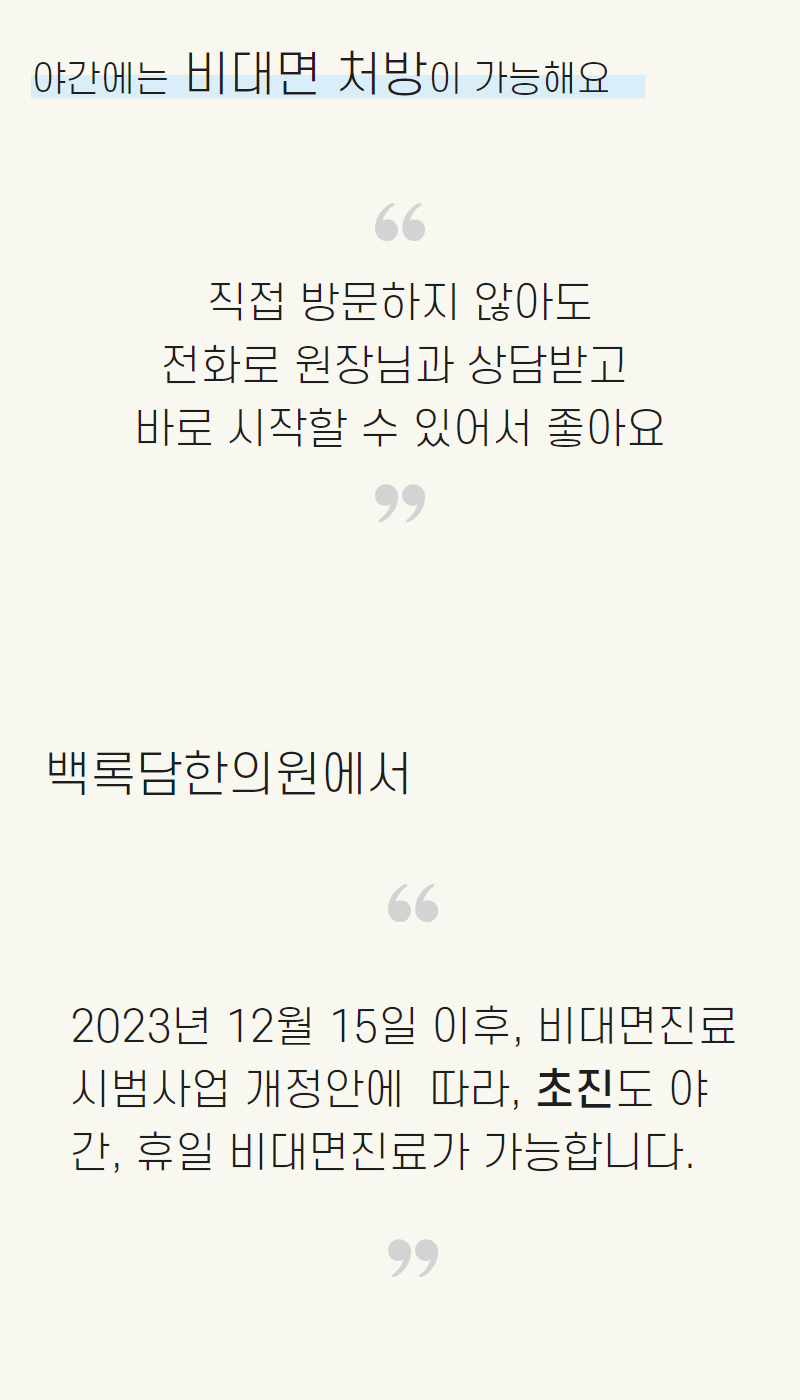
비대면 vs 대면
Q. Is it more effective to just receive medication via telehealth or to visit the clinic for an in-person consultation?
A.
While telehealth prescriptions are incredibly convenient for busy professionals and save significant time, weight loss requires an accurate assessment of your current physical state. In-person visits allow for real-time diagnosis through pulse and tongue examination to identify imbalances. Depending on your situation, we recommend visiting the clinic for your initial consultation to ensure a tailored approach.
📝 Detailed Answer
I completely understand the desire for efficiency, as many of us have postponed self-care due to hectic schedules. However, relying solely on medication without a comprehensive diagnosis can sometimes lead to suboptimal results.
In Traditional Korean Medicine (TKM), weight loss is not merely about suppressing appetite. It is a process of clearing 'Dam-eum' (痰飮, accumulated metabolic waste/phlegm-fluid) and resolving 'Eo-hyeol' (瘀血, blood stasis or stagnant blood) that hinders circulation. For patients with 'Bi-heo' (脾虛, deficiency of the Spleen/digestive function), using potent appetite suppressants without considering their weakness can lead to adverse effects, such as extreme fatigue and loss of vitality.
These subtle physiological nuances are most accurately captured during a physical examination. While telehealth offers convenience, in-person visits offer precision. For your reference, here is a comparison:
| Category | Telehealth Prescription | In-Person Consultation |
| :--- | :--- | :--- |
| Convenience | Very High (Time-saving) | Moderate (Requires visit) |
| Diagnostic Precision | Based on questionnaires/consults | Includes pulse, tongue, and palpation |
| Customization | Focused on initial/standard scripts | Immediate adjustments based on changes |
| Psychological Support | Text/Phone-based | Emotional rapport through face-to-face interaction |
| Recommended For | Maintenance or repeat prescriptions | Initial diagnosis and constitution analysis |
If you are looking for a prescription that fits your body like a 'custom-tailored suit,' visiting the clinic for your first appointment is the most efficient choice in the long run.
#comparison
#comparison-table

Expert Verified
Dr. Yeonseung Choe
Chief Director