
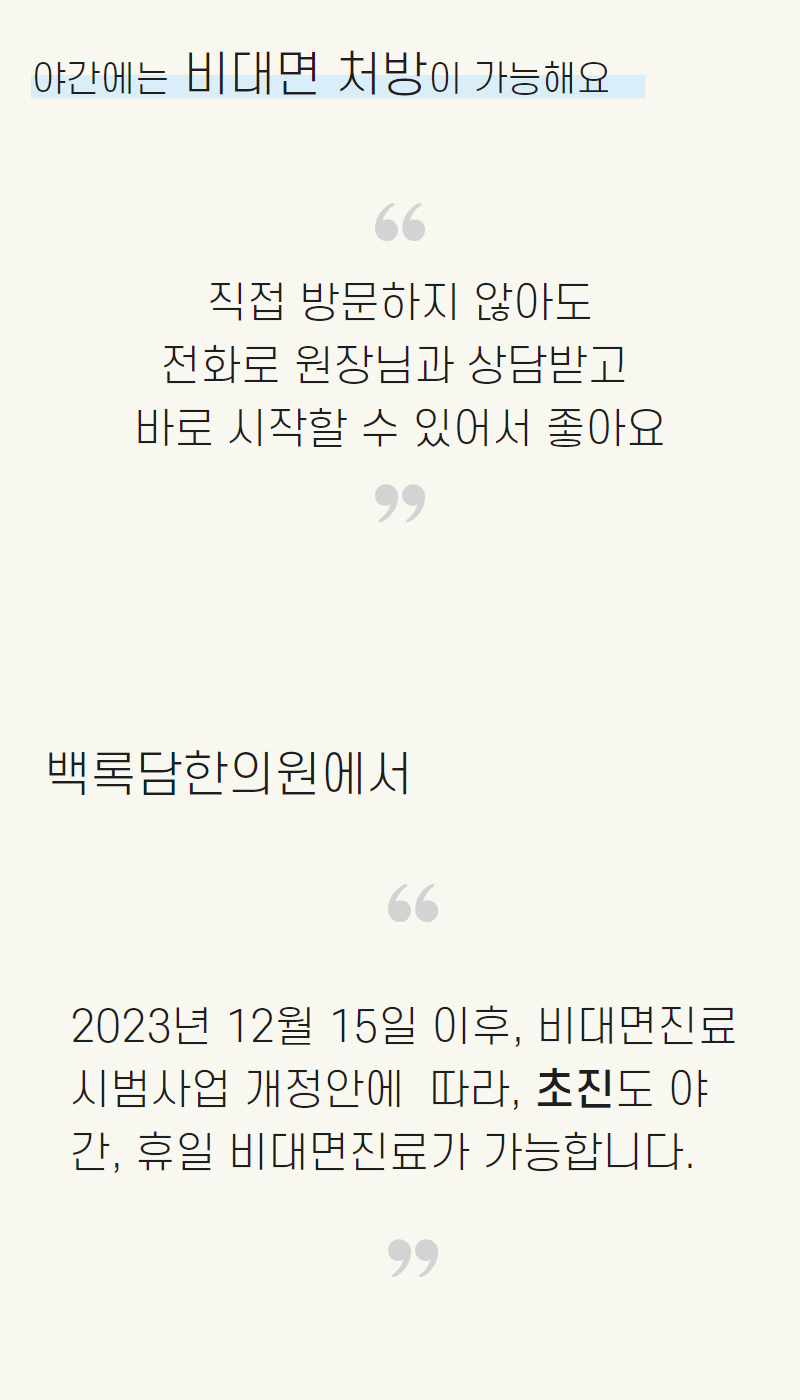
비대면 vs 대면
Q. I see so many ads for remote weight loss herbal medicine prescriptions lately. What’s the real difference between visiting a clinic in person and getting a prescription over the phone?
A.
It is essentially a choice between convenience and precision. While tele-consultations are highly efficient for those with busy schedules, in-person visits allow for a multidimensional assessment of your health. Through direct methods like tongue and pulse diagnosis, we often discover underlying internal issues that patients might not even be aware of, leading to a much more accurate and personalized prescription.
📝 Detailed Answer
While tele-consultations are legally permitted, as a practitioner of Traditional Korean Medicine (TKM), I often feel a sense of professional caution regarding them. This is due to the importance of the 'Four Examinations' (Sajin), the fundamental diagnostic pillars of TKM: Inspection (looking), Listening and Smelling, Inquiry (questioning), and Palpation (touching). In particular, Tongue Diagnosis (Seoljin) and Pulse Diagnosis (Maekjin) are incredibly difficult to perform accurately over a screen or phone line.
Subtle signs of 'Phlegm-fluid' (Damyum, metabolic waste) or 'Blood Stasis' (Eohyeol, stagnant blood) are reflected in a patient's complexion, breathing rhythm, and pulse tension—signals that are easily missed remotely. For instance, if a patient has 'Spleen Deficiency' (Biheo, weak digestive function), the herbal dosage must be adjusted with extreme precision. Without this, the patient may suffer from side effects like nausea or insomnia. Facing a patient directly allows for a thorough examination, ensuring that the effort you take to visit the clinic results in a truly effective treatment.
| Category | In-Person Consultation | Tele-Consultation |
| :--- | :--- | :--- |
| Diagnostic Method | Direct exams (Tongue & Pulse diagnosis) | Inquiry-based (Patient's verbal answers) |
| Precision | Multidimensional health & constitution check | Relies on subjective descriptions |
| Safety | Immediate response to potential side effects | Limited real-time feedback |
| Depth of Care | Includes lifestyle and habit correction | Brief, core-focused consultation |
| Convenience | Requires physical travel | High; accessible from any location |
#comparison
#comparison-table

Expert Verified
Dr. Yeonseung Choe
Chief Director