
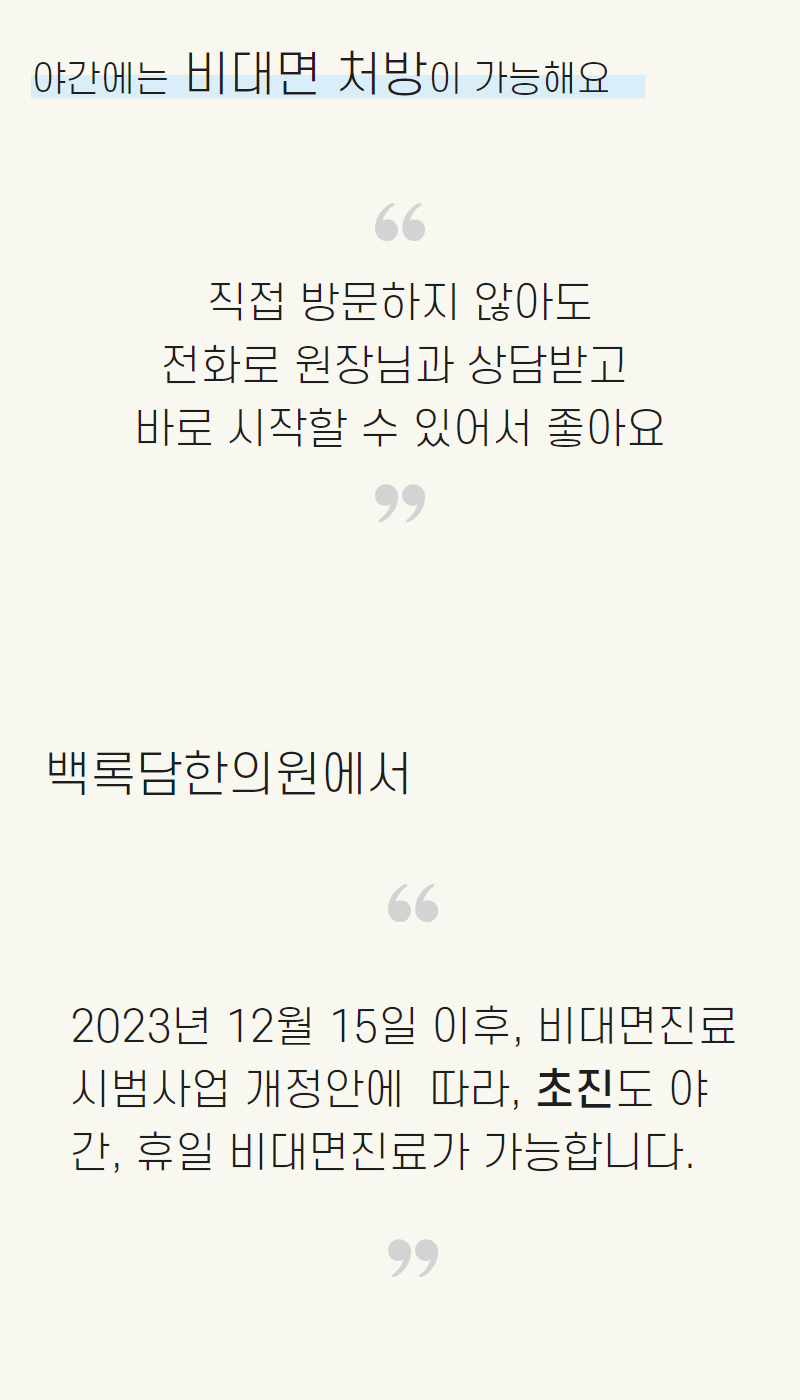
비대면 vs 대면
Q. I see a lot of non-face-to-face prescriptions for weight loss herbal medicine these days. What is the difference between that and visiting a clinic in person?
A.
Non-face-to-face prescriptions are a convenient option for those prioritizing time and cost. However, successful weight loss requires an accurate understanding of your current physical state, not just appetite suppression. In-person consultations allow me to personally check your pulse and assess edema and body type to provide a precisely tailored prescription for your specific needs.
📝 Detailed Answer
Having been a busy professional myself, I completely understand the appeal of the convenience offered by non-face-to-face services. However, from the perspective of Traditional Korean Medicine (TKM), the underlying cause of weight gain differs significantly from person to person, even among those with the same body weight.
For some, weight gain is caused by 'Eohyeol' (瘀血, blood stasis), where poor circulation leads to the accumulation of waste. For others, it is 'Dameum' (痰飮, phlegm-fluid retention), where impaired fluid metabolism causes systemic swelling. Furthermore, those with 'Biheo' (脾虛, Spleen Deficiency/weak digestive function) may experience severe nausea if they take strong appetite suppressants. Having learned from my own early clinical experiences, I emphasize a more meticulous approach to avoid these pitfalls.
Here is a summary of the differences between non-face-to-face prescriptions and in-person consultations:
| Category | Non-Face-to-Face | In-Person Consultation (Baengnokdam) |
| :--- | :--- | :--- |
| Accessibility | Very convenient (App/Phone) | Requires visit (Time consuming) |
| Diagnostic Method | Focused on questionnaires | Precise diagnosis via Mang-Mun-Mun-Jeol (Observation, Listening/Smelling, Questioning, Palpation) |
| Customization | Based on standardized prescriptions | Individually tailored by constitution and symptoms |
| Side Effect Management | Adjusted after symptom reporting | Real-time monitoring and immediate response |
| Physical Assessment | Not possible | Assessment of edema, muscle mass, and body type |
Rather than just starting quickly, it is more important to find a sustainable method that does not strain your body. If you wish to lose weight healthily by accurately reading your body's signals, I recommend visiting the clinic at least once for an in-depth consultation.
#comparison
#comparison-table

Expert Verified
Dr. Yeonseung Choe
Chief Director