
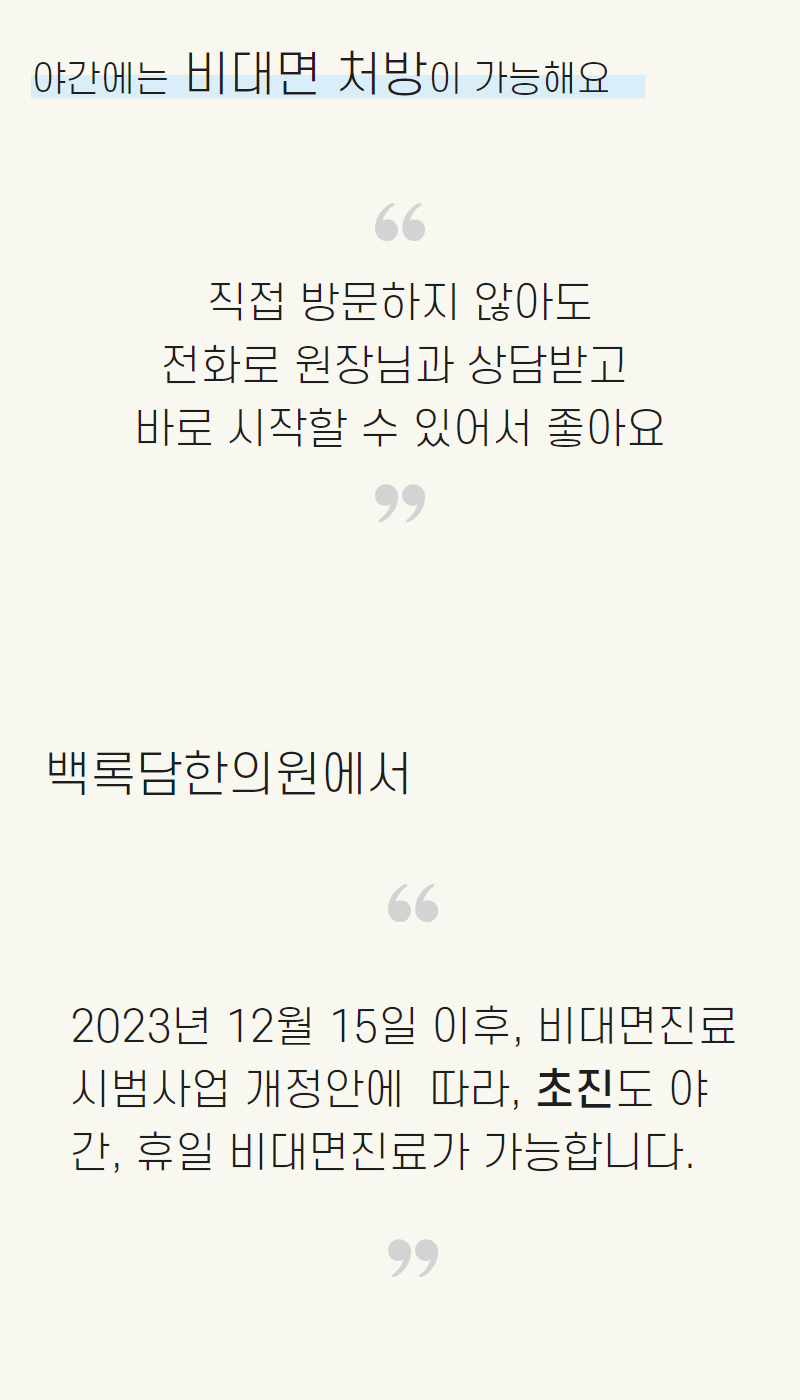
비대면 vs 대면
Q. There are so many remote diet herbal medicine options these days. Is there really a difference between those and visiting a clinic in person?
A.
Simply put, it is a trade-off between convenience and precision. While remote consultations are attractive for busy professionals, weight loss is not just about suppressing appetite; it is about correcting systemic imbalances. By conducting a physical examination and pulse diagnosis in person, I can accurately determine if your body is retaining water or if your vital energy is depleted, allowing for a 'tailor-made' prescription specifically suited to your current condition.
📝 Detailed Answer
It is true that remote consultations are incredibly convenient. However, the core of Traditional Korean Medicine (TKM) lies in 'Byun-jeung' (辨證), the process of comprehensive pattern identification to find the root cause of an ailment. There are many critical physiological markers that a questionnaire simply cannot capture.
For example, some patients suffer from 'Dam-eum' (痰飮, phlegm-rheum), where accumulated waste causes heaviness and edema, while others have 'Eo-hyeol' (瘀血, blood stasis) that hinders metabolism due to poor circulation. If a patient is in a state of 'Bi-heo' (脾虛, Spleen deficiency) with weakened digestive capacity, using a generic appetite suppressant without balancing it can lead to severe lethargy and dizziness. Having experienced the importance of these nuances during my own training, I cannot overemphasize this point.
Here is a comparison between in-person consultations and remote prescriptions:
| Category | In-person Consultation | Remote Prescription |
| :--- | :--- | :--- |
| Diagnostic Method | Inquiry + Tongue/Pulse Diagnosis + Physical Exam | Online Questionnaire + Consultation |
| Prescription Precision | Real-time customized prescription based on condition | Prescription based on standardized guidelines |
| Side Effect Management | Immediate feedback and herbal ingredient adjustment | Indirect adjustment via messages/phone |
| Physical Assessment | Direct observation of edema, muscle mass, skin tone | Reliance on patient's subjective description |
| Psychological Support | Direct communication and motivation from the doctor | Efficiency-driven, rapid prescription |
If your only goal is to lower the number on the scale, remote options may suffice. However, if you want to lose weight healthily—without the fear of the yo-yo effect or side effects—while truly understanding your constitution, visiting the clinic in person for a thorough evaluation is the most accurate approach.
#comparison
#comparison-table

Expert Verified
Dr. Yeonseung Choe
Chief Director