
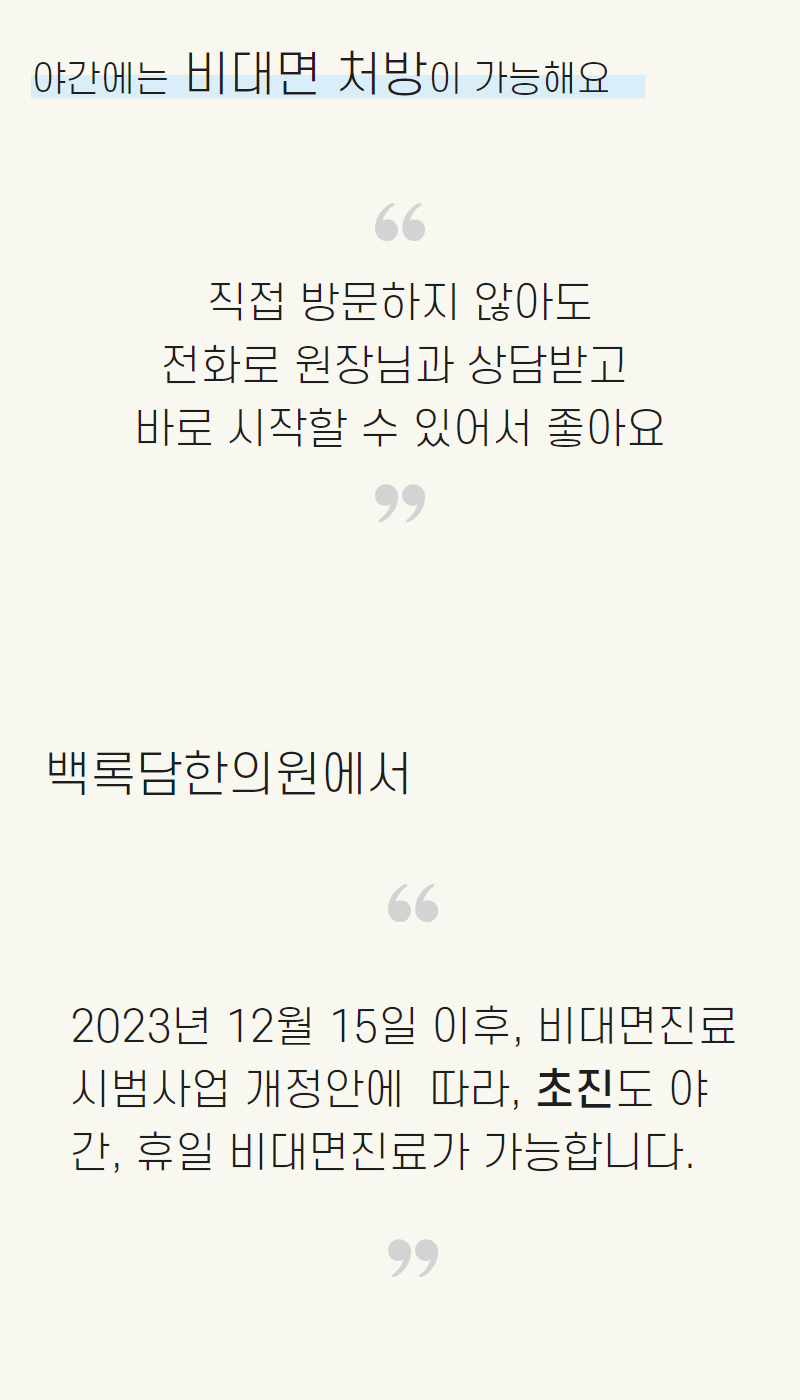
비대면 vs 대면
Q. I've noticed there are many non-face-to-face diet herbal medicine options these days. Is there a big difference compared to visiting a clinic in person?
A.
Remote prescriptions are incredibly convenient for busy professionals, and I understand the appeal of efficiency. However, weight loss is more than just reducing a number on the scale; the core lies in identifying the root cause of why your body is retaining weight. The primary advantage of an in-person visit is that I can personally perform pulse diagnosis and verify your constitution to design a truly 'personalized' treatment plan. Ultimately, it is a choice between convenience and diagnostic precision.
📝 Detailed Answer
I completely understand the desire for efficiency, as I have experienced the frustration of trial and error myself. In Traditional Korean Medicine (TKM), dieting is not simply about suppressing appetite; it is a process of revitalizing your diminished metabolic capacity.
Constitutions vary greatly from person to person. A patient with an accumulation of Phlegm-Fluid (Dameum/痰飮) requires a fundamentally different prescription than one with Blood Stasis (Eohyeol/瘀血) causing poor circulation. Furthermore, if a patient has a Spleen Deficiency (Bi-heo/脾虛) resulting in weak digestion, using overly potent herbs without a proper diagnosis can often lead to nausea and discomfort. Only through a physical examination can these details be captured to minimize potential side effects.
Here is a comparison of the two approaches:
| Category | Remote Prescription | In-Person Consultation (Baengnokdam) |
| :--- | :--- | :--- |
| Accessibility | Extremely convenient | Requires travel time |
| Constitutional Diagnosis | Questionnaire-based | Inspection, Inquiry, and Pulse Diagnosis (Mang, Mun, Jeol) |
| Precision | Standardized prescriptions | Highly detailed individual adjustments |
| Side Effect Management | Post-prescription feedback | Immediate reaction check and modification |
| Scope of Treatment | Centered on herbal medicine | Integration of acupuncture, Chuna, etc. |
While there is no single 'correct' answer, if you wish to understand your body's exact condition and lose weight safely, I encourage you to visit the clinic. After all, a successful diet is a journey of discovering and understanding your own body.
#comparison
#comparison-table

Expert Verified
Dr. Yeonseung Choe
Chief Director