
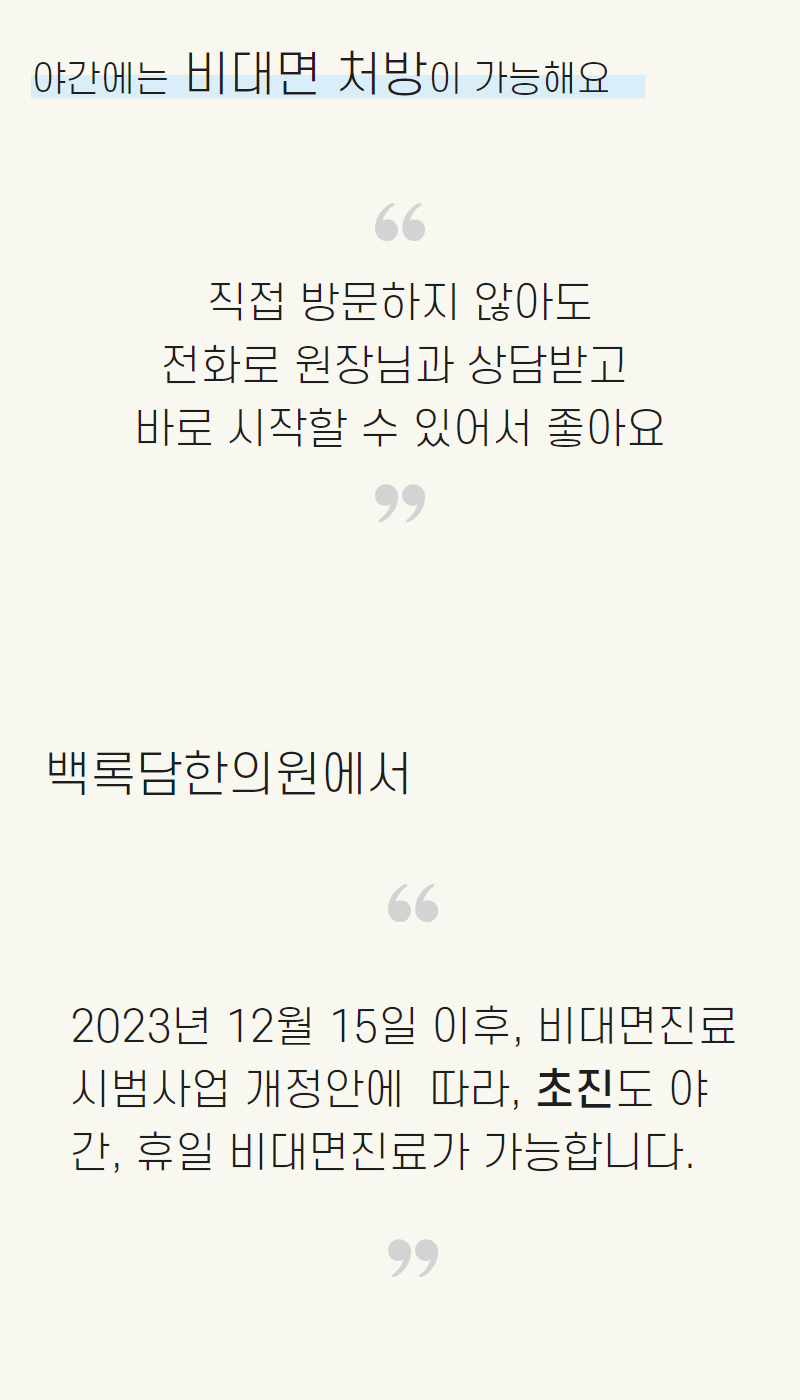
비대면 vs 대면
Q. I'm looking for a weight loss clinic in Hanam. I've seen many remote prescription options lately; what exactly is the difference between an in-person consultation and a remote one?
A.
While remote consultations offer great convenience for busy professionals, herbal weight loss medicine is much more than a simple supplement; its core lies in customized prescriptions based on an accurate diagnosis of your current physical state. While remote services excel in accessibility, in-person visits remain the gold standard for precise examination and minimizing the risk of side effects through direct clinical assessment.
📝 Detailed Answer
As a practitioner who once struggled with weight management myself, I’ve learned that success depends on how you manage internal 'waste products.' In Traditional Korean Medicine (TKM), we call these waste products Dameum (痰飮, phlegm-fluid) and Eohyeol (瘀血, blood stasis). When these accumulate and obstruct the circulation of Qi and blood, your body becomes resistant to weight loss regardless of calorie restriction.
Remote consultations rely primarily on phone interviews, which can make it difficult to detect subtle physical changes. In contrast, in-person visits allow for a more sophisticated diagnosis using Maekjin (脈診, pulse diagnosis) and Seoljin (舌診, tongue diagnosis). This helps us clearly distinguish whether your condition is due to Biheo (脾虛, spleen deficiency) or Qi stagnation caused by stress.
| Comparison | In-Person (Clinic Visit) | Remote Prescription |
| :--- | :--- | :--- |
| **Examination** | Precise tests (InBody, BP, Pulse, Tongue) | Self-survey and phone consultation |
| **Customization** | Fine-tuned to constitution and condition | Standardized phased prescriptions |
| **Safety** | Real-time monitoring of herbal reactions | Potential delay in feedback for side effects |
| **Convenience** | Requires travel and scheduled time | Accessible anywhere without location limits |
| **Motivation** | Psychological support via regular checkups | Highly dependent on individual willpower |
If this is your first time trying a clinical diet or if you have experienced side effects from medication previously, I highly recommend an in-person visit. Taking the time to accurately assess your condition is the safest path to success. I will be here to help you navigate this journey with care.
#comparison
#comparison-table

Expert Verified
Dr. Yeonseung Choe
Chief Director