Intermittent Fasting: 16:8 Schedule, Water, and Portions

Table of Contents
Recently, many people in the clinic ask, "Doctor, I don't eat after 8 PM, so why is my weight the same?" Most people have started intermittent fasting but are confused about how to eat or if they can drink water during the fasting window. Today, I will address the questions I frequently receive in the clinic.
Why It Turns Into 'Intermittent Binge Eating' and Loses Effectiveness
Intermittent fasting is a dietary method where you eat only during specific times and maintain a fast for the rest of the day. Data from the Korean Nutrition Society (kns.or.kr) suggests it is somewhat effective for weight and body fat reduction, but warns that if the approach is wrong, it can lead to "intermittent binge eating," which may harm your health.
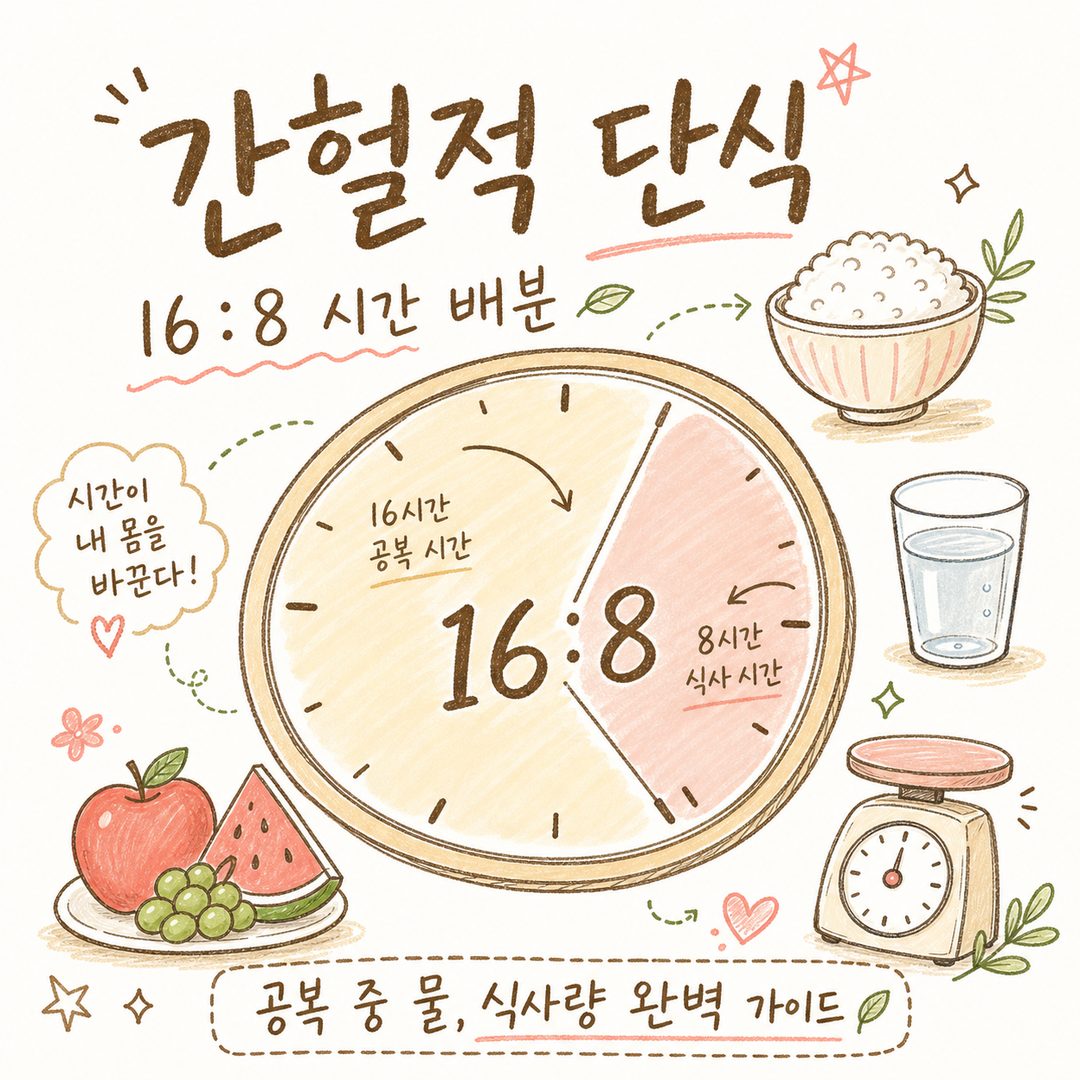
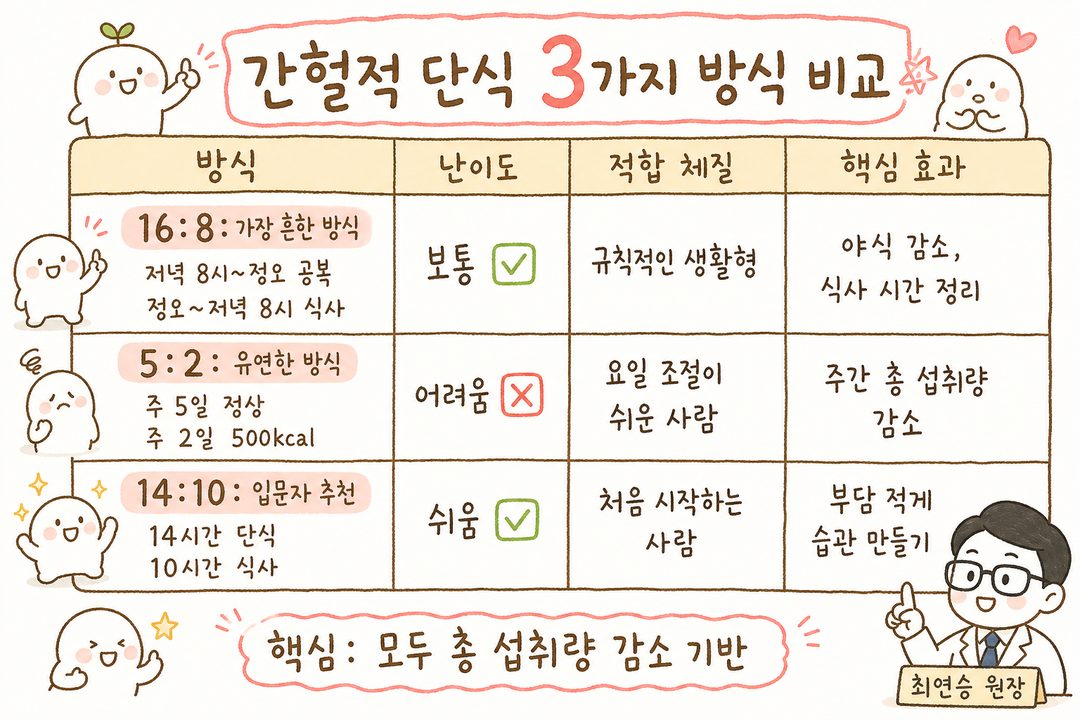
The most common method in Korea is 16:8. This involves a 16-hour fast and an 8-hour eating window, typically emptying the stomach from 8 PM until noon the next day and eating only between noon and 8 PM. Other variations include the 5:2 method (eating normally for 5 days and restricting to 500 kcal for 2 days), as well as 14:10, 18:6, and 23:1 (one meal a day).
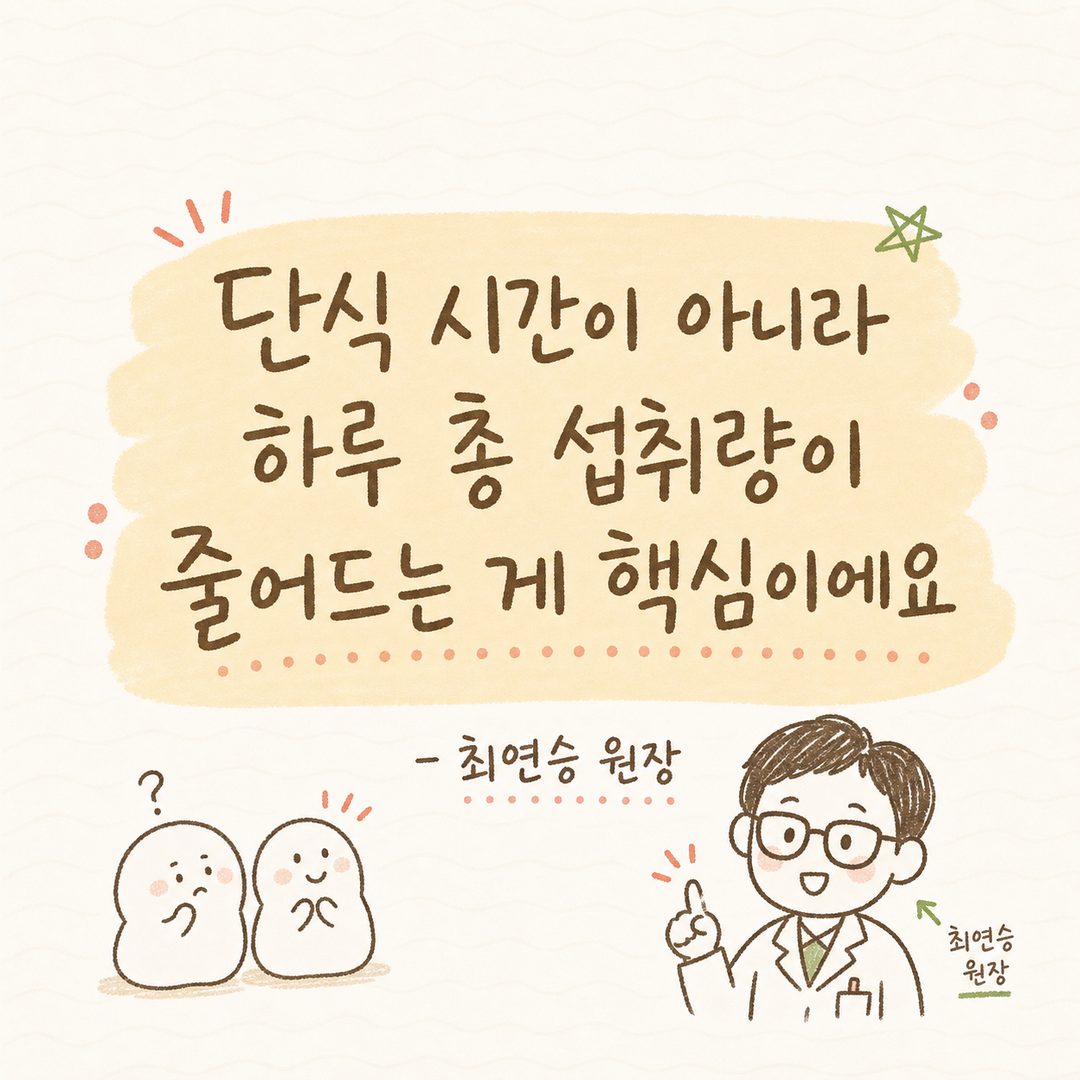
The problem arises when people focus so much on the "fasting time" that they overeat during the eating window. If the total calorie intake does not decrease, the effectiveness almost disappears. Please remember that the key is reducing your total daily intake, not just the length of the fasting period.
How Much Weight Can You Actually Lose?
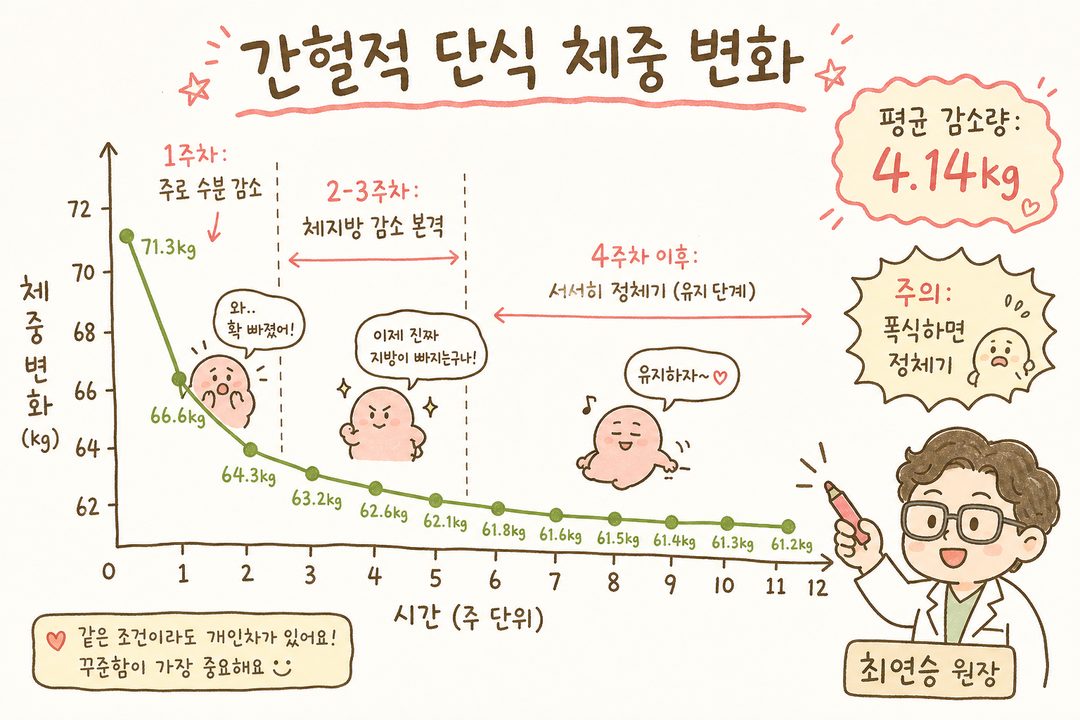
Looking at the numbers helps put things into perspective. A meta-analysis of six domestic clinical studies reported an average weight loss of 4.14 kg with intermittent fasting. However, the same data adds that it is not significantly more effective than a standard low-calorie diet/weight management plan. Ultimately, it is reasonable to view it as the effect of "eating less" (small portions).
I often see the same pattern in the clinic. During the first week, weight drops quickly, but this is mostly water. Real body fat loss begins after 2 to 3 weeks, and if you binge during the eating window at this stage, you will hit a plateau immediately. I know all too well that when your appetite spikes and you feel lightheaded, it’s hard to stop at just one slice of bread or one bag of snacks. That is why you must first manage what and how much you eat within the eating window, rather than just the length of the fast.
Fasting and Appetite from a Korean Medicine Perspective
In Korean medicine, fasting is not seen merely as the act of emptying; it is viewed as rest time for the Spleen and Stomach (Bi-wi). When food enters constantly, the Spleen and Stomach have no time to rest. Over time, this weakens digestive function, changing the constitution into one that gains weight more easily even when eating the same amount.
Those who find intermittent fasting effective are benefiting from this rest for the Spleen and Stomach. Conversely, it may not suit everyone. For those with a "Qi deficiency" (Gi-heo) constitution—often characterized by cold hands and feet and low energy—or those with a weak stomach, long fasts can be a strain. If you find yourself binging as soon as it's time to eat, or if you experience severe headaches and dizziness during the fast, it may be a sign that this method does not fit your constitution.
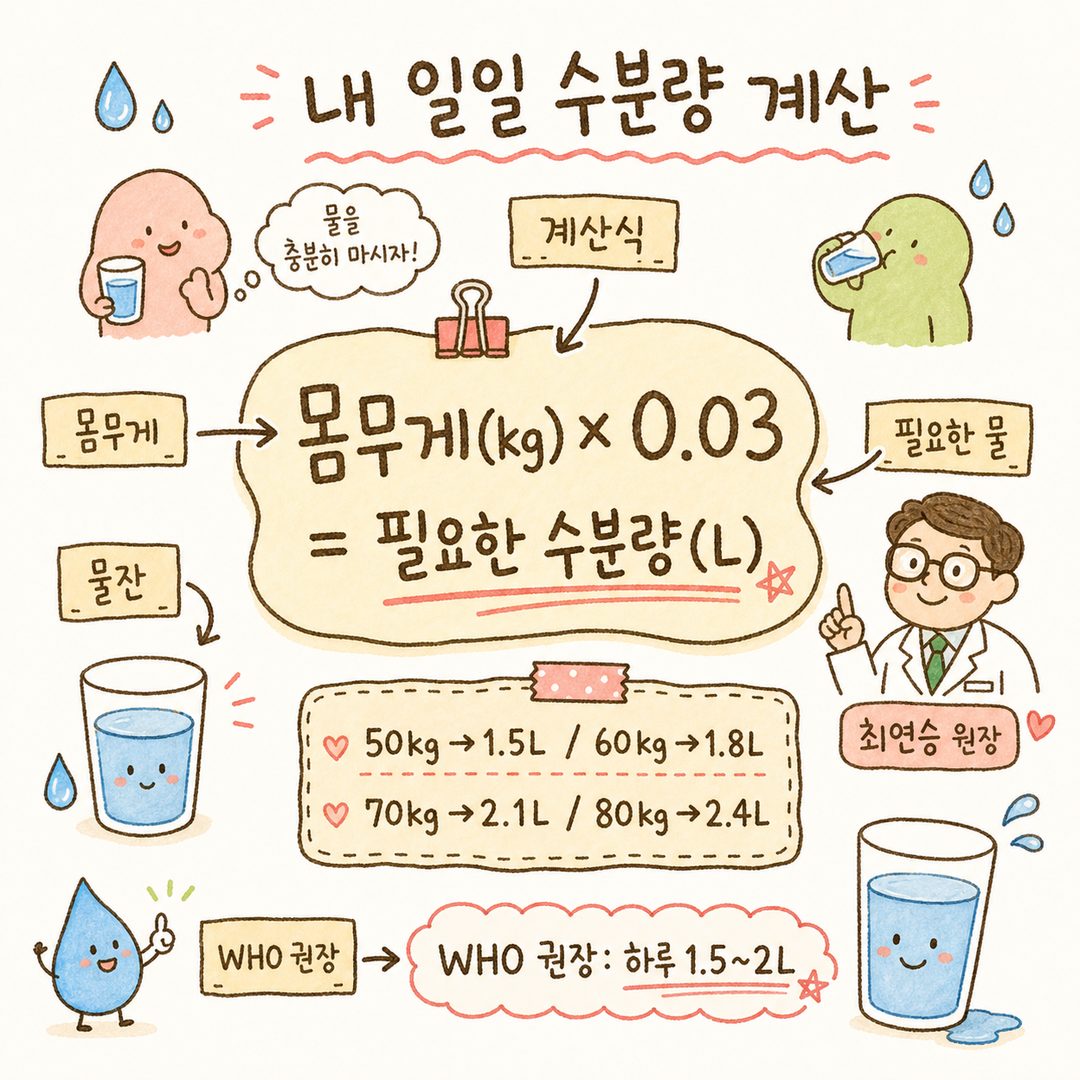
Another frequently overlooked factor is hydration. You must drink enough water during the fast, and this does not break the fast. Pure water, unsweetened carbonated water, black coffee, and unsweetened tea—all free of calories, sugar, and additives—are considered acceptable. According to WHO and Seoul National University Bundang Hospital standards, the recommended daily intake is about 1.5–2 L (8 or more 200 mL cups). More accurately, you can aim for Weight (kg) × 0.03 L. For example, if you weigh 60 kg, that would be about 1.8 L. Since you normally receive about 27–36% of your total hydration from food, you must supplement that amount with extra water during fasting hours.
Action Points You Can Implement Starting Today
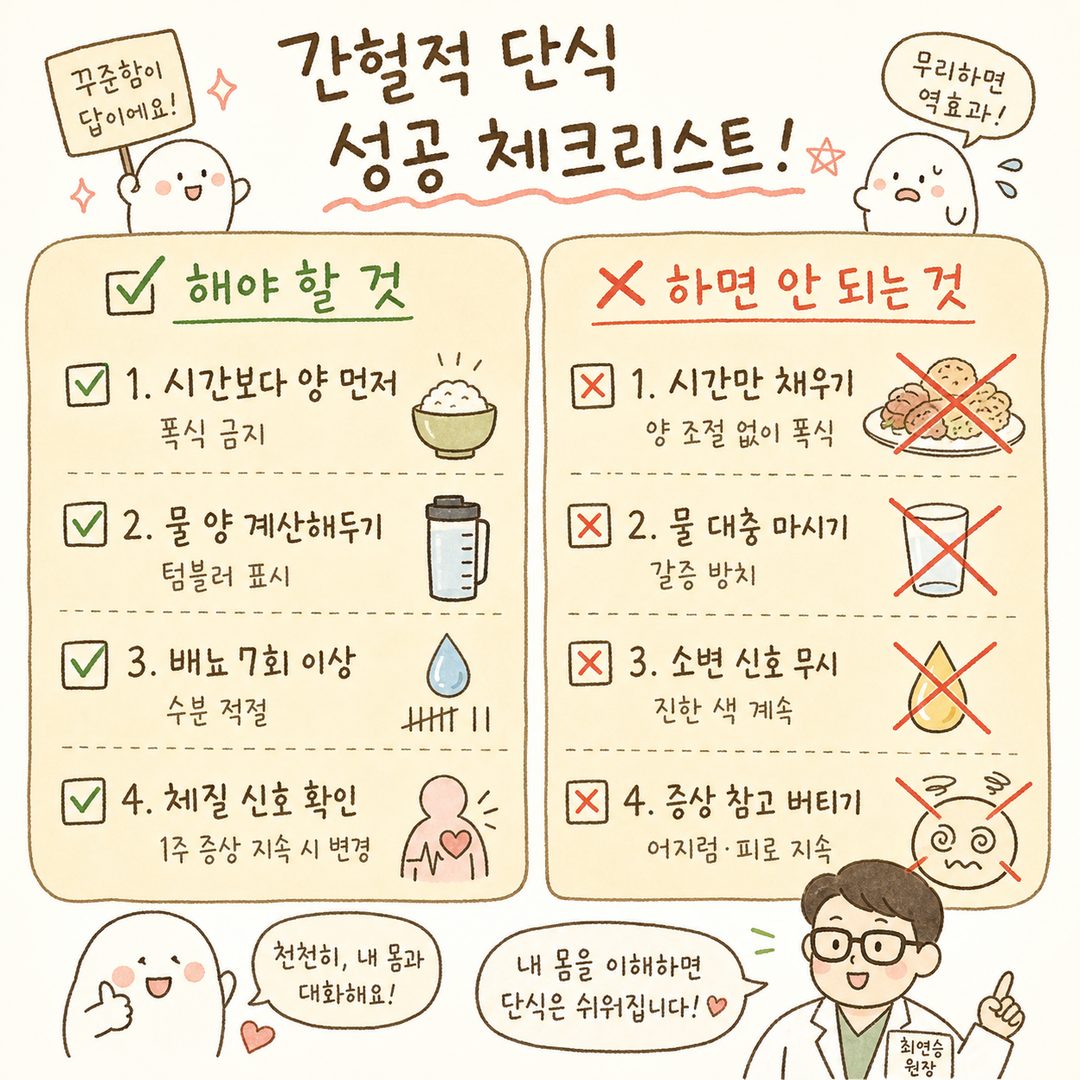
Don't overcomplicate it; just focus on these four points:
Quantity before time: Do not binge for 8 hours just because you completed a 16-hour fast. Think of it as compressing your usual meal portions into a shorter timeframe.
Calculate your water intake: Calculate your weight × 0.03 in advance and mark it on a tumbler to make it easier to track throughout the day.
Check hydration via urination frequency: One source suggests that 7 or more bathroom visits a day generally indicates adequate hydration, while 6 or fewer may be a sign of dehydration. This is a simple and accurate check.
Don't ignore constitutional signals: If headaches, lethargy, or binge-eating urges persist for more than a week, this method may not be right for you. If 16:8 doesn't work, try reducing it to 14:10 or switching to 5:2.
Within your eating window, fill up on protein and vegetables before refined carbohydrates, and make it a habit to leave the last bite. Small changes can be felt within a month.
In the clinic, I often meet people who are frustrated by slow weight changes despite intermittent fasting. These individuals usually have weak Spleen and Stomach function or a constitution that makes appetite control difficult. Rather than forcing a longer fasting period, identifying your constitution first is a faster path. Baekrok Gambi-jung provides customized Korean herbal medicine prescriptions by assessing the Spleen and Stomach health and appetite patterns of such individuals. If you are stuck at a plateau while trying on your own, I recommend seeking a consultation.