Menopausal Weight Gain — The Link Between Hormonal Changes and Traditional Korean Medicine Approaches to Metabolic Stagnation

Table of Contents
- Menopausal Weight Gain — The Link Between Hormonal Changes and Traditional Korean Medicine Approaches to Metabolic Stagnation
- Why Is Menopausal Weight Gain Particularly Concentrated in the Abdomen?
- Why Doesn't Weight Decrease Despite Eating Less?
- How Does Traditional Korean Medicine Address Menopausal Metabolic Stagnation?
- Will Increasing Exercise Intensity Solve the Problem?
- Frequently Asked Questions
Menopausal Weight Gain — The Link Between Hormonal Changes and Traditional Korean Medicine Approaches to Metabolic Stagnation
When I see menopausal women in my clinic, the most common thing they say is: "Doctor, in the past, I could lose weight by just eating a little less and walking more, but now even drinking water feels like it's making me gain weight." Actually, this isn't simply how they feel. Menopausal weight gain, which occurs as women enter their late 40s to 50s, is not a matter of willpower—it's the result of your body's 'energy management system' having fundamentally changed.
I also sometimes feel my efficiency dropping when my physical condition declines, and think to myself, "Ah, I'm also getting older now." However, what I've learned through countless clinical cases is that weight gain during this period is not simply a calorie issue, but rather a 'dissonance' between hormones and metabolic function.
Why Is Menopausal Weight Gain Particularly Concentrated in the Abdomen?
The core of menopause is the rapid decline of estrogen. Estrogen doesn't just manage reproductive function—it also plays a role in determining fat distribution. When this hormone decreases, fat begins to accumulate in the abdominal area rather than in the limbs.
From a Traditional Korean Medicine perspective, this can be interpreted through the lenses of Liver Stagnation (肝鬱) and Phlegm-Dampness (痰飮). When liver qi becomes constrained due to stress (Liver Stagnation), the flow of energy becomes blocked, which transforms into Phlegm-Dampness (痰飮)—sticky waste products within the body. Just like traffic backing up when there's an accident on the highway, when energy metabolism stagnates, a 'backup zone' of fat develops in the abdomen. During this period, basal metabolic rate can drop by as much as 20-30%, so even eating the same amount as before, the body recognizes it as 'excess energy' and stores it away.
Why Doesn't Weight Decrease Despite Eating Less?
Many people drastically reduce their food intake to lose weight. However, during menopause, this can actually be counterproductive. The body recognizes this as an 'emergency situation' and slows down the metabolic rate even further.
The concept that requires attention here is Spleen Deficiency (脾虛). When the spleen function responsible for digestion and absorption is weakened, and you aggressively starve yourself, the body tries to hold onto energy more tightly. As a result, you fall into a vicious cycle where muscle mass decreases while body fat percentage increases.
Among the cases I've seen, many patients ate less than 1,000 kcal per day yet still couldn't reduce their waist circumference. For these patients, simply 'eating less' isn't the answer. Rather, a process to lower body heat and assist in waste elimination through herbal formulas like Bangpungtongseong-san (防風通聖散), which unblocks stagnant energy, should come first.
How Does Traditional Korean Medicine Address Menopausal Metabolic Stagnation?
We focus not on simply reducing the number on the scale, but on turning the 'metabolic switch' back on. Menopausal weight gain is best approached through three stages.
Correction of Upper Heat Lower Cold (上熱下寒): The state where heat rises to the face but the lower body is cold must be corrected. If qi only flows upward, metabolism in the lower body stagnates even further.
Removal of Phlegm-Dampness (痰飮) and Blood Stasis (瘀血): Only when Blood Stasis (瘀血) that impedes blood circulation and Phlegm-Dampness (痰飮)—metabolic waste—are cleared away, can an environment conducive to fat burning be created.
Calming Heart Fire (心火): Anxiety and insomnia characteristic of menopause represent a state where Heart Fire (心火) is flaring up. When you can't sleep well, the balance of leptin and ghrelin—the appetite-regulating hormones—becomes disrupted, making false hunger more intense.
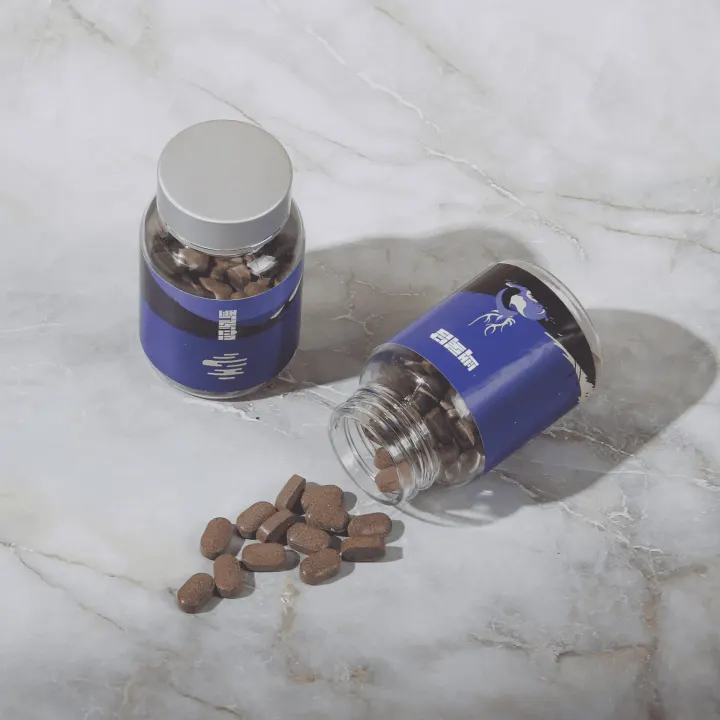
Based on these mechanisms, formulas like Baegnok Gami Pills take an approach that doesn't simply suppress appetite but helps improve overall metabolic efficiency in the body, allowing weight to decrease naturally.
Will Increasing Exercise Intensity Solve the Problem?
To be direct, excessive exercise without preparation can actually be dangerous. During menopause, joint flexibility decreases and muscle loss accelerates.
Rather than walking aimlessly or lifting heavy weights, it's necessary to first assess the state of Qi-Blood (氣血) circulation in your body. For example, when people with very cold bodies suddenly do high-intensity aerobic exercise, they may only experience severe fatigue and worsen edema.
Therefore, in the beginning, opening the body's 'water pathways' through gentle stretching and herbal formulas, then gradually increasing the proportion of strength training is helpful. Especially when protein intake is increased while improving Spleen Deficiency (脾虛) status, basal metabolic rate recovers and weight loss gains momentum.
Frequently Asked Questions
Q. I'm taking hormones—can I also take herbal medicine?
Yes, it's possible. Hormone medication replenishes deficient estrogen to alleviate acute symptoms, while herbal medicine removes stagnant metabolic function and Phlegm-Dampness (痰飮) caused by that process, so they can have a complementary relationship. However, it's advisable to take them with a time gap.
Q. Has menopausal weight really changed into a 'constitution' that won't lose weight?
Rather than constitution changing, it's the 'state' that has changed. It's simply a state where metabolic efficiency has decreased due to hormonal changes. If the metabolic switch is turned back on with appropriate formulas and lifestyle corrections, it can certainly be managed. It's just that you need different strategies than in your 20s.
Q. What's the difference between appetite suppressants and Traditional Korean Medicine?
General appetite suppressants often work on the brain's satiety center to forcibly make you forget hunger. In contrast, the Traditional Korean Medicine approach focuses on resolving Liver Stagnation (肝鬱), strengthening Spleen Deficiency (脾虛), and creating an environment where the body can naturally burn energy well. It's the difference between forcibly suppressing and allowing natural flow.
Menopausal weight gain is not simply a dieting issue—it's a 'health restoration' issue. Rather than ignoring the signals your body sends and just starving yourself, I recommend first examining which part of your body is experiencing stagnation.
If you'd like to learn more about detailed metabolic management methods, please check the [Baegnok Gami Pills Details] page.