Severe Obesity Criteria: From BMI Index to Diagnosis and Body Fat Distribution

Table of Contents
Have you ever looked at the number on the scale and wondered, 'Am I obese?' When I meet patients in the clinic, many are curious not just about whether they're overweight, but about their exact status and why it might be dangerous.
Why Are Obesity Standards Stricter for Koreans?
The most commonly used indicator for assessing obesity is Body Mass Index (BMI). It's calculated by dividing weight by height squared, and is widely used because it provides a convenient estimate of body fat content. However, interestingly, the criteria vary from country to country.
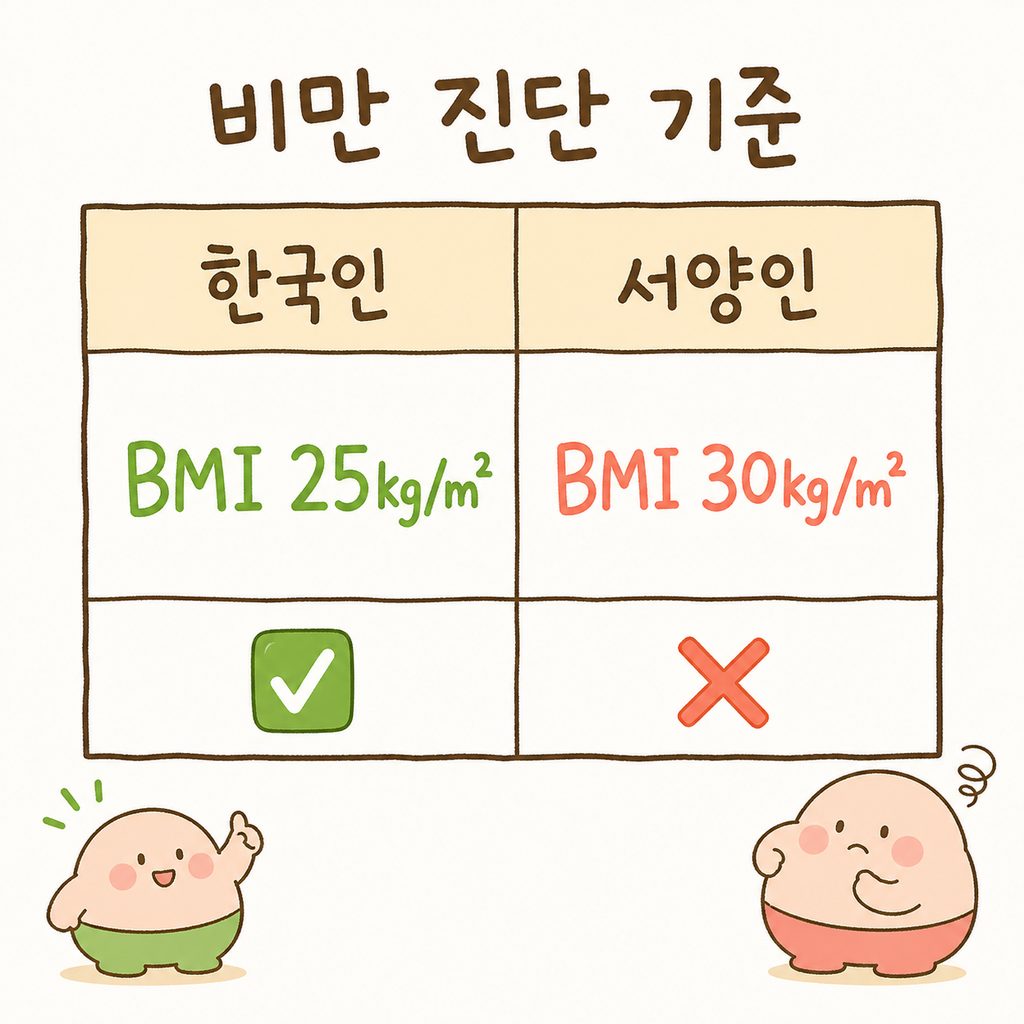
According to data from the Korean Society for the Study of Obesity, the diagnostic threshold for obesity in Koreans is set at BMI 25 kg/m². In contrast, for Americans and other Westerners, the threshold is set higher at 30 kg/m². The reason the Korean standard is 5 kg/m² lower is due to constitutional differences.
Professor Kwon Hyuk-tae at Seoul National University Hospital explains that Koreans and Westerners differ in the timing of excessive fat accumulation and the resulting health risks. This means that even at lower BMI values compared to Westerners, Koreans often experience dangerous fat accumulation or health problems.
Why Body Fat Distribution Matters More Than Numbers
Obesity is not simply about weighing more. Looking at the dictionary definition, it refers to a condition where excess body fat accumulates or abnormal fat deposits develop in inappropriate areas, causing various health problems.
This is why experts emphasize that body fat distribution is more important than weight itself. Even if your BMI isn't very high, fat concentrated in specific areas can still pose risks.
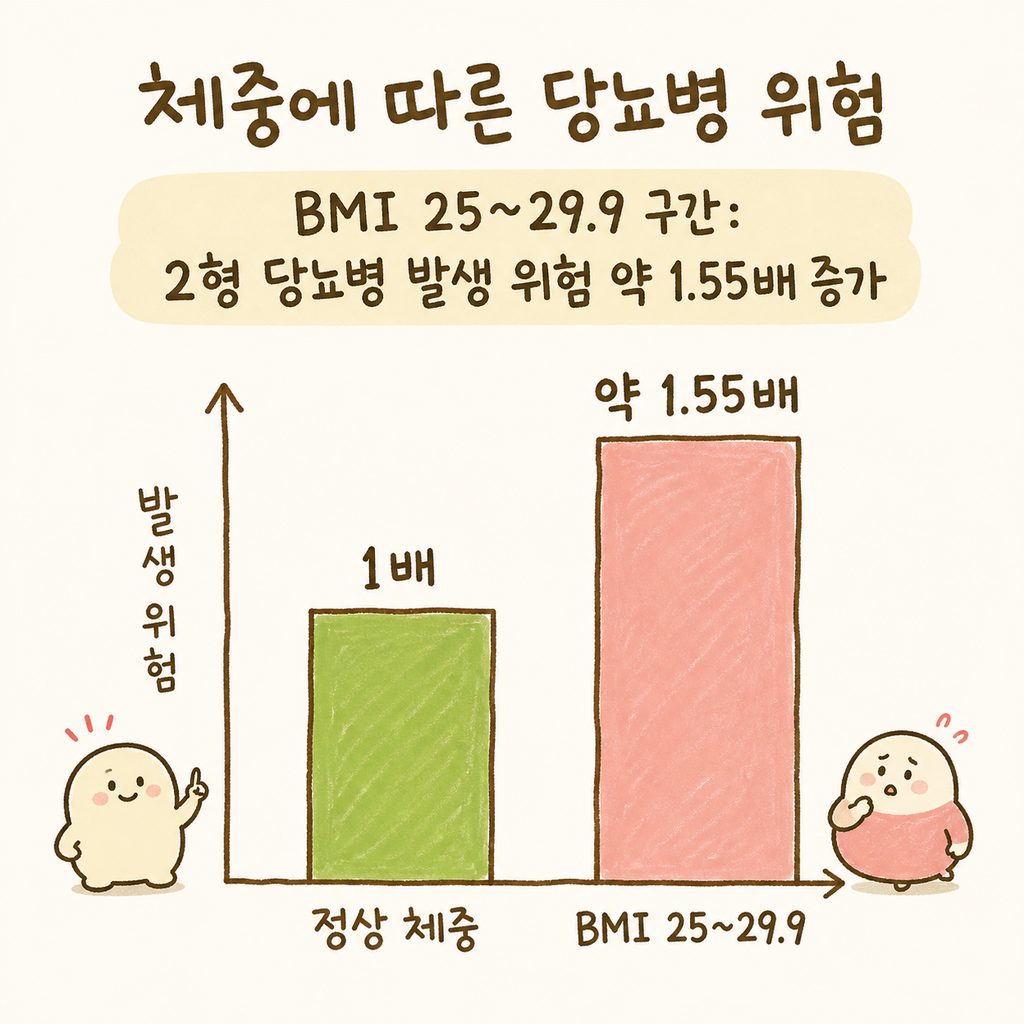
According to one study, compared to those of normal weight, individuals who are overweight (pre-obesity) and Class 1 obesity (BMI 25-29.9 kg/m²) showed up to 1.55 times higher risk of developing type 2 diabetes. This shows that even small increases can place considerable strain on the body's metabolism.
A Korean Medicine Clinic's Perspective on Severe Obesity
Among my severe obesity patients in the clinic, many自责 themselves, saying, 'I ate too much and this is what happened.' However, in my view, severe obesity is not solely a problem of excessive caloric intake.
In many cases, it's the result of systemic breakdown in the body. Along with genetic factors, complex causes such as extreme stress, sleep deprivation, and conditions like insulin resistance or endocrine disorders are intertwined.
This is why simply skipping meals or walking randomly won't solve the problem. Because the body's metabolic functions have already declined, your body may have transformed into one that gains weight more easily even when eating the same as others. That's why I prioritize carefully examining each patient's constitution and current metabolic state.
Action Points to Start Today
So, what should you begin with right now? Instead of grand plans, let me share some small habits.

First, according to clinical guidelines from the Korean Society for the Study of Obesity, all adults are recommended to measure their BMI at least once a year. Simply regularly tracking changes in your body is the start of management.
Additionally, instead of being overly concerned about a single number on the scale, look at your body's 'distribution.' If your waist circumference suddenly increases, or if you get winded or tired more easily than before, these could be signals that management is needed regardless of your BMI.
Finally, rather than extreme fasting, try approaching it by restoring your body's metabolic rhythm. Sudden changes can strain your body and easily lead to the yo-yo effect.
The process of restoring your body's balance may take longer than expected. However, if you find a method that suits your constitution, you can absolutely return to a healthy state. Rather than exhausting yourself with solitary struggles, I recommend proceeding step by step with professional guidance.
With the Baekrokdam program, you can receive detailed management tailored to your body's metabolic state, leading to more effective results. Check your current body status based on the criteria shared today, and if you're curious about specific methods, please don't hesitate to mention it during your clinic visit.
References